24 Biophilic Living Room Ideas for Small Apartments
Biophilic living room ideas for small apartments can completely transform even the tiniest space into a refreshing retreat filled with warmth, greenery, and natural beauty.
If your apartment feels cramped, disconnected from nature, or lacking personality, the right design choices can make a remarkable difference. By incorporating plants, organic materials, natural light, and earthy textures, you can create a living room that feels larger, calmer, and more inviting without sacrificing functionality.
This collection of ideas is designed to help you bring the outdoors in while making the most of limited square footage. In my experience, even a few carefully chosen natural elements can dramatically improve the atmosphere of a room. I’ve noticed that spaces filled with greenery and organic textures often feel more relaxing, balanced, and enjoyable to spend time in. These ideas will inspire you to create a beautiful apartment living room that feels connected to nature every day.
1. Vertical Plant Wall
- Maximizes greenery without using floor space.
- Creates a striking natural focal point.
- Improves visual depth in compact rooms.
- Works well in rental-friendly layouts.
- Makes the room feel connected to nature.
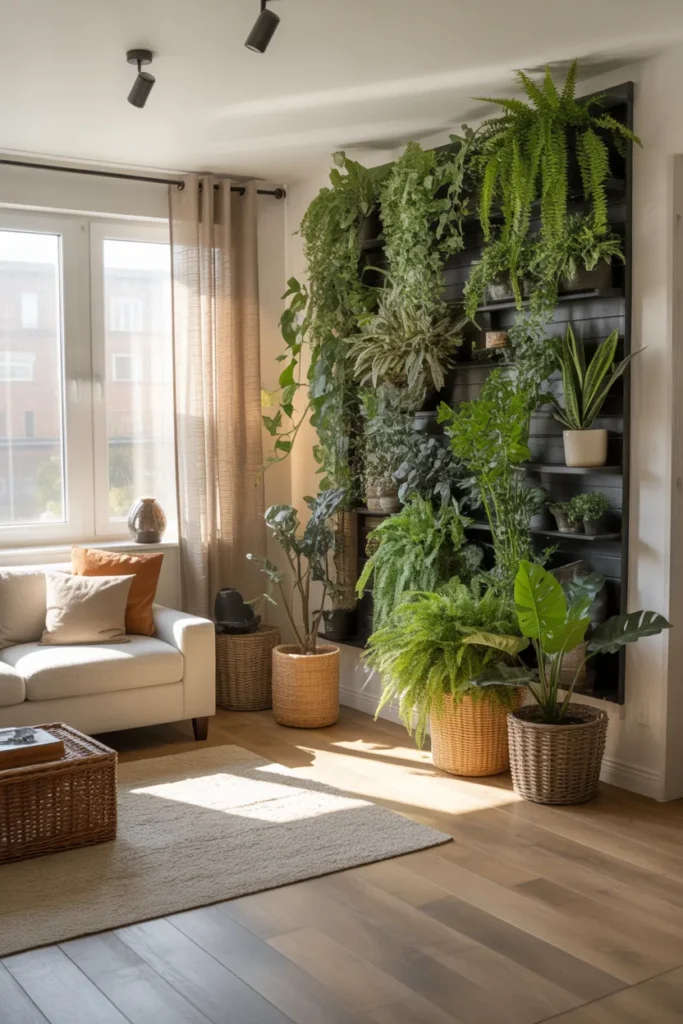
A vertical plant wall is one of the most effective ways to introduce abundant greenery into a compact living room without sacrificing valuable floor space. By drawing the eye upward, it creates the illusion of higher ceilings and a more expansive environment. The layered foliage adds texture, movement, and visual interest while helping the room feel softer and more inviting. This approach works particularly well in apartments where square footage is limited but natural elements are desired. The result is a living area that feels vibrant, calming, and thoughtfully connected to the outdoors.
In my experience, vertical greenery often delivers a greater visual impact than several scattered plants because it creates a unified focal point. I’ve noticed that combining different leaf shapes and shades of green helps the display feel natural and balanced. The wall becomes both decorative and functional, adding personality without cluttering the room. The finished space feels refreshing, modern, and beautifully integrated with nature.
2. Natural Wood Layers
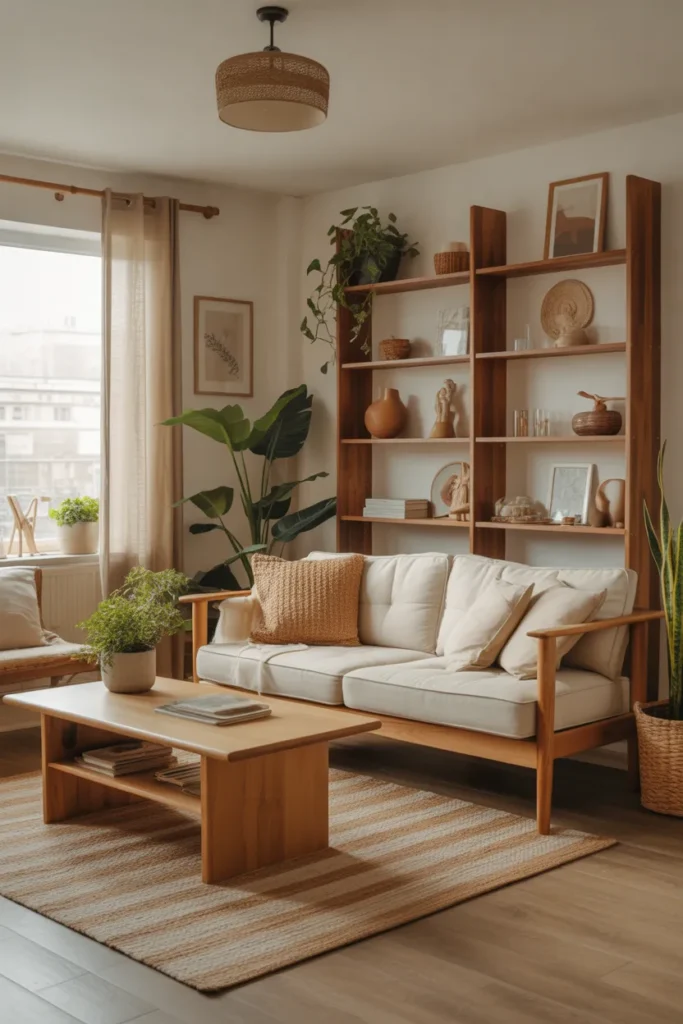
- Introduces warmth and texture naturally.
- Creates a grounded and organic atmosphere.
- Works with many decorating styles.
- Enhances visual comfort.
- Makes small rooms feel inviting.
Natural wood surfaces instantly bring warmth and authenticity into a living room while supporting a nature-inspired design aesthetic. Combining different wood tones creates depth and character without overwhelming the space. Coffee tables, shelving, frames, and decorative accessories all contribute to a layered appearance that feels organic and welcoming. This design strategy works especially well in apartments because it helps soften modern architectural features and creates a more comfortable environment. The overall effect is calming, balanced, and visually rich despite a limited footprint.
I’ve seen this work well in many homes because wood introduces texture that paint and fabric alone cannot provide. Mixing lighter and darker finishes creates subtle contrast while maintaining cohesion throughout the room. Paired with greenery and natural textiles, the materials feel timeless and highly versatile. The result is a living room that feels warm, connected, and effortlessly stylish.
3. Window Herb Corner
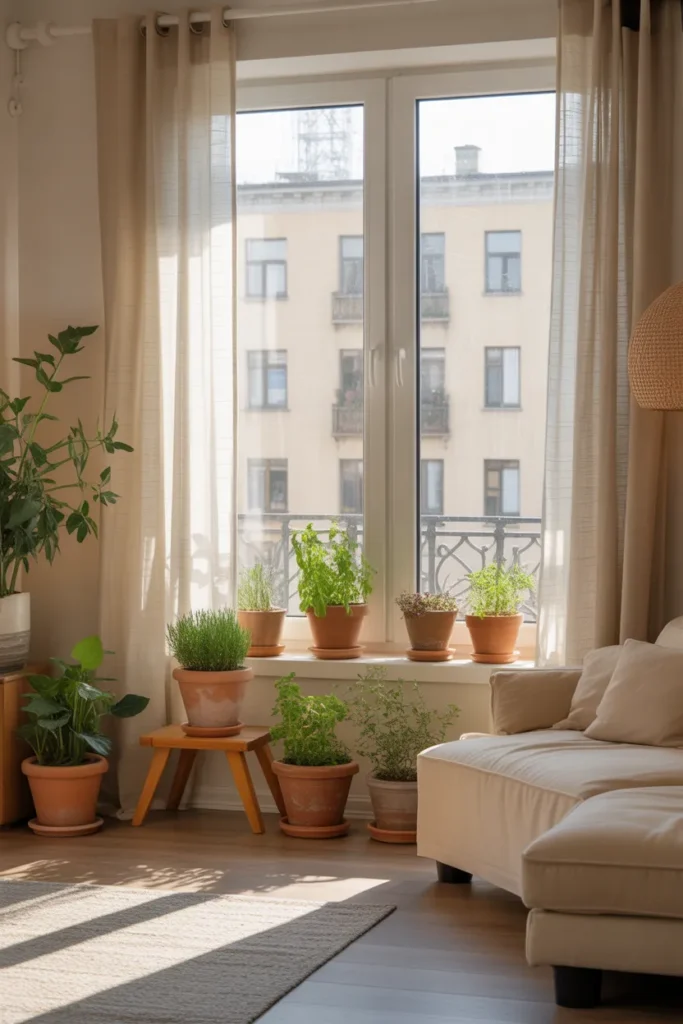
- Adds greenery with practical benefits.
- Utilizes sunny window areas effectively.
- Introduces natural fragrance.
- Creates a fresh and lively atmosphere.
- Enhances connection to daily plant care.
A dedicated herb corner transforms an ordinary window area into a vibrant feature filled with life and functionality. Small pots of basil, mint, rosemary, and other herbs introduce greenery while providing pleasant natural scents throughout the living space. This approach works especially well in apartments because it combines decoration with everyday usefulness. The collection adds texture, color, and movement while making the room feel more connected to natural rhythms. The result is a compact yet impactful design feature that enhances both aesthetics and practicality.
I’ve noticed that caring for herbs often helps people feel more connected to their homes because the plants become part of a daily routine. The changing growth patterns add visual interest and create a living display that evolves over time. Combined with natural light and simple decor, the arrangement feels fresh and welcoming. The finished corner becomes a charming focal point that adds warmth and personality to the room.
4. Hanging Planter Cluster
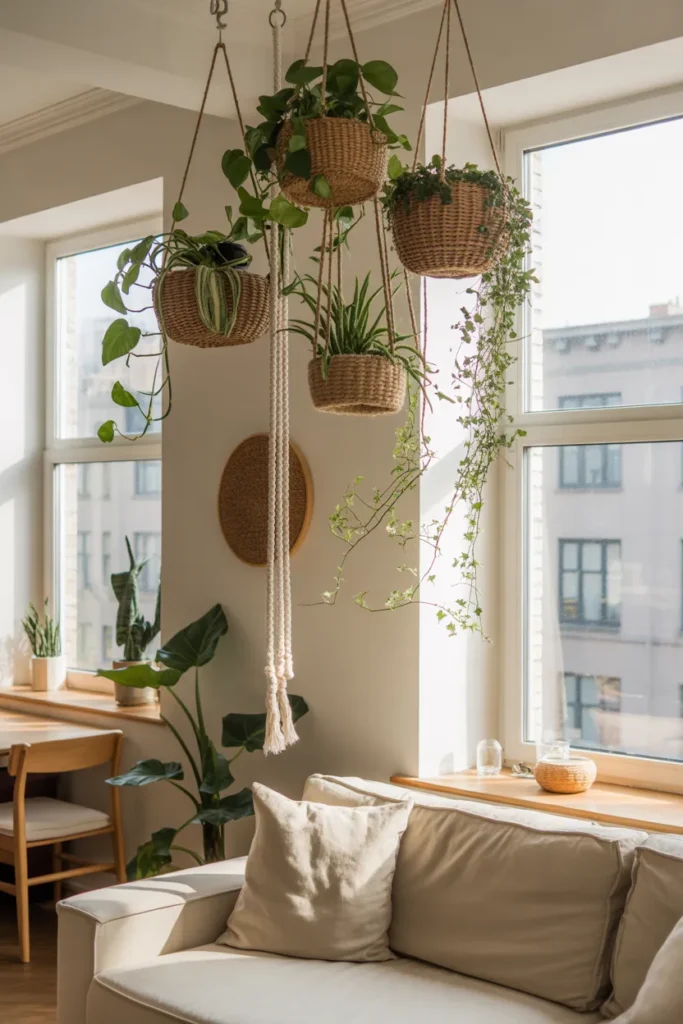
- Draws attention upward visually.
- Creates movement through cascading foliage.
- Works well in compact layouts.
- Makes the room feel lighter and fresher.
Hanging planters offer a smart solution for bringing more greenery into a compact apartment while preserving valuable floor area. The suspended plants create visual layers at different heights, helping the room feel larger and more dynamic. Cascading vines soften corners and introduce movement that makes the living area feel more connected to nature. This approach works especially well in apartments where every square foot matters. The result is a space that feels vibrant, airy, and thoughtfully designed without sacrificing functionality or circulation around furniture.
In my experience, hanging plants often make small rooms feel more spacious because they guide the eye upward rather than outward. I’ve noticed that combining different trailing varieties creates a fuller and more natural appearance. The layered greenery adds depth while keeping surfaces uncluttered. The finished room feels refreshing, balanced, and full of organic character.
5. Woven Texture Layers
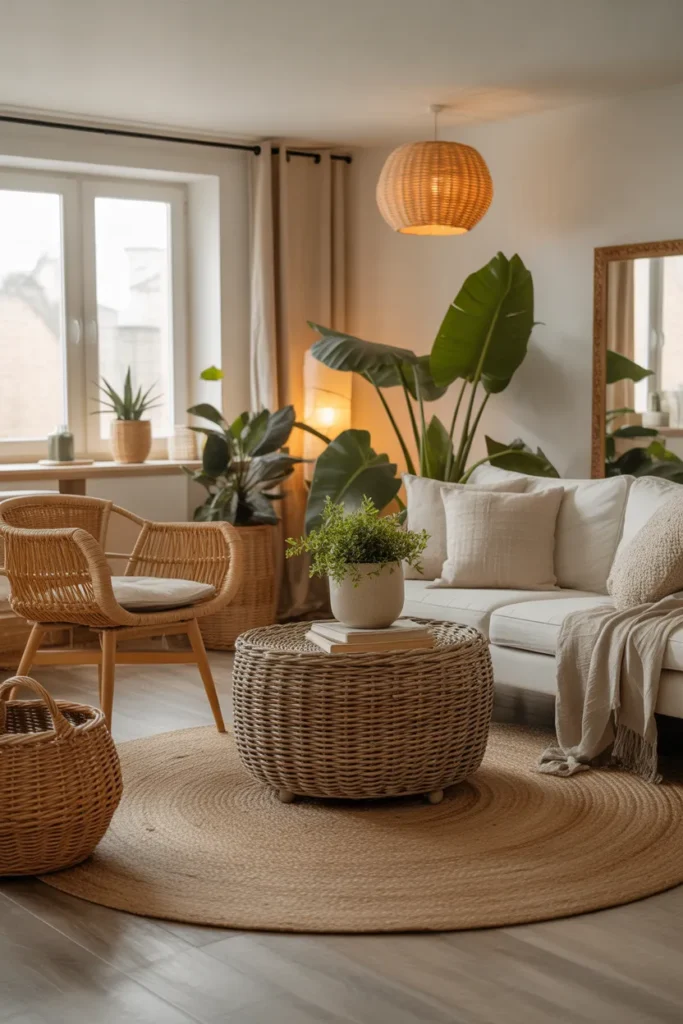
- Introduces natural texture throughout the room.
- Creates warmth without visual clutter.
- Enhances the organic aesthetic.
- Adds depth through layered materials.
- Complements indoor greenery beautifully.
Woven textures play a major role in creating a nature-inspired living room because they introduce warmth and tactile interest. Materials such as rattan, wicker, jute, and seagrass help soften modern apartment interiors while creating visual depth. Layering these textures throughout the room establishes a cohesive and inviting atmosphere that feels relaxed and comfortable. This design strategy works especially well in smaller spaces because texture adds character without requiring additional furniture. The result is a room that feels grounded, welcoming, and naturally connected to the outdoors.
I’ve seen this work well in many homes because woven materials instantly make interiors feel more approachable and lived-in. Combined with greenery and wood finishes, the textures help create harmony throughout the room. The subtle variations in pattern and material add richness without overwhelming the design. The finished space feels calm, stylish, and effortlessly organic.
6. Indoor Tree Accent
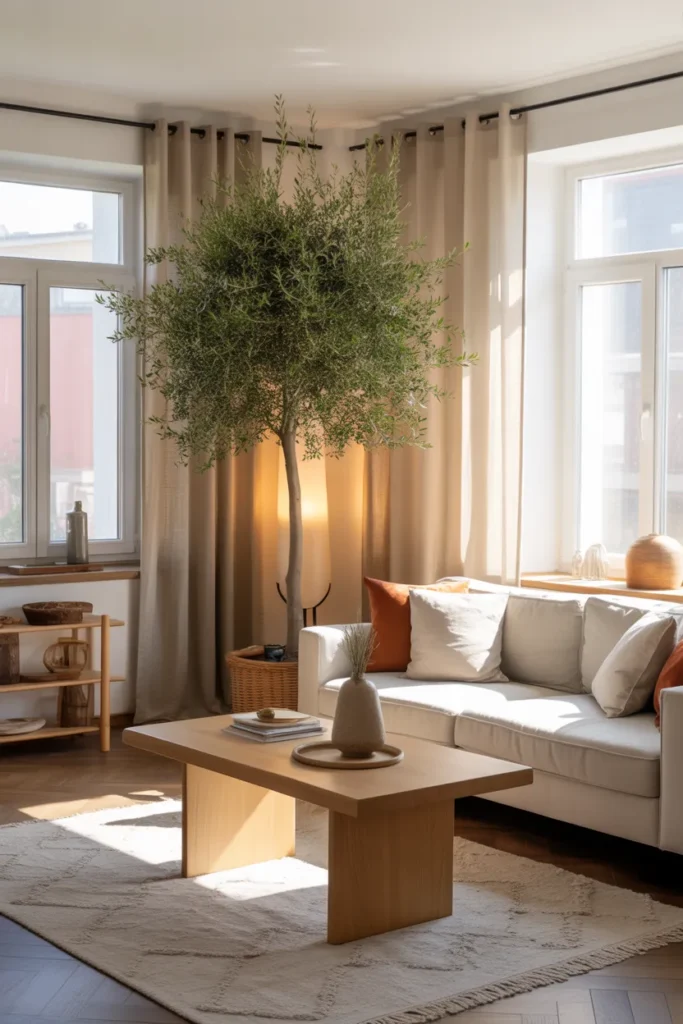
- Creates a strong natural focal point.
- Adds height and vertical interest.
- Makes the room feel more expansive.
- Enhances the connection to nature.
- Works with minimalist decor styles.
A single indoor tree can transform the atmosphere of a compact living room by introducing scale, structure, and natural beauty. Positioned beside a sofa or near a window, the tree adds height that helps balance furniture proportions while drawing attention upward. This simple addition makes the room feel more expansive and visually complete. The presence of larger greenery also strengthens the connection to outdoor environments, which is a key element of nature-inspired design. The result is a living space that feels calmer, fresher, and more visually balanced.
I’ve noticed that indoor trees often create more impact than multiple smaller plants because they establish an immediate focal point. Varieties such as olive trees, fiddle leaf figs, and rubber plants work particularly well in apartment settings. Combined with natural light and organic materials, the greenery enhances the room’s overall atmosphere. The finished living area feels elegant, refreshing, and beautifully connected to nature.
7. Stone Coffee Table
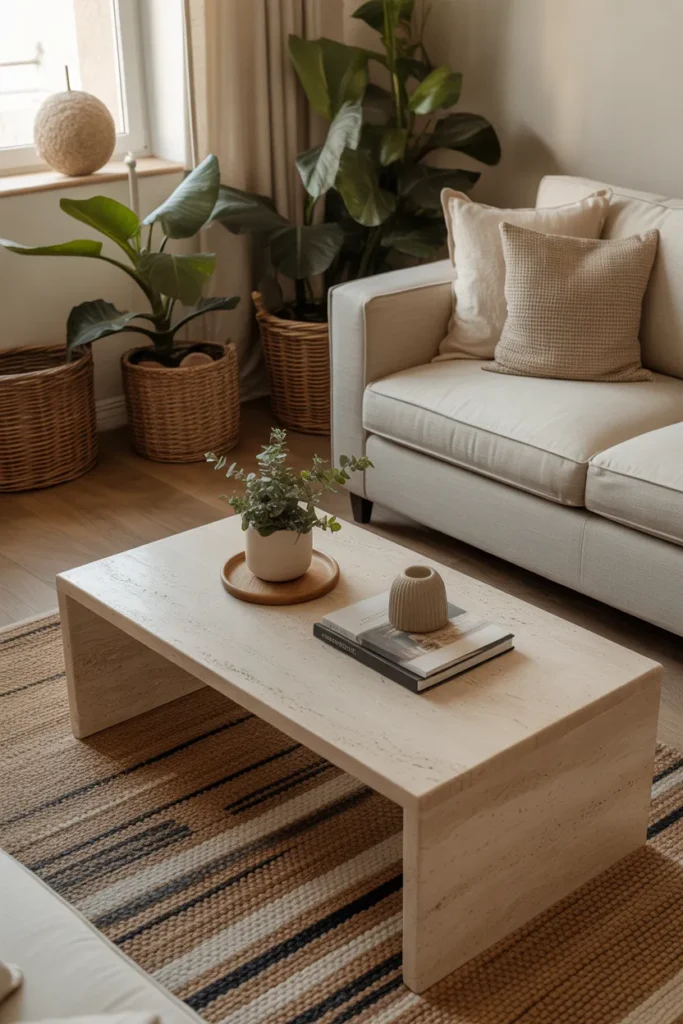
- Introduces natural materials effortlessly.
- Creates a grounded focal point.
- Adds texture without visual clutter.
- Enhances an organic design palette.
- Complements greenery beautifully.
Natural stone instantly brings an organic quality into a living room while adding texture and visual weight. A stone coffee table becomes a functional centerpiece that helps anchor the furniture arrangement without overwhelming the space. The unique veining and natural imperfections create subtle visual interest that feels timeless and sophisticated. This design approach works particularly well in apartments because it adds character through materials rather than excessive decoration. The result is a room that feels grounded, balanced, and closely connected to natural elements.
In my experience, incorporating raw materials often makes compact rooms feel more authentic and welcoming. I’ve noticed that stone surfaces pair exceptionally well with wood, linen, and greenery because each material contributes a different layer of texture. Together they create a harmonious environment that feels calm and cohesive. The finished space appears elegant, organic, and effortlessly inviting.
8. Botanical Gallery Wall
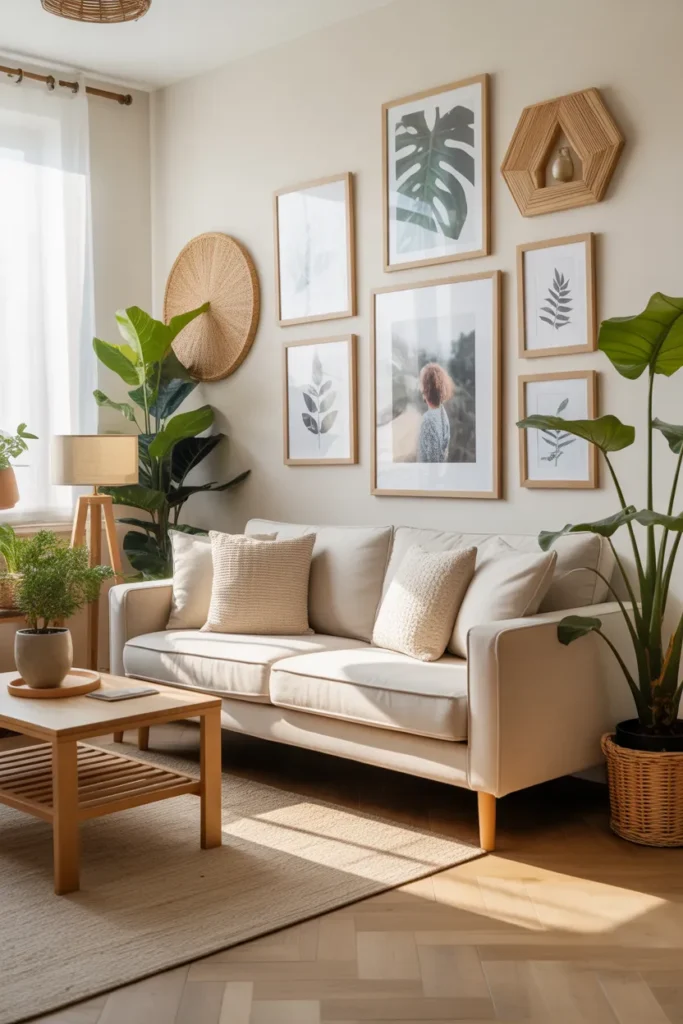
- Adds nature-inspired artwork.
- Creates a strong visual focal point.
- Personalizes blank walls beautifully.
- Works in small apartment layouts.
- Enhances the overall organic theme.
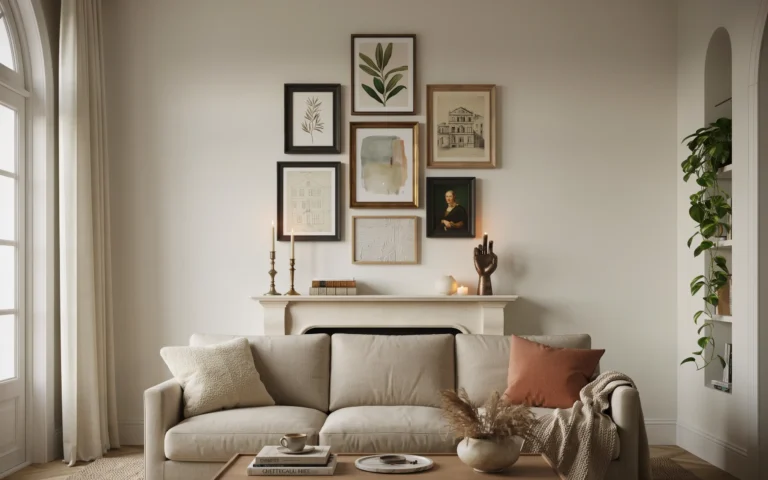
A botanical gallery wall is an excellent way to strengthen a nature-inspired design without requiring additional floor space. Framed leaf illustrations, landscape photography, and botanical sketches create a visual connection to the outdoors while adding personality to the room. The arrangement introduces depth and texture while helping empty walls feel more intentional. This approach works especially well in apartments where vertical decorating opportunities are valuable. The result is a living room that feels curated, inviting, and visually connected to natural surroundings.
I’ve seen this work well in many homes because artwork allows homeowners to introduce nature in a subtle yet impactful way. Wooden frames further enhance the organic aesthetic while maintaining a cohesive appearance. Combined with living plants and natural materials, the gallery wall contributes to a layered and harmonious environment. The finished room feels creative, calming, and beautifully balanced.
9. Moss Green Sofa
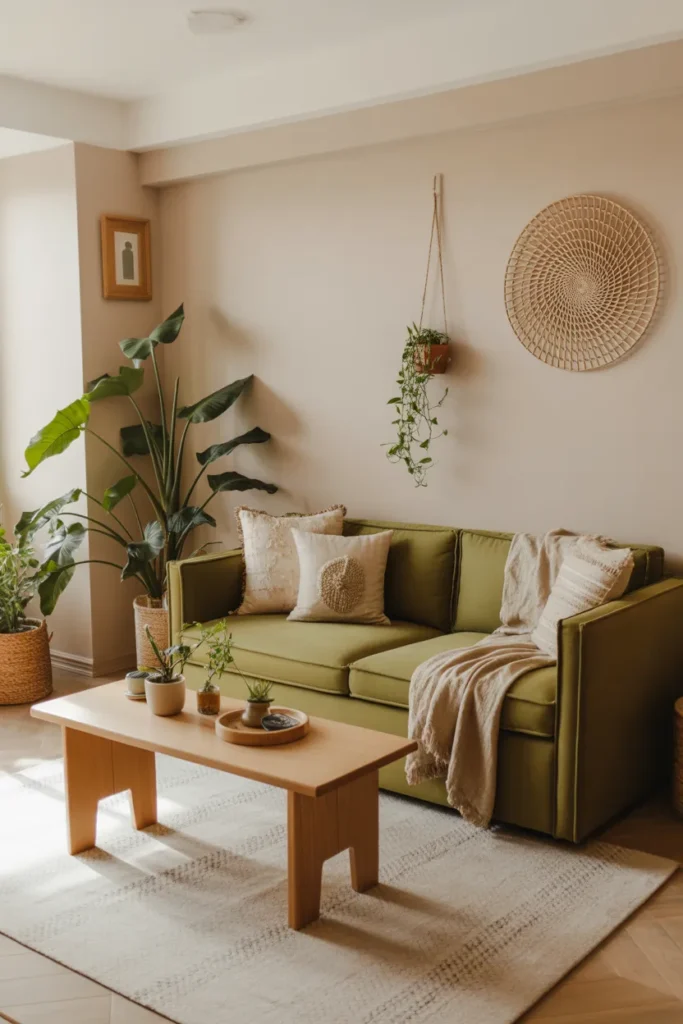
- Introduces nature-inspired color.
- Creates a strong focal point.
- Adds warmth and visual depth.
- Pairs well with neutral decor.
- Helps unify natural design elements.
A moss green sofa immediately establishes a connection to nature while serving as a beautiful focal point in a small apartment living room. The earthy color feels calming and sophisticated, making it ideal for creating a relaxing environment. Unlike brighter shades, moss green blends naturally with wood finishes, woven textures, and indoor plants. This combination helps establish visual harmony throughout the room while maintaining a fresh and welcoming atmosphere. The result is a living area that feels stylish, comfortable, and grounded in natural inspiration.
I’ve noticed that nature-inspired upholstery colors often make a room feel more cohesive because they connect furniture with surrounding greenery. A green sofa adds personality without dominating the design and remains versatile across different decorating styles. Paired with warm neutrals and organic materials, it creates a balanced and inviting atmosphere. The finished space feels fresh, timeless, and beautifully connected to the outdoors.
Related Article : 23 Dark Feminine Bedroom Ideas for a Moody Retreat
10. Bamboo Shelf Styling
- Adds storage with natural character.
- Creates vertical interest in small spaces.
- Displays plants beautifully.
- Introduces sustainable materials.
- Keeps the room organized and inviting.
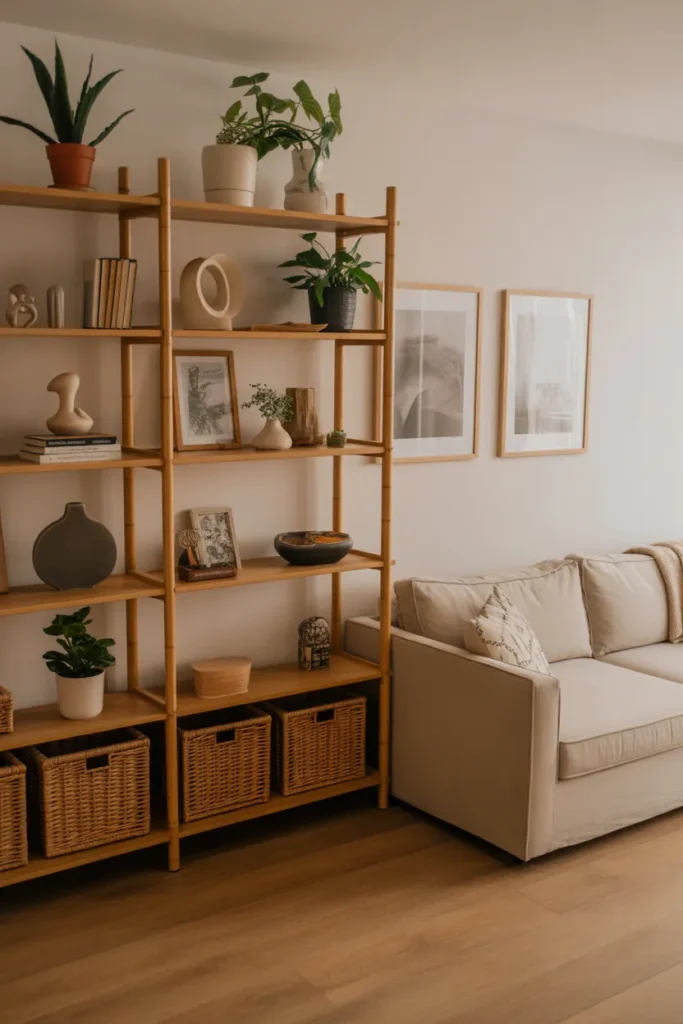
Bamboo shelving combines functionality and natural beauty, making it an excellent addition to compact apartment living rooms. The warm tones and organic texture help soften modern interiors while providing valuable storage and display space. Open shelving allows plants, books, and decorative accessories to become part of the room’s visual story. This design approach works especially well in smaller homes because it adds organization without making the room feel enclosed. The result is a balanced space that feels practical, airy, and naturally welcoming.
In my experience, open shelving works best when it combines storage with decorative elements. I’ve noticed that bamboo brings warmth without the visual heaviness that darker furniture sometimes creates. Pairing greenery with natural materials enhances the sense of harmony throughout the room. The finished area feels organized, fresh, and beautifully connected to nature.
11. Linen Curtain Glow
- Softens incoming natural light.
- Enhances the airy atmosphere.
- Adds texture without clutter.
- Supports a calming environment.
- Complements natural materials.
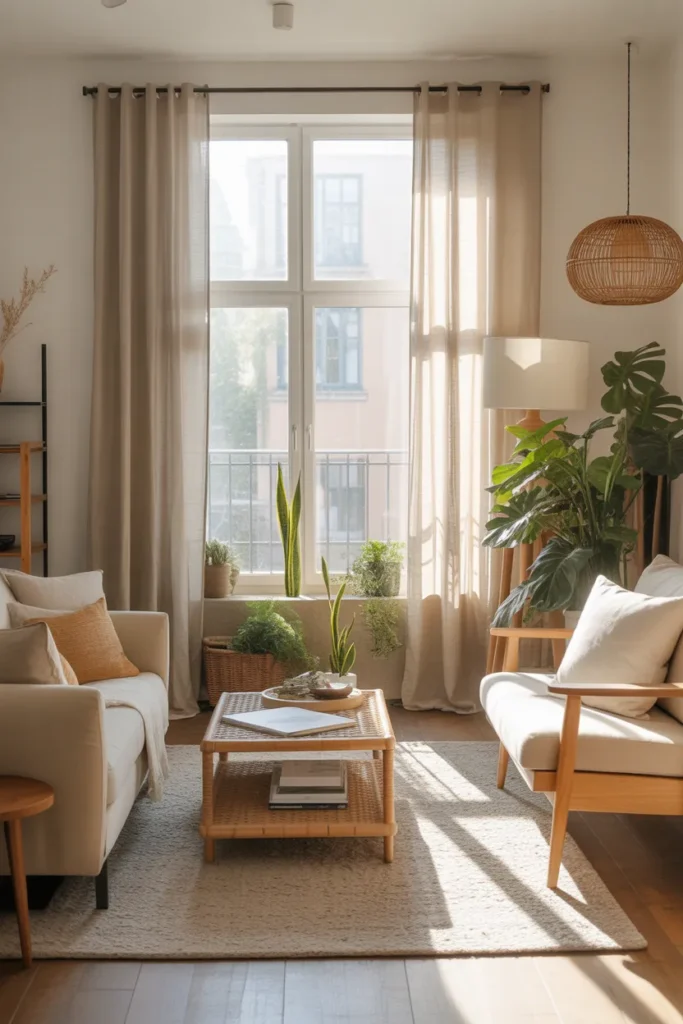
Linen curtains help create a softer and more inviting atmosphere by filtering sunlight while maintaining brightness throughout the room. The natural fabric introduces subtle texture that complements wood finishes, plants, and woven accents. This design element is especially valuable in apartments where natural light plays an important role in making compact spaces feel larger. The gentle diffusion of sunlight creates a warm glow that enhances every corner of the living room. The result is a comfortable environment that feels open, peaceful, and connected to the outdoors.
I’ve seen this work well in many homes because linen offers a balance between privacy and light. The fabric moves naturally with airflow, adding subtle movement that enhances the room’s organic feel. Combined with greenery and neutral furnishings, it helps establish a relaxed atmosphere that feels timeless. The finished living room appears bright, serene, and effortlessly stylish.
12. Pebble Decor Accents
- Introduces natural texture affordably.
- Reinforces an outdoor-inspired aesthetic.
- Adds subtle decorative detail.
- Works well on tables and shelves.
- Enhances visual layering.
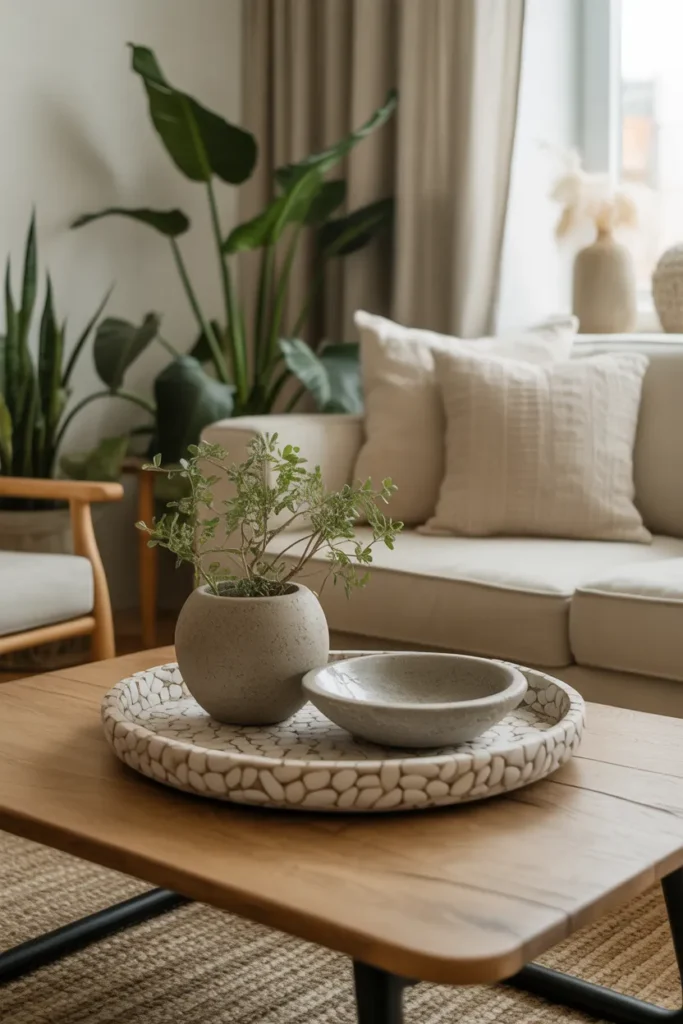
Pebble-inspired decor brings a subtle connection to nature through texture, shape, and material. Decorative stone bowls, pebble trays, and natural rock accents introduce organic forms that soften more structured furniture pieces. These details may seem small, but they contribute significantly to the overall atmosphere of a nature-inspired living room. This approach is especially useful in apartments because it adds character without requiring additional furniture or major design changes. The result is a layered environment that feels grounded, cohesive, and visually interesting.
I’ve noticed that small natural accents often make a room feel more authentic because they introduce irregular shapes and textures not commonly found in manufactured decor. When combined with plants, wood, and soft textiles, pebble-inspired accessories strengthen the connection to the outdoors. The finished space feels balanced, calming, and thoughtfully designed.
13. Living Plant Divider
- Defines zones without blocking light.
- Adds greenery at eye level.
- Creates privacy in open layouts.
- Makes small apartments feel organized.
- Strengthens the nature-inspired atmosphere.
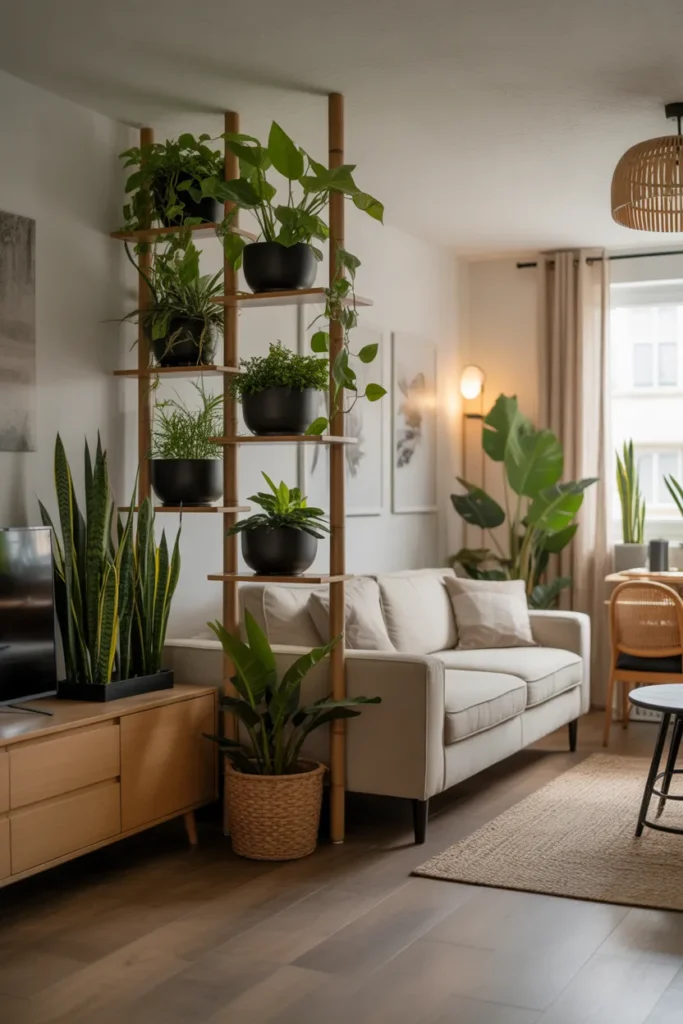
A plant divider offers a creative way to define different areas within a small apartment while maintaining an open and airy feel. Instead of using solid partitions, greenery creates separation without disrupting natural light or visual flow. Tall plants add height and texture while helping the room feel more layered and intentional. This strategy works especially well in studio apartments where living, dining, and work areas often share the same space. The result is a more organized environment that feels both functional and naturally beautiful.
I’ve seen this work well in many homes because plants provide flexibility while adding life to the layout. Unlike traditional dividers, greenery improves the overall atmosphere rather than making the room feel smaller. Combined with natural materials and soft colors, the divider becomes both practical and decorative. The finished space feels balanced, fresh, and thoughtfully arranged.
14. Nature Inspired Rug
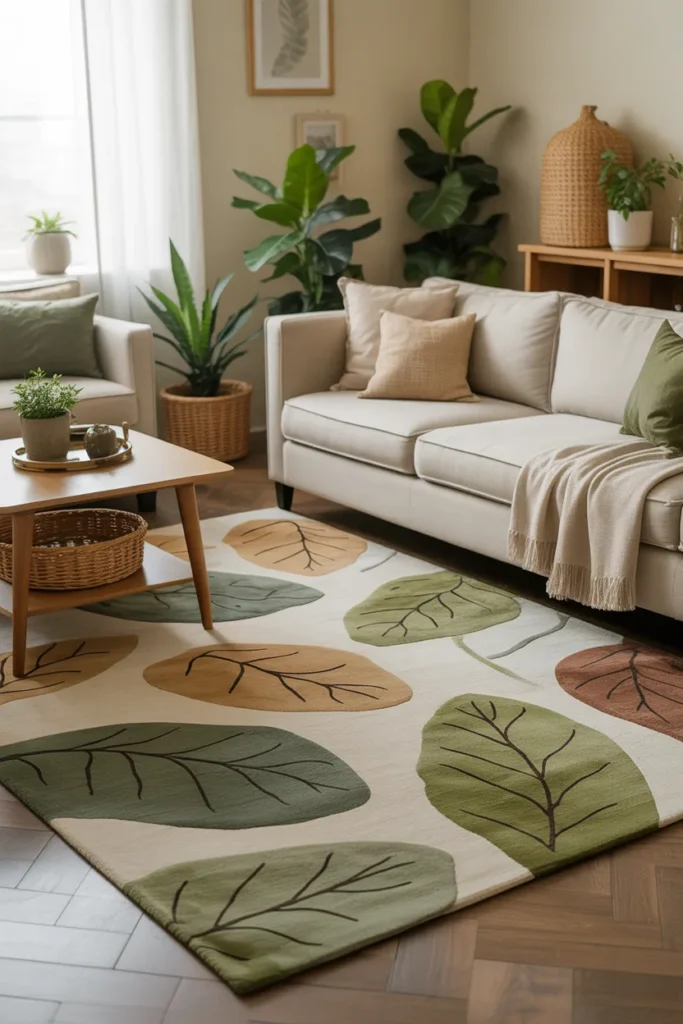
- Introduces organic patterns subtly.
- Anchors furniture arrangements beautifully.
- Adds warmth and comfort.
- Enhances the natural color palette.
- Creates visual cohesion throughout the room.
A nature-inspired rug helps establish an organic foundation for the entire living room. Leaf patterns, earthy tones, and botanical motifs reinforce the connection to nature while adding softness underfoot. This design element anchors furniture and creates visual structure, which is especially important in compact apartments. The rug also introduces texture and pattern without overwhelming the space. The overall effect is a living room that feels comfortable, cohesive, and visually connected to the outdoors.
In my experience, rugs often influence the atmosphere of a room more than people realize because they connect all major furniture pieces. I’ve noticed that botanical patterns work particularly well in smaller spaces because they add interest while maintaining a calming aesthetic. Paired with plants and natural materials, the rug helps create a harmonious environment. The finished room feels warm, welcoming, and beautifully balanced.
15. Reclaimed Wood Feature
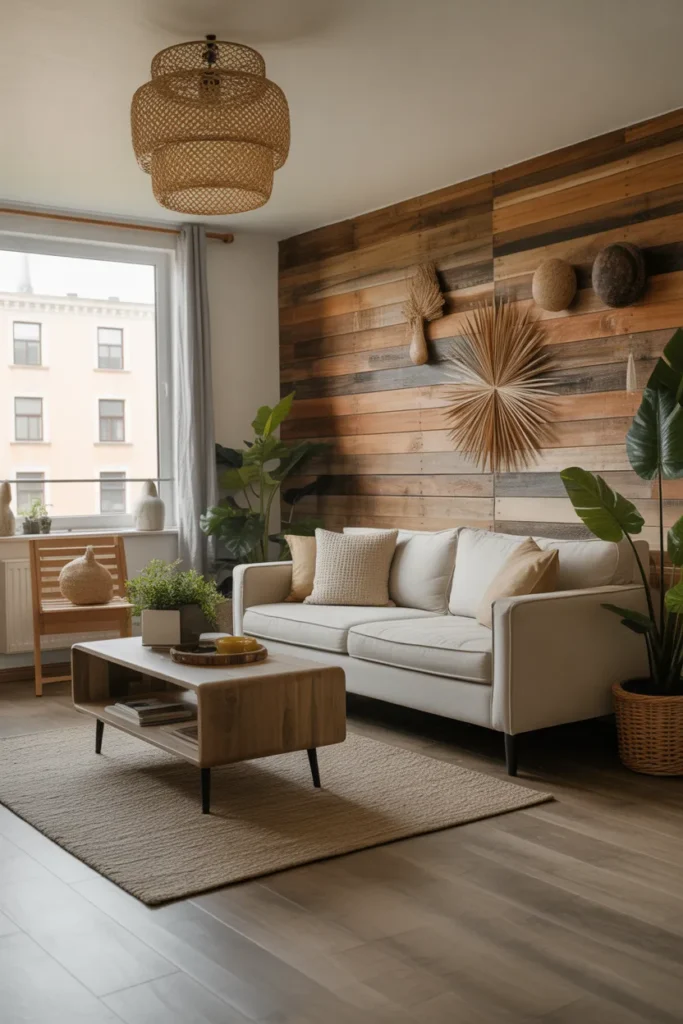
- Adds character through natural materials.
- Creates a strong focal point.
- Introduces texture without clutter.
- Enhances warmth and visual depth.
- Makes the room feel more personalized.
Reclaimed wood introduces authenticity and texture that instantly enhances a compact living room. Whether used as an accent wall, shelving detail, or decorative panel, the weathered material brings natural character that newer finishes often lack. The unique grain patterns and imperfections add depth while supporting an organic design aesthetic. This approach works especially well in apartments because it creates visual impact without requiring additional furniture. The result is a space that feels warm, grounded, and rich in personality.
I’ve noticed that reclaimed materials often make interiors feel more meaningful because they carry a sense of history and craftsmanship. Combined with greenery and neutral furnishings, the wood creates balance while adding visual warmth. The texture catches light beautifully and helps soften modern apartment architecture. The finished living room feels inviting, timeless, and deeply connected to natural elements.
16. River Stone Display
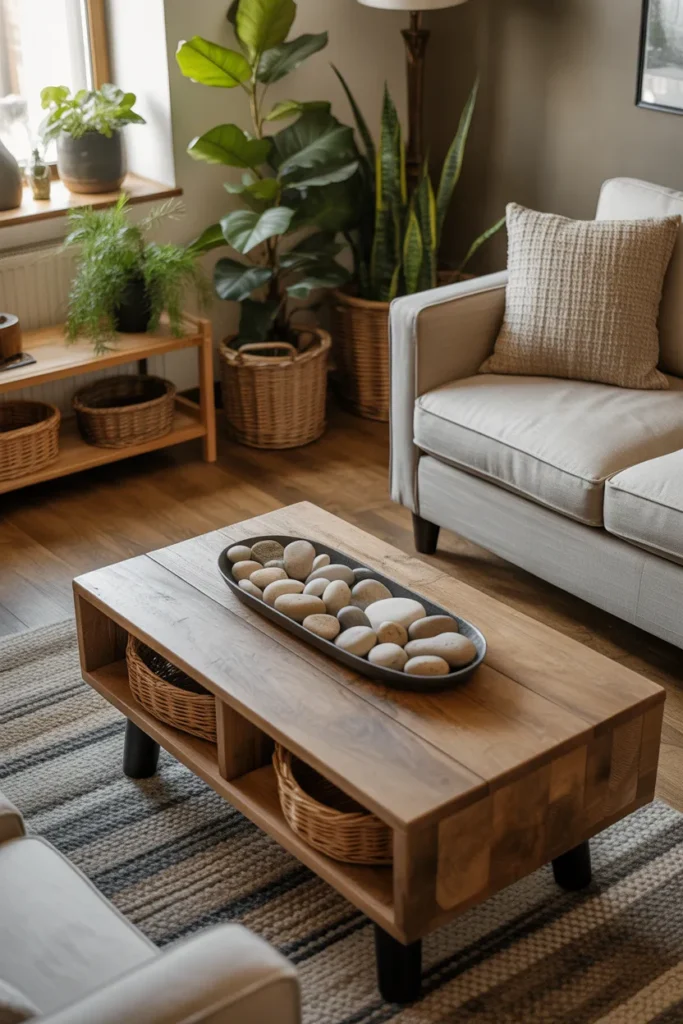
- Introduces natural texture and visual contrast.
- Adds organic detail without taking up space.
- Creates a calming focal point on surfaces.
- Complements wood and plant elements.
- Enhances the overall nature-inspired aesthetic.
One of the simplest ways to strengthen a nature-inspired living room is through carefully chosen natural accessories. A river stone display introduces organic texture and subtle visual interest while helping the room feel more connected to outdoor landscapes. Smooth stones arranged in decorative bowls, trays, or sculptural displays create an understated focal point that feels intentional and calming. This idea works especially well in smaller apartments because it adds character without consuming valuable floor space. The natural forms provide contrast against structured furniture, making the room feel softer and more visually balanced throughout.
In my experience, small organic details often have a surprisingly large impact on how a room feels. I’ve noticed that natural stone elements introduce a sense of permanence and calm that artificial accessories rarely achieve. Combined with greenery, wood furniture, and soft textiles, river stones help establish a layered environment inspired by natural landscapes. The textures create visual depth while maintaining a clean and uncluttered appearance. The result is a living room that feels grounded, peaceful, and thoughtfully designed around the principles of nature and simplicity.
17. Corner Jungle Cluster
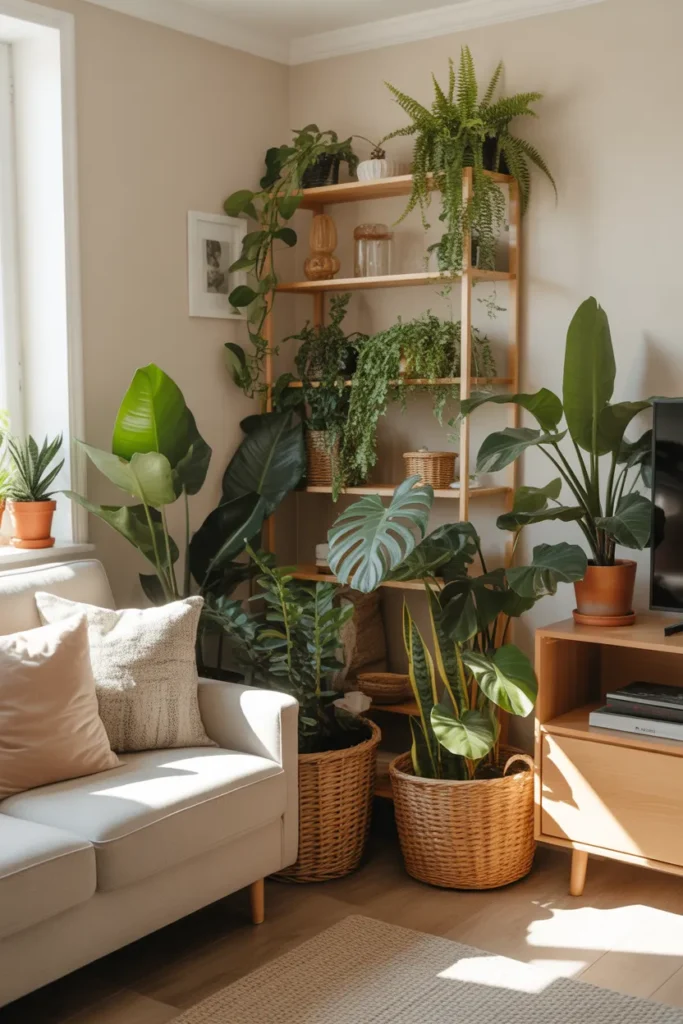
- Maximizes an unused corner.
- Creates a dramatic natural focal point.
- Adds depth and visual layering.
- Makes the room feel more vibrant.
- Enhances the connection to greenery.
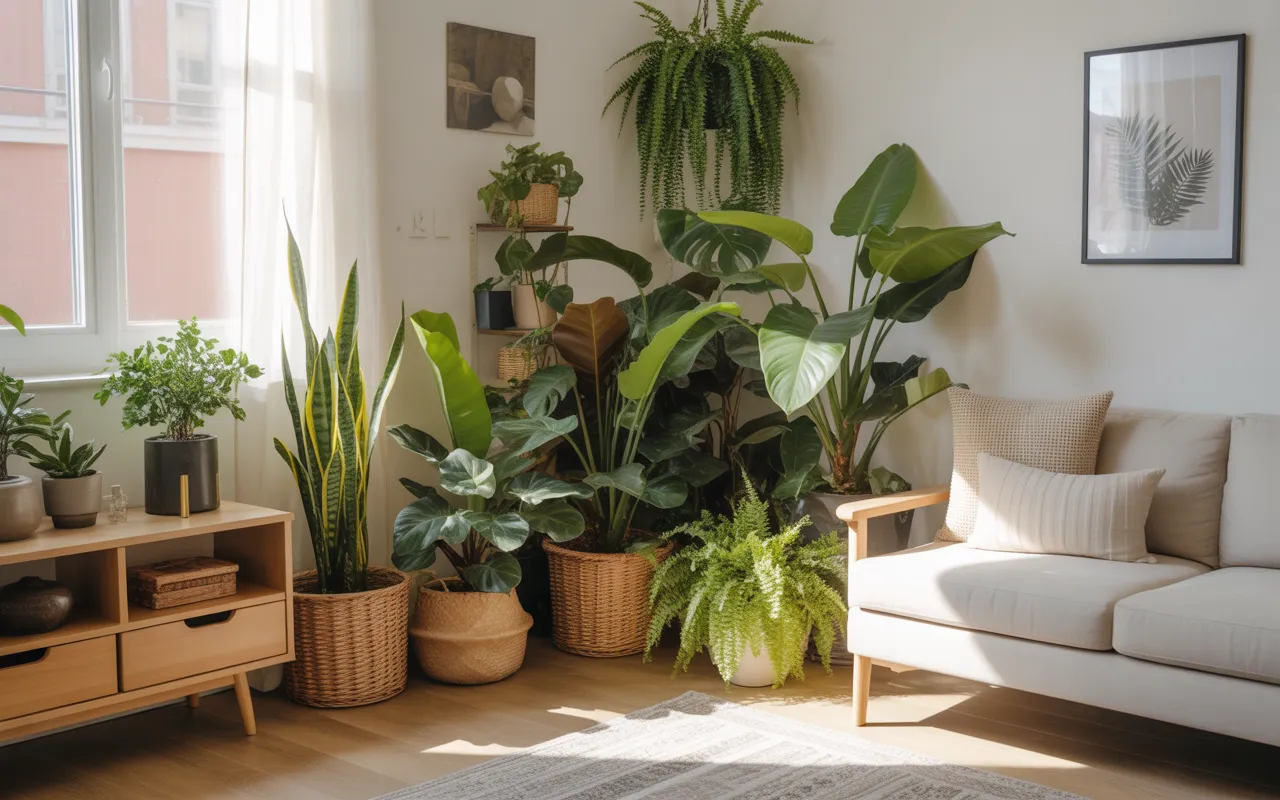
Transforming an empty corner into a dense plant cluster is an effective way to bring life and personality into a small apartment living room. By grouping plants of different heights, leaf shapes, and textures together, the arrangement creates visual richness that instantly draws attention. The layered greenery helps soften hard architectural lines while introducing movement and natural color throughout the room. This strategy works particularly well in apartments because it concentrates plants in one location, making maintenance easier while delivering a strong visual impact. The result is a lively, refreshing feature that feels both decorative and organic.
I’ve seen this work well in many homes because grouped plants often create more impact than spreading greenery evenly throughout a room. The varying heights mimic natural landscapes and help the arrangement feel intentional rather than random. Large leafy plants provide structure while trailing varieties add softness and movement. Combined with woven baskets and natural materials, the cluster becomes a beautiful focal point that transforms an overlooked corner into one of the most attractive areas of the living room.
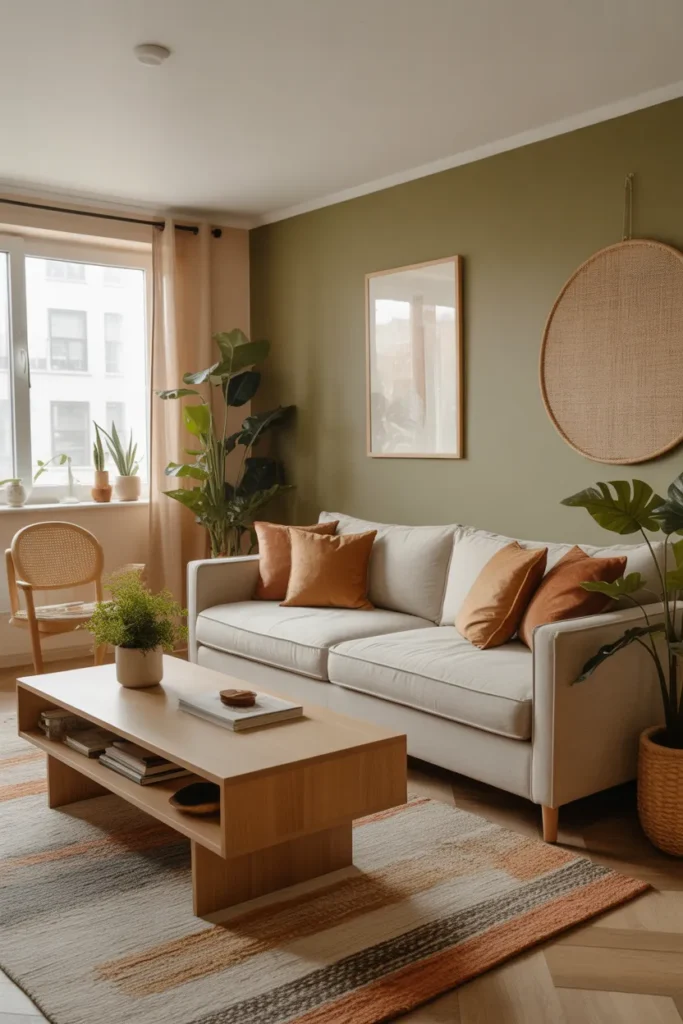
18. Earth Tone Palette
- Creates visual harmony and warmth.
- Strengthens the natural atmosphere.
- Works beautifully in small spaces.
- Makes greenery stand out more.
- Supports a calm and relaxing mood.
An earth-tone color palette provides the perfect foundation for a nature-inspired apartment living room. Shades of olive, terracotta, beige, sand, and warm brown create a cohesive environment that feels calming and grounded. These colors reflect natural landscapes, helping the room feel connected to the outdoors even in an urban apartment setting. The palette also allows greenery to stand out while maintaining overall visual balance. This design approach works especially well in compact spaces because the colors create warmth without making the room feel crowded or visually overwhelming.
I’ve noticed that earth-inspired colors tend to age beautifully because they feel timeless and versatile. They pair effortlessly with wood, stone, linen, and living plants, creating harmony across different materials and textures. When layered thoughtfully, these shades add depth without requiring bold patterns or excessive decoration. The result is a living room that feels serene, welcoming, and deeply connected to nature while remaining stylish and highly functional for everyday living.
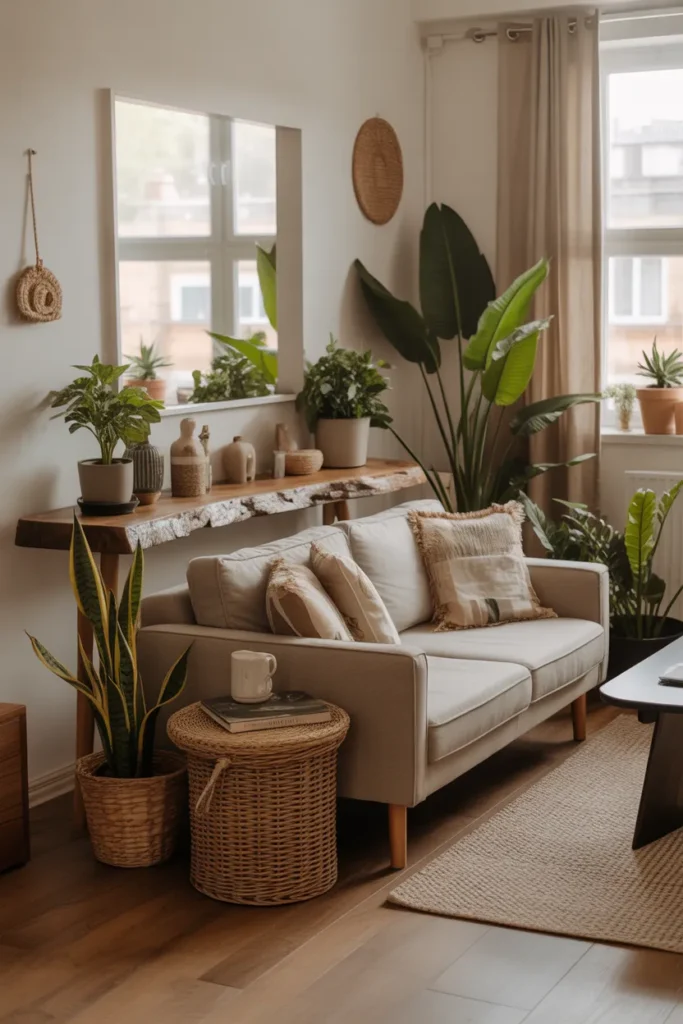
19. Live Edge Console
- Introduces organic shapes and textures.
- Creates a natural focal point.
- Adds functional display space.
- Enhances warmth without clutter.
- Complements greenery and earthy decor.
A live-edge console table brings natural beauty into a living room through its unique shape and visible wood grain. Unlike perfectly manufactured furniture, the organic edges celebrate the natural form of the tree, creating a stronger connection to nature. In a small apartment, this type of furniture adds character without requiring excessive decoration because the material itself becomes the focal point. The console can display plants, books, and decorative objects while helping organize the room. The result is a space that feels warmer, more authentic, and visually connected to natural environments.
In my experience, furniture with organic forms often creates a stronger emotional connection than highly polished modern pieces. I’ve noticed that live-edge wood introduces texture and movement that instantly softens compact interiors. Combined with greenery, woven materials, and soft textiles, the natural shape helps the room feel more relaxed and inviting. The finished living room feels thoughtfully designed, comfortable, and inspired by the beauty of natural landscapes rather than purely manufactured forms.
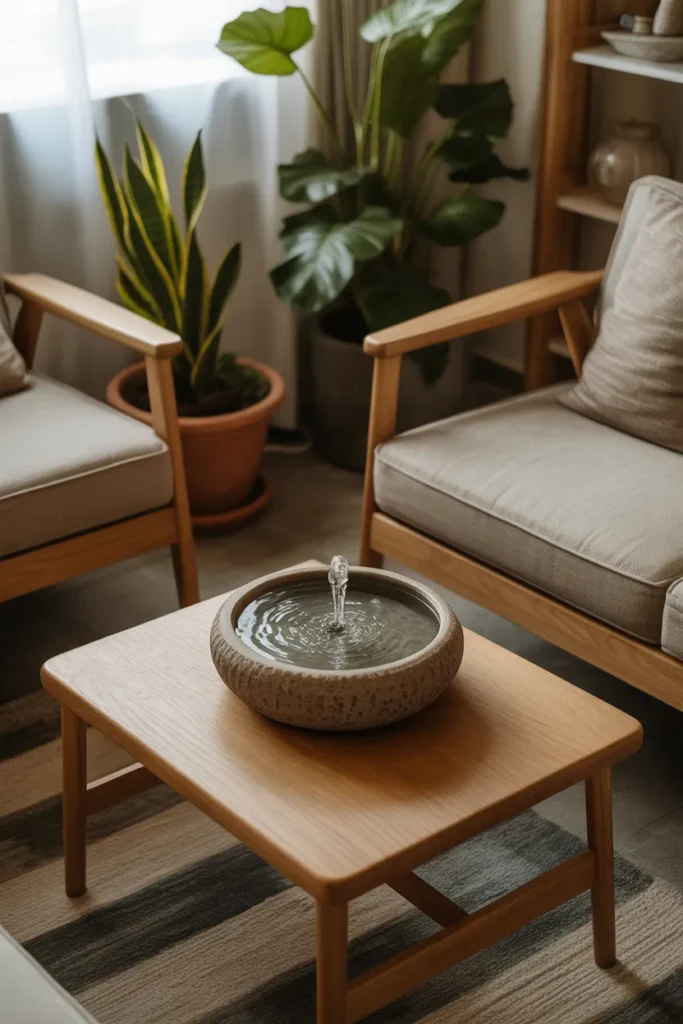
20. Indoor Water Feature
- Introduces soothing natural sounds.
- Enhances the sensory experience.
- Creates a relaxing atmosphere.
- Strengthens the connection to nature.
- Adds visual movement to the room.
A small indoor water feature introduces another layer of nature-inspired design by engaging more than just the visual senses. The gentle sound of flowing water creates a calming atmosphere that helps reduce the feeling of urban noise often present in apartment living. Compact tabletop fountains work particularly well because they provide sensory benefits without requiring significant space. The movement of water adds life and energy to the room while complementing surrounding plants and natural materials. The result is a living room that feels peaceful, restorative, and more connected to outdoor environments.
I’ve seen this work well in many homes because sound plays a major role in how comfortable a space feels. The subtle movement and soft water sounds create a relaxing backdrop that enhances the overall ambiance. Combined with greenery, stone accents, and warm natural textures, the feature contributes to a multi-sensory environment. The finished room feels tranquil, balanced, and intentionally designed to support relaxation and well-being.
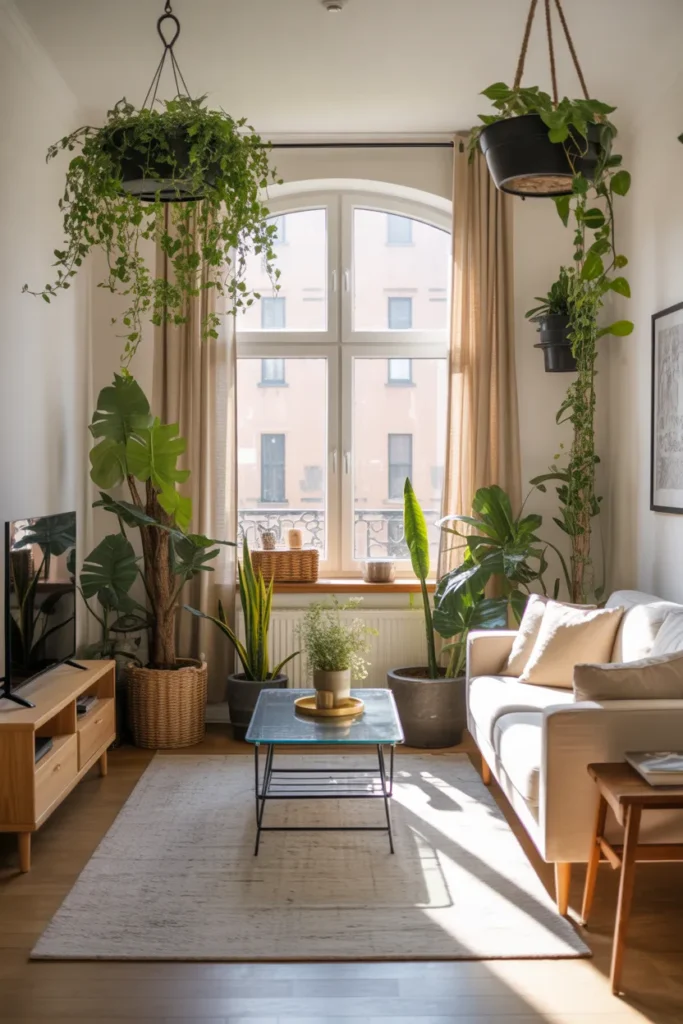
21. Floor To Ceiling Greens
- Maximizes greenery in a compact footprint.
- Creates dramatic visual impact.
- Adds depth and vertical interest.
- Makes the room feel more immersive.
- Strengthens the nature-inspired atmosphere.
Using greenery at multiple heights creates one of the most effective biophilic designs for a small apartment. Tall indoor trees, hanging planters, wall-mounted displays, and tabletop plants work together to create a layered environment that feels immersive and dynamic. This strategy draws the eye throughout the room and makes the space feel larger than it actually is. The combination of heights mimics the structure of natural landscapes, helping the living room feel more organic and visually engaging. The result is a compact space filled with life, movement, and natural beauty.
I’ve noticed that vertical layering often makes a stronger impression than simply adding more plants. Different heights create rhythm and visual flow while helping each plant stand out individually. When paired with natural materials and an earthy color palette, the layered greenery transforms the room into a refreshing retreat. The finished living area feels vibrant, calming, and beautifully connected to the natural world.
22. Natural Light Maximizer
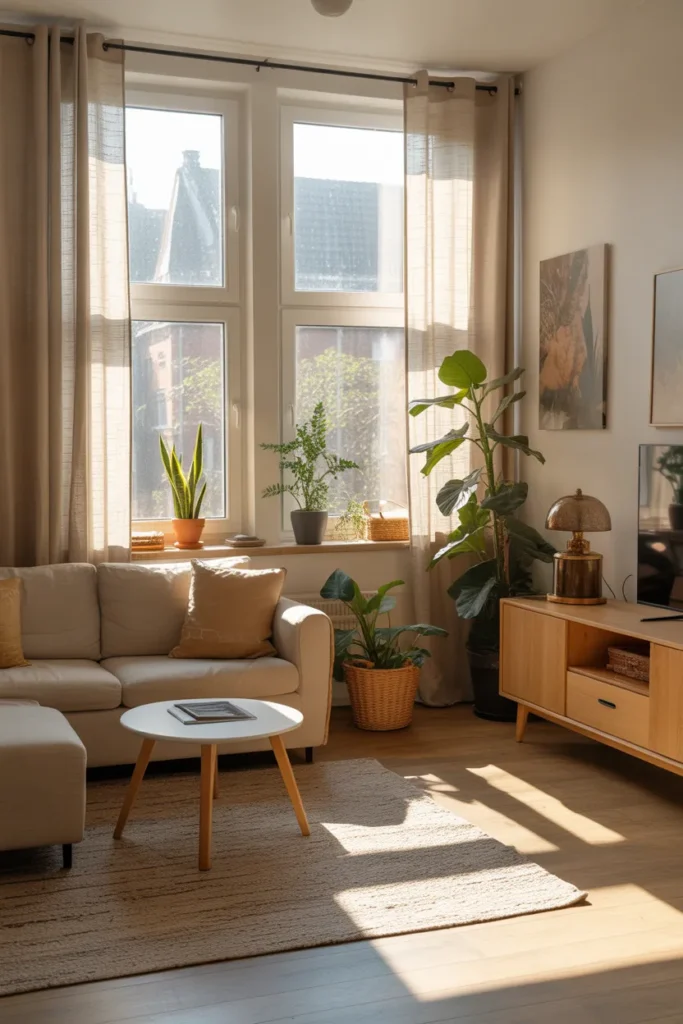
- Makes the room feel larger and brighter.
- Supports healthy plant growth.
- Enhances natural materials beautifully.
- Reduces the need for heavy decor.
- Creates a fresh and uplifting atmosphere.
Natural light is one of the most valuable design elements in a compact apartment, especially when creating a nature-inspired living space. Maximizing sunlight helps greenery thrive while making the room feel larger, brighter, and more welcoming. Positioning furniture thoughtfully and using sheer window treatments allows daylight to flow freely throughout the space. This approach strengthens the connection between indoor and outdoor environments while highlighting natural materials such as wood, stone, and linen. The result is a living room that feels open, refreshing, and filled with positive energy throughout the day.
In my experience, rooms with abundant natural light require fewer decorative additions because sunlight itself enhances textures, colors, and materials. I’ve noticed that plants appear healthier and more vibrant when placed near bright windows, which further strengthens the room’s organic atmosphere. Combined with light-reflecting surfaces and neutral tones, natural light creates depth and openness. The finished space feels calm, airy, and perfectly suited for everyday living in a small apartment.
23. Organic Shape Furniture
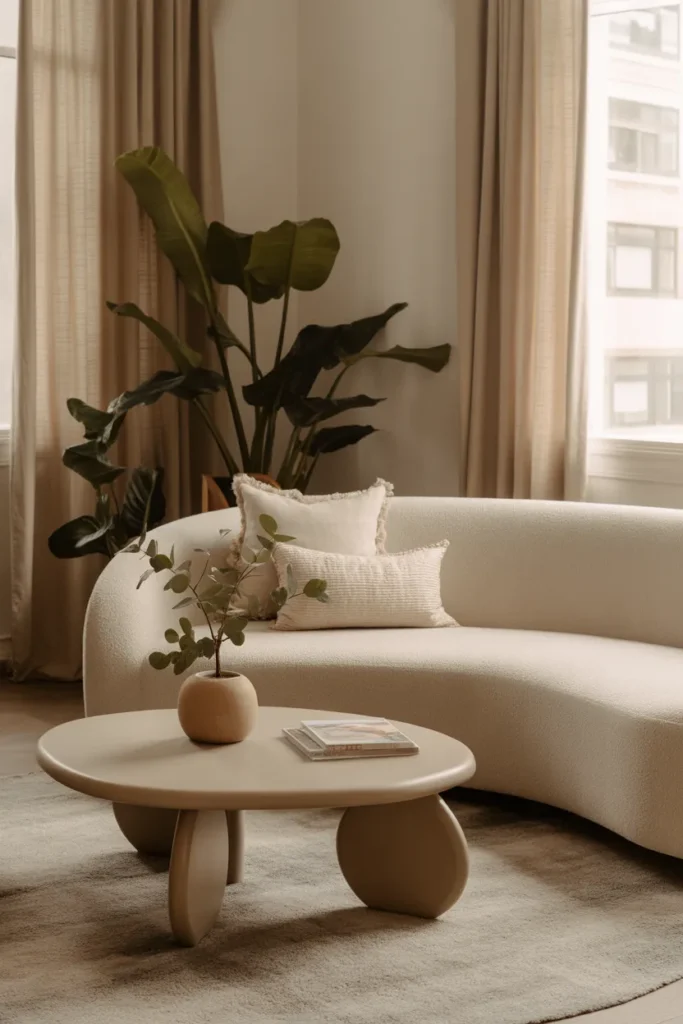
- Softens hard architectural lines.
- Creates a more relaxed atmosphere.
- Enhances visual flow throughout the room.
- Mimics forms found in nature.
- Makes compact spaces feel welcoming.
Furniture with curved and organic silhouettes helps reinforce a nature-inspired aesthetic by introducing forms commonly found in landscapes and natural environments. Rounded coffee tables, curved sofas, and soft-edged decor create visual flow while reducing the rigid appearance often associated with apartment interiors. This design approach helps compact spaces feel more comfortable and inviting because the softer lines encourage movement and openness. The result is a living room that feels harmonious, balanced, and naturally connected to its surroundings without requiring major renovations.
I’ve seen this work well in many homes because curved furniture creates a sense of ease that straight lines sometimes lack. Organic forms pair beautifully with greenery, woven materials, and natural textures, helping the entire room feel cohesive. The softer shapes also improve circulation in smaller layouts by reducing visual heaviness. The finished living room feels elegant, approachable, and inspired by the natural world.
24. Layered Nature Nook
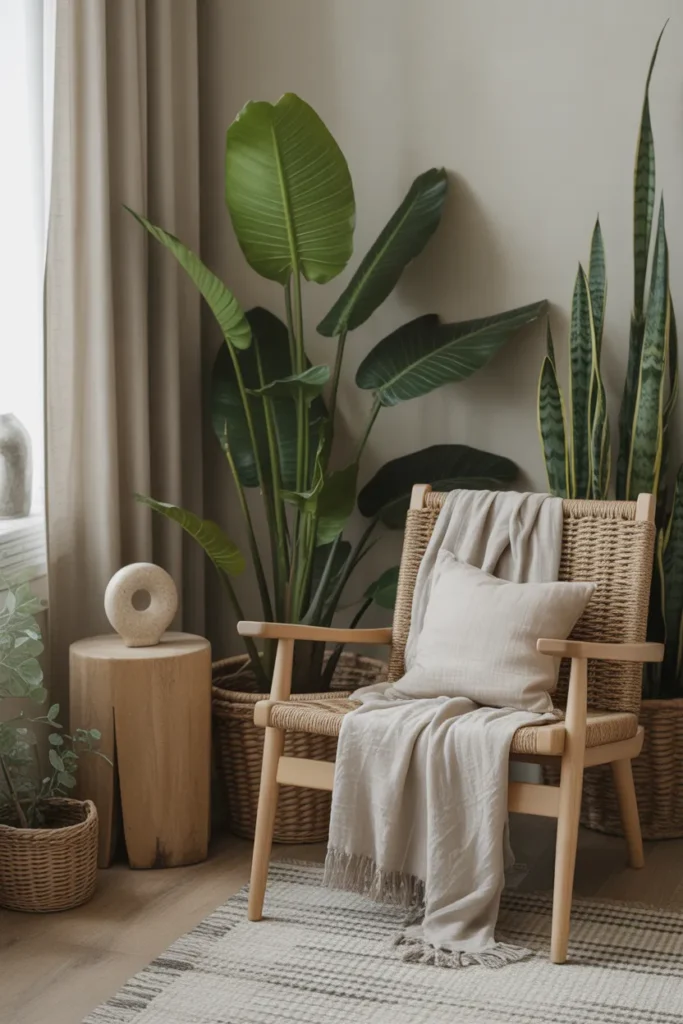
- Creates a dedicated relaxation zone.
- Combines multiple natural elements.
- Maximizes unused corners effectively.
- Adds warmth and visual depth.
- Encourages daily moments of calm.
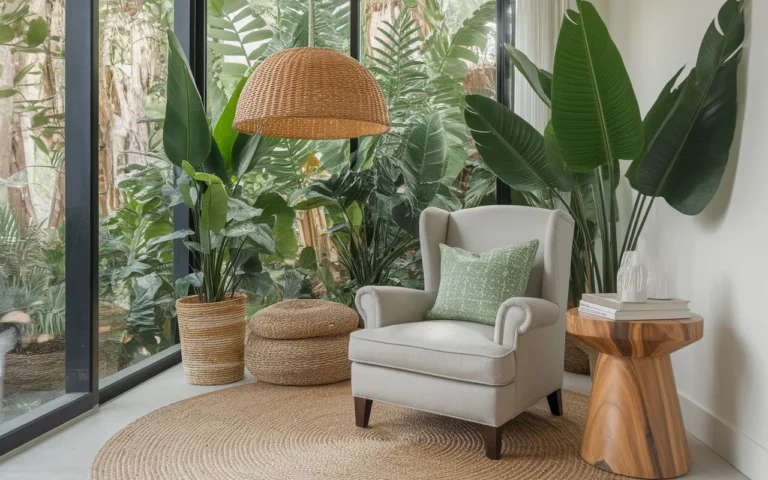
A layered nature nook brings together several biophilic elements into one carefully designed corner, creating a personal retreat within a small apartment. Combining plants, natural materials, soft textiles, and warm lighting establishes a space that feels comfortable and restorative. This idea works particularly well in compact homes because it transforms underused areas into purposeful destinations. The layered textures and greenery add depth while encouraging a stronger connection to nature. The result is a cozy corner that supports relaxation, reading, reflection, or simply enjoying a peaceful moment at home.
I’ve noticed that even a small dedicated retreat can completely change how a living room feels and functions. Bringing together plants, wood, stone, and woven textures creates a multi-layered environment that feels rich without being crowded. The combination of comfort and natural beauty encourages people to spend more time enjoying their surroundings. The finished nook feels calming, personal, and perfectly aligned with the principles of biophilic design.
Conclusion
Creating a nature-inspired living room doesn’t require a large home or an expensive renovation. Small changes such as adding plants, maximizing natural light, introducing organic materials, and layering natural textures can completely transform how your space looks and feels. The ideas shared throughout this article prove that even compact apartments can become calming retreats filled with warmth and character.
I’ve seen how thoughtful updates inspired by biophilic living room ideas for small apartments can make a home feel more spacious, welcoming, and connected to nature. Save your favorite ideas on Pinterest, try a few in your own space, and share this article with anyone looking to create a healthier and more beautiful living environment. Small natural touches can lead to a surprisingly big transformation.