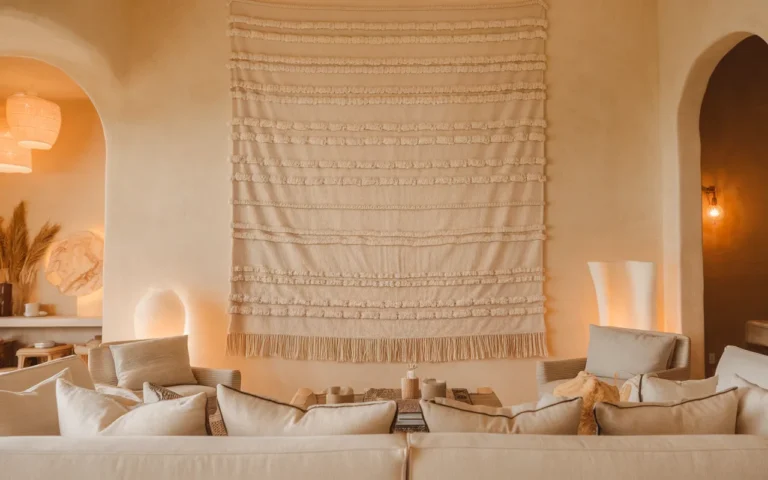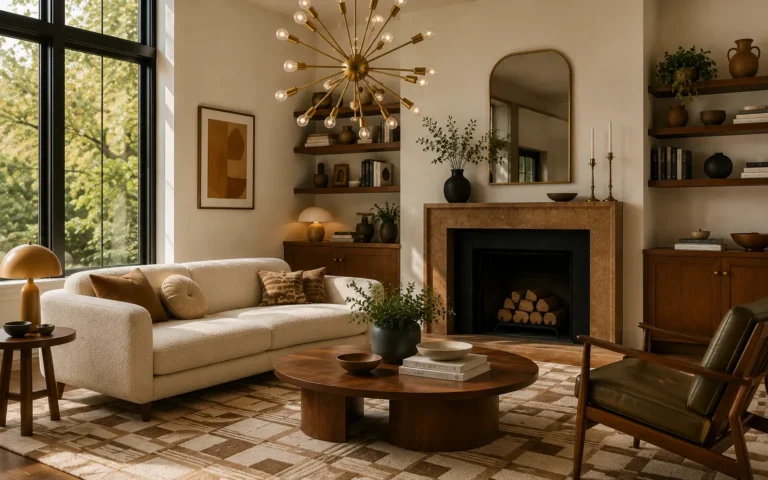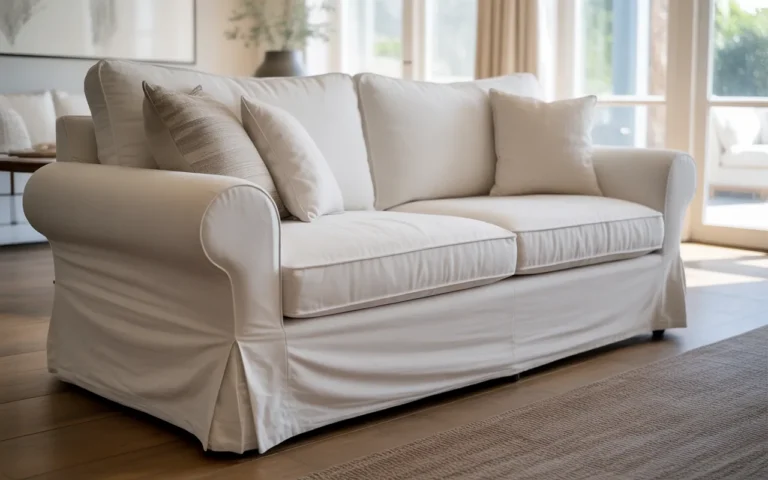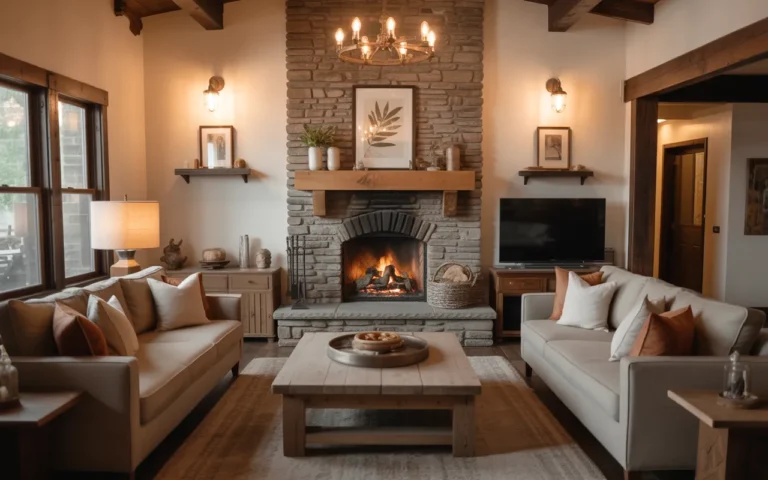
23 Sage Green Living Room Ideas That Feel Fresh and Elegant
Dreaming of a living room that feels calm, elegant, and effortlessly stylish? These sage green living room ideas might be exactly the inspiration you need.
Sage green has become one of the most loved interior colors because it brings together the freshness of nature and the sophistication of timeless design. Whether your space feels too plain, lacks warmth, or simply needs a refreshing update, the right shade of green can completely transform the atmosphere. In this collection, you’ll find beautiful ways to incorporate soft green tones through furniture, textures, architectural details, and decor accents.
In my experience, sage green works especially well because it feels both relaxing and versatile. I’ve noticed that even small touches of this color can make a room feel more balanced and welcoming. These ideas are designed to help you create a space that feels brighter, more inviting, and visually cohesive while remaining practical for everyday living. Get ready to discover inspiring designs worth saving for your next home refresh.
1. Soft Sage Walls
- Creates a calm and welcoming atmosphere
- Makes the room feel brighter and more spacious
- Pairs beautifully with neutral furniture
- Adds color without overwhelming the space
- Works in both modern and traditional interiors
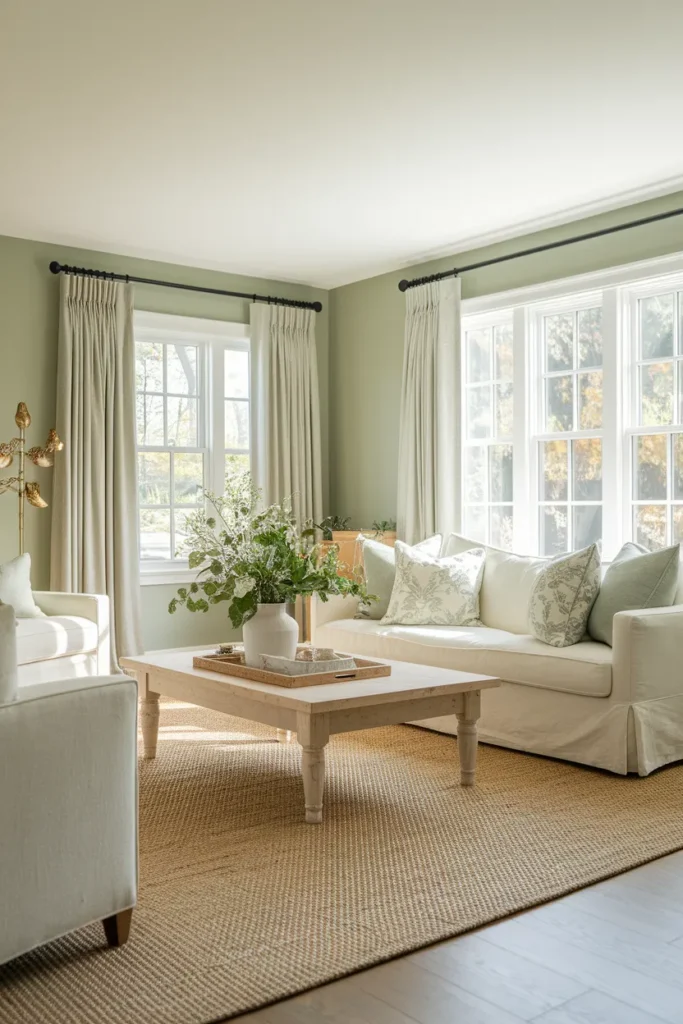
A fresh wall color can completely change how a living room feels the moment you walk inside. Soft sage tones bring a gentle balance between color and neutrality, creating a space that feels calm without looking plain. This shade reflects natural light beautifully throughout the day, helping the room feel open and inviting. Many homeowners love it because it offers subtle character while remaining easy to decorate around. It also serves as a versatile backdrop for artwork, textured fabrics, and decorative accents that may change with the seasons.
One reason this approach remains popular is its flexibility across different design styles. Whether your furniture leans modern, farmhouse, coastal, or transitional, this muted green blends effortlessly into the overall palette. In my experience, softer green walls often make everyday spaces feel more relaxing after a busy day. The color has enough personality to feel intentional while remaining understated and timeless. Combined with layered textures and natural materials, it creates an elegant environment that feels fresh year after year without requiring major design updates.
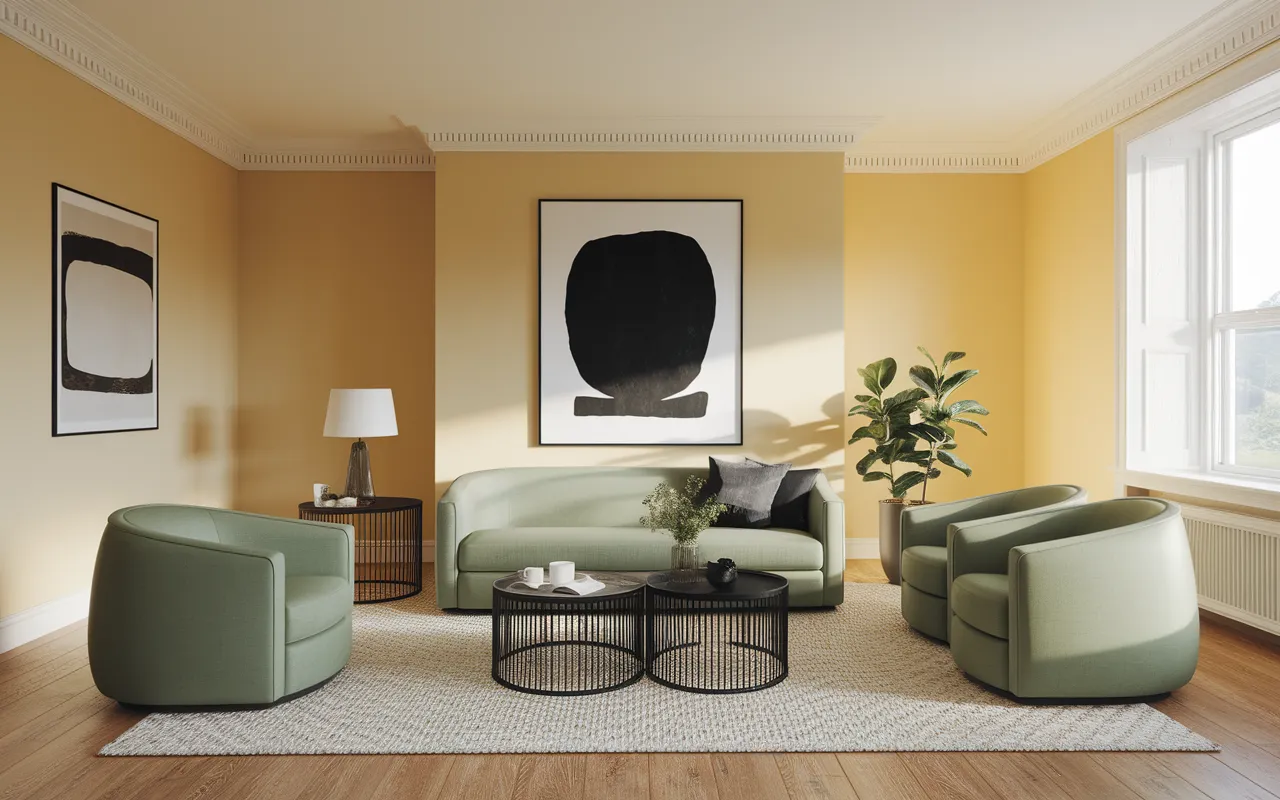
2. Velvet Sage Sofa
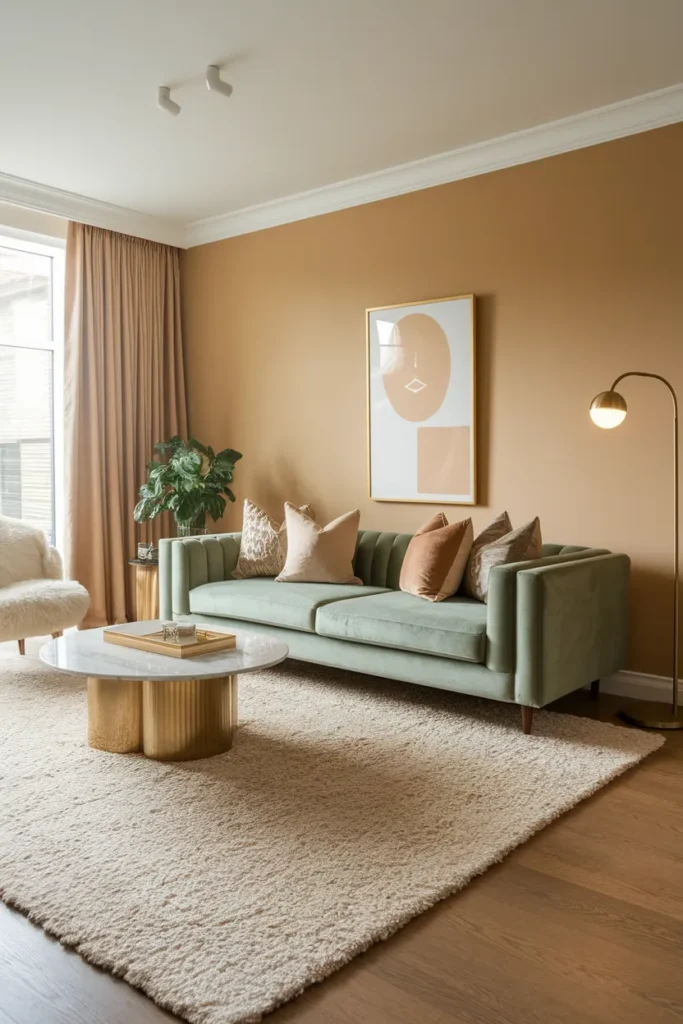
- Becomes an instant focal point
- Adds rich texture and depth
- Introduces color without repainting walls
- Feels luxurious yet comfortable
- Works well with gold and wood accents
Nothing captures attention faster than a beautifully upholstered sofa in a rich green tone. A velvet version introduces texture, color, and elegance all at once, making it a standout feature without feeling overpowering. The soft sheen of velvet changes subtly depending on the lighting, adding visual interest throughout the day. This type of statement furniture can elevate even a simple room layout. When paired with neutral surroundings, the sofa becomes the centerpiece while still maintaining a calm and sophisticated overall appearance.
Many designers favor colored seating because it offers personality without requiring permanent changes to the room. That’s why many designers recommend investing in one standout furniture piece rather than filling the space with numerous decorative accents. A sage-toned sofa pairs beautifully with cream textiles, warm woods, and brushed metal finishes. I’ve noticed that homeowners often find this option easier to style than brighter greens because the muted tone feels balanced and versatile. The result is a living space that feels curated, comfortable, and effortlessly elegant.
3. Botanical Gallery Wall
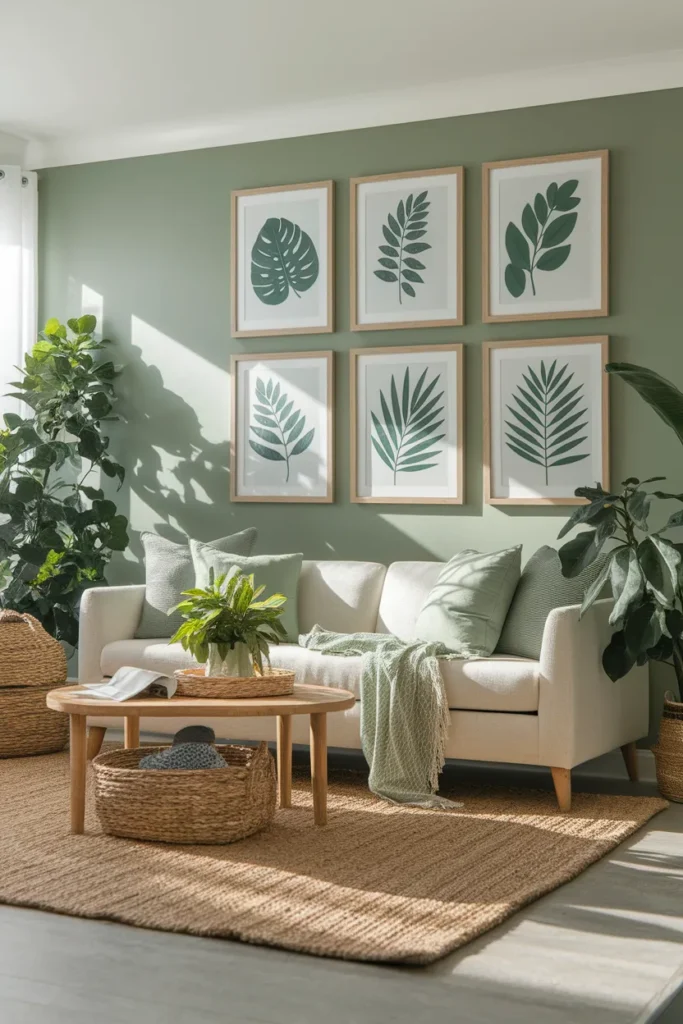
- Adds visual interest without clutter
- Reinforces a nature-inspired theme
- Creates a custom designer look
- Helps fill large empty walls beautifully
- Easy to personalize with different artwork
A thoughtfully arranged gallery wall can make a living room feel finished and intentionally designed. Botanical artwork works especially well because it echoes the natural qualities often associated with green interiors. Framed leaf prints, vintage plant sketches, and nature photography create visual movement while maintaining a calm aesthetic. The layered collection adds personality without overwhelming the room. This approach works particularly well for renters or homeowners who want a meaningful design update without committing to major renovations or expensive furniture replacements.
One of the biggest advantages of this idea is how easily it can evolve over time. Artwork can be rearranged, expanded, or refreshed whenever you want a new look. I’ve seen this work well in many homes because it allows homeowners to express personal style while maintaining a cohesive design direction. Combining botanical prints with natural wood frames creates warmth and texture that complement green-inspired interiors beautifully. The finished arrangement often feels collected rather than purchased all at once, giving the room a more authentic and welcoming appearance.
4. Cream And Sage Palette
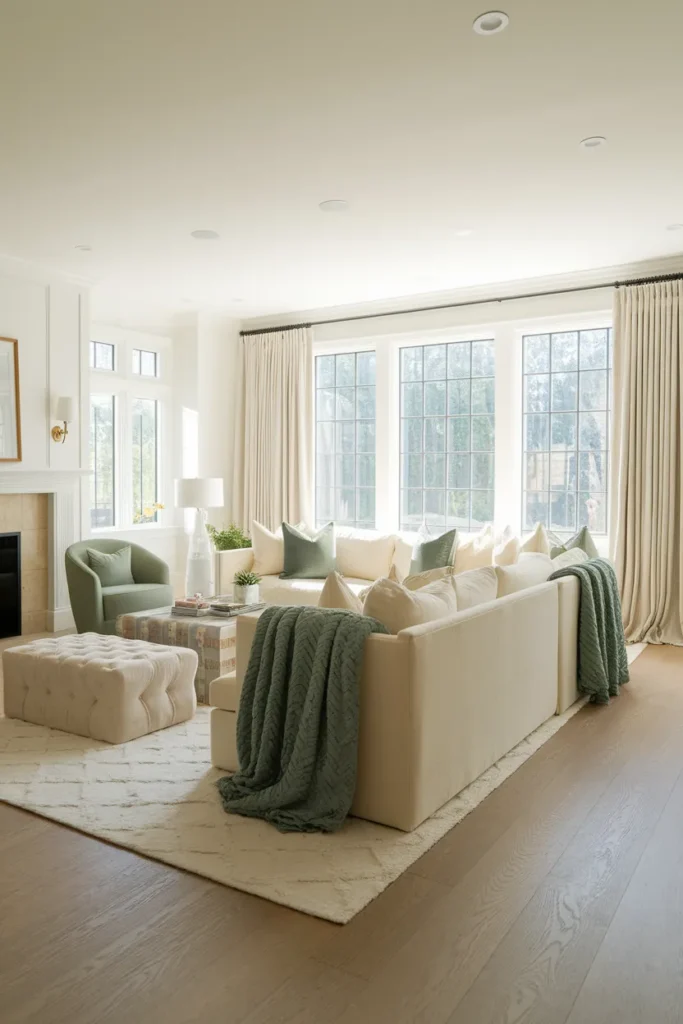
- Creates a bright and timeless appearance
- Makes green tones feel softer and lighter
- Helps small rooms feel more spacious
- Offers flexibility for seasonal decorating
- Enhances natural light beautifully
Some color combinations never seem to go out of style, and cream paired with muted green is one of them. The contrast feels gentle rather than dramatic, creating a room that looks polished without appearing overly designed. Cream surfaces help reflect light around the space while green accents add enough color to prevent the room from feeling flat. This balance works particularly well in living areas that need warmth and brightness at the same time. The result is an inviting environment that feels elegant throughout every season.
The beauty of this palette lies in its versatility across furniture styles and decorative preferences. Whether you enjoy modern pieces, vintage finds, or classic designs, these colors create a harmonious foundation. In my experience, rooms built around soft neutrals and muted greens remain visually appealing longer because they avoid trend-driven extremes. Decorative accessories can easily be swapped throughout the year without disrupting the overall look. This creates a refined living area that feels fresh, cohesive, and comfortable for everyday living.
5. Natural Wood Accents
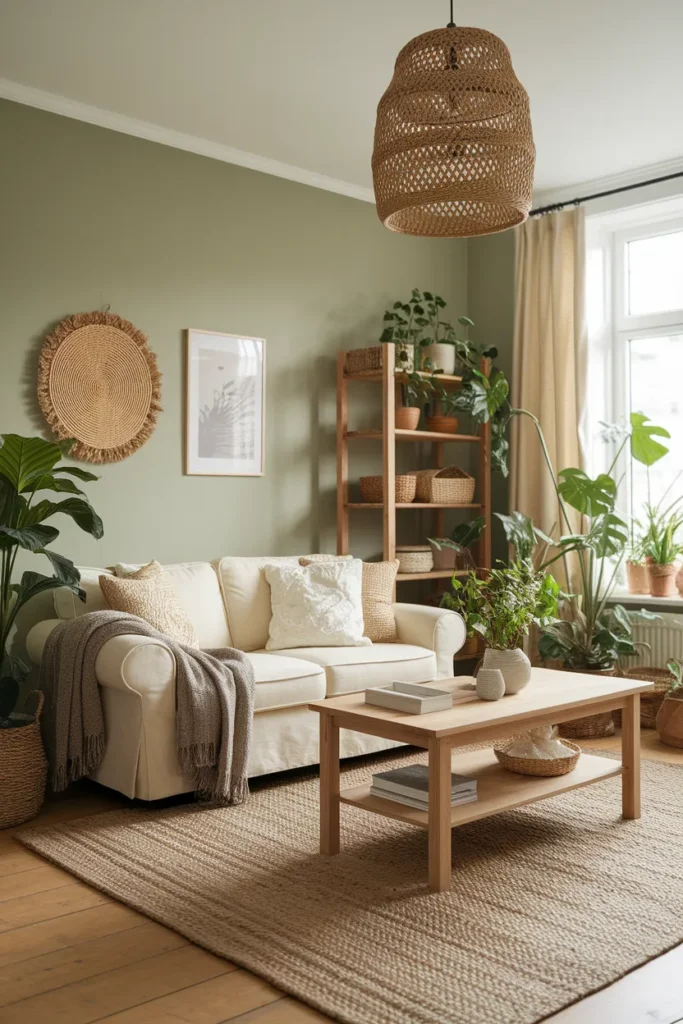
- Adds warmth to cooler green tones
- Creates an organic and grounded feel
- Enhances visual texture naturally
- Works with multiple decorating styles
- Helps the space feel more inviting
Natural wood has a unique ability to make any room feel more comfortable and welcoming. When combined with green tones, it reinforces the connection to nature and creates an environment that feels balanced and calming. Oak, walnut, and ash finishes each bring a slightly different personality while maintaining the same organic appeal. Wood furniture, shelving, and decorative pieces help soften the appearance of painted walls and upholstered furnishings. This combination creates depth without relying on bold colors or excessive decoration.
Many homeowners struggle with making a room feel cozy without introducing visual clutter. That’s where natural materials often make the biggest difference. I’ve noticed that even a few carefully chosen wooden elements can add warmth and authenticity to a space. Coffee tables, sideboards, floating shelves, and picture frames all contribute to a layered look. These pieces age beautifully over time and continue to complement evolving design preferences. The overall effect feels sophisticated, relaxed, and closely connected to the natural world.
6. Brass Decor Details
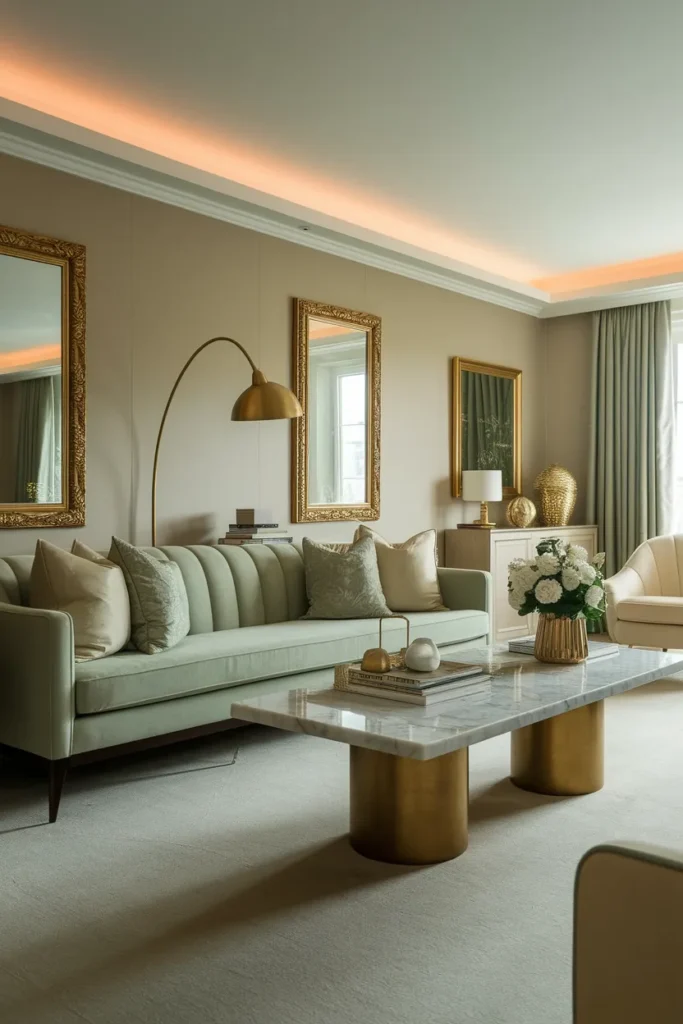
- Introduces subtle luxury without excess
- Reflects light and brightens the room
- Complements muted green beautifully
- Creates visual contrast with soft colors
- Adds a refined designer-inspired touch
Small decorative details often have a surprisingly large impact on the finished appearance of a living room. Brass accents bring warmth and elegance while helping muted green tones feel richer and more sophisticated. Floor lamps, mirror frames, hardware, and decorative trays can introduce metallic elements without overwhelming the space. The reflective surface catches natural and artificial light, creating subtle highlights throughout the room. This simple addition can make a living area feel more polished and thoughtfully designed.
That’s why many designers recommend incorporating warm metallic finishes when working with earthy color palettes. Brass pairs naturally with green because both colors feel connected to traditional and organic design influences. I’ve seen this combination work especially well in spaces that need a touch of sophistication without becoming formal. Even a few carefully selected metallic accessories can elevate the overall aesthetic. The room feels balanced, elegant, and visually layered while maintaining the relaxed atmosphere homeowners often want in everyday living spaces.
7. Layered Linen Textures
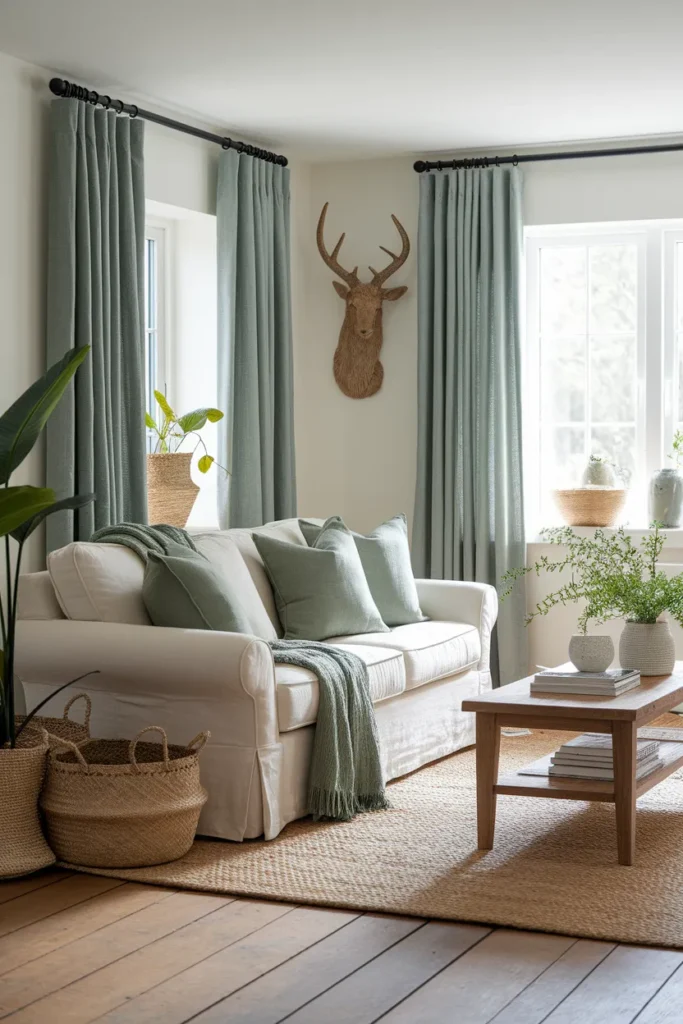
- Adds softness without visual clutter
- Creates depth using subtle texture
- Enhances comfort and warmth
- Supports a relaxed, elegant aesthetic
- Works beautifully in every season
The quickest way to make a living room feel more inviting is often through texture rather than additional color. Layered linen fabrics introduce softness that immediately makes the space feel more comfortable and lived in. Curtains, pillow covers, throws, and upholstered furniture create visual depth while maintaining a calm palette. The slightly relaxed appearance of linen prevents the room from feeling too formal or overly styled. This approach helps create a balanced environment where elegance and comfort exist together naturally.
Many homeowners focus entirely on furniture and wall colors while overlooking the importance of fabric choices. In my experience, layered textiles often make the biggest difference in how a room feels day to day. Linen works especially well because it complements muted green tones without competing for attention. The natural texture catches light differently throughout the room, adding dimension without requiring bold patterns. The result is a sophisticated space that feels warm, welcoming, and effortlessly beautiful from every angle.
8. Sage Built-In Shelving
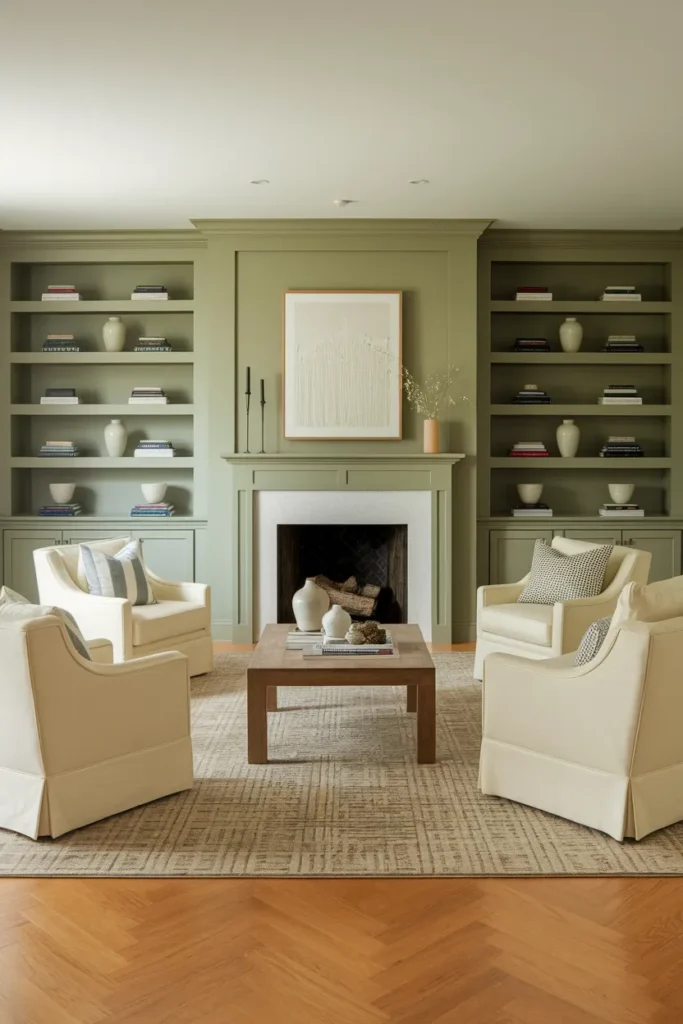
- Creates a striking architectural feature
- Adds storage while enhancing style
- Highlights decorative accessories beautifully
- Brings color into the room elegantly
- Makes the space feel custom designed
Built-in shelving instantly gives a living room a more intentional and high-end appearance. Painting these shelves in a muted green shade transforms them from simple storage into a standout design feature. The color creates contrast against books, artwork, ceramics, and decorative objects, helping each item feel more curated. This approach introduces visual interest without relying on excessive decoration. It also provides an opportunity to incorporate color in a way that feels integrated into the room’s architecture.
One reason this idea remains popular is its balance of beauty and functionality. Shelving serves a practical purpose while contributing significantly to the room’s overall style. I’ve noticed that colored built-ins often make a living room feel more customized and thoughtfully planned. Decorative pieces appear more intentional when displayed against a soft green backdrop. Combined with neutral furnishings and warm materials, the shelves become a sophisticated focal point that enhances both organization and visual appeal throughout the entire space.
9. Marble Coffee Table
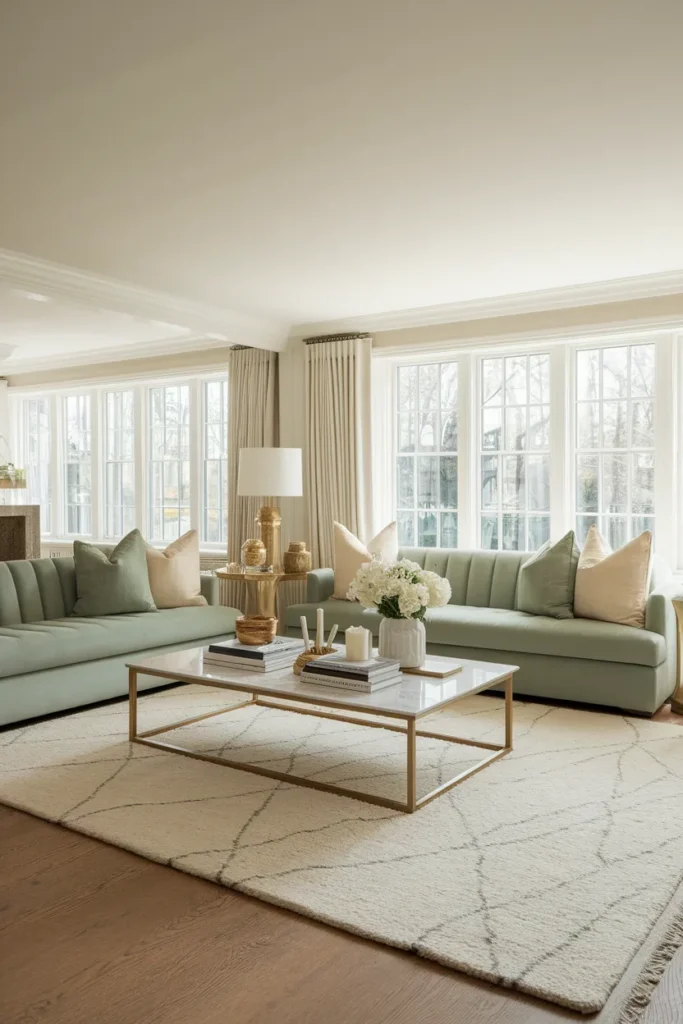
- Introduces a luxurious focal point
- Brightens the overall color palette
- Balances earthy green tones
- Adds visual contrast and sophistication
- Complements modern and classic interiors
A marble coffee table can instantly elevate the appearance of a living room while maintaining a clean and timeless look. The smooth surface contrasts beautifully with softer fabrics, textured rugs, and muted green furnishings. White marble especially helps reflect light, making the room feel brighter and more open. Even in smaller spaces, this material creates a sense of elegance without overwhelming the design. Its natural veining also introduces subtle pattern and movement that enhances visual interest.
That’s why many designers recommend combining organic colors with refined materials for a balanced aesthetic. Marble offers sophistication while green elements provide warmth and comfort, preventing the space from feeling cold or formal. I’ve seen this work well in many homes because it blends practicality with style. Whether paired with contemporary furniture or traditional pieces, the table creates a polished centerpiece that anchors the room beautifully. The overall effect feels fresh, elevated, and effortlessly timeless.
Related Article : 21 Vanity for Small Bedrooms That Make Every Inch Count
10. Olive And Sage Mix
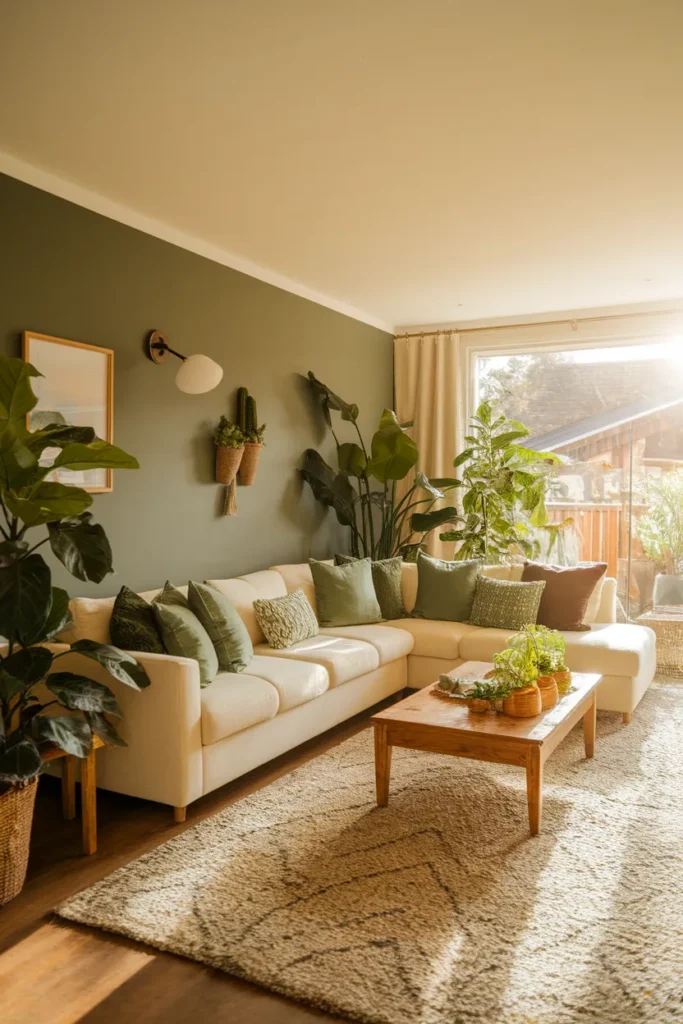
- Creates richer visual depth
- Prevents the room from looking one-dimensional
- Adds a designer-inspired layered palette
- Works well with natural materials
- Enhances the organic feel of the space
A single shade of green can look beautiful, but combining multiple tones often creates a more refined and professionally designed appearance. Pairing sage with deeper olive accents adds contrast while maintaining harmony throughout the room. Pillows, throws, artwork, and decorative accessories can introduce darker shades without overwhelming the overall palette. This layered approach creates visual movement and makes the space feel more dynamic. The combination feels sophisticated because it mirrors the variety of greens naturally found in outdoor environments.
Many professionally designed interiors rely on tonal layering rather than dramatic color contrasts. I’ve noticed that mixing related shades often creates a richer and more cohesive result than introducing completely different colors. Olive accents help anchor lighter green elements while adding warmth and depth. Combined with neutral furniture and natural textures, the room feels thoughtfully curated instead of overly coordinated. This technique allows homeowners to create a more dimensional and elegant living area without making the design feel complicated or busy.
11. Arched Wall Niches
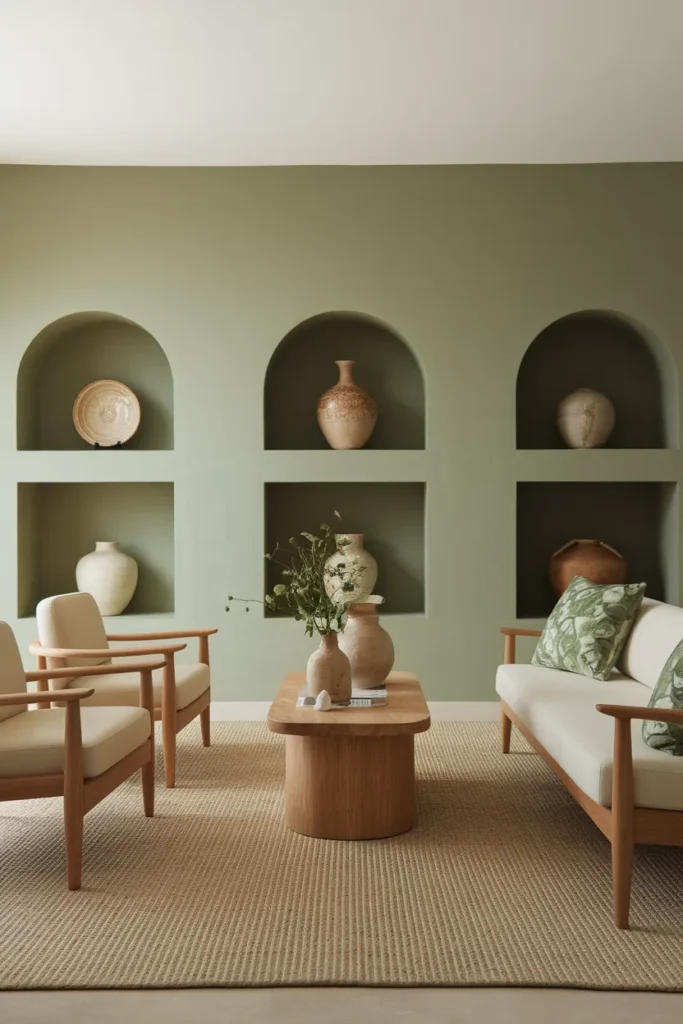
- Adds architectural interest
- Creates a custom high-end appearance
- Displays decor beautifully
- Softens straight room lines
- Introduces subtle character without clutter
Architectural details often make the biggest visual impact because they become part of the room itself. Arched wall niches introduce shape, depth, and personality while providing a beautiful place to display decorative objects. Painted in a soft green tone or surrounded by complementary colors, they become an elegant focal feature. The curved silhouette helps soften the sharp lines commonly found in furniture and modern interiors. This creates a more inviting atmosphere that feels unique and thoughtfully designed.
One reason homeowners love this feature is its ability to add character without requiring excessive decoration. That’s why many designers recommend incorporating architectural elements whenever possible. Even a simple niche filled with ceramics, books, or artwork can dramatically elevate the room’s appearance. I’ve seen this work especially well in spaces that feel flat or lacking personality. The gentle curves create visual interest while maintaining the calm, sophisticated atmosphere that makes green-inspired interiors feel timeless and welcoming.
12. Botanical Print Curtains
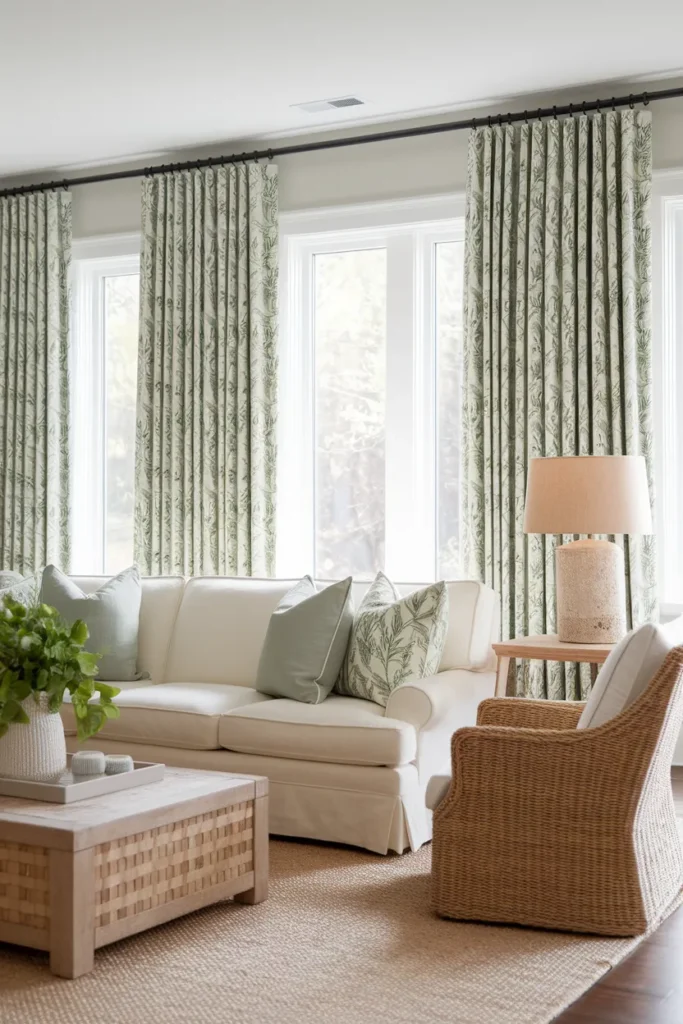
- Brings pattern into the room gently
- Reinforces a nature-inspired theme
- Softens large windows beautifully
- Adds movement and visual texture
- Creates a cohesive design story
Window treatments can completely transform how a living room feels, especially when they introduce pattern in a subtle and intentional way. Botanical print curtains add visual interest while reinforcing the natural atmosphere created by green accents and organic materials. The flowing fabric softens hard architectural surfaces and helps the room feel more comfortable. Delicate leaf patterns create movement without becoming overwhelming. This allows the space to remain elegant while adding a touch of personality and visual charm.
Many homeowners hesitate to introduce patterns because they worry about creating visual clutter. In my experience, nature-inspired prints tend to feel calmer and more timeless than bold geometric designs. Botanical motifs work beautifully alongside wood, linen, and muted green furnishings because they support the overall design direction. The curtains become part of the room’s story rather than a separate decorative element. The result is a cohesive and inviting living space that feels fresh, sophisticated, and effortlessly connected to nature.
13. Woven Natural Elements
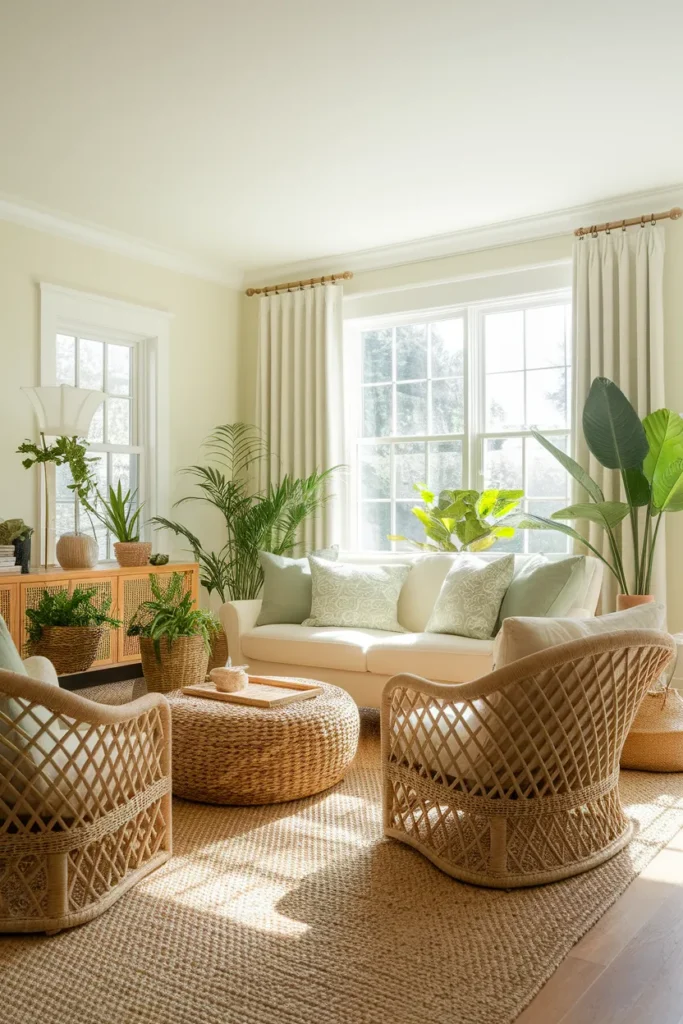
- Adds warmth and texture naturally
- Creates a relaxed organic atmosphere
- Balances painted surfaces and upholstery
- Enhances the connection to nature
- Makes the room feel more inviting
The easiest way to make a living room feel warm and approachable is by incorporating natural woven materials. Rattan chairs, woven baskets, jute rugs, and cane-front furniture introduce texture that immediately softens the space. These elements work particularly well alongside muted green tones because they reinforce an earthy, nature-inspired aesthetic. Rather than relying on additional colors, woven pieces create interest through texture and craftsmanship. This helps the room feel layered and thoughtfully designed without becoming visually overwhelming or crowded with decorative accessories.
Many interiors look beautiful in photos but feel cold or unfinished in everyday life. I’ve noticed that woven materials often solve this problem by introducing warmth and personality in a subtle way. Their handcrafted appearance adds character while keeping the overall design relaxed and elegant. Combined with soft textiles and greenery, these elements create a living area that feels comfortable from the moment someone enters. The finished space appears balanced, welcoming, and effortlessly connected to the natural environment that inspired its palette.
14. White Fireplace Surround
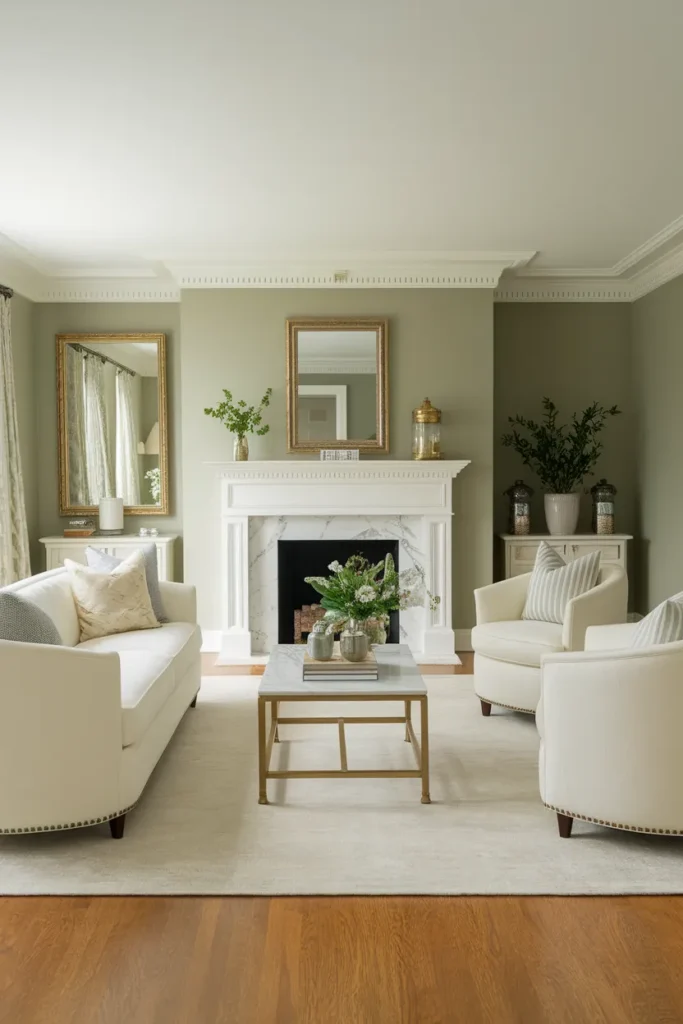
- Creates a bright focal point
- Balances deeper green tones
- Enhances architectural details
- Makes the room feel larger
- Adds timeless visual contrast
A fireplace naturally draws attention, making it the perfect feature to highlight with a clean white surround. Against soft green walls, the bright finish creates contrast that feels fresh, elegant, and timeless. The crisp color helps architectural details stand out while preventing the room from feeling too dark or monochromatic. This approach works particularly well in both traditional and modern homes because the contrast feels classic rather than trendy. It instantly gives the space a polished appearance without requiring extensive renovations.
One reason this combination remains popular is its ability to create balance within the room. Green tones provide warmth and softness, while white elements introduce brightness and structure. I’ve seen this work well in many homes where homeowners wanted a focal point without relying on bold colors or oversized furniture. Decorative accessories, artwork, and seasonal styling become easier to showcase against a clean backdrop. The finished result feels refined, welcoming, and visually balanced throughout every season of the year.
15. Floor-To-Ceiling Plants
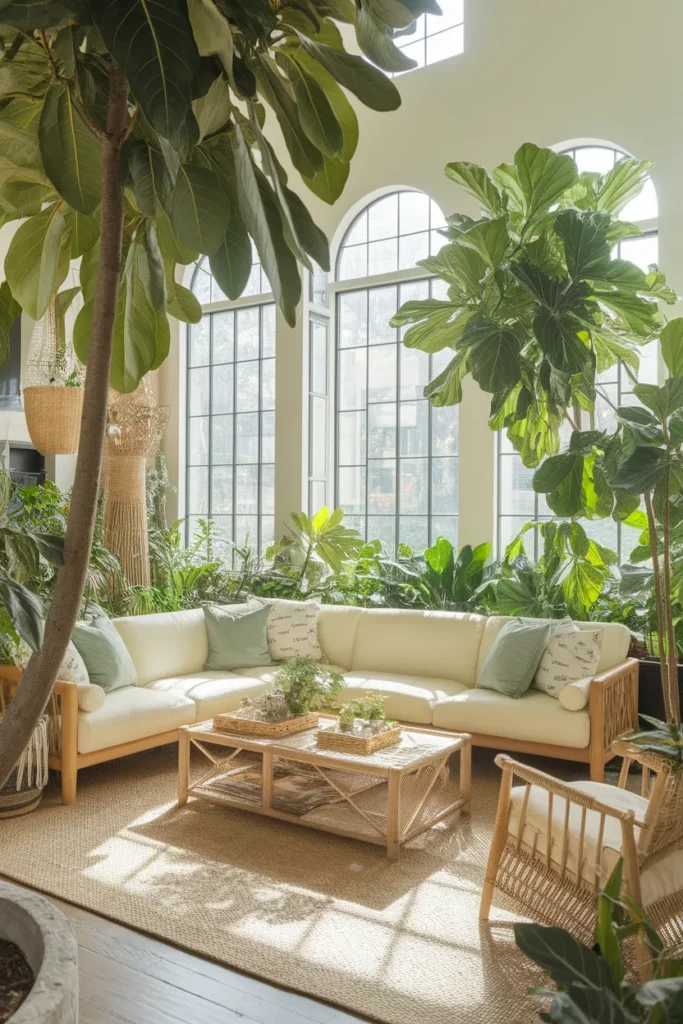
- Brings life and movement into the room
- Enhances the natural color palette
- Improves visual balance in empty corners
- Creates a fresh and vibrant atmosphere
- Strengthens the indoor-outdoor connection
Nothing complements a green-inspired living room better than real plants placed throughout the space. Tall indoor trees and large leafy varieties help create height while filling empty corners that often feel neglected. Their natural shapes add movement and softness, making the room feel more dynamic and alive. When paired with muted green furnishings and natural materials, the effect feels cohesive rather than decorative. The living room begins to feel connected to nature in a way that instantly makes it more relaxing and refreshing.
Many homeowners underestimate how much greenery can influence the overall mood of a room. That’s why many designers recommend incorporating plants at multiple heights throughout a space. I’ve noticed that even one large plant can dramatically improve the atmosphere of a living area. Floor-to-ceiling greenery creates visual flow while helping the room feel fuller without adding unnecessary furniture. Combined with natural light and soft textures, the result is a calm, elegant environment that feels fresh, healthy, and beautifully balanced.
16. Sage Paneled Walls
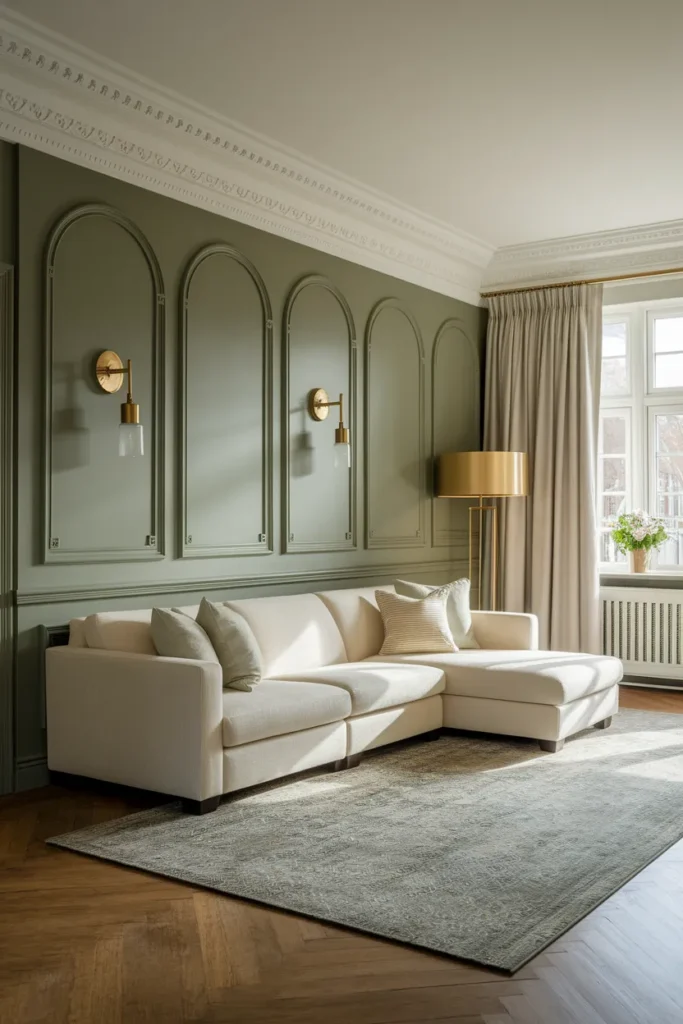
- Adds architectural depth and character
- Makes the room feel more custom designed
- Enhances visual texture without clutter
- Creates an elegant backdrop for furniture
- Works in both classic and modern homes
Wall paneling has a unique ability to make a room feel instantly more refined and intentional. When finished in a soft green shade, the architectural details become even more noticeable while maintaining a calm atmosphere. The subtle shadows created by molding and panel lines add texture throughout the day as natural light shifts across the walls. This creates depth without requiring bold colors or excessive decoration. The result is a living room that feels polished, sophisticated, and thoughtfully designed from every angle.
Many homeowners look for ways to elevate plain walls without overcrowding them with artwork. In my experience, paneling often provides a more timeless solution because it becomes part of the room’s structure rather than an added decoration. The muted green tone keeps the design feeling fresh while allowing furniture and accessories to stand out naturally. Combined with neutral upholstery and warm materials, paneled walls create an elegant setting that feels both welcoming and luxurious without appearing overly formal.
17. Black Accent Contrast
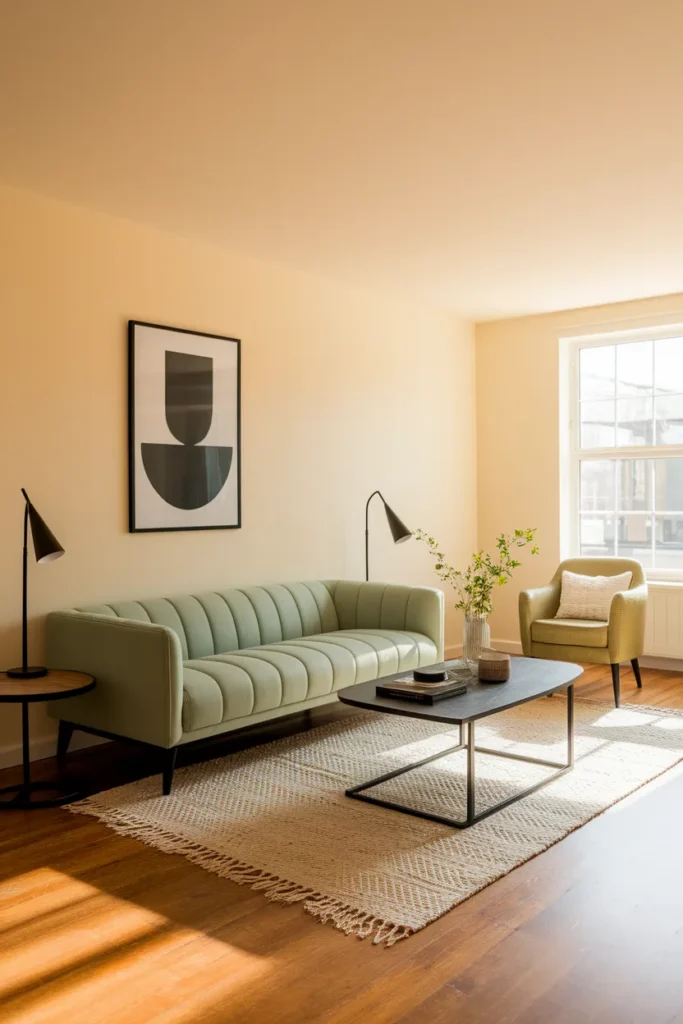
- Creates strong visual definition
- Prevents soft colors from looking flat
- Adds a modern designer touch
- Highlights architectural features
- Balances lighter furnishings beautifully
Soft green tones often benefit from a darker element that adds structure and visual contrast. Black accents provide exactly that balance, helping the room feel more defined and sophisticated. Picture frames, light fixtures, side tables, and cabinet hardware can introduce darker touches without overwhelming the overall palette. These details create focal points that guide the eye through the room. The contrast feels intentional and modern while preserving the calming atmosphere created by lighter colors and natural materials.
That’s why many designers recommend including a few grounding elements when decorating with soft, muted shades. Black accessories create depth and prevent the room from appearing overly delicate or washed out. I’ve seen this work especially well in contemporary interiors where clean lines and simple color palettes dominate. The darker accents help anchor furniture arrangements while highlighting key design features. The finished space feels balanced, elegant, and visually interesting without sacrificing the relaxed comfort homeowners want from their living rooms.
18. Vintage Gold Frames
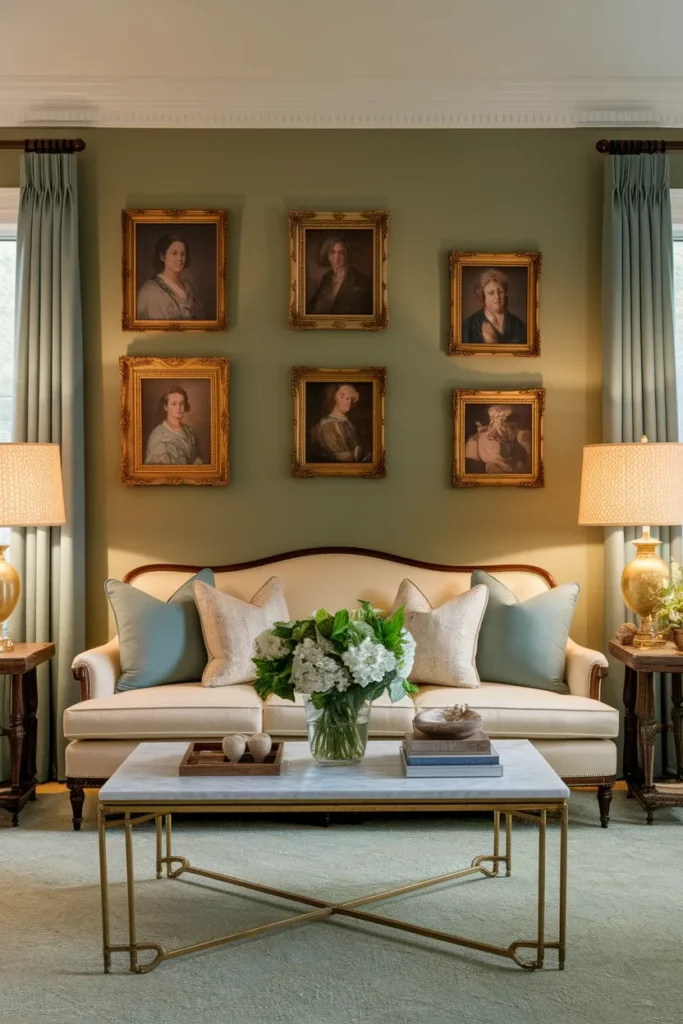
- Adds character and personality
- Introduces warmth to the palette
- Enhances traditional and transitional spaces
- Creates a collected designer look
- Elevates artwork beautifully
Decorative frames can have a surprising impact on the overall style of a living room. Vintage gold frames bring warmth, elegance, and a sense of history that pairs beautifully with muted green surroundings. Whether displaying artwork, mirrors, or family photographs, the metallic finish creates subtle contrast against softer colors. The aged appearance adds charm without feeling overly ornate. This simple detail helps transform ordinary wall decor into a more curated and intentional design feature that feels unique to the home.
One reason this idea remains timeless is its ability to blend sophistication with personality. I’ve noticed that vintage-inspired accessories often make interiors feel more authentic because they add visual layers and character. Gold finishes also complement green tones naturally, creating a combination that feels rich without becoming flashy. When paired with neutral furnishings and natural textures, the frames contribute to a balanced and elegant atmosphere. The room feels thoughtfully collected over time rather than decorated all at once.
19. Sage Window Seat
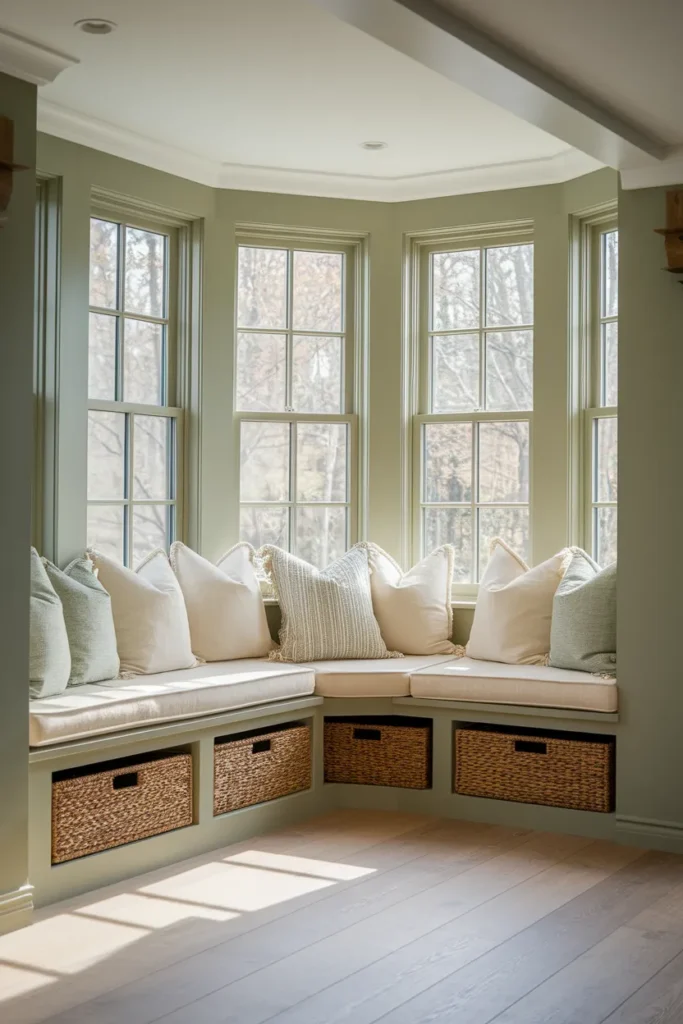
- Creates a charming reading nook
- Adds extra seating without crowding the room
- Enhances natural light enjoyment
- Introduces color in a practical way
- Makes unused space feel purposeful
Few design features feel as inviting as a comfortable window seat positioned beside natural light. Finished in a soft green tone, the built-in feature becomes both functional and decorative while enhancing the room’s overall character. The seating area creates a cozy destination for reading, relaxing, or enjoying morning coffee. Cushions and pillows add softness while helping the feature blend seamlessly with surrounding furnishings. This simple addition turns an overlooked area into one of the most attractive and useful spots within the entire living room.
Many homeowners struggle to maximize awkward corners or underused window areas. I’ve seen this work well in many homes because it transforms empty space into a practical feature that also improves the room visually. The built-in appearance feels custom and intentional, giving the living area a more tailored design. Combined with natural light, soft fabrics, and nearby greenery, the window seat creates a peaceful retreat. The result feels elegant, welcoming, and perfectly suited for everyday living.
20. Stone And Sage Blend
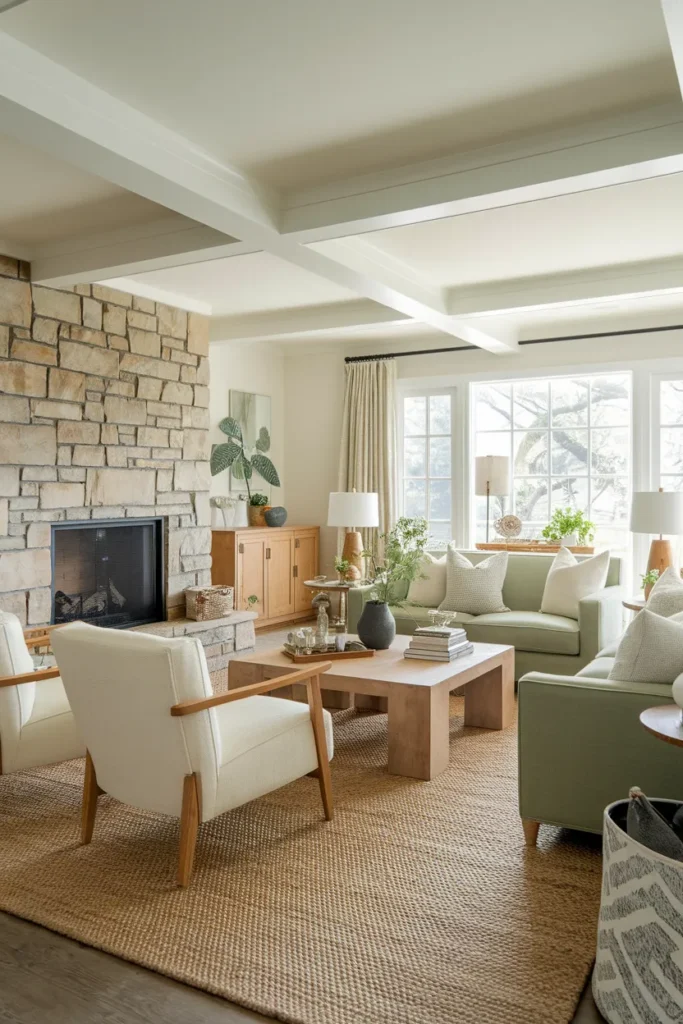
- Adds natural texture and depth
- Creates a grounded, timeless look
- Balances soft furnishings beautifully
- Enhances organic design elements
- Works across multiple decorating styles
Natural stone introduces a level of texture and authenticity that is difficult to replicate with manufactured materials. When paired with muted green furnishings, the combination feels organic, balanced, and timeless. Stone fireplaces, accent walls, or decorative elements create visual weight while helping softer colors feel more grounded. The variation within the stone adds movement and interest without relying on bold patterns. Together, these materials create a living room that feels connected to nature while maintaining an elegant and sophisticated appearance.
That’s why many designers recommend combining earthy materials when creating calming interiors. Stone and green tones naturally complement one another because they reflect colors and textures commonly found outdoors. In my experience, this pairing often helps a room feel more relaxing and enduring than trend-focused alternatives. The materials age beautifully and continue looking relevant over time. Combined with warm woods and soft textiles, they create a welcoming environment that feels luxurious without appearing overly decorated or formal.
21. Minimalist Green Styling
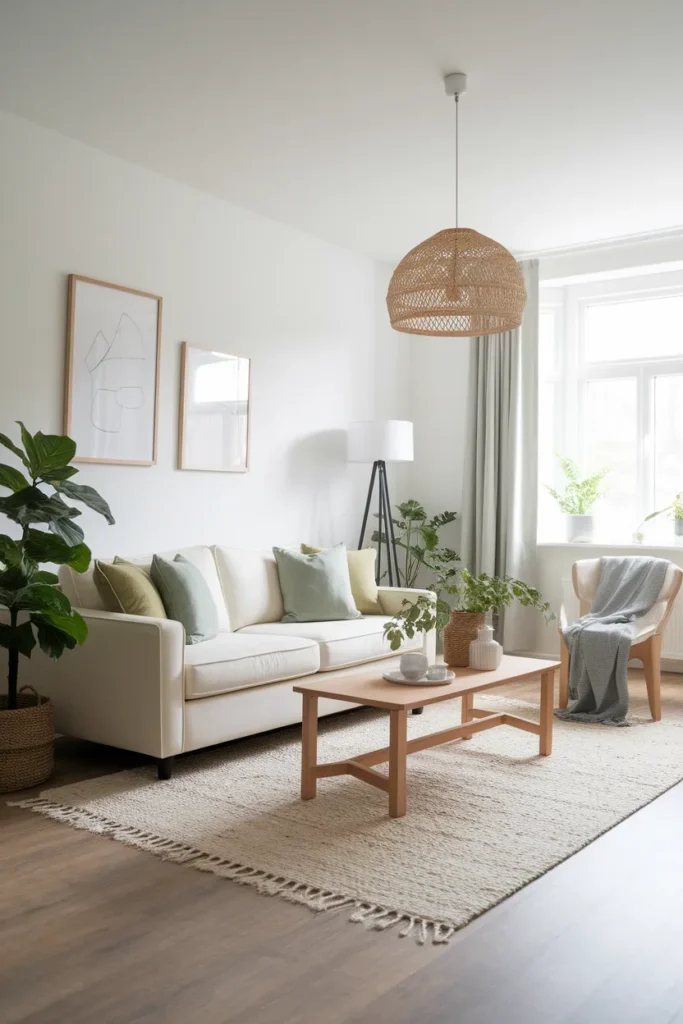
- Reduces visual clutter effectively
- Makes the room feel larger
- Highlights quality over quantity
- Creates a calm everyday environment
- Keeps the design timeless and flexible
A minimalist approach allows beautiful colors and materials to stand out without distraction. Instead of filling the room with numerous accessories, this style focuses on carefully selected furnishings, subtle decor, and open space. Soft green accents become more noticeable because there is less visual competition surrounding them. The clean layout encourages a sense of calm while helping the room feel larger and brighter. Every piece serves a purpose, creating an elegant atmosphere that feels intentional rather than sparse.
Many people assume minimalism feels cold, but that is often the result of removing warmth along with clutter. I’ve noticed that combining simple furniture with natural textures and muted green accents creates a much softer outcome. Thoughtfully chosen pieces provide personality while preserving the clean aesthetic that makes minimalist spaces so appealing. The room remains practical for daily living while maintaining a polished and sophisticated appearance. This balance creates an environment that feels peaceful, organized, and effortlessly stylish.
22. Sage Ceiling Accent
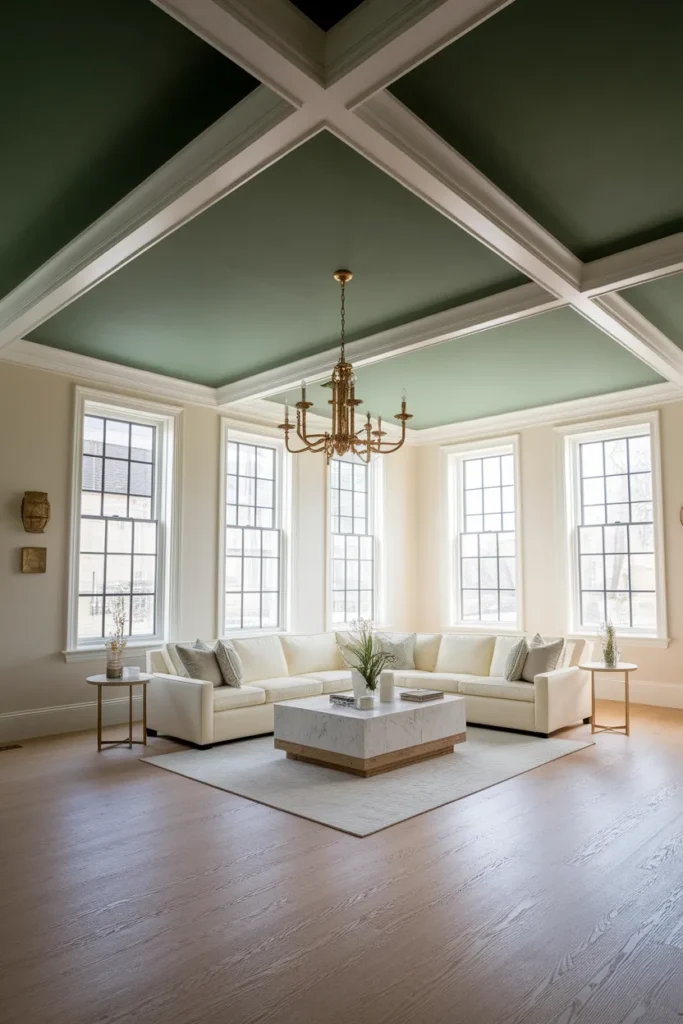
- Draws the eye upward beautifully
- Adds color without overwhelming the walls
- Makes the room feel custom designed
- Creates a subtle architectural statement
- Works especially well with neutral decor
Most homeowners focus on walls and furniture, but the ceiling offers an unexpected opportunity to introduce personality. Painting it in a soft green shade creates visual interest while maintaining the calm atmosphere the room already enjoys. The color gently frames the space and adds depth without making it feel enclosed. When paired with white walls and natural materials, the contrast feels elegant rather than dramatic. This approach allows the room to stand out while preserving the light and airy quality many people want in a living area.
That’s why many designers recommend looking beyond traditional surfaces when planning a room refresh. A painted ceiling can transform an ordinary living room into something that feels more intentional and memorable. I’ve seen this work particularly well in spaces with good natural light because the color changes subtly throughout the day. Combined with simple furnishings and layered textures, the ceiling becomes a unique design feature. The result feels sophisticated, fresh, and thoughtfully curated without requiring major renovations.
23. Soft Green Monochrome
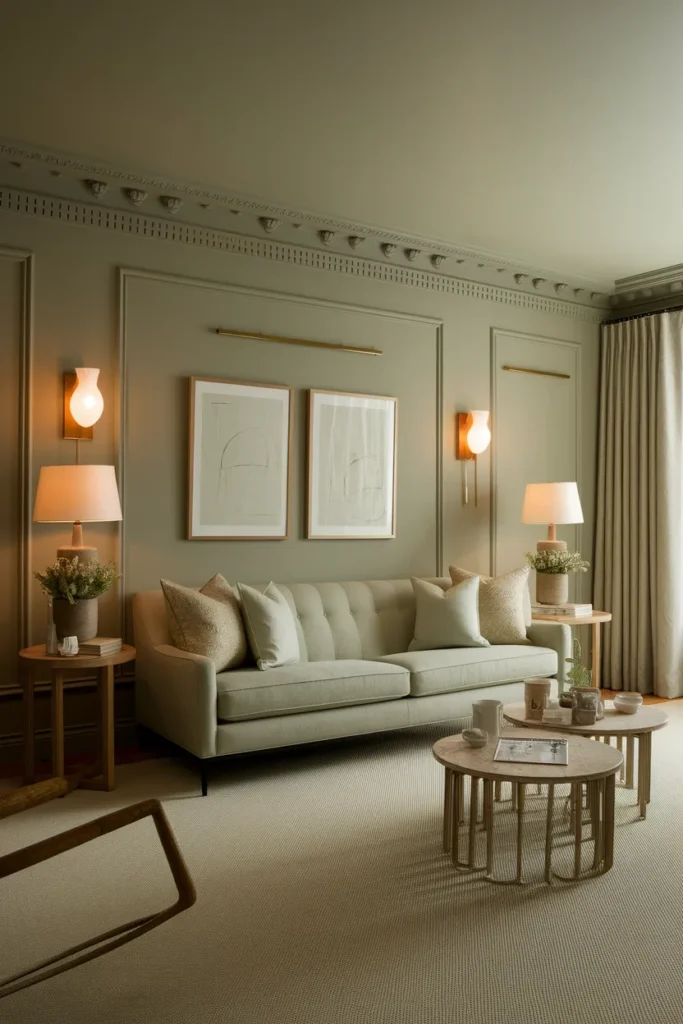
- Creates a cohesive designer-inspired look
- Makes the room feel calm and harmonious
- Adds depth through tonal variation
- Highlights texture instead of contrast
- Feels elegant and effortlessly polished
A monochromatic design can feel incredibly sophisticated when different shades and textures are layered thoughtfully throughout the room. Instead of relying on strong color contrasts, this approach uses multiple green tones to create depth and visual interest. Upholstery, artwork, pillows, and decorative accessories work together to build a cohesive palette that feels intentional and refined. The result is a living space that appears polished and serene while maintaining enough variation to avoid looking flat or repetitive.
In my experience, tonal decorating often creates a more luxurious appearance because every element feels connected to a larger design story. Different textures become especially important, helping distinguish one feature from another while maintaining harmony. Linen fabrics, woven materials, wood finishes, and soft upholstery each contribute their own character. When combined thoughtfully, they create a layered environment that feels balanced and welcoming. The finished room embodies the best qualities of sage green living room ideas, delivering a fresh, elegant atmosphere that remains timeless year after year.
Conclusion
Creating a beautiful living room doesn’t always require a complete renovation. Sometimes, thoughtful updates like layered textures, natural materials, elegant accents, and calming colors can make the biggest difference. The sage green living room ideas featured in this guide show how small design choices can work together to create a space that feels fresh, sophisticated, and comfortable every day.
I’ve seen how simple changes like these can completely transform the mood of a room. Save this post on Pinterest for future inspiration, try a few of your favorite ideas in your own home, and share this article with anyone looking to create a more elegant and inviting living space. Your dream room may be closer than you think.