23 Shade Plants That Bring Life to Low-Light Gardens
Struggling with dark garden corners that feel empty or lifeless? These shade plants can help you transform low-light spaces into lush, beautiful retreats filled with texture, color, and natural charm.
Many gardeners assume that limited sunlight means fewer design possibilities, but some of the most stunning landscapes thrive beneath tree canopies and along shaded pathways. The right foliage, flowers, and ground covers can add depth, softness, and visual interest where other plants may struggle. From elegant ferns and colorful heucheras to dramatic hostas and woodland favorites, there are countless ways to bring life to darker areas.
In my experience, shaded gardens often feel more peaceful and layered than sunny spaces when they are thoughtfully designed. I’ve noticed that combining different leaf shapes, textures, and heights creates a richer and more natural look. In this collection, you’ll discover inspiring ideas that can help transform overlooked corners into vibrant garden features that feel welcoming, balanced, and Pinterest-worthy throughout the season.
1. Hosta Path Border
- Creates a lush and welcoming pathway edge.
- Adds texture without needing flowers.
- Helps shaded walkways feel more finished.
- Works beautifully beneath mature trees.
- Provides a classic layered garden look.
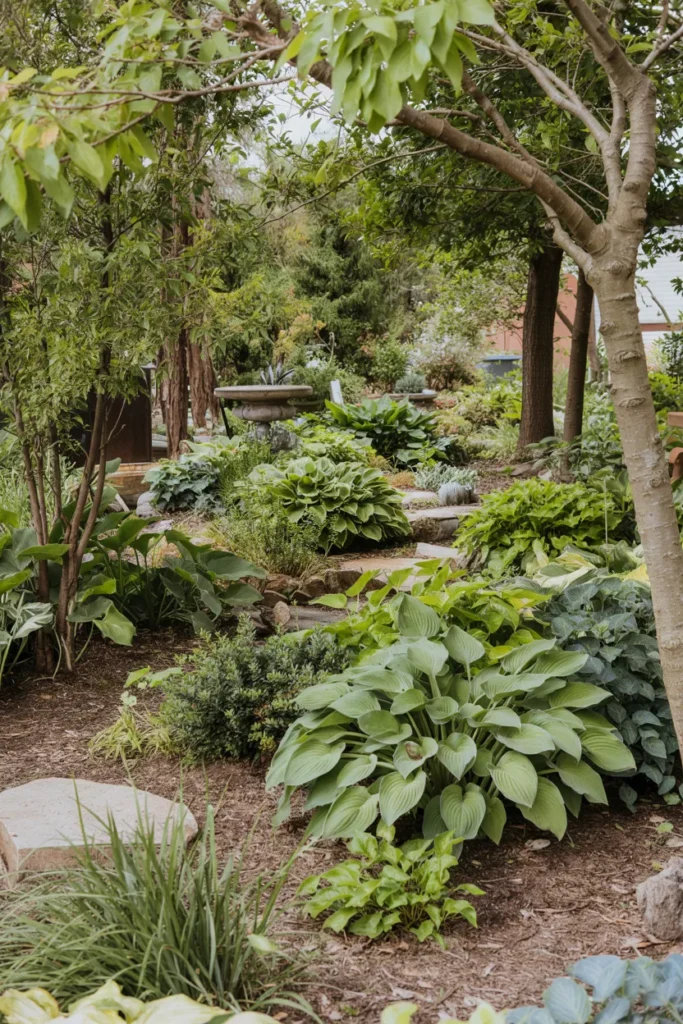
A pathway bordered with hostas can instantly make a shaded area feel richer and more intentional. The broad leaves create a dense, layered appearance that softens hard edges and adds visual depth along walkways. Their varied foliage colors help brighten darker spaces without relying on constant blooms. Because hostas grow into generous mounds, they naturally fill gaps and create a cohesive look. This approach works especially well beneath trees and alongside stone paths where other varieties may struggle to provide the same level of texture and fullness.
In my experience, hostas are among the easiest ways to make a low-light garden appear established and professionally designed. The large leaves create contrast against stone, mulch, and surrounding greenery while helping pathways feel more inviting. I’ve noticed that repeating hostas along a border creates a stronger visual impact than using scattered individual plants. As the foliage matures throughout the season, the garden develops a lush and balanced appearance. The result is an outdoor space that feels calm, organized, and naturally beautiful.
2. Fern Woodland Drift
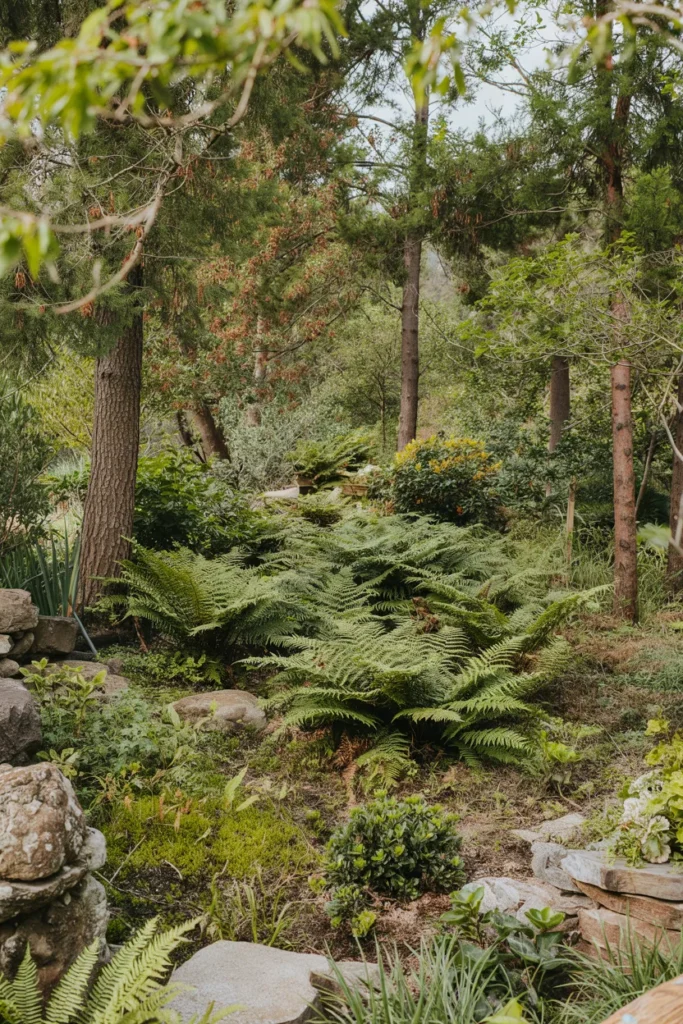
- Brings softness and movement to darker spaces.
- Creates a natural woodland atmosphere.
- Adds texture without overwhelming the garden.
- Fills large planting areas gracefully.
- Enhances the feeling of depth and layering.
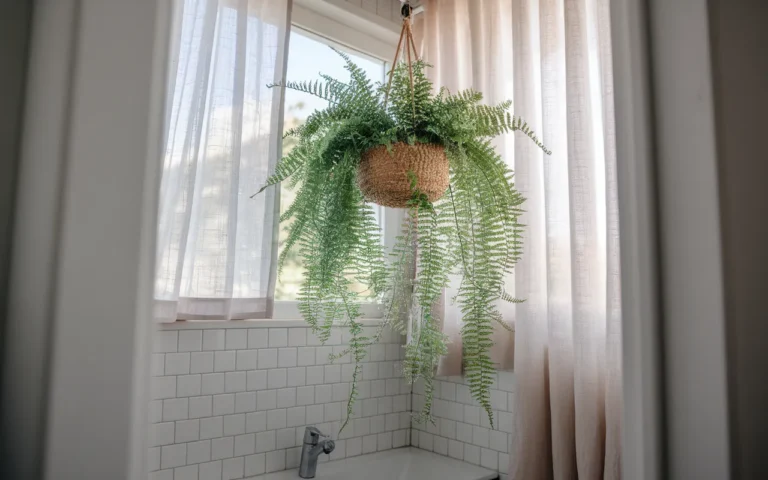
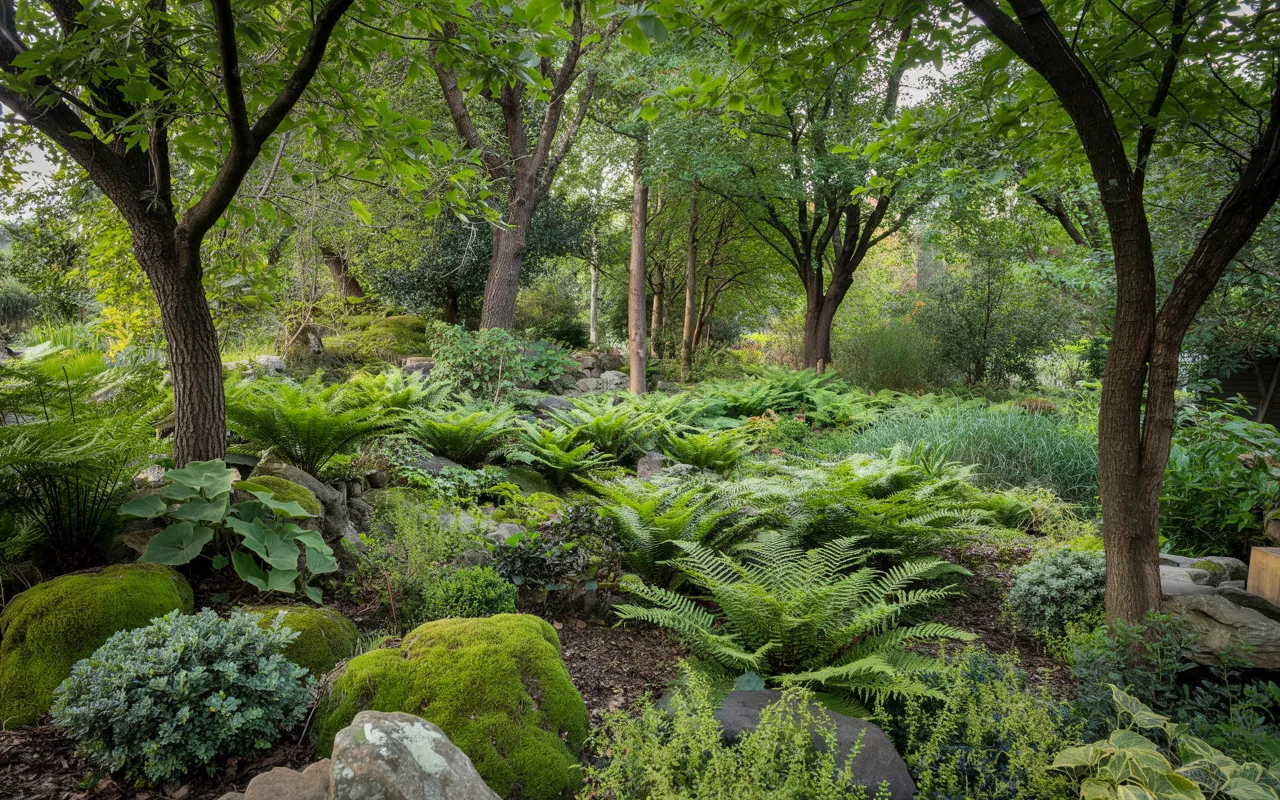
Few plants create a woodland feeling as effortlessly as ferns. Their delicate fronds add movement and texture while helping shaded landscapes feel more vibrant and alive. When planted in drifts, they create a flowing effect that connects different areas of the garden. The layered foliage softens hard surfaces and introduces visual interest without appearing overly structured. This makes them ideal for naturalistic spaces where a relaxed and organic appearance is preferred. Their graceful form adds elegance while maintaining a calm and peaceful atmosphere.
I’ve seen this work well in many homes where darker corners felt disconnected from the rest of the landscape. Ferns naturally thrive in protected areas, allowing gardeners to transform difficult spaces into attractive focal points. The repeating foliage patterns create consistency while making the garden feel larger and more cohesive. Combined with moss, stone, and woodland accents, the effect becomes even more immersive. The result is a shaded retreat that feels lush, balanced, and beautifully connected to nature.
3. Heuchera Color Pockets
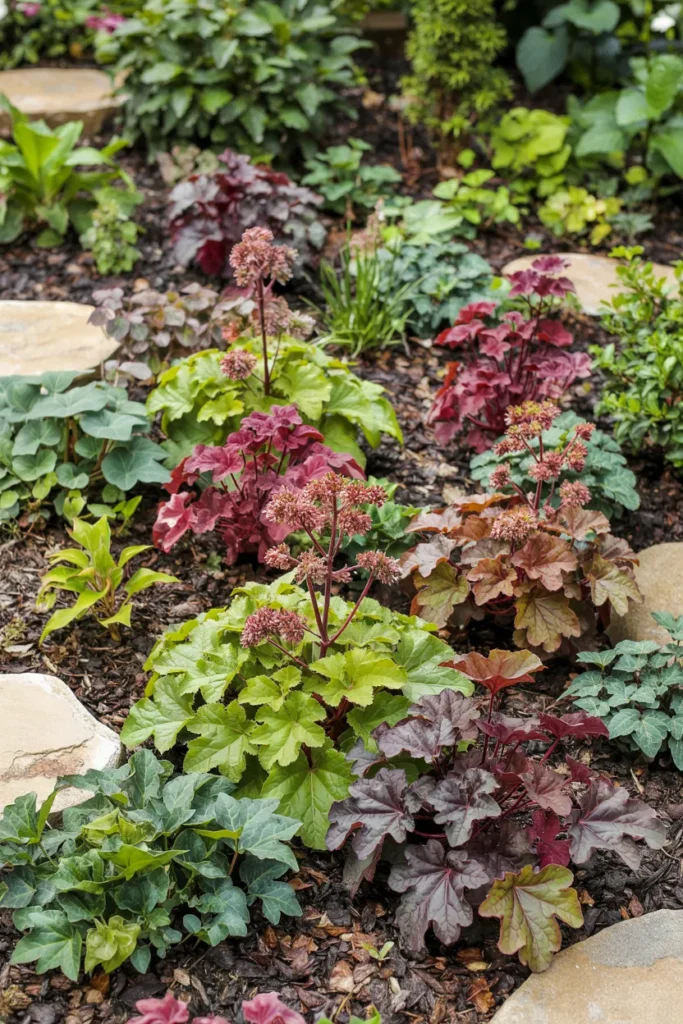
- Introduces color without relying on flowers.
- Brightens low-light planting areas.
- Creates contrast among green foliage.
- Adds year-round visual interest.
- Works beautifully in mixed garden beds.
A collection of heuchera plants can dramatically improve the color palette of a shaded landscape. Their foliage ranges from deep burgundy to bright lime green, creating contrast that stands out even when flowering plants are not blooming. Positioned throughout garden beds, these plants add depth and variation while helping darker areas feel more dynamic. The colorful leaves provide season-long interest and blend beautifully with ferns, hostas, and other foliage-focused plantings. This simple addition can make a low-light garden appear far more vibrant and thoughtfully designed.
I’ve noticed that foliage color often has a greater impact in shaded spaces than flowers alone. Heucheras excel because they bring lasting visual interest while maintaining a compact and tidy growth habit. That’s why many designers recommend using them as accent plants throughout woodland-inspired landscapes. The rich leaf colors create focal points that guide the eye through the garden while adding warmth and character. The result is an outdoor space that feels lively, balanced, and visually engaging throughout much of the year.
4. Japanese Forest Grass
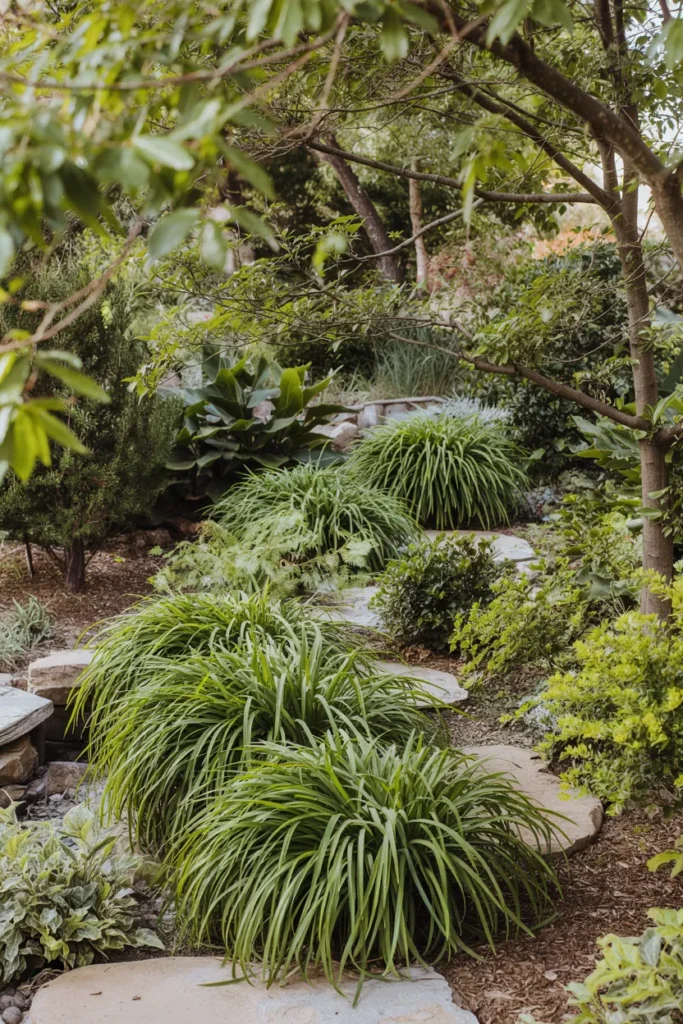
- Adds graceful movement to quiet garden spaces.
- Softens pathways and hard landscaping.
- Brightens darker corners with golden foliage.
- Creates a layered designer-inspired look.
- Blends beautifully with woodland plantings.
A sweep of Japanese forest grass can completely change the atmosphere of a shaded landscape. The arching foliage introduces movement that helps the garden feel more dynamic while maintaining a calm and elegant appearance. Its golden-green tones naturally brighten areas where sunlight is limited, creating visual contrast against darker leaves and surrounding textures. Positioned along pathways or beneath trees, the grass softens hard edges and encourages the eye to move through the garden. This simple addition creates a more layered and inviting outdoor environment.
In my experience, few foliage plants create such a refined effect in low-light spaces. The cascading form adds softness without becoming untidy, making it ideal for both naturalistic and structured garden designs. I’ve noticed that repeating this grass in clusters helps create visual continuity throughout a landscape. Combined with hostas, ferns, or stone features, it introduces depth and subtle color variation. The result is a garden that feels brighter, more balanced, and beautifully connected to its surroundings.
5. Astilbe Bloom Clusters
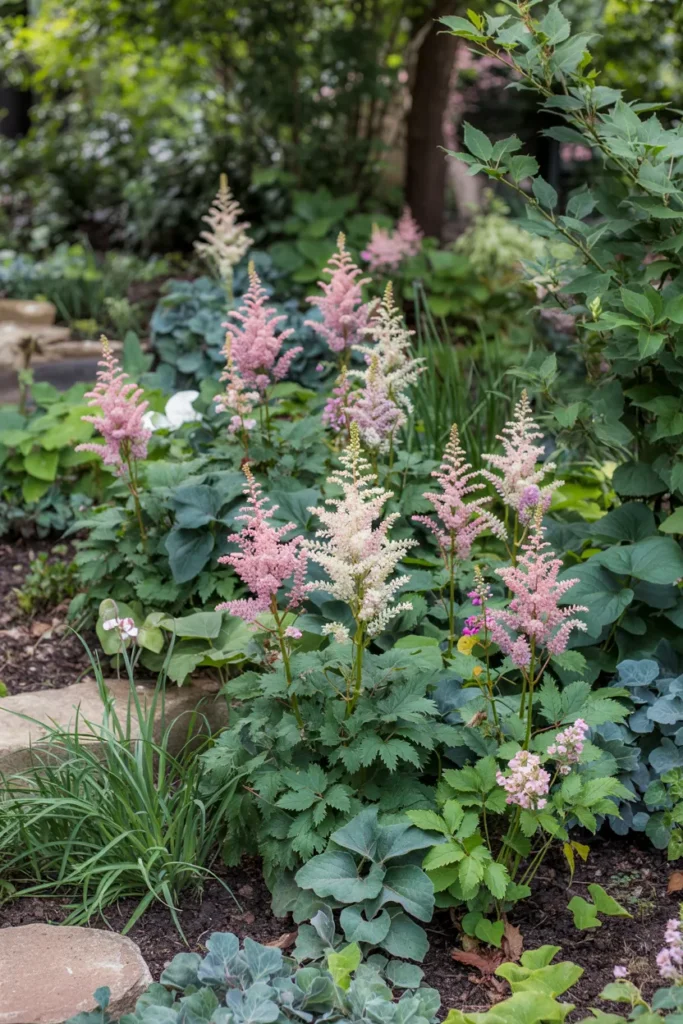
- Adds colorful blooms to low-light areas.
- Creates vertical interest among foliage plants.
- Softens darker garden corners.
- Attracts pollinators during blooming season.
- Enhances layered planting designs.
Nothing brings seasonal color to a shaded garden quite like astilbe. The feathery flower plumes rise above surrounding foliage, creating height and softness that instantly catches attention. Their blooms add brightness to darker spaces while blending beautifully with greenery-focused landscapes. Because the flowers appear above dense foliage, they create visual layers that help the garden feel fuller and more dynamic. This planting approach works particularly well when combined with ferns and broad-leaf varieties that provide contrast beneath the flowering stems.
I’ve seen this work well in many homes where shaded beds lacked seasonal interest. Astilbe provides a reliable burst of color without overwhelming the surrounding design. The delicate flower plumes move gently in the breeze, adding a sense of life and movement throughout the garden. That’s why many designers recommend incorporating flowering accents among foliage-rich plantings. The result is a landscape that feels vibrant, balanced, and visually engaging while maintaining the calm atmosphere often associated with shaded outdoor spaces.
6. Moss Stone Garden
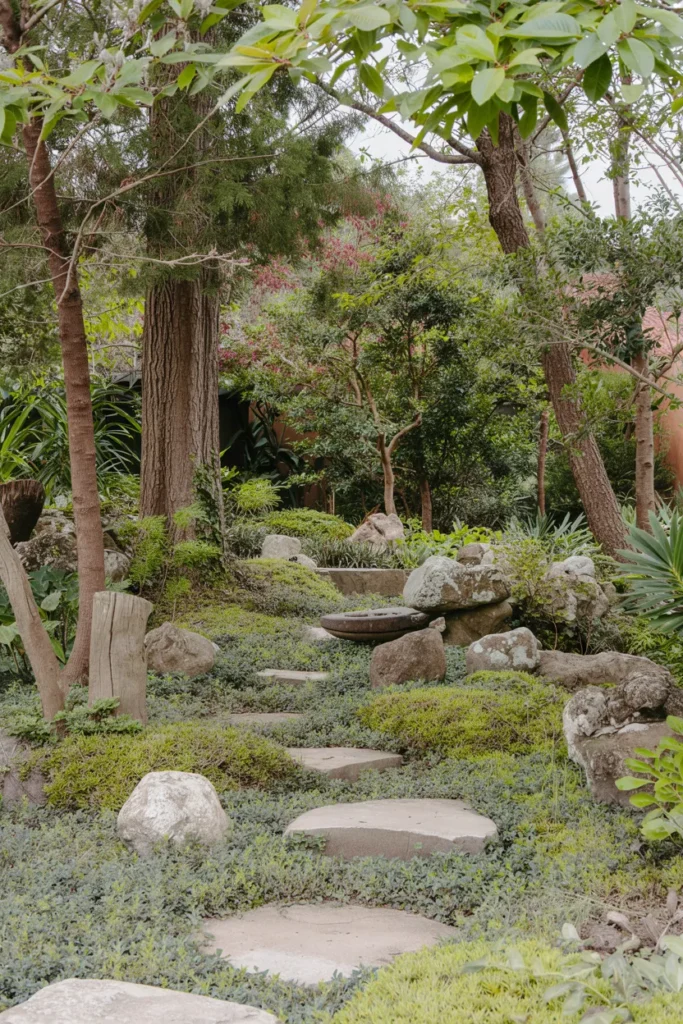
- Creates a timeless woodland atmosphere.
- Adds texture where grass struggles to grow.
- Softens stone surfaces naturally.
- Enhances peaceful garden aesthetics.
- Requires minimal visual clutter.
A moss-covered stone garden introduces a sense of tranquility that few landscape features can match. The rich green texture fills spaces between rocks and pathways, helping the garden feel established and naturally aged. Because moss thrives in protected conditions, it often succeeds where traditional lawn areas struggle. The soft surface contrasts beautifully with weathered stone, creating depth and visual interest without requiring excessive planting. This combination helps shaded landscapes feel intentional while maintaining a calm and understated appearance.
I’ve noticed that moss often becomes one of the most admired elements in low-light gardens because of its simplicity. The texture brings life to otherwise overlooked areas and creates a seamless connection between stones, trees, and surrounding greenery. Designers frequently use moss to soften hardscape features while preserving a natural aesthetic. Combined with woodland-inspired plantings, it creates an immersive environment that feels both relaxing and visually rich. The result is a garden that feels peaceful, cohesive, and beautifully integrated with nature.
7. Bleeding Heart Corner
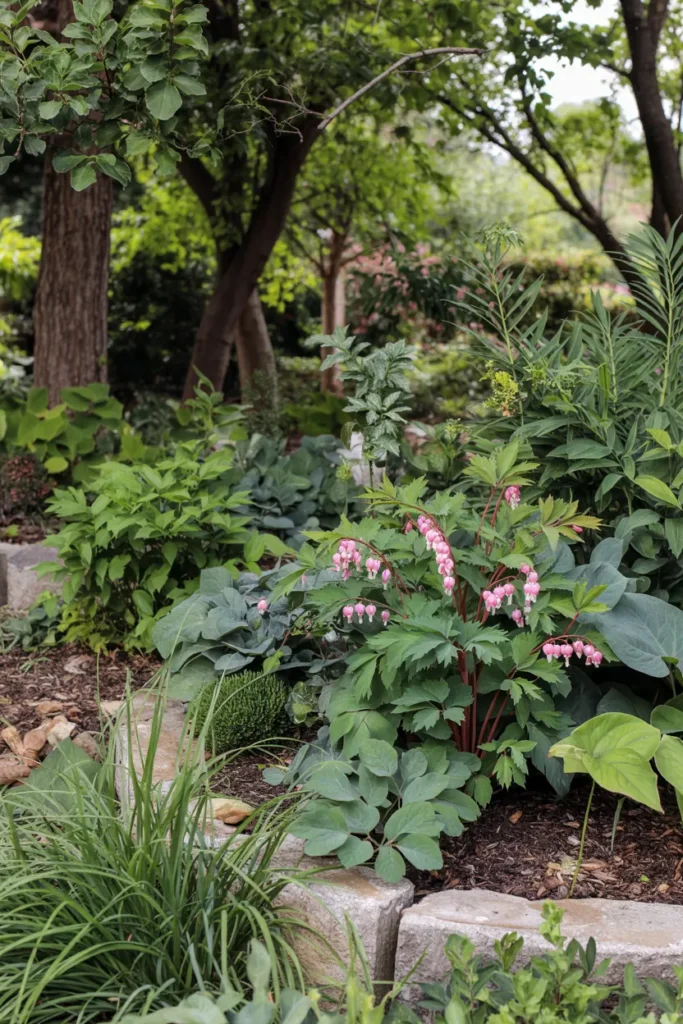
- Adds unique blooms to shaded areas.
- Creates a soft cottage-garden feel.
- Brings seasonal color to darker corners.
- Pairs beautifully with ferns and hostas.
- Introduces visual interest without clutter.
A quiet garden corner can become a standout feature with the addition of bleeding heart plants. The graceful stems arch outward, displaying delicate flowers that create a whimsical focal point beneath trees and larger shrubs. Their unique bloom shape adds character while softening darker spaces with gentle color. Positioned among textured foliage, they provide contrast that helps surrounding greenery stand out. This combination creates a layered planting scheme that feels intentional and welcoming while maintaining a natural woodland atmosphere.
In my experience, bleeding hearts often become conversation pieces because of their unusual flowers and elegant growth habit. I’ve noticed they work especially well when surrounded by foliage-focused companions that allow the blooms to take center stage. The flowers create a seasonal highlight without overwhelming the garden design. As the surrounding greenery fills in, the space remains attractive even after blooming ends. The result is a shaded retreat that feels colorful, balanced, and thoughtfully curated.
8. Caladium Color Mix
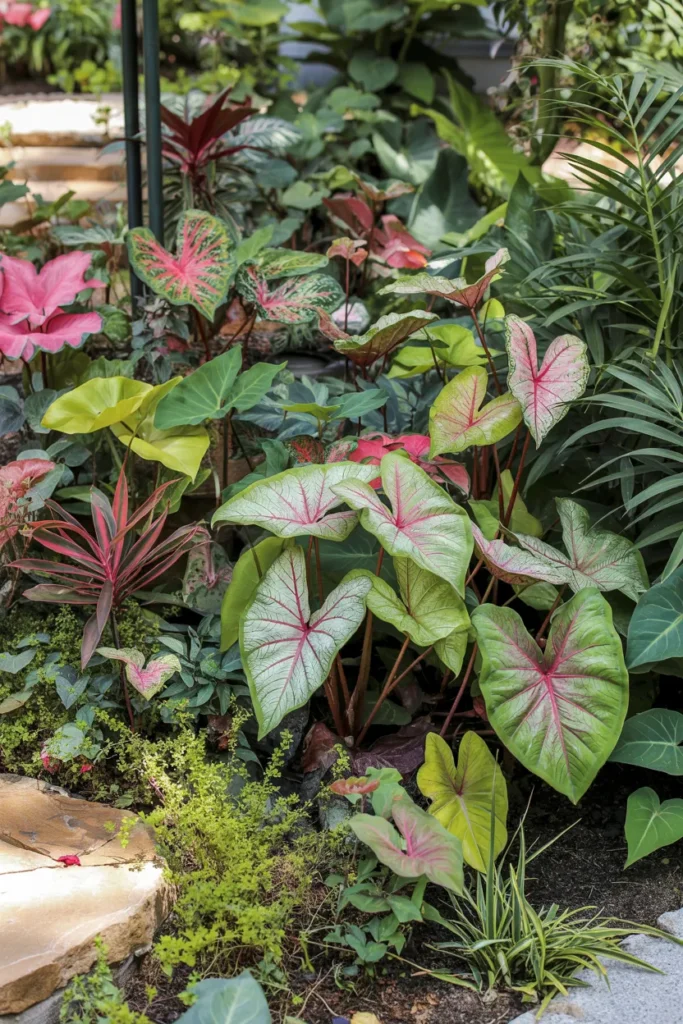
- Brings vibrant color through foliage alone.
- Brightens low-light garden beds.
- Creates striking visual contrast.
- Adds a tropical-inspired feel.
- Makes shaded spaces feel more energetic.
Few foliage plants deliver as much color impact as caladiums. Their bold leaves instantly brighten darker planting areas and create eye-catching contrast among surrounding greenery. Available in a wide range of shades and patterns, they help transform shaded beds into vibrant focal points. The heart-shaped leaves add softness while introducing visual variety that keeps the landscape interesting. Used in groups, these colorful plants can dramatically enhance the overall appearance of a low-light garden without relying on seasonal flowers.
I’ve seen this work well in many homes where shaded spaces felt dull or monochromatic. Caladiums introduce brightness in a way that feels fresh and exciting while remaining easy to integrate with other plantings. The colorful foliage pairs beautifully with ferns, hostas, and woodland perennials. That’s why many designers recommend using them as accent features throughout darker garden areas. The result is a landscape that feels lively, cheerful, and visually engaging throughout the growing season.
9. Toad Lily Patch
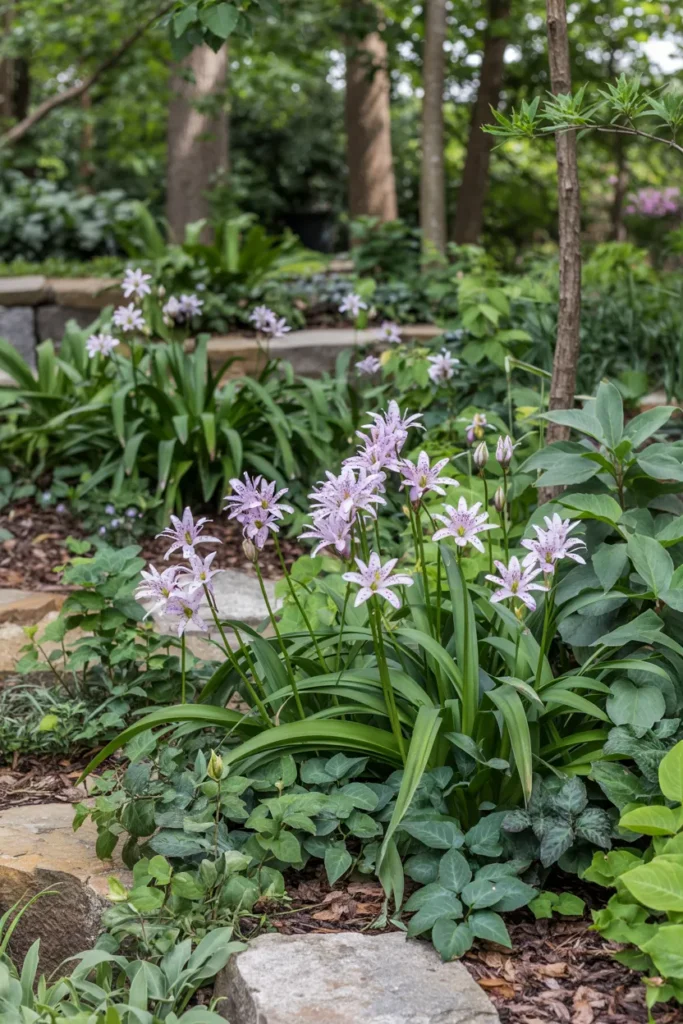
- Adds unusual flowers to shaded landscapes.
- Creates late-season visual interest.
- Enhances woodland garden themes.
- Brings detail and texture to planting beds.
- Complements foliage-rich designs.
A patch of toad lilies introduces a surprising level of detail to shaded garden spaces. Their intricate flowers provide visual interest when many other plants have finished blooming, helping the landscape remain attractive later in the season. The speckled petals create contrast against surrounding greenery while adding a touch of elegance to woodland-inspired plantings. Positioned beneath trees or among larger foliage plants, they become hidden gems that reward closer observation. This makes them especially valuable in gardens designed around texture and layered visual interest.
I’ve noticed that gardeners often appreciate toad lilies once they discover how unique the blooms truly are. The flowers add character without requiring large displays or extensive maintenance. Combined with ferns, moss, and hostas, they contribute to a rich and immersive planting scheme. Designers frequently use them to extend seasonal interest while maintaining a cohesive woodland aesthetic. The result is a shaded garden that feels distinctive, textured, and full of subtle beauty.
Related Article : 21 Mosquito Free Summer Plants for an Outdoor Oasis
10. Brunnera Silver Carpet
- Brightens darker planting beds naturally.
- Creates contrast through foliage rather than flowers.
- Adds a refined woodland feel.
- Helps unify larger shaded areas.
- Provides season-long visual interest.
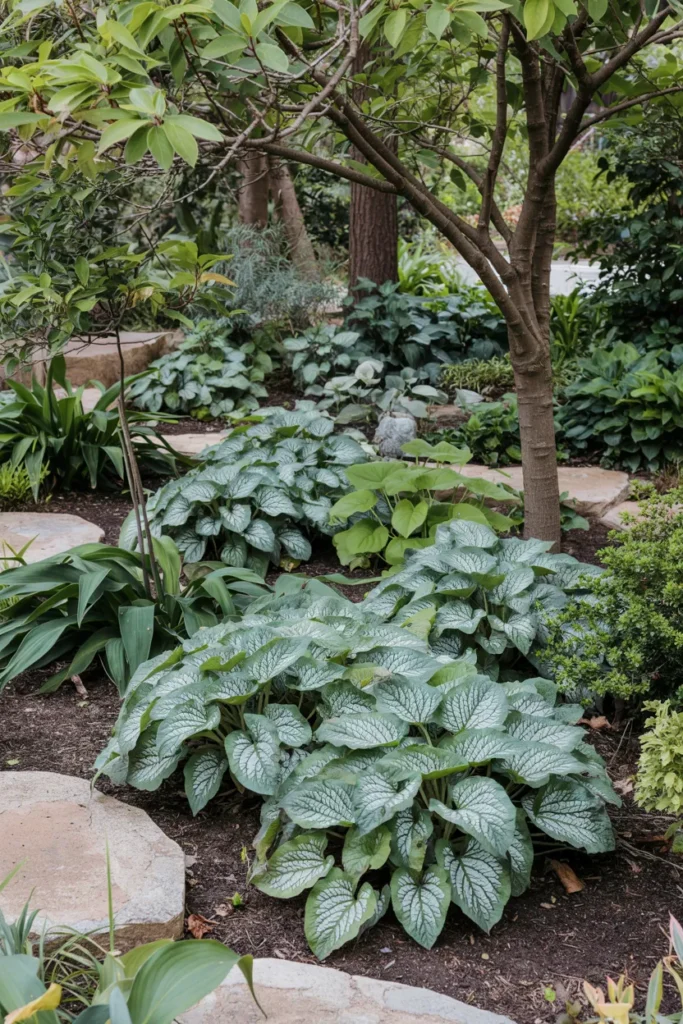
A sweep of brunnera can instantly brighten areas where sunlight rarely reaches the ground. The silver markings on the leaves reflect available light, helping the garden feel more open and visually dynamic. When planted in groups, the foliage creates a carpet-like effect that ties together different sections of the landscape. The cool tones blend beautifully with ferns, hostas, and woodland shrubs, creating a balanced planting scheme. This approach works particularly well in shaded spaces where texture and foliage are more important than constant blooms.
I’ve seen this work well in many homes because silver foliage naturally stands out against darker greenery. The leaves provide long-lasting visual interest and help create contrast without introducing excessive color. Designers often use brunnera to illuminate low-light areas while maintaining a calm and sophisticated atmosphere. As the plants mature, they form attractive clusters that reduce visual gaps in the landscape. The result is a garden that feels brighter, fuller, and more cohesive throughout the growing season.
11. Coral Bells Layer
- Introduces year-round foliage color.
- Creates depth within planting beds.
- Complements both flowers and greenery.
- Adds visual contrast without clutter.
- Helps low-light gardens feel more vibrant.
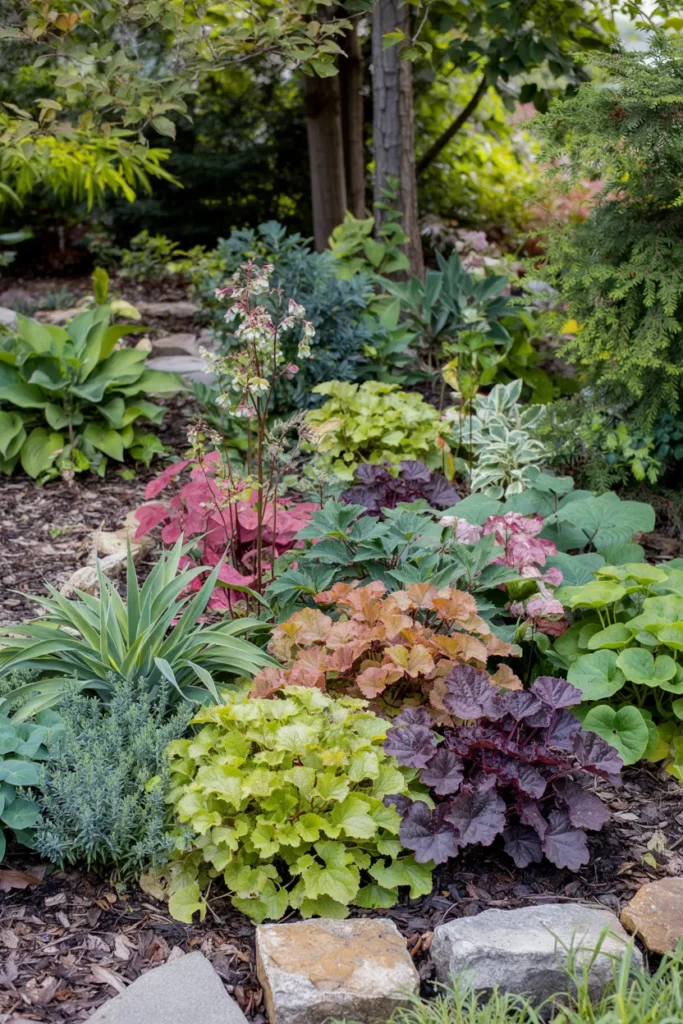
A layered display of coral bells can completely transform the appearance of a shaded garden. Their colorful foliage introduces warmth and variety while helping planting beds feel more dynamic. The wide range of leaf colors creates contrast that remains attractive long after flowering plants fade. Positioned throughout the landscape, coral bells help connect different sections of the garden while maintaining a cohesive look. Their compact size makes them ideal for filling gaps without overwhelming surrounding plants or hardscape features.
In my experience, foliage color often has a greater impact than flowers in darker garden settings. Coral bells provide reliable visual interest throughout much of the year, making them a valuable addition to woodland-inspired designs. I’ve noticed that combining several foliage shades creates a richer and more layered appearance than relying on a single variety. The result is a landscape that feels colorful, balanced, and visually engaging while preserving the peaceful atmosphere associated with shaded outdoor spaces.
12. Woodland Hydrangeas
- Adds larger blooms to shaded areas.
- Creates a strong focal point.
- Softens woodland-style landscapes.
- Provides seasonal beauty and texture.
- Enhances depth and visual balance.
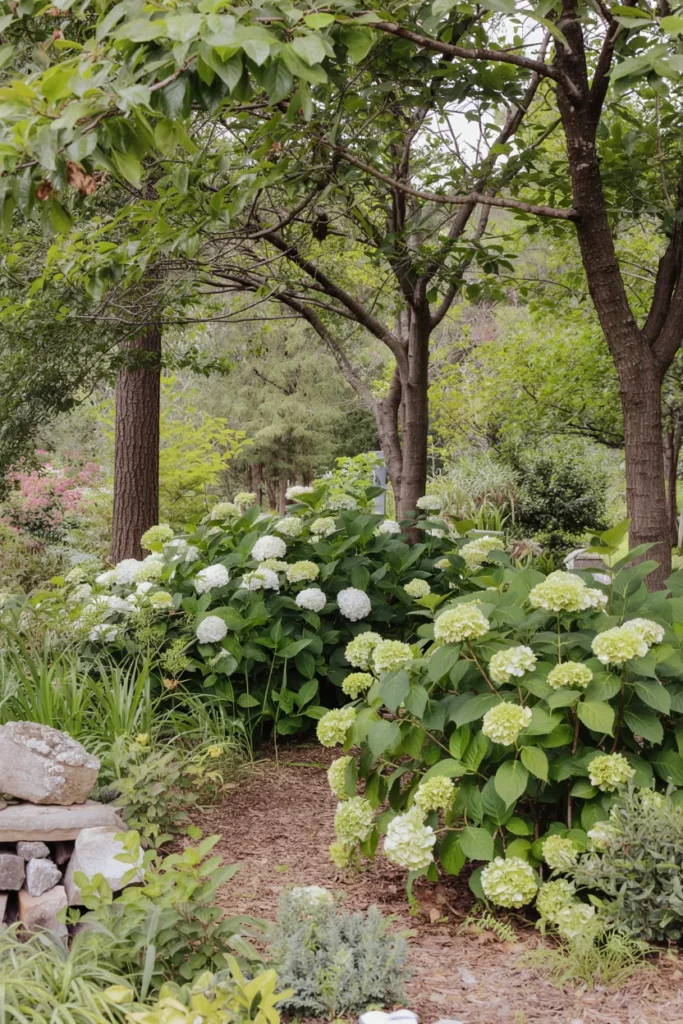
Few flowering shrubs make as much impact in a shaded garden as hydrangeas. Their large blooms add softness and elegance while helping darker spaces feel brighter and more welcoming. Positioned beneath taller trees, they create a layered effect that adds depth to the landscape. The rounded flower clusters contrast beautifully with ferns and broad-leaf foliage, creating a balanced and visually appealing planting scheme. This combination helps transform underused areas into attractive focal points that draw attention throughout the blooming season.
I’ve noticed that hydrangeas often become centerpiece plantings because they provide both structure and color. The blooms help break up large areas of greenery while maintaining a relaxed woodland aesthetic. Designers frequently use them to anchor planting beds and create visual balance within larger landscapes. As the flowers mature, they add texture and seasonal interest that elevates the entire garden. The result is a shaded outdoor space that feels lush, elegant, and beautifully designed.
13. Lungwort Ground Cover
- Brightens dark areas with patterned foliage.
- Creates attractive low-growing coverage.
- Adds seasonal blooms and texture.
- Blends well with woodland plantings.
- Helps reduce empty spaces in garden beds.
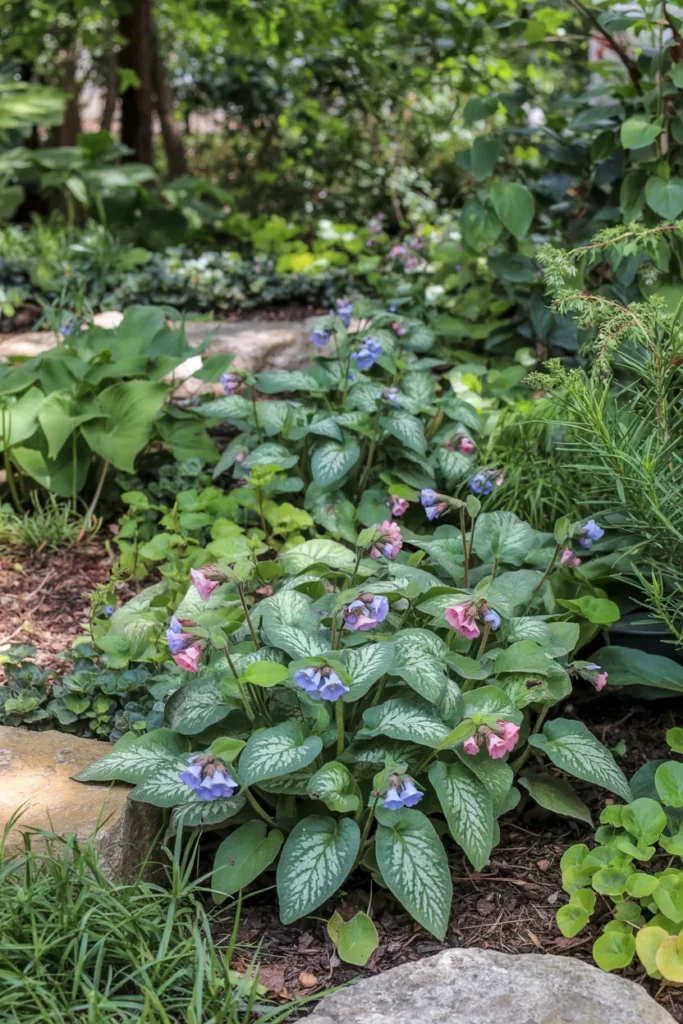
A carpet of lungwort can make shaded garden beds feel fuller and more visually connected. The silver-speckled foliage catches available light and creates contrast against darker greenery, helping low-light areas appear brighter. During blooming periods, the delicate flowers add another layer of interest while maintaining a natural woodland character. Because the plants stay relatively compact, they work well beneath larger perennials and shrubs. This makes them ideal for filling gaps and creating a more cohesive landscape design without overwhelming nearby plantings.
I’ve seen this work well in many homes where bare patches disrupted the flow of a planting bed. The patterned leaves continue providing visual interest long after the blooms fade, making lungwort valuable throughout much of the season. Designers often use it to soften transitions between larger foliage varieties and hardscape features. The result is a garden that feels more complete, layered, and naturally balanced while preserving the calm atmosphere of a shaded landscape.
14. Japanese Painted Fern
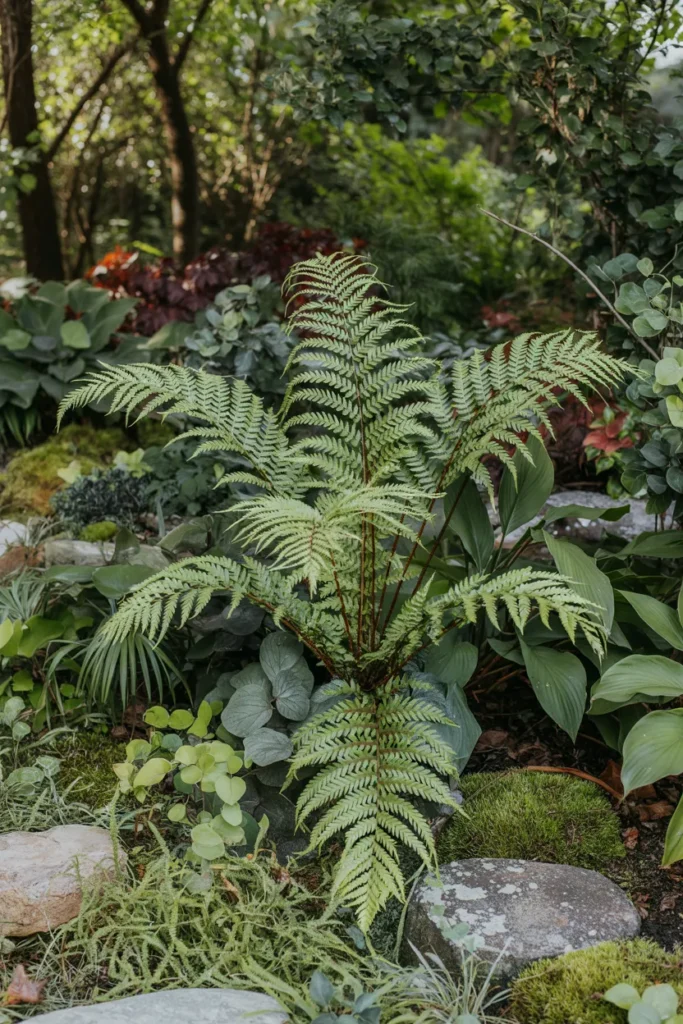
- Adds unique foliage color and texture.
- Creates contrast among green plantings.
- Enhances woodland-inspired gardens.
- Brings elegance to low-light spaces.
- Provides season-long visual interest.
A grouping of Japanese painted ferns can instantly elevate the appearance of a shaded garden. The intricate fronds feature subtle silver and burgundy tones that stand out beautifully against traditional green foliage. Their refined texture introduces a delicate quality while helping darker areas feel brighter and more visually interesting. Positioned near pathways or among hostas and woodland perennials, they create focal points that reward closer observation. The combination of unusual color and graceful form makes these ferns especially effective in layered planting schemes.
In my experience, these ferns often attract attention even without flowers because of their striking foliage patterns. I’ve noticed that the cool tones help balance brighter plants while adding sophistication to the overall design. Designers frequently incorporate them into woodland gardens where texture plays a major role. As the fronds mature, they create movement and depth that enrich the landscape. The result is a shaded retreat that feels elegant, distinctive, and thoughtfully curated.
15. Solomon’s Seal Arch
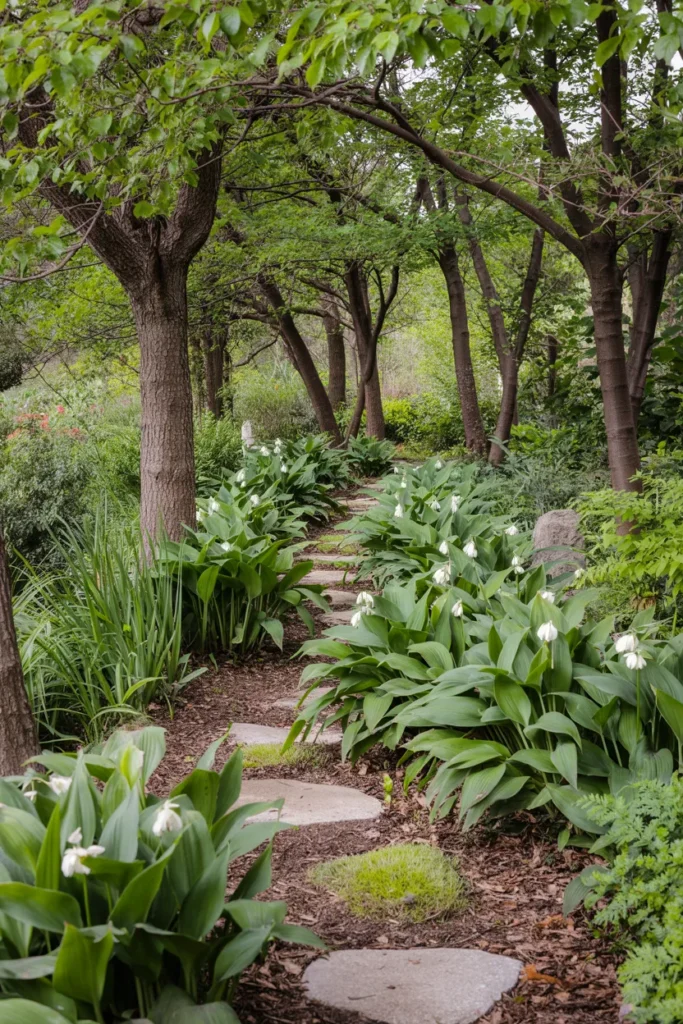
- Introduces graceful vertical movement.
- Softens pathways and garden edges.
- Adds elegance to woodland settings.
- Creates natural layering beneath trees.
- Enhances the feeling of depth and flow.
Few woodland plants create such graceful movement as Solomon’s seal. The gently arching stems soften planting beds while adding height and structure without appearing heavy. Their elegant form helps guide the eye through the garden, making pathways and borders feel more connected. Positioned beneath trees or among ferns and hostas, the plants contribute to a layered look that feels natural and cohesive. This approach works especially well in shaded landscapes where texture and form are key design elements.
I’ve noticed that arching foliage often creates a stronger sense of flow than upright plantings alone. Solomon’s seal adds this movement while maintaining a refined appearance that complements many garden styles. The stems create subtle contrast against broader leaves and ground covers, helping the landscape feel more dynamic. Designers often use it to soften transitions between taller and lower-growing plants. The result is a garden that feels balanced, immersive, and beautifully integrated with its woodland surroundings.
16. Trillium Woodland Cluster
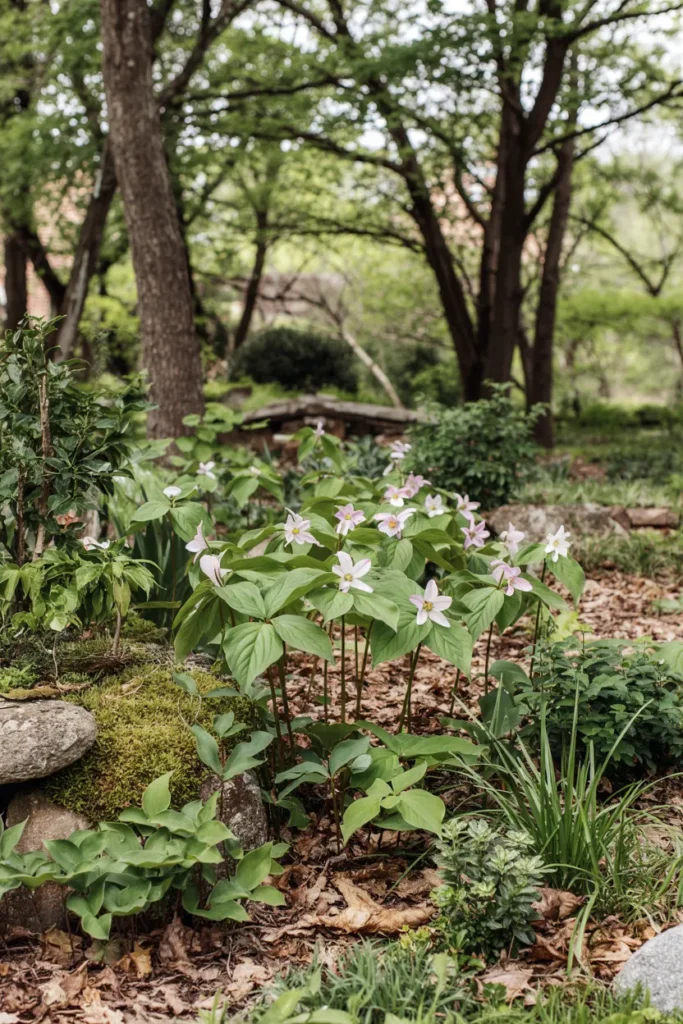
- Adds seasonal woodland charm.
- Creates a natural forest-garden appearance.
- Brings subtle blooms to shaded areas.
- Pairs beautifully with ferns and moss.
- Enhances the authenticity of woodland designs.
A cluster of trilliums can instantly make a shaded garden feel more connected to nature. Their delicate blooms emerge among layered foliage, creating a subtle but memorable focal point. Because these plants naturally thrive in woodland environments, they blend effortlessly into low-light landscapes while adding seasonal beauty. Positioned beneath mature trees, they help create a layered design that feels organic rather than heavily structured. The flowers bring gentle color and texture that enrich the overall appearance of the garden without overwhelming surrounding plantings.
I’ve seen this work well in many homes where gardeners wanted a more natural woodland aesthetic. Trilliums contribute a sense of authenticity that complements moss, ferns, and other forest-inspired elements. Their understated beauty encourages closer observation and adds depth to the planting scheme. Designers often include them in layered shade gardens because they enhance the overall atmosphere while remaining harmonious with surrounding foliage. The result is a landscape that feels peaceful, timeless, and beautifully integrated with its environment.
17. Foamflower Border
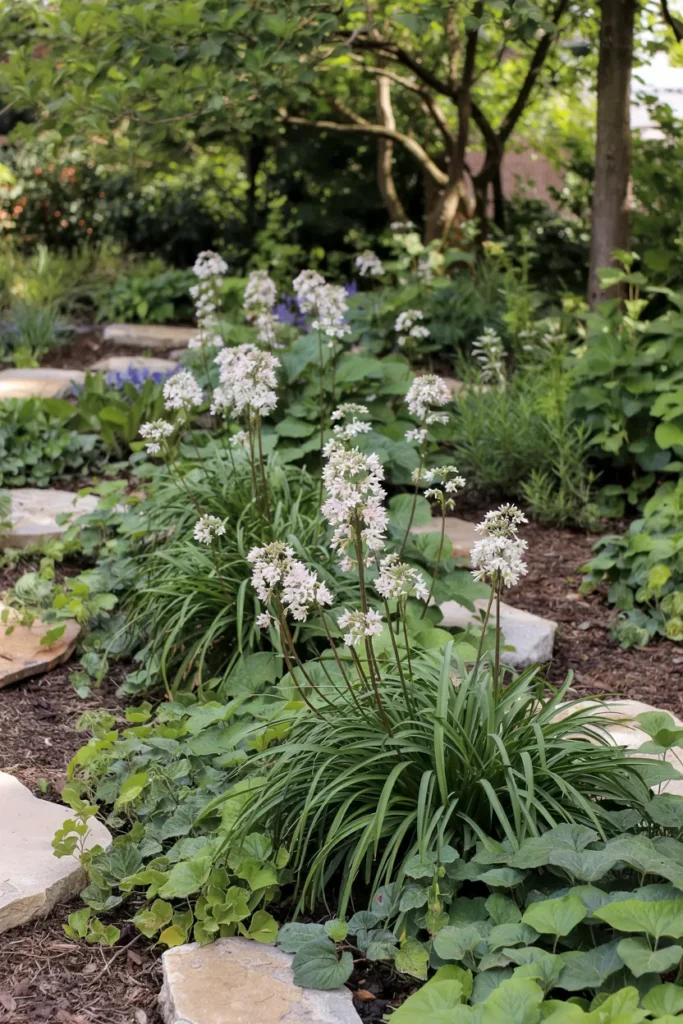
- Softens pathway edges naturally.
- Adds delicate blooms to darker areas.
- Creates a lighter visual appearance.
- Blends beautifully with woodland plantings.
- Enhances texture without creating clutter.
A foamflower border can brighten a shaded landscape while maintaining a soft and natural appearance. The airy flower spikes rise above attractive foliage, creating layers that add depth and visual interest. Positioned along pathways or planting bed edges, these plants help define spaces while preserving a relaxed woodland feel. Their delicate blooms provide seasonal highlights that contrast beautifully with larger foliage varieties. This approach helps make low-light gardens feel more welcoming and visually balanced throughout the growing season.
In my experience, lighter flowers often have a greater impact in shaded spaces because they stand out against darker backgrounds. Foamflowers accomplish this beautifully while remaining subtle enough to blend with surrounding greenery. I’ve noticed that repeating them along a border creates rhythm and continuity throughout the landscape. Combined with hostas, ferns, and woodland shrubs, they contribute to a cohesive and layered design. The result is a garden that feels brighter, softer, and more thoughtfully composed.
18. Variegated Sedge Sweep
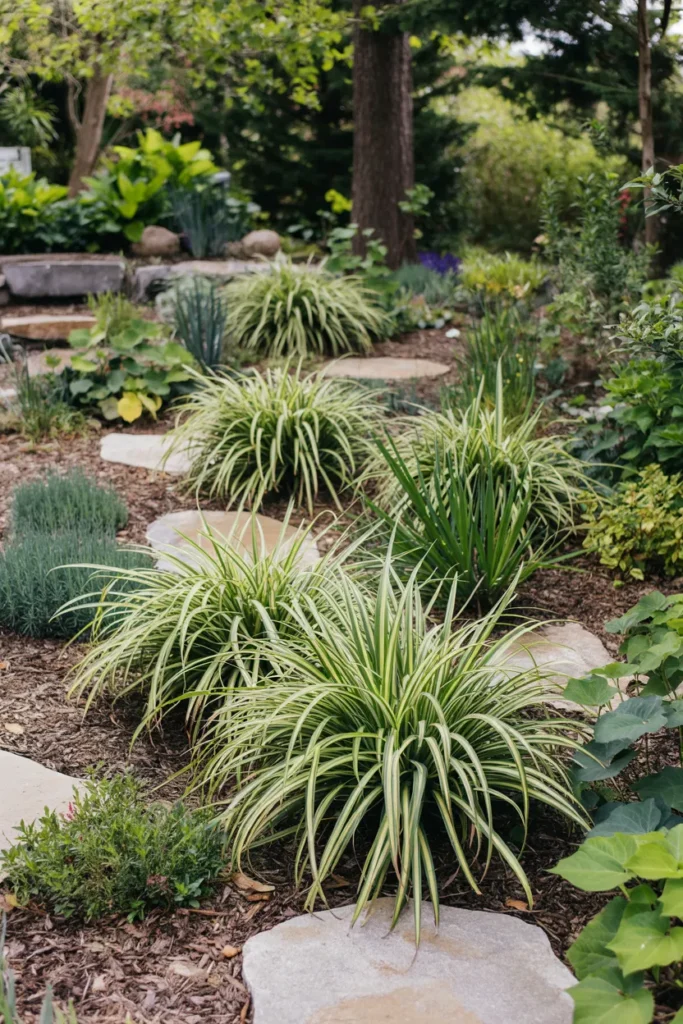
- Brightens darker planting areas.
- Adds movement and texture.
- Creates a contemporary garden feel.
- Helps connect different planting zones.
- Provides long-lasting foliage interest.
A broad sweep of variegated sedge can completely change how a shaded garden feels. The striped foliage reflects available light, helping darker spaces appear more open and vibrant. When planted in drifts, the grass-like leaves create movement that softens pathways and hardscape features. The repeating pattern also helps unify different sections of the landscape, making the garden feel more cohesive. This planting style works especially well in modern woodland settings where texture and subtle contrast are important design elements.
I’ve noticed that lighter foliage often serves as a natural highlight in low-light landscapes. Variegated sedge provides that effect while maintaining a clean and elegant appearance. Designers frequently use it to create visual transitions between larger perennials and ground covers. The flowing foliage introduces energy without overwhelming the surrounding design. The result is a garden that feels brighter, more dynamic, and beautifully layered throughout the season.
19. Jack Frost Brunnera
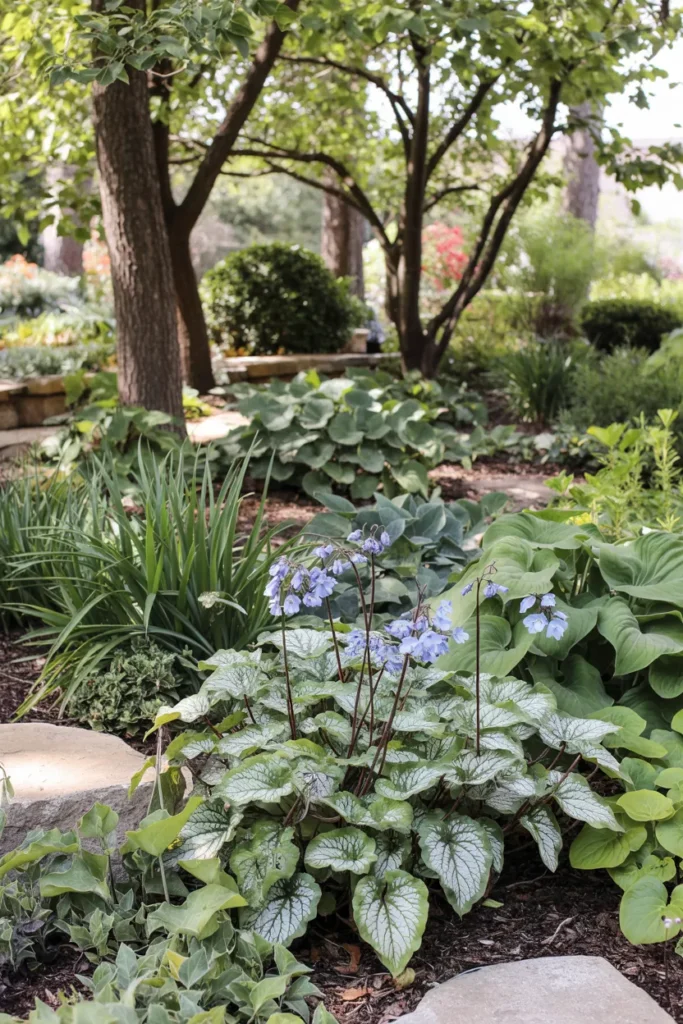
- Reflects light in darker planting areas.
- Creates strong foliage contrast.
- Adds subtle seasonal blooms.
- Enhances woodland garden designs.
- Provides long-lasting visual interest.
A grouping of Jack Frost brunnera can instantly brighten areas where sunlight is limited. The silver-coated leaves catch available light and create contrast against deeper green foliage, helping the garden appear more vibrant. Small blue flowers add a delicate seasonal accent while allowing the foliage to remain the primary attraction. Positioned beneath trees or among woodland perennials, these plants help create depth and visual balance. Their unique leaf patterns make them especially effective as focal points within low-light planting beds.
I’ve seen this work well in many homes because the reflective foliage creates impact throughout the growing season. The leaves remain attractive long after flowering ends, making the plant valuable beyond a single bloom period. Designers often use it to illuminate darker corners while maintaining a natural woodland aesthetic. Combined with ferns and hostas, it contributes to a layered planting scheme that feels rich and cohesive. The result is a garden that appears brighter, more textured, and thoughtfully designed.
20. Wild Ginger Carpet
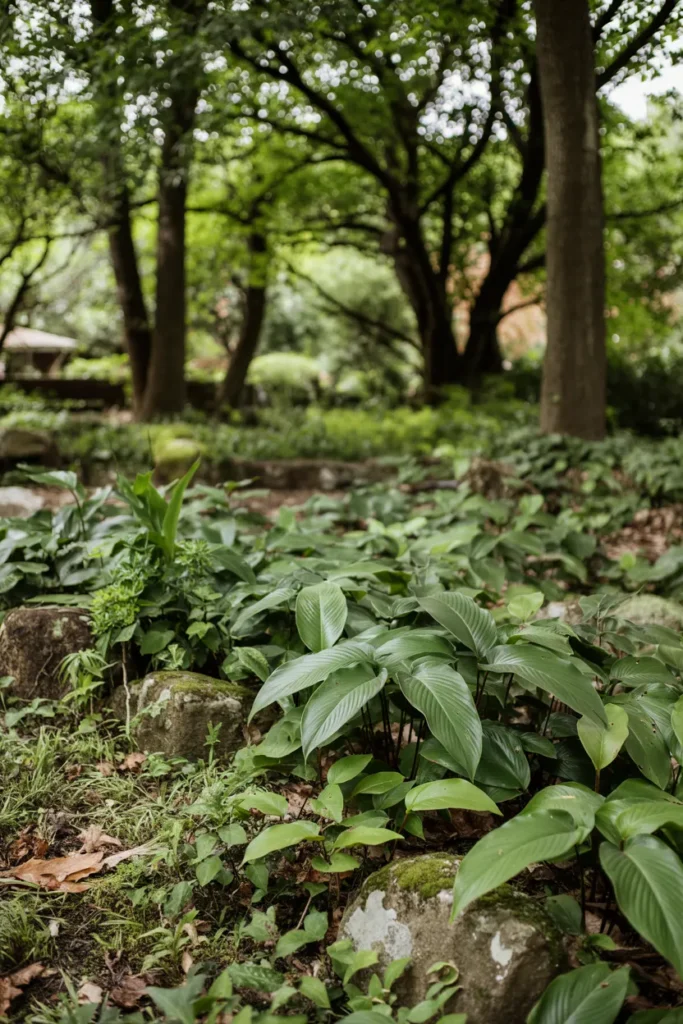
- Creates dense coverage in shaded spaces.
- Suppresses visual gaps between plants.
- Adds glossy texture to the landscape.
- Complements woodland-inspired gardens.
- Maintains a natural, low-growing appearance.
A carpet of wild ginger can transform empty soil into a lush and cohesive feature. The glossy leaves spread gently across the ground, creating a dense layer that adds texture and richness to shaded landscapes. Their low-growing habit makes them ideal for filling spaces beneath larger perennials and shrubs while helping the garden feel more complete. The foliage provides a smooth visual transition between different planting zones, creating a natural flow throughout the landscape. This approach is especially useful in woodland-inspired settings.
In my experience, ground covers often play a major role in making gardens feel professionally finished. Wild ginger excels because it introduces texture without competing for attention. I’ve noticed that its glossy foliage creates subtle contrast against matte leaves and natural stone features. Designers frequently use it to unify planting beds and reduce visual clutter. The result is a garden that feels lush, balanced, and beautifully connected from one area to the next.
21. Mahonia Accent Shrub
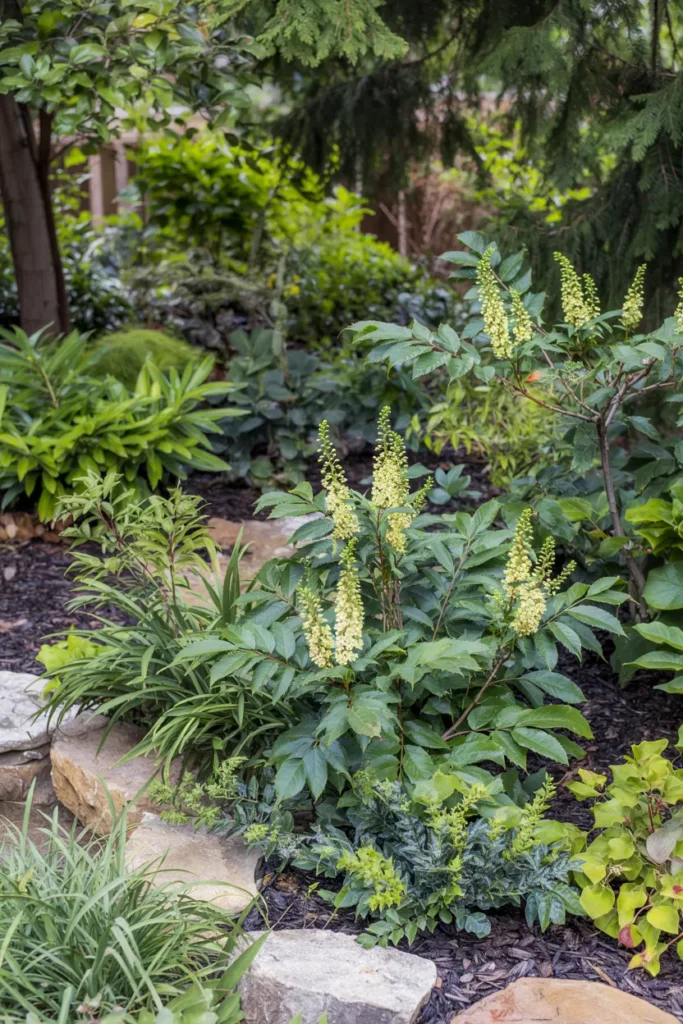
- Adds evergreen structure year-round.
- Creates a strong focal feature.
- Introduces seasonal blooms and texture.
- Enhances depth within planting beds.
- Complements woodland and cottage gardens.
A mahonia shrub can provide structure and visual interest when many other plants fade into the background. The glossy foliage creates a strong architectural presence while helping shaded planting beds feel more organized. During flowering periods, the bright blooms introduce color that contrasts beautifully with surrounding greenery. Positioned among ferns, hostas, and woodland perennials, the shrub acts as a focal point that anchors the design. Its year-round presence helps maintain balance and consistency throughout the landscape.
I’ve noticed that evergreen features often make low-light gardens feel more complete during seasonal transitions. Mahonia contributes both texture and structure while remaining visually attractive across multiple seasons. Designers frequently use it to establish focal points and create height variation within layered planting schemes. Combined with softer foliage plants, it adds depth and contrast without disrupting the natural atmosphere. The result is a garden that feels refined, balanced, and visually engaging all year long.
22. Woodland Begonia Group
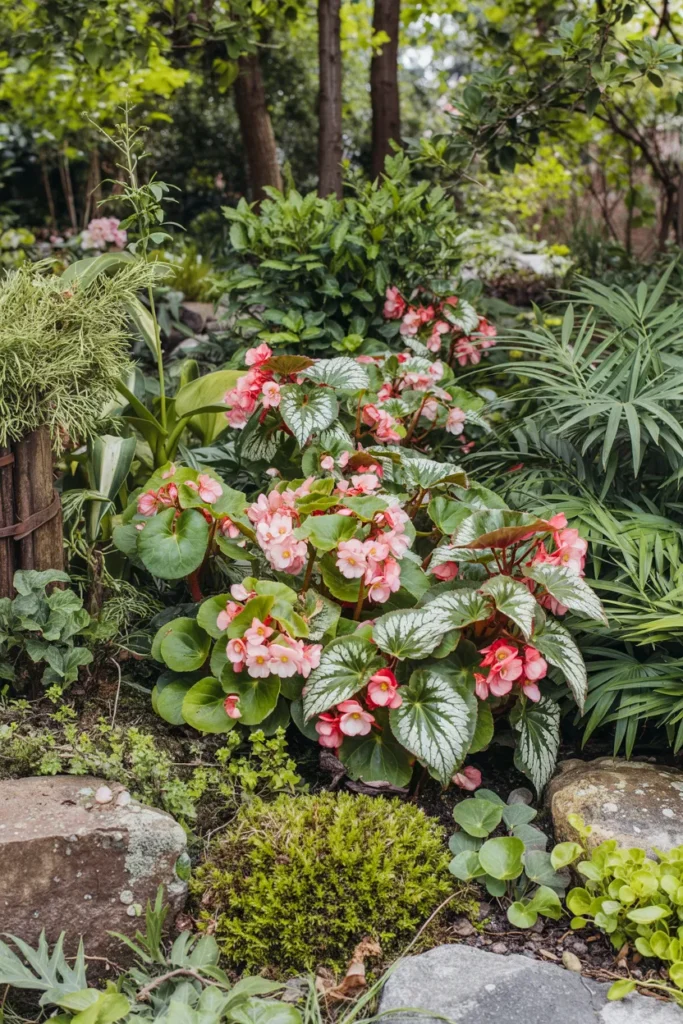
- Adds decorative foliage and blooms.
- Brightens dark planting beds naturally.
- Creates a layered woodland appearance.
- Introduces texture and subtle color contrast.
- Works beautifully with other low-light favorites.
A grouping of begonias can instantly bring character and detail to a shaded garden. The patterned foliage adds texture while the soft blooms provide seasonal color that stands out against deeper greens. Their compact growth habit makes them easy to incorporate into woodland-style planting beds without overwhelming surrounding plants. Positioned among ferns, hostas, and ground covers, they create visual variety that helps the garden feel more dynamic. This combination makes darker spaces appear more vibrant while preserving a calm and natural atmosphere.
I’ve seen this work well in many homes where gardeners wanted additional color without relying entirely on flowers. The foliage remains attractive for much of the season, giving the landscape lasting interest beyond blooming periods. Designers often use begonias to introduce texture and subtle highlights within layered planting schemes. Their unique leaf patterns create focal points that encourage closer observation. The result is a garden that feels richer, more detailed, and beautifully balanced throughout the growing season.
23. Tree Root Garden
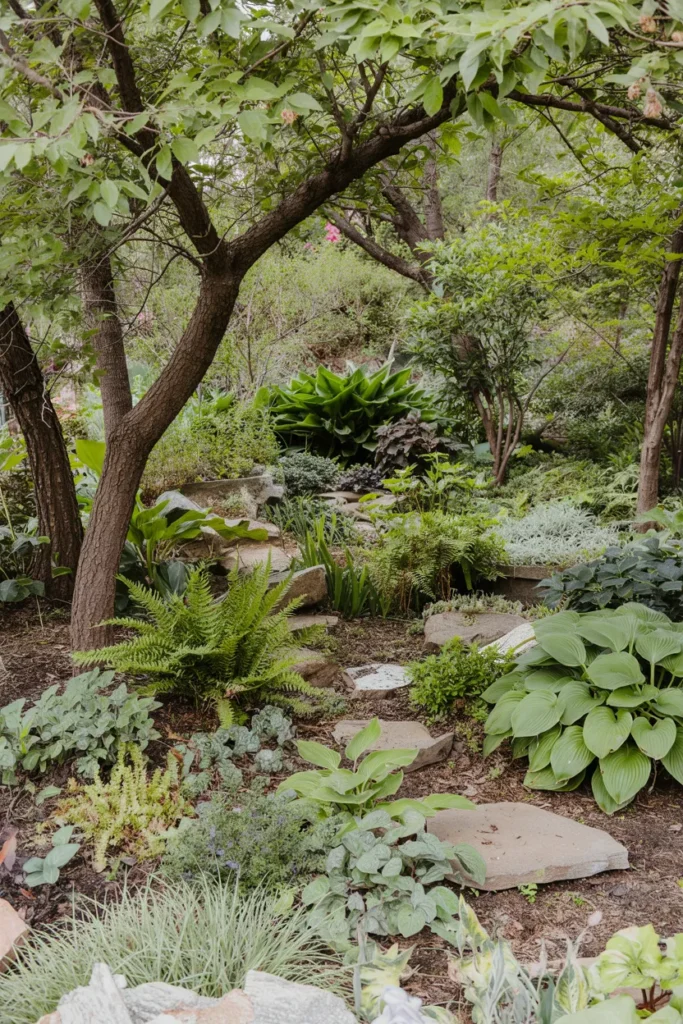
- Transforms difficult planting areas.
- Creates a natural woodland atmosphere.
- Makes mature trees a design feature.
- Adds texture and layered greenery.
- Helps low-light spaces feel purposeful.
A thoughtfully designed tree root garden can turn one of the most challenging landscape areas into a standout feature. Instead of fighting against mature roots, this approach embraces them by surrounding the space with layered foliage and woodland-inspired plantings. The combination of textures creates depth while helping the garden feel more intentional. Natural mulch, moss, and carefully selected greenery soften exposed roots and make the area appear integrated into the overall landscape. This transforms an often-overlooked space into an attractive focal point.
In my experience, working with existing conditions often leads to the most beautiful results. I’ve noticed that gardens built around mature trees tend to feel more established and connected to their surroundings. Designers frequently use layered foliage and natural materials to highlight the character of older trees rather than hiding them. The result is a landscape that feels authentic, balanced, and full of visual interest. What was once a difficult corner becomes a peaceful garden feature that enhances the entire outdoor space.
Conclusion
A beautiful garden doesn’t require full sun to make an impact. With the right shade plants, even the darkest corners can become lush, inviting spaces filled with texture, color, and year-round interest. Whether you love woodland-inspired landscapes, elegant foliage displays, or subtle seasonal blooms, these ideas offer plenty of inspiration for creating a more vibrant outdoor retreat.
I’ve seen how small changes in plant selection can completely transform a low-light area and make it feel intentional rather than challenging. Save your favorite ideas on Pinterest, try a few in your own garden, and share this article with fellow plant lovers looking to refresh their shaded spaces. A thriving, beautiful garden may be closer than you think.