21 Mosquito Free Summer Plants for an Outdoor Oasis
Dreaming of spending more time outdoors without constantly battling unwanted pests? Mosquito free summer plants can help transform your backyard into a more comfortable, beautiful, and relaxing retreat.
The right greenery does more than enhance curb appeal. Thoughtfully chosen herbs, flowers, and foliage can add color, texture, structure, and fragrance while helping create an outdoor environment you’ll actually enjoy using. Whether you have a spacious backyard, a cozy patio, or a small balcony, strategic planting can make a noticeable difference in how welcoming your space feels.
In my experience, even a few carefully placed plants can dramatically improve the atmosphere of an outdoor area. I’ve noticed that layered greenery, colorful blooms, and well-designed borders often make gardens feel more inviting and purposeful. In this collection, you’ll discover inspiring ideas that combine beauty and practicality, helping you create a summer oasis that’s both stylish and enjoyable.
1. Lavender Border
- Adds beautiful color and fragrance.
- Creates a defined garden edge.
- Enhances outdoor seating areas naturally.
- Brings a classic cottage-garden look.
- Attracts beneficial pollinators.
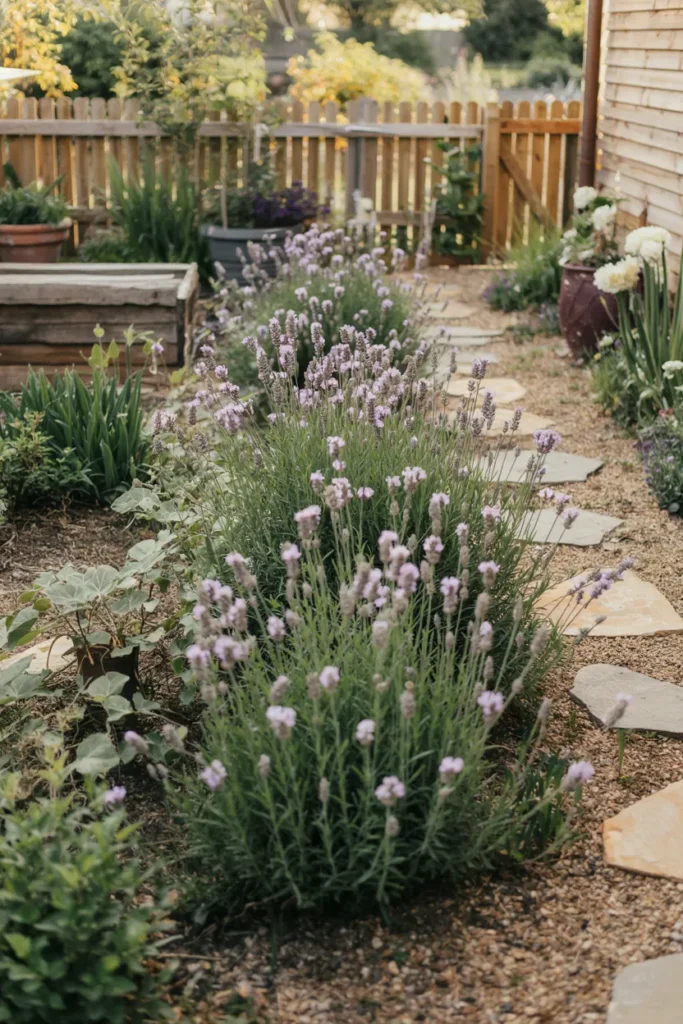
Nothing transforms a summer garden quite like a border of lavender. The vibrant purple blooms instantly brighten outdoor spaces while creating a structured and polished appearance. Positioned along pathways, patios, or garden beds, the plants introduce color and texture that make the landscape feel more intentional. Their soft movement in the breeze adds a relaxed quality that works beautifully in both formal and casual settings. The result is an outdoor environment that feels fresh, welcoming, and thoughtfully designed while offering visual interest throughout the season.
In my experience, lavender often becomes one of the most admired features in a garden because of its color and fragrance. I’ve noticed that repeating the plants along a border creates a stronger visual impact than using isolated groupings. The blooms pair beautifully with stone, gravel, and natural wood elements while helping connect different areas of the landscape. Combined with comfortable seating and warm evening lighting, the border creates an inviting retreat. The result is a backyard that feels peaceful, vibrant, and full of summer charm.
2. Citronella Planters
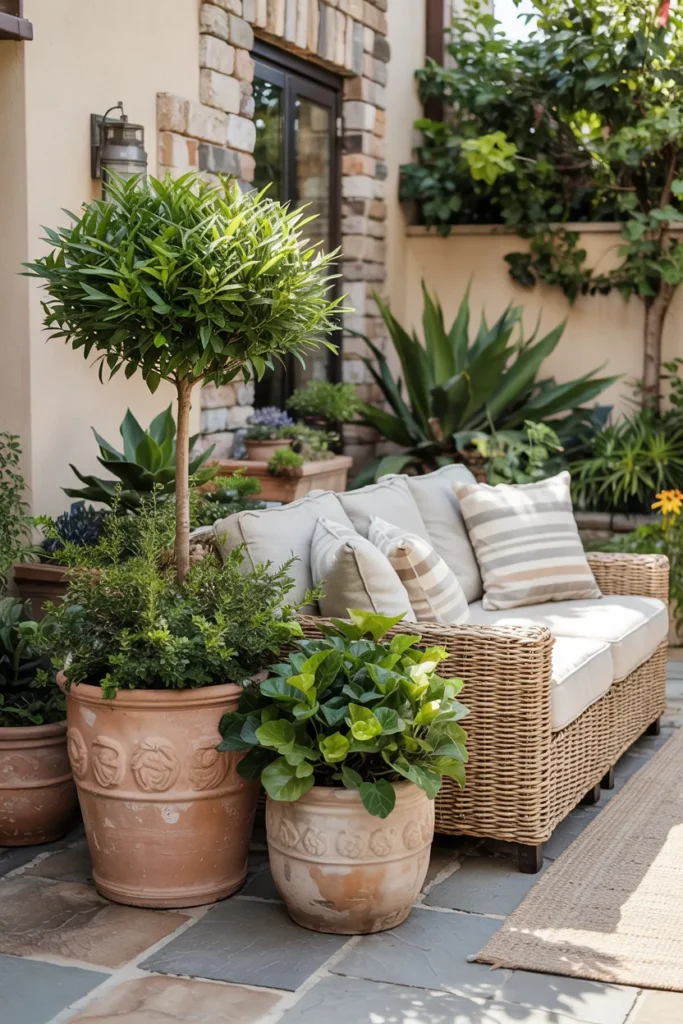
- Defines patio zones with greenery.
- Adds height and texture to seating areas.
- Creates a more inviting outdoor setup.
- Works well in containers and pots.
- Enhances the overall garden design.
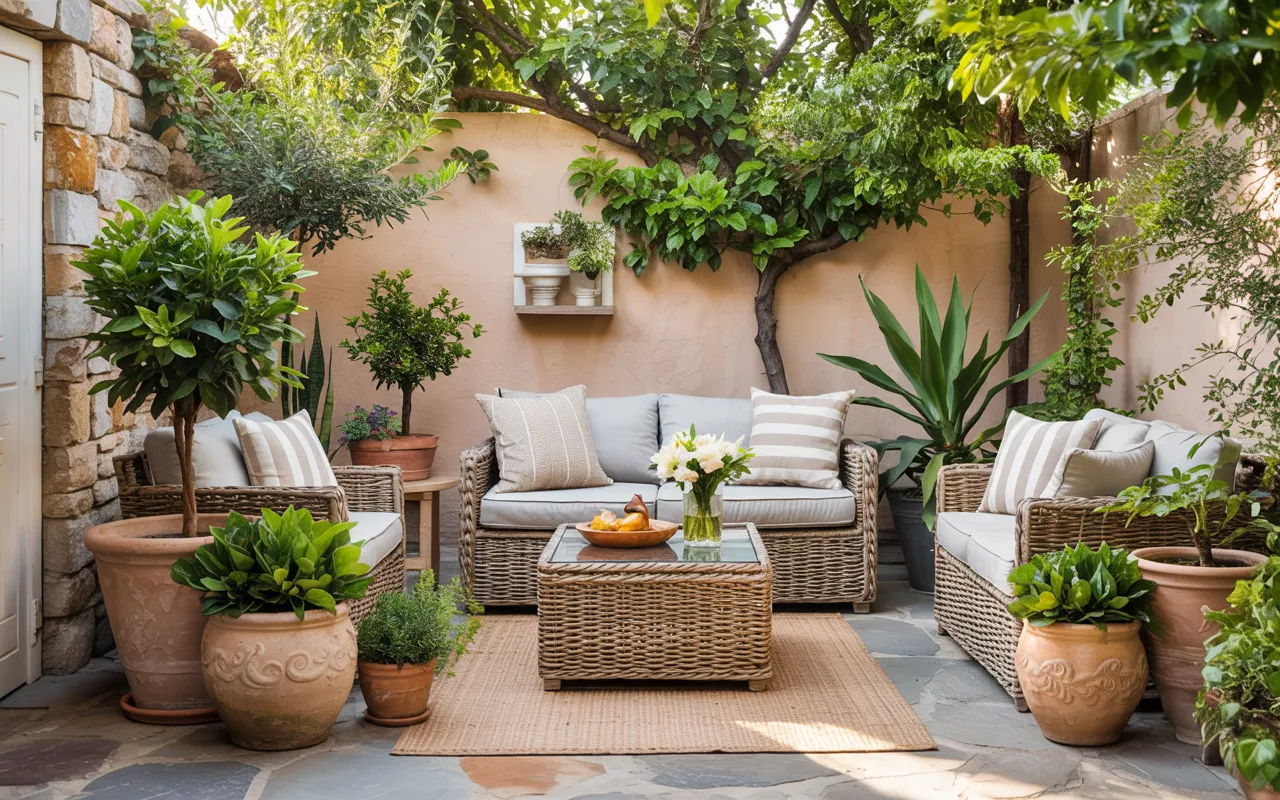
A collection of citronella planters can make a patio feel more complete and visually balanced. The tall greenery adds structure while helping frame outdoor furniture and decorative features. Positioned around seating areas, the containers create a sense of enclosure that makes the space feel more comfortable and intentional. Their fresh green foliage pairs beautifully with natural materials such as wood, stone, and woven textures. This simple arrangement helps transform an ordinary patio into an attractive outdoor destination that encourages relaxation and everyday enjoyment.
I’ve seen this work well in many homes where patios lacked greenery and visual definition. Large planters create focal points while remaining flexible enough to reposition when needed. The layered foliage softens hard surfaces and introduces a more natural atmosphere without requiring extensive landscaping. That’s why many designers recommend container plantings around outdoor seating zones. The result is a backyard area that feels stylish, organized, and perfectly suited for spending time outdoors during the warmer months.
3. Rosemary Pathway Edge
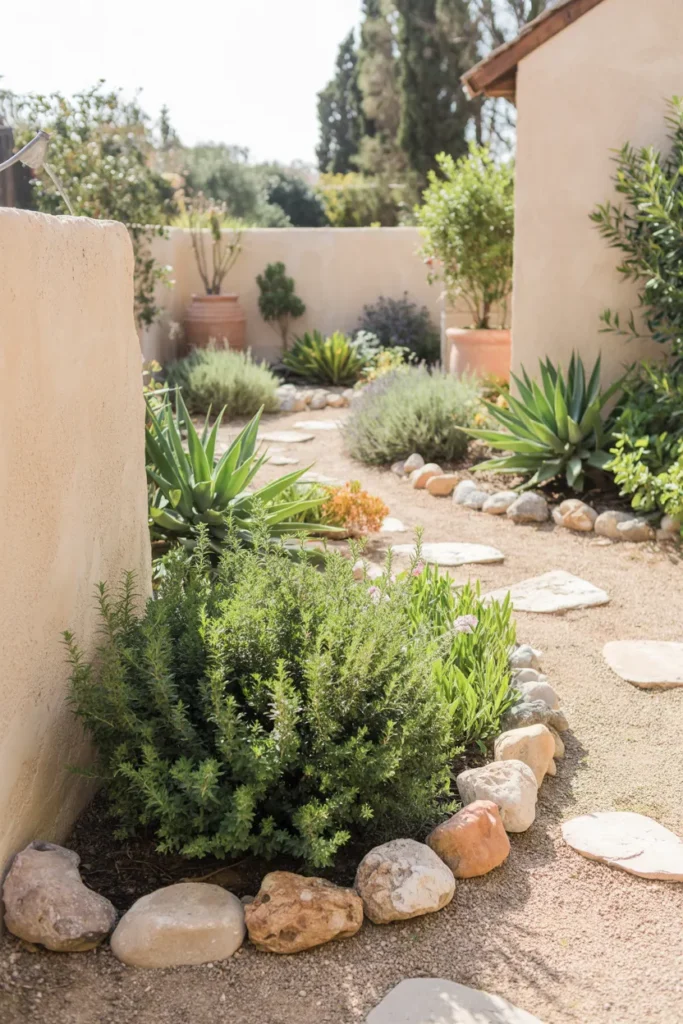
landscape photography showcasing structure, color contrast, and elegant garden design.
- Creates a neat and organized pathway.
- Adds evergreen texture year-round.
- Complements Mediterranean garden styles.
- Brings fragrance to outdoor spaces.
- Helps define landscape features clearly.
A rosemary-lined pathway instantly creates a more polished and welcoming garden experience. The evergreen foliage forms a structured edge that guides visitors through the landscape while adding texture and depth. Positioned beside gravel or stone walkways, the shrubs help establish visual rhythm and connect different areas of the yard. Their rich green color contrasts beautifully with natural materials, making the pathway stand out without appearing overly formal. This approach works especially well in sunny outdoor spaces where simplicity and elegance are equally important.
I’ve noticed that pathways feel more intentional when bordered with greenery rather than left completely exposed. Rosemary provides structure while maintaining a relaxed appearance that complements many garden styles. The foliage creates a natural transition between hardscape and planting areas, helping the overall design feel cohesive. Combined with flowering plants and decorative containers, the effect becomes even more appealing. The result is a garden pathway that feels inviting, balanced, and beautifully integrated into the surrounding landscape.
4. Basil Container Cluster
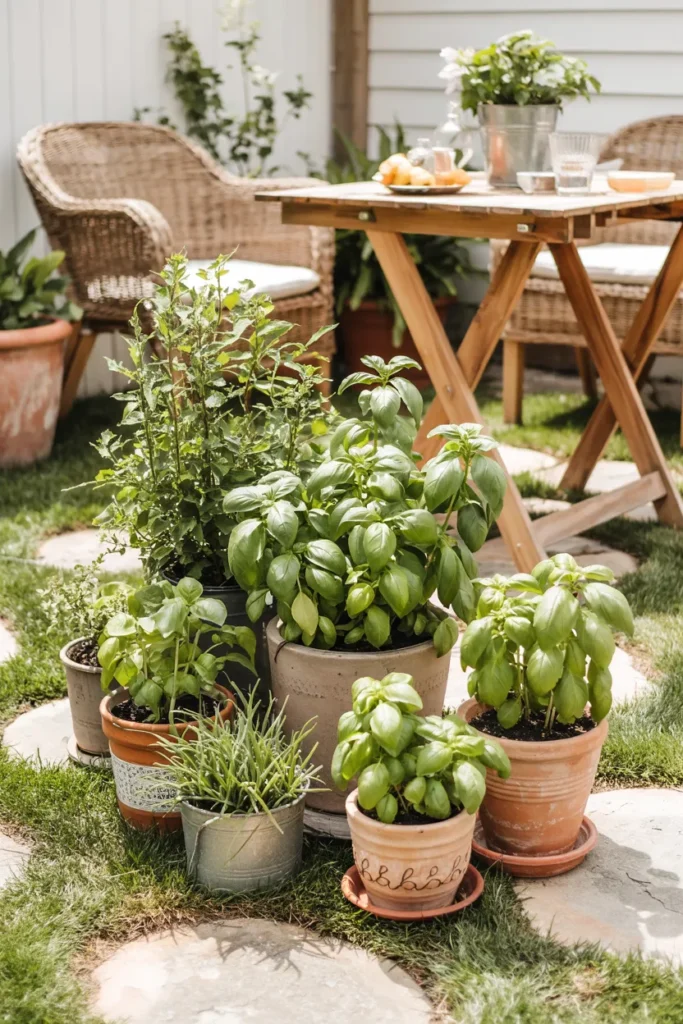
- Creates a lush container display.
- Adds fresh greenery to patios and decks.
- Works well in small outdoor spaces.
- Enhances outdoor dining areas.
- Provides both beauty and functionality.
A grouping of basil containers can instantly make an outdoor seating area feel more vibrant and inviting. The rich green foliage introduces texture while helping patios and balconies feel fuller without requiring permanent garden beds. Arranged in varying heights, the containers create visual depth and make the space feel professionally styled. This approach is especially useful in compact yards where every decorative element needs to work harder. The result is an outdoor area that feels fresh, organized, and naturally connected to the surrounding landscape.
In my experience, clustered container gardens often create more visual impact than individual pots scattered throughout a yard. I’ve noticed that grouping greenery around seating areas helps define the space and make it feel more intentional. The layered foliage softens hard surfaces while adding a sense of abundance. Combined with natural materials and comfortable furniture, the arrangement creates a welcoming environment that encourages outdoor relaxation. The result is a backyard retreat that feels lively, practical, and beautifully designed.
5. Lemongrass Privacy Row
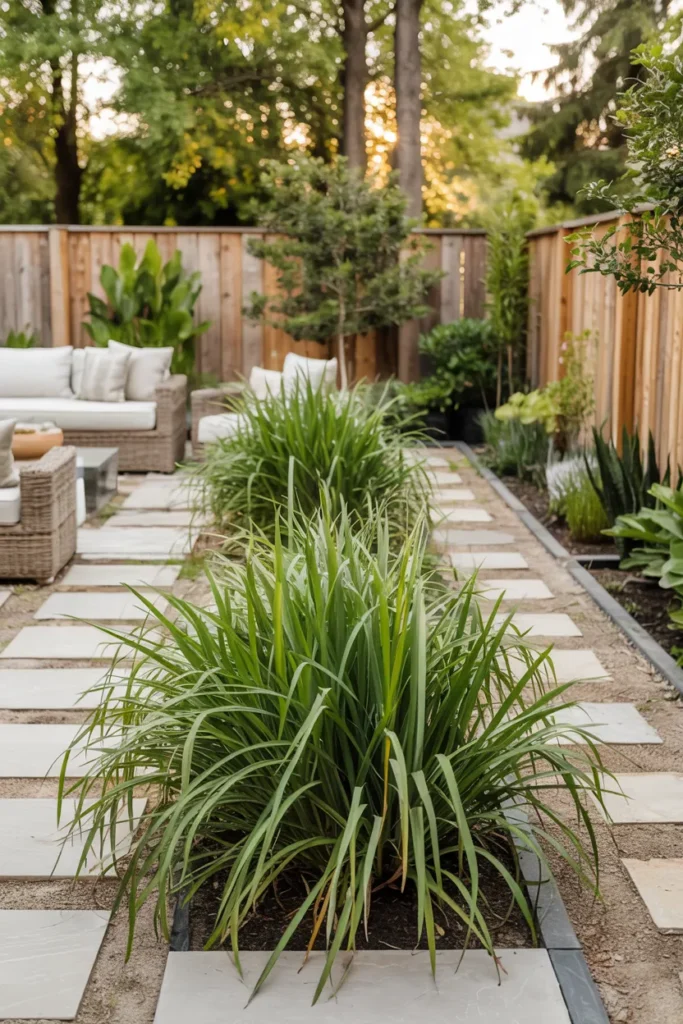
- Adds height without heavy structures.
- Creates a natural sense of privacy.
- Softens fences and hard boundaries.
- Brings movement to the landscape.
- Enhances modern garden layouts.
A row of lemongrass can transform an exposed patio into a more comfortable and visually appealing outdoor space. The tall foliage creates a natural screen that helps define seating areas while maintaining an open and airy feel. Unlike solid barriers, the grass-like texture introduces movement that makes the landscape feel more dynamic. Positioned along fences or property lines, it softens hard edges and creates a smoother transition between different sections of the yard. The result is a garden that feels more private, balanced, and welcoming.
I’ve seen this work well in many homes where homeowners wanted additional screening without installing bulky structures. The upright foliage adds vertical interest while helping larger spaces feel more organized. Designers often use tall ornamental-style plantings to create subtle boundaries that blend naturally into the landscape. Combined with gravel, stone, and outdoor furniture, the effect feels modern and relaxed. The result is an outdoor environment that appears thoughtfully planned while remaining visually light and inviting.
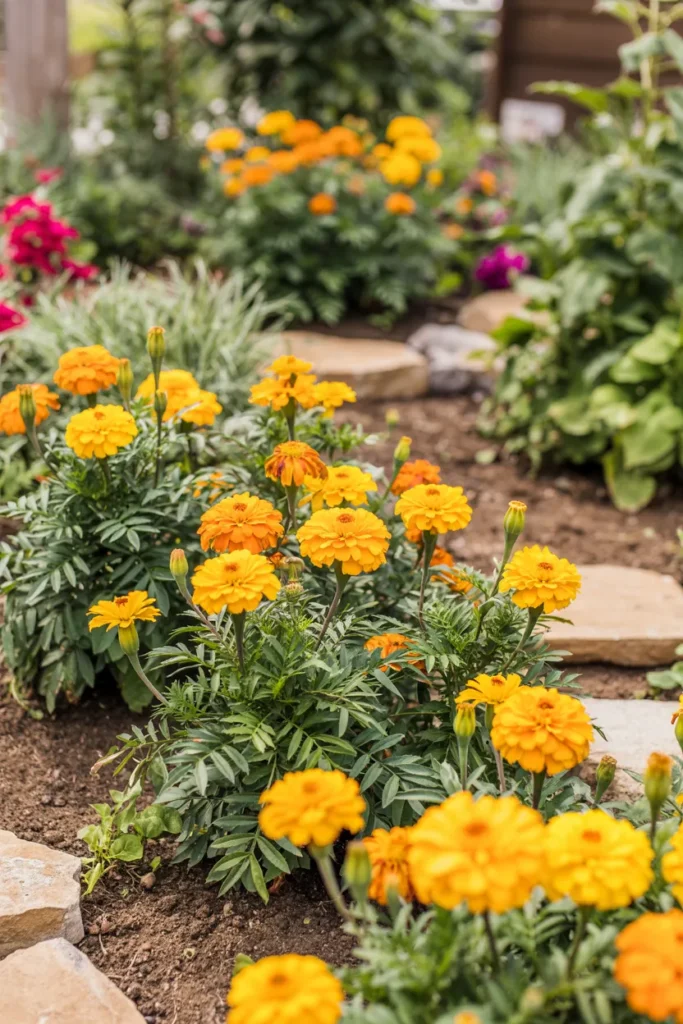
6. Marigold Flower Bed
- Adds bright seasonal color.
- Creates eye-catching garden borders.
- Enhances curb appeal instantly.
- Pairs well with vegetables and herbs.
- Brings cheerful energy to outdoor spaces.
A bed filled with marigolds can instantly brighten a garden and create a strong visual focal point. The warm colors stand out beautifully against green foliage and help make planting beds feel more lively and intentional. Positioned near pathways, patios, or vegetable gardens, the flowers introduce energy while enhancing the overall design. Their dense blooms create a layered effect that adds texture and depth. This simple planting choice can dramatically improve the appearance of outdoor spaces throughout the summer season.
I’ve noticed that colorful flowers often have a remarkable ability to make a garden feel more welcoming. Marigolds are particularly effective because their vivid tones create contrast and draw attention naturally. The blooms pair beautifully with herbs, ornamental grasses, and flowering perennials, making them easy to incorporate into many garden styles. Combined with stone borders and natural materials, they help create a balanced and visually engaging landscape. The result is a backyard that feels cheerful, vibrant, and full of seasonal character.
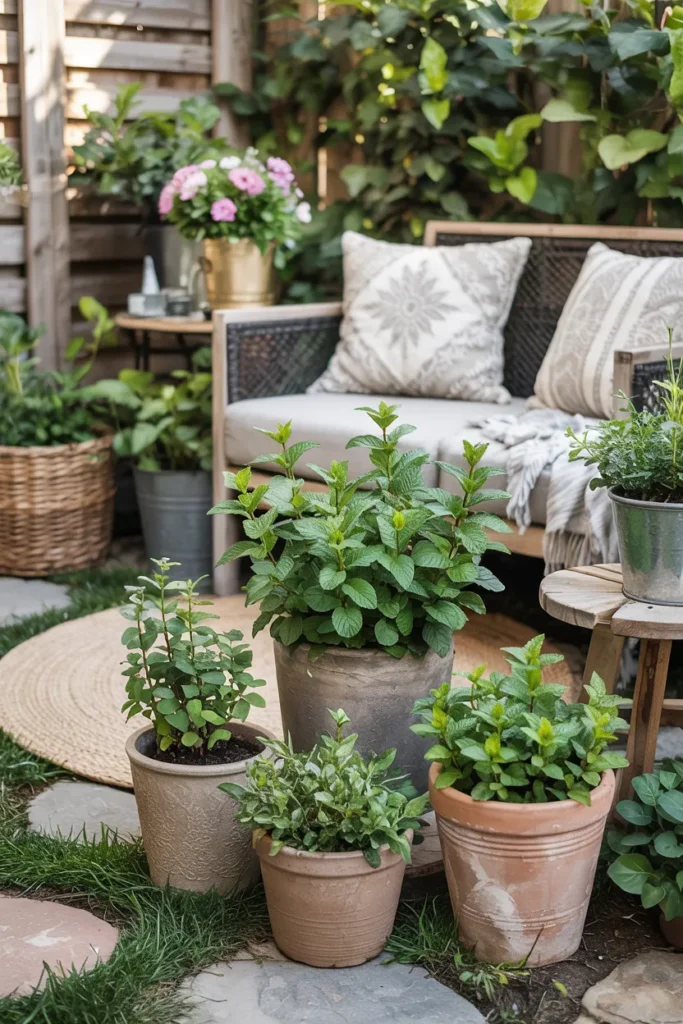
7. Mint Patio Pots
- Adds fresh greenery near gathering spaces.
- Works well in containers and raised planters.
- Creates a lush layered appearance.
- Enhances small patios beautifully.
- Brings texture to outdoor decor.
A collection of mint-filled pots can instantly make a patio feel greener and more inviting. The dense foliage creates a lush appearance that softens hard surfaces such as stone, concrete, and wood. Arranged around seating areas, the containers help define outdoor zones while adding depth and visual interest. Because they are easy to move and rearrange, they offer flexibility for changing layouts throughout the season. The result is a patio that feels more vibrant, comfortable, and naturally connected to the surrounding landscape.
I’ve seen this work well in many homes where outdoor spaces needed a simple visual refresh. Grouping several containers together creates a stronger impact than scattering individual pots throughout the yard. The layered greenery adds a sense of abundance while maintaining a neat and organized appearance. Combined with outdoor lighting and comfortable furniture, the setup feels both practical and stylish. The result is a backyard retreat that encourages relaxation and everyday enjoyment.
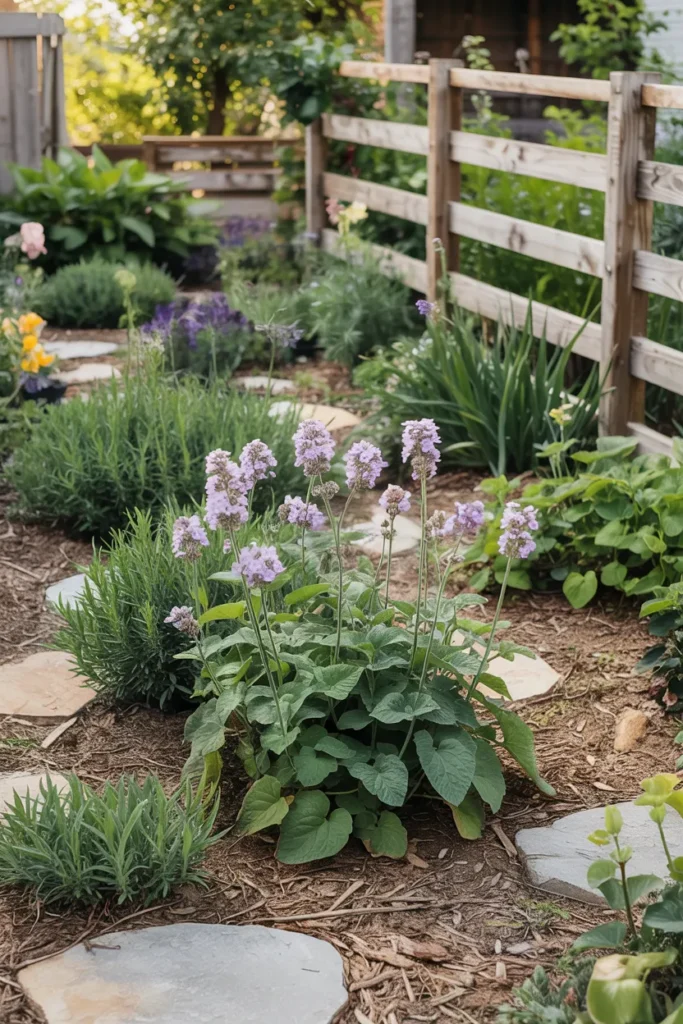
8. Catnip Garden Border
- Softens pathways and garden edges.
- Adds delicate color and texture.
- Creates a relaxed cottage-garden look.
- Blends well with flowering perennials.
- Enhances the flow of the landscape.
A catnip border can add softness and charm to outdoor spaces while helping pathways feel more intentional. The delicate blooms and textured foliage create a natural transition between hardscape features and planting beds. Positioned along walkways, the plants introduce movement that keeps the landscape feeling dynamic and visually appealing. Their relaxed growth habit works particularly well in cottage-inspired gardens where layered textures are important. This simple addition helps transform ordinary pathways into more attractive and inviting garden features.
In my experience, softer plantings often make landscapes feel more welcoming than rigid borders. I’ve noticed that catnip pairs beautifully with roses, ornamental grasses, and perennial flowers while helping connect different areas of the garden. The blooms contribute gentle color without overwhelming surrounding plantings. Designers frequently use this type of border to create flow and continuity throughout outdoor spaces. The result is a landscape that feels cohesive, relaxed, and naturally beautiful throughout the summer months.
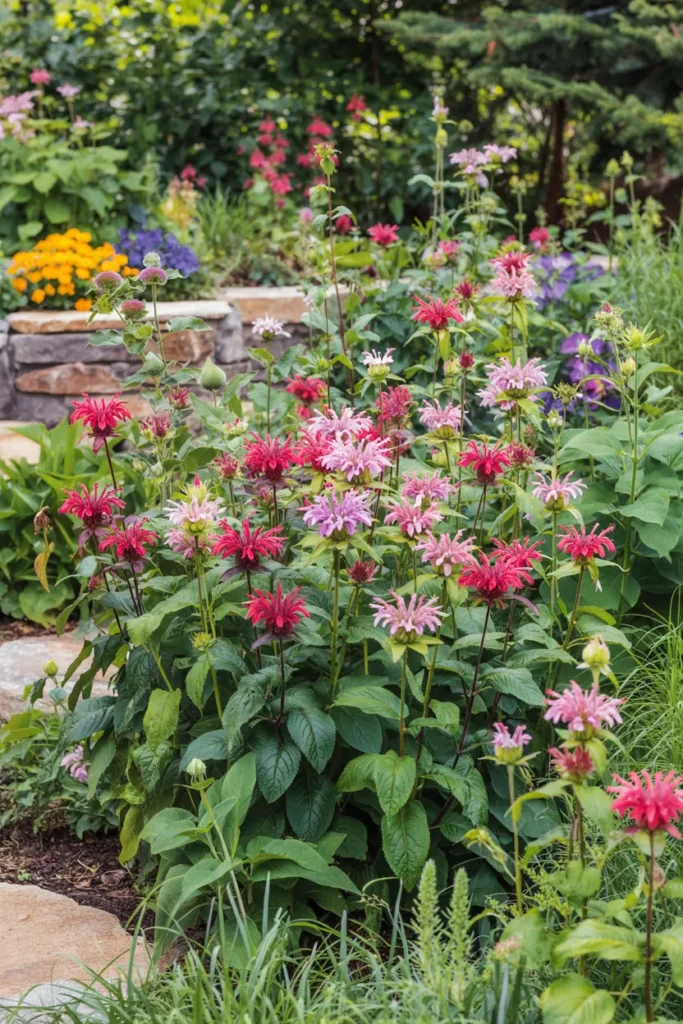
9. Bee Balm Patch
- Adds bold seasonal color.
- Creates a strong garden focal point.
- Attracts beneficial pollinators.
- Enhances layered flower beds.
- Brings energy and movement to the landscape.
A patch of bee balm can completely transform a garden bed by introducing vivid color and texture. The unique blooms create visual excitement while helping larger planting areas feel more dynamic and engaging. Positioned near patios or along garden borders, the flowers provide a focal point that draws attention naturally. Their upright growth adds height and structure, making surrounding plants appear more layered and balanced. This planting choice helps create an outdoor environment that feels lively, colorful, and full of seasonal interest.
I’ve noticed that bold flowering displays often become the highlight of a summer landscape. Bee balm works especially well when planted in groups because the repeating color creates a stronger visual statement. Combined with ornamental grasses and perennial flowers, the blooms contribute depth and movement throughout the garden. That’s why many designers recommend mass plantings when creating eye-catching outdoor spaces. The result is a backyard that feels vibrant, inviting, and beautifully designed for warm-weather enjoyment.
Related Article : 22 Air Purifying House Plants for a Fresher Home
10. Sage Stone Border
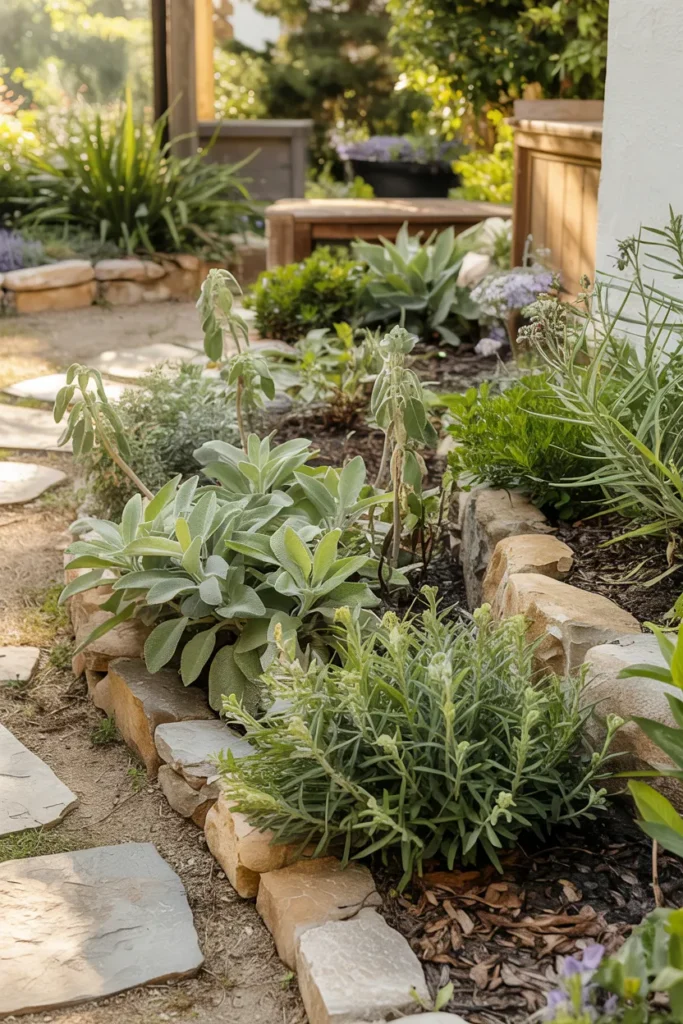
- Adds soft silvery color to planting beds.
- Creates a clean and structured border.
- Complements stone and gravel features.
- Enhances Mediterranean-style gardens.
- Provides year-round visual texture.
A sage-lined border can instantly make a garden feel more polished and thoughtfully designed. The soft gray-green foliage creates beautiful contrast against stone pathways, gravel, and flowering plants while maintaining a refined appearance. Positioned along walkways or patio edges, the plants help define outdoor spaces and establish visual structure. Their subtle color palette blends effortlessly with natural materials and warm-toned landscaping. This simple approach transforms ordinary garden borders into attractive features that add depth and balance throughout the landscape.
I’ve seen this work well in many homes where garden beds needed additional texture without relying solely on flowers. The foliage remains attractive for long periods and helps create consistency throughout the design. Designers often use sage to soften hardscape elements while maintaining a clean, organized appearance. Combined with decorative stone and drought-friendly plantings, the effect feels relaxed yet sophisticated. The result is an outdoor space that appears elegant, cohesive, and beautifully suited to summer living.
11. Geranium Patio Display
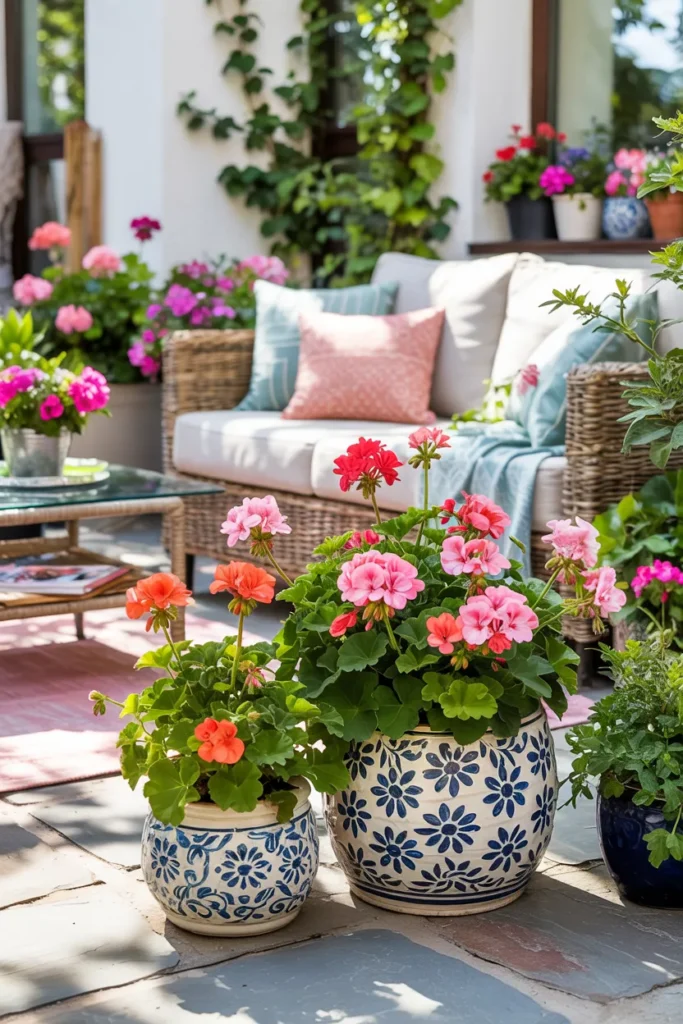
- Adds vibrant color near seating areas.
- Creates attractive container arrangements.
- Enhances patios and balconies easily.
- Pairs well with outdoor furniture.
- Brings seasonal charm to the landscape.
A patio display filled with geraniums can instantly brighten outdoor living spaces. The colorful blooms create focal points that draw attention while helping furniture arrangements feel more complete. Positioned in decorative containers, the flowers add flexibility and can be moved to suit changing layouts. Their rich colors contrast beautifully with natural materials and neutral outdoor decor. This setup helps transform patios into welcoming gathering spaces that feel vibrant and full of life throughout the summer season.
In my experience, container flowers often provide one of the fastest ways to refresh an outdoor area. I’ve noticed that geraniums perform especially well when grouped together because the repeating color creates stronger visual impact. The blooms help soften hard surfaces while adding warmth and personality to the space. Combined with lanterns, cushions, and greenery, the display becomes even more inviting. The result is a patio that feels cheerful, stylish, and perfectly suited for outdoor entertaining.
12. Lemon Thyme Walkway
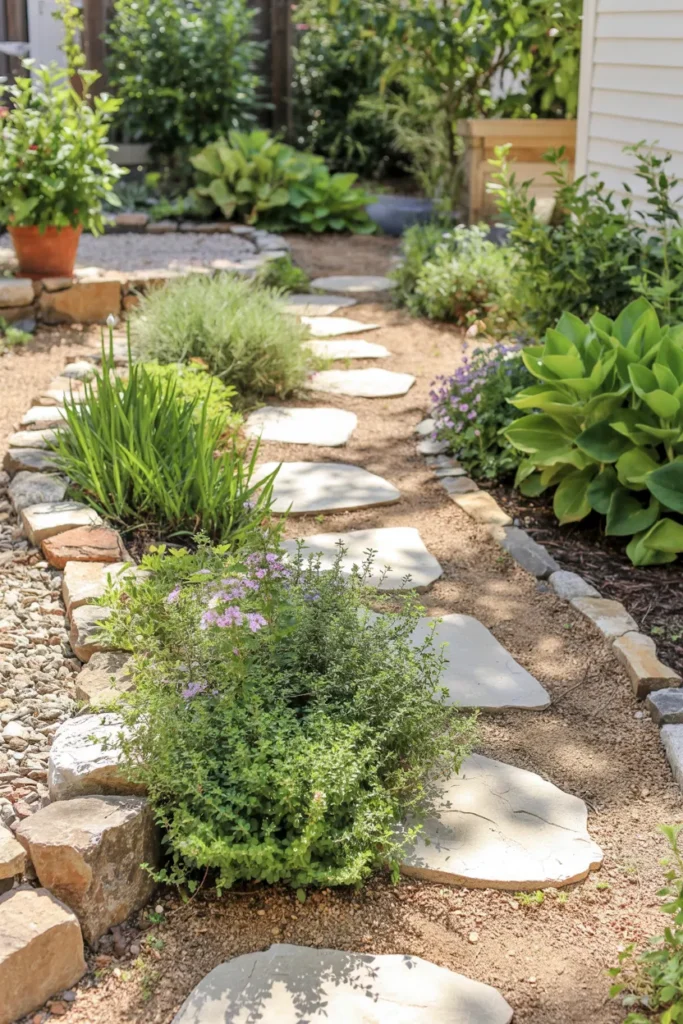
- Softens pathway edges naturally.
- Adds texture at ground level.
- Creates a charming cottage-garden look.
- Enhances visual interest along walkways.
- Complements stone landscaping beautifully.
A lemon thyme walkway can completely transform the appearance of a garden path. The low-growing foliage fills spaces around stones and borders, creating a softer and more inviting look. Its compact growth habit helps connect hardscape features with surrounding planting beds, making the landscape feel more cohesive. Positioned along pathways, the greenery introduces texture that keeps the garden visually engaging from every angle. This simple planting strategy helps turn an ordinary path into an attractive feature that enhances the overall outdoor design.
I’ve noticed that pathways feel far more welcoming when they include greenery close to the ground. Lemon thyme creates that effect while maintaining a tidy and organized appearance. Designers frequently use low-growing plants to soften stone edges and establish visual continuity throughout the landscape. Combined with flowering perennials and natural materials, the result feels charming and well-balanced. The outcome is a garden pathway that appears more polished, inviting, and beautifully integrated into the surrounding space.
13. Eucalyptus Container Grove
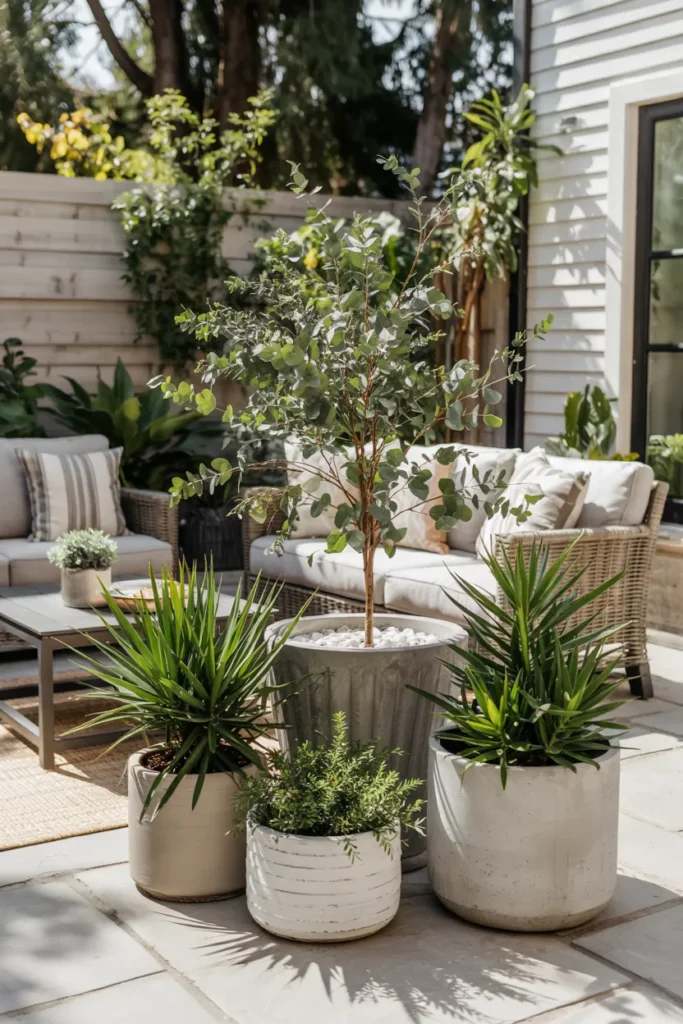
- Adds height and structure to patios.
- Creates a modern designer-inspired look.
- Introduces unique foliage color.
- Enhances outdoor seating areas naturally.
- Works beautifully in large containers.
A grouping of eucalyptus containers can instantly elevate the appearance of a patio or deck. The silvery foliage creates a refreshing contrast against wood, stone, and neutral outdoor furnishings while introducing texture and height. Arranged around seating areas, the planters help define spaces and create a more intentional layout. Their elegant color palette blends beautifully with contemporary landscapes and minimalist decor. This setup transforms outdoor living areas into sophisticated retreats that feel both stylish and inviting throughout the summer season.
I’ve seen this work well in many homes where patios needed additional greenery without permanent garden beds. The containers provide flexibility while creating a strong visual impact. The soft foliage catches sunlight beautifully and adds movement that keeps the landscape feeling dynamic. Designers often use eucalyptus to introduce subtle color variation and create a more refined atmosphere. The result is an outdoor space that feels modern, balanced, and effortlessly elegant.
14. Pennyroyal Ground Cover
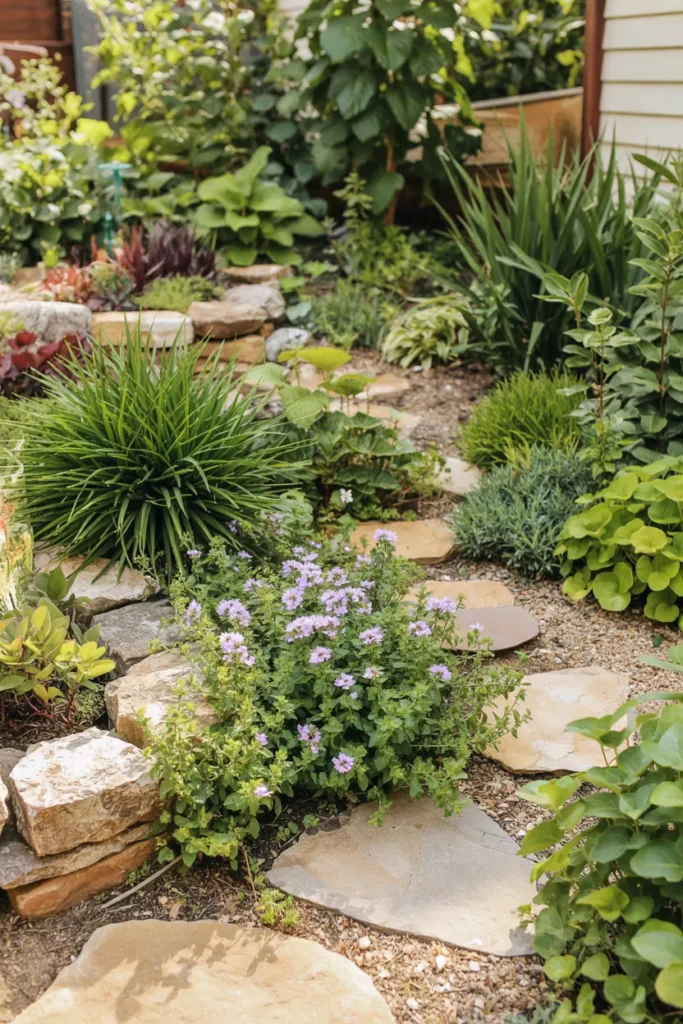
- Fills empty spaces with greenery.
- Softens hardscape features naturally.
- Creates a lush garden appearance.
- Enhances pathways and borders.
- Adds texture without visual clutter.
A dense pennyroyal ground cover can make a landscape feel fuller and more connected. The low-growing greenery spreads between stones and along borders, helping eliminate bare patches that interrupt the flow of the garden. Its compact habit creates a smooth transition between hardscape elements and larger plantings. Positioned around pathways and decorative features, it introduces texture while maintaining a tidy appearance. This simple addition helps create a more cohesive outdoor environment that feels lush, inviting, and thoughtfully designed.
In my experience, ground covers often play a major role in making gardens feel professionally finished. I’ve noticed that filling gaps with low-growing greenery creates a stronger sense of continuity throughout the landscape. The rich foliage complements flowers, shrubs, and stone features while reducing visual interruptions. Combined with layered plantings and natural materials, the effect becomes even more attractive. The result is a garden that feels complete, balanced, and beautifully maintained throughout the season.
15. Lemon Balm Retreat
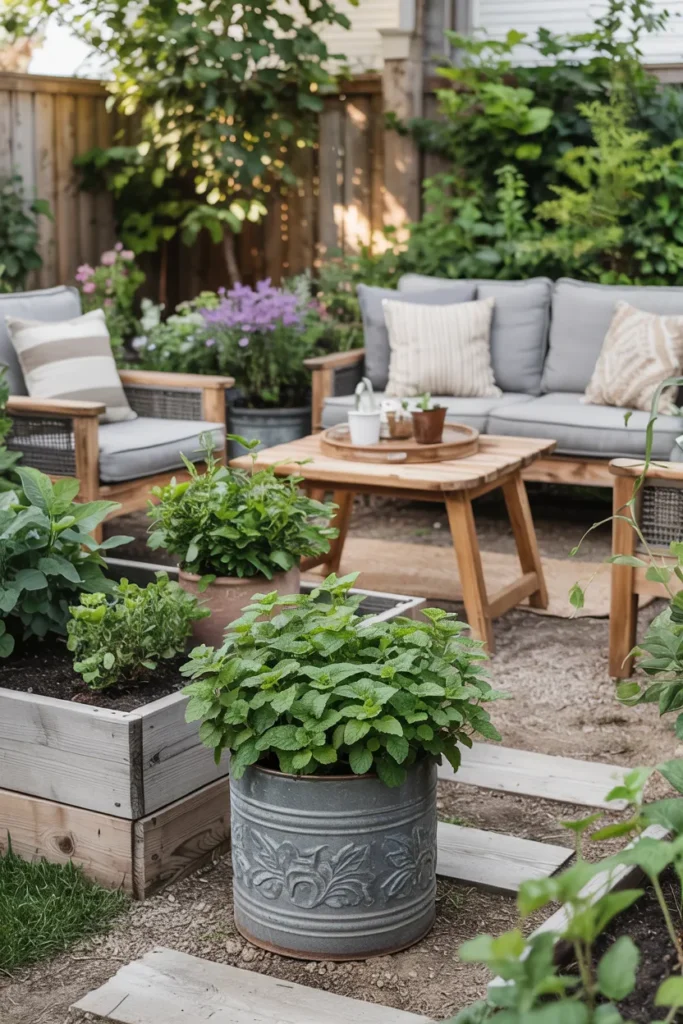
- Creates a relaxing outdoor atmosphere.
- Adds greenery around seating zones.
- Enhances raised bed designs.
- Brings texture and fullness to gardens.
- Makes outdoor spaces feel more welcoming.
A lemon balm retreat can transform an ordinary seating area into a more comfortable and attractive outdoor destination. The lush foliage creates a soft backdrop that helps define the space while introducing natural texture. Positioned around benches, patios, or conversation areas, the greenery contributes to a calmer and more inviting environment. The layered planting style also helps soften hard surfaces and create a stronger connection between the seating zone and surrounding garden. The result is an outdoor setting that feels cozy, fresh, and beautifully integrated.
I’ve noticed that seating areas become more enjoyable when surrounded by greenery rather than left completely exposed. Lemon balm adds fullness without overwhelming nearby furniture or decorative features. Designers often use layered plantings around gathering spaces to create a stronger sense of enclosure and comfort. Combined with outdoor lighting and natural materials, the effect becomes even more welcoming. The result is a backyard retreat that feels peaceful, stylish, and perfect for enjoying summer evenings.
16. Catmint Flower Drift
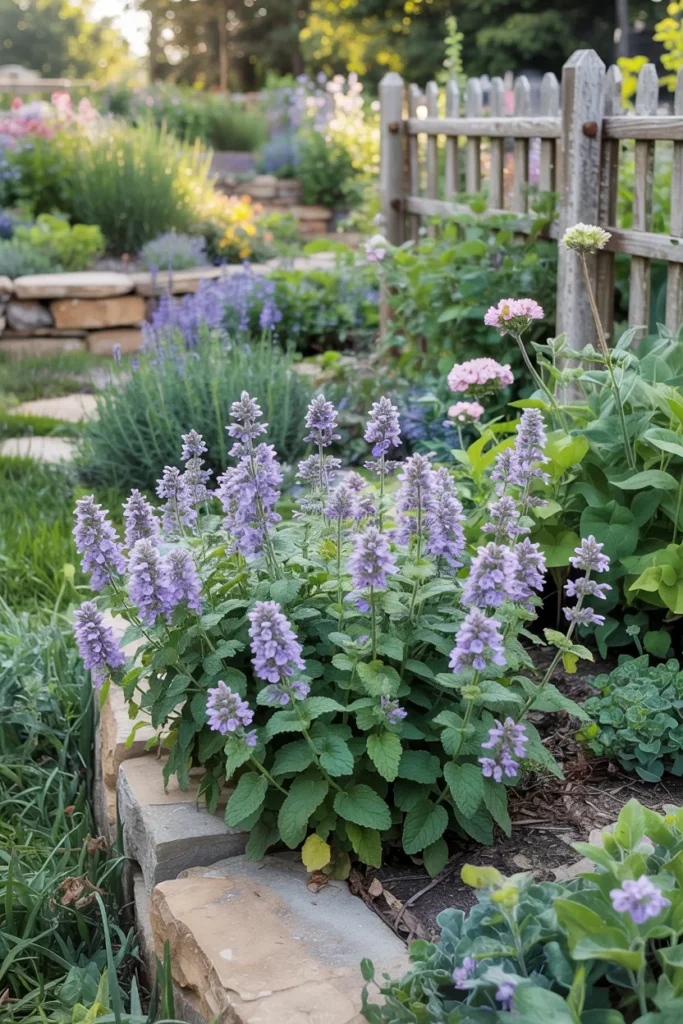
- Adds soft color throughout the landscape.
- Creates movement and texture in garden beds.
- Blends beautifully with perennial plantings.
- Enhances cottage-style garden designs.
- Makes larger planting areas feel cohesive.
A broad drift of catmint can completely transform the appearance of a summer garden. The flowing blooms create a carpet of color that softens pathways, borders, and surrounding plantings. When used in large groupings, the repeated texture helps connect different sections of the landscape while creating a more unified design. The gentle tones complement a wide variety of flowers and shrubs, making the garden feel layered and balanced. This approach turns ordinary planting beds into eye-catching features that remain attractive throughout much of the season.
I’ve seen this work well in many homes where garden beds felt disconnected or lacked visual flow. The repeating blooms create rhythm and continuity while adding softness to the overall design. Designers frequently use large drifts of flowering perennials to establish movement and create stronger focal points. Combined with ornamental grasses and natural stone, the result feels relaxed and beautifully integrated. The outcome is a garden that appears vibrant, welcoming, and professionally designed.
17. Allium Accent Bed
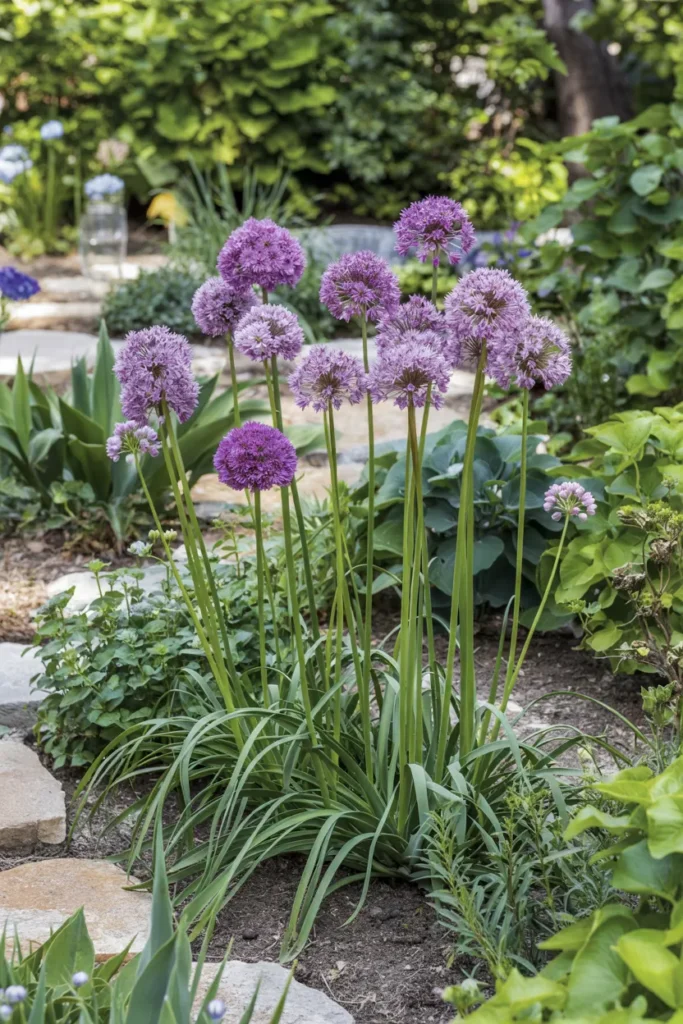
- Adds height and architectural interest.
- Creates strong focal points in planting beds.
- Introduces unique flower shapes.
- Enhances layered landscape designs.
- Brings elegance to summer gardens.
An allium accent bed instantly adds structure and sophistication to a landscape. The tall stems and distinctive flower heads create visual contrast that helps break up lower-growing plantings. Positioned among perennials and ornamental grasses, the blooms introduce height while maintaining an airy appearance. Their unique shape draws attention naturally and creates focal points throughout the garden. This simple planting strategy helps transform ordinary flower beds into more dynamic and visually engaging outdoor spaces.
In my experience, architectural flowers often create a stronger impact than traditional blooms because they add shape as well as color. I’ve noticed that alliums work particularly well when repeated throughout a planting scheme. The vertical elements help guide the eye through the landscape and create a sense of balance. Combined with softer foliage and flowering plants, they contribute depth and variety. The result is a garden that feels elegant, structured, and beautifully layered from every angle.
18. Basil Raised Beds
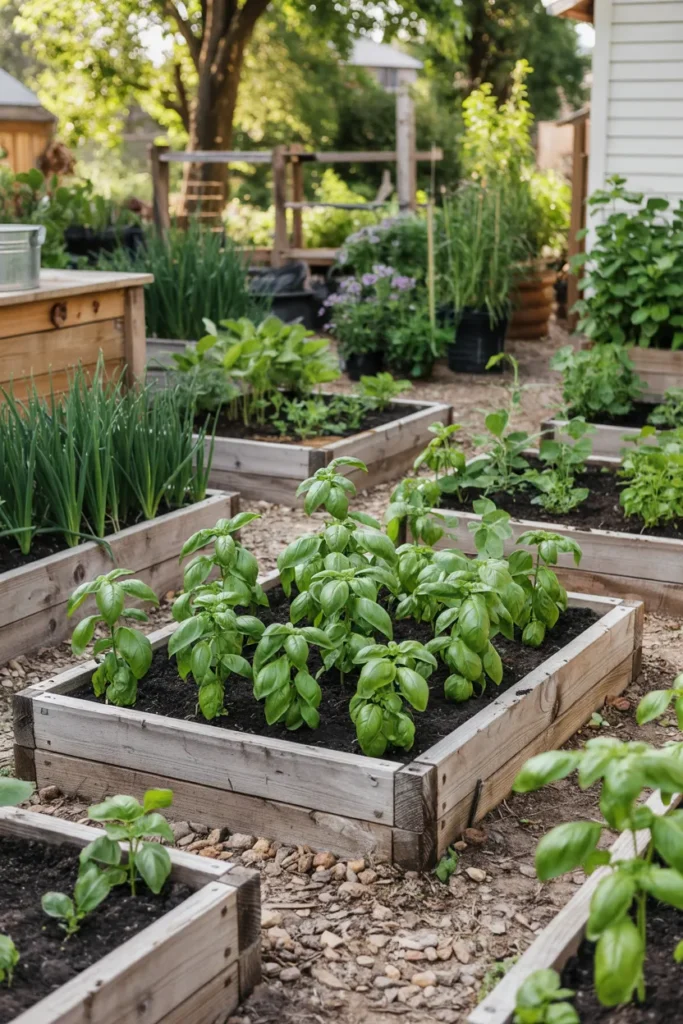
- Creates organized garden structure.
- Adds lush greenery to growing spaces.
- Enhances the look of raised beds.
- Makes backyard gardens feel more productive.
- Combines beauty with functionality.
A raised bed filled with basil can instantly make a backyard garden feel more abundant and purposeful. The rich green foliage creates visual fullness while helping define the layout of the growing area. Surrounded by natural wood borders and pathways, the planting feels organized and easy to maintain. This setup works especially well in smaller yards where every feature should contribute both beauty and function. The result is a garden space that feels productive, attractive, and thoughtfully planned.
I’ve noticed that raised beds often look more appealing when filled densely with greenery rather than leaving large areas of exposed soil. The foliage helps soften hard edges while creating a sense of abundance throughout the garden. Designers frequently use raised bed plantings to establish structure and improve visual flow within outdoor spaces. Combined with gravel paths and decorative containers, the effect becomes even more attractive. The result is a backyard that feels organized, vibrant, and full of summer character.
19. Scented Geranium Border
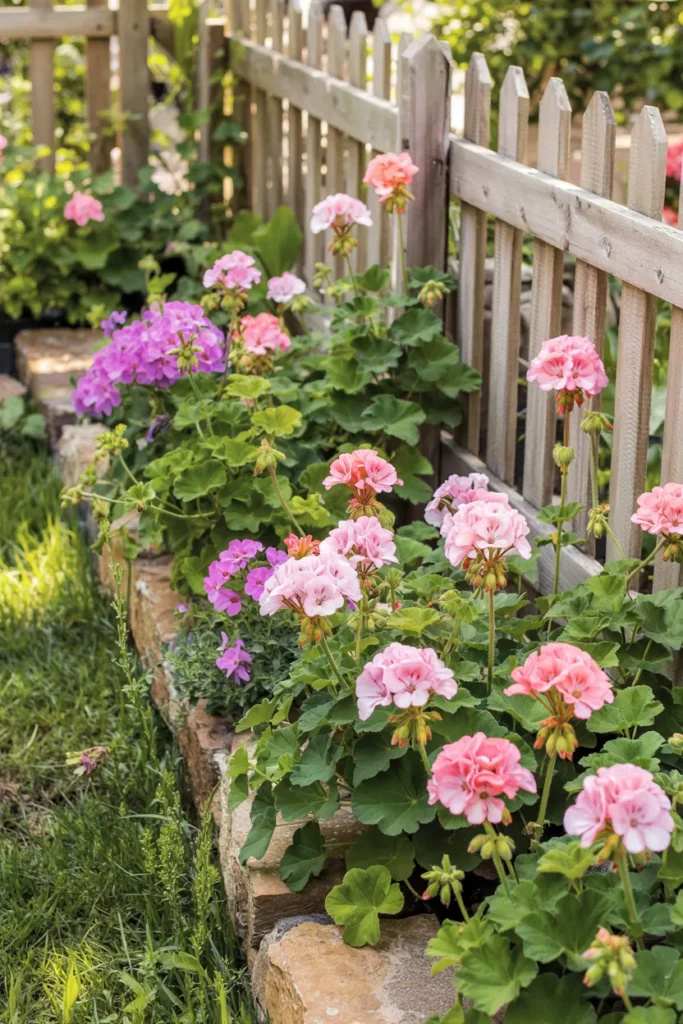
- Creates a colorful garden edge.
- Adds texture and visual depth.
- Enhances cottage-style landscapes.
- Softens pathways and borders.
- Brings seasonal beauty to outdoor spaces.
A scented geranium border can instantly make a garden feel more vibrant and thoughtfully designed. The layered foliage and colorful blooms create a natural frame that helps define planting beds and pathways. Positioned along walkways or patio edges, the plants add texture and visual interest without overwhelming surrounding features. Their soft colors blend beautifully with ornamental grasses, herbs, and flowering perennials. This simple planting strategy helps transform ordinary garden borders into attractive features that feel welcoming and full of seasonal charm.
I’ve seen this work well in many homes where pathways lacked definition or planting beds needed more visual structure. The repeated foliage and flowers create rhythm while helping connect different areas of the landscape. Designers often use flowering borders to establish continuity and add softness to outdoor spaces. Combined with natural stone and rustic materials, the effect feels timeless and inviting. The result is a backyard that appears colorful, balanced, and beautifully maintained throughout summer.
20. Feverfew Cottage Patch
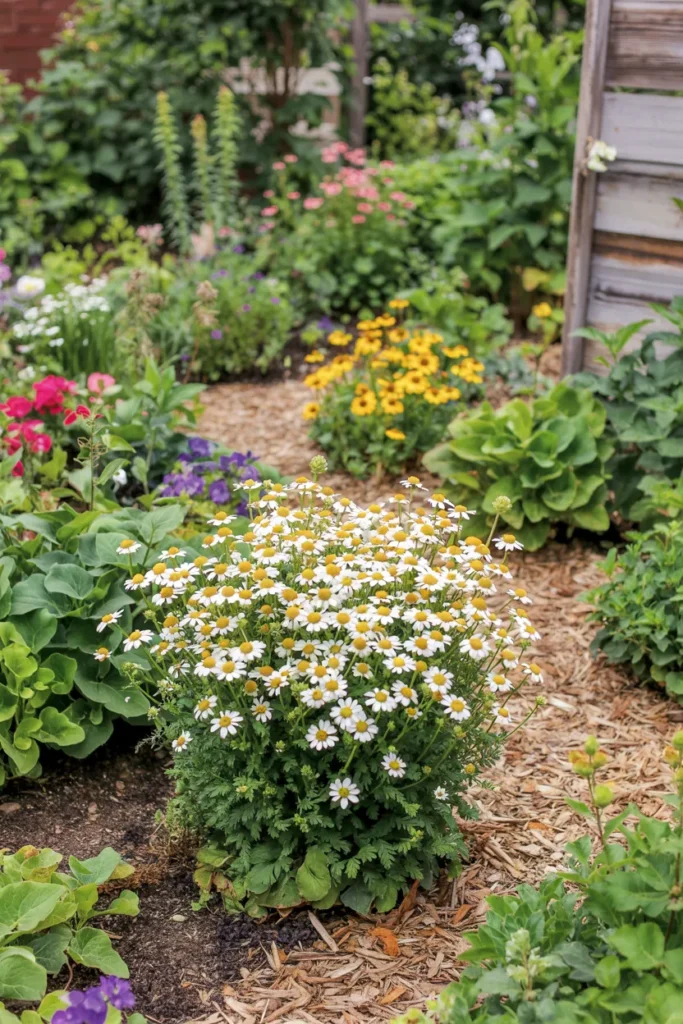
- Adds cheerful blooms to planting beds.
- Creates a soft cottage-garden look.
- Brightens outdoor spaces naturally.
- Blends well with mixed flower borders.
- Enhances visual texture throughout the landscape.
A feverfew patch can instantly bring charm and brightness to a summer garden. The daisy-like flowers create a cheerful display that contrasts beautifully against green foliage and surrounding plantings. Positioned within mixed borders or dedicated flower beds, the blooms add texture and movement that keep the landscape visually engaging. Their light appearance helps soften larger shrubs and structural elements while maintaining a relaxed and welcoming atmosphere. This planting style creates a garden that feels lively, colorful, and effortlessly beautiful.
In my experience, smaller flowers often have a surprisingly strong impact when planted in generous clusters. I’ve noticed that feverfew works especially well alongside herbs, ornamental grasses, and traditional cottage-garden favorites. The repeating blooms create a sense of abundance while helping unify the overall design. Combined with natural pathways and rustic garden features, the effect feels both charming and practical. The result is an outdoor space that feels inviting, fresh, and full of summer personality.
21. Mixed Herb Oasis
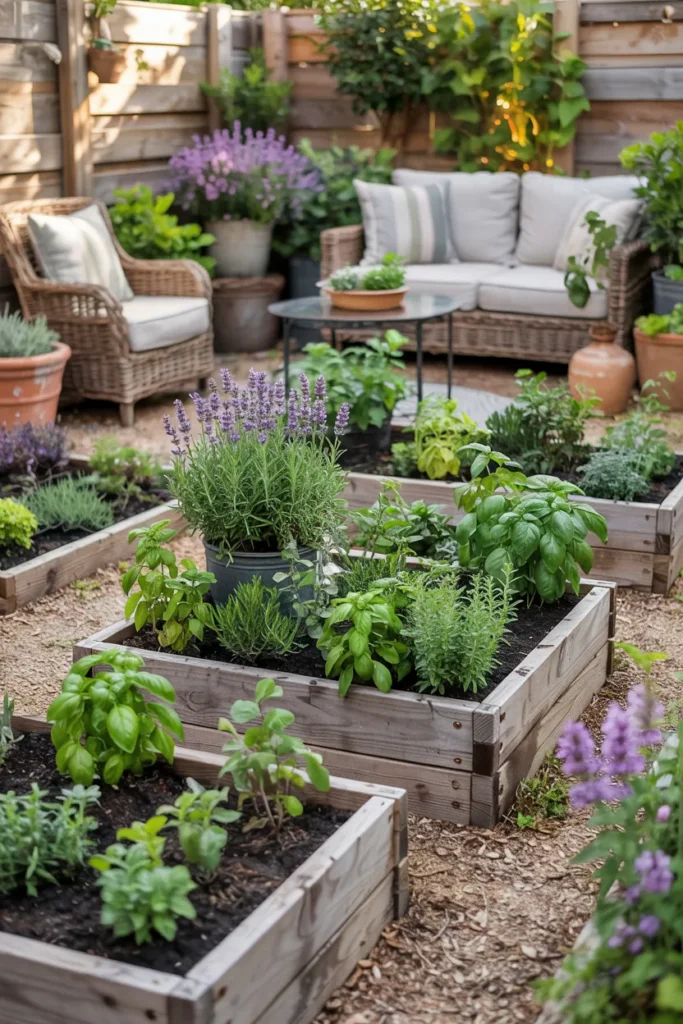
- Combines multiple garden favorites in one space.
- Creates a lush and layered landscape.
- Enhances outdoor seating areas.
- Adds texture, color, and variety.
- Makes the garden feel more intentional.
A mixed herb oasis brings together a variety of greenery to create a backyard retreat that feels both practical and beautiful. The combination of textures, heights, and foliage colors creates depth that keeps the garden visually interesting from every angle. Arranged around pathways and seating areas, the planting helps establish a stronger connection between outdoor living spaces and the surrounding landscape. This layered approach creates an environment that feels abundant, organized, and full of natural charm throughout the season.
I’ve noticed that combining several garden favorites often produces a richer and more dynamic result than relying on a single variety. The diversity of textures helps create movement while allowing different plants to complement one another naturally. Designers frequently use mixed herb layouts to create balance and variety within outdoor spaces. Combined with comfortable furniture, warm lighting, and natural materials, the effect becomes even more inviting. The result is a backyard oasis that feels relaxing, vibrant, and perfectly suited for summer enjoyment.
Conclusion
Creating an outdoor retreat doesn’t require a complete landscape makeover. Small changes, thoughtful plant choices, and well-placed greenery can completely transform the way a yard feels and functions. From colorful flower beds and fragrant herb gardens to stylish patio containers and lush borders, these ideas offer plenty of inspiration for building a more enjoyable outdoor space.
I’ve seen how simple upgrades like these can make a backyard feel more welcoming and comfortable throughout the season. Save these mosquito free summer plants ideas on Pinterest, try a few favorites in your own garden, and share this article with friends or family who love outdoor living. Your dream summer oasis may be just a few plants away.