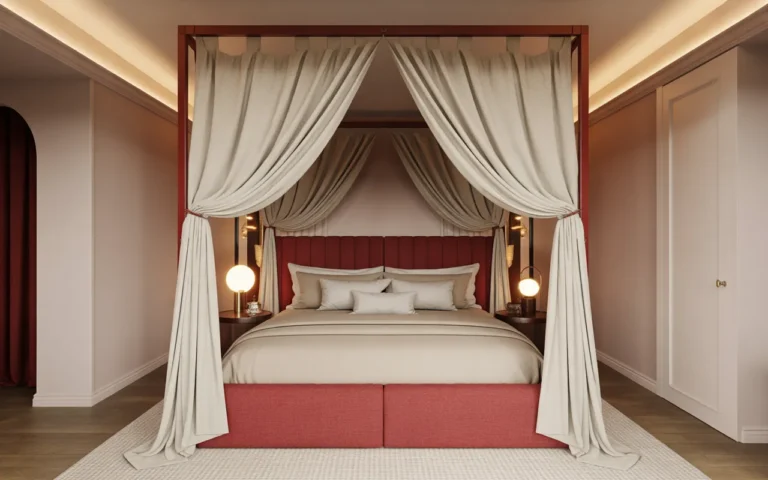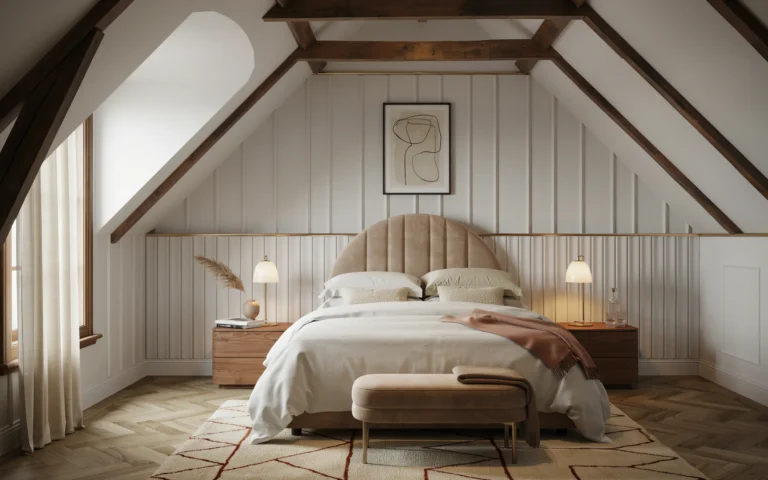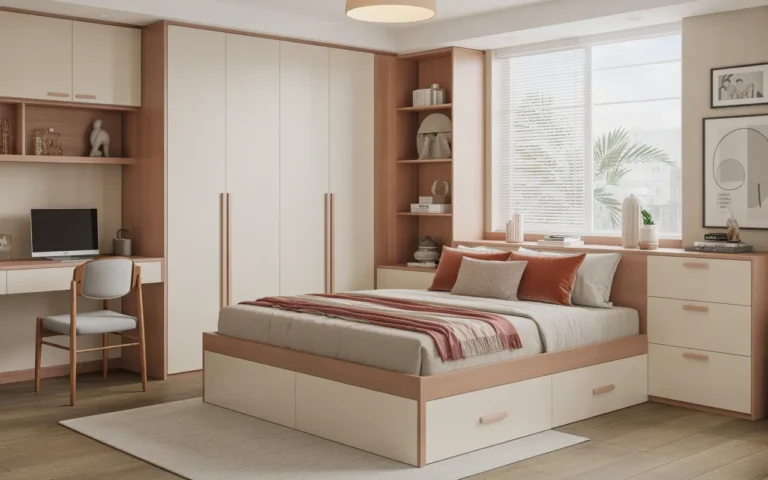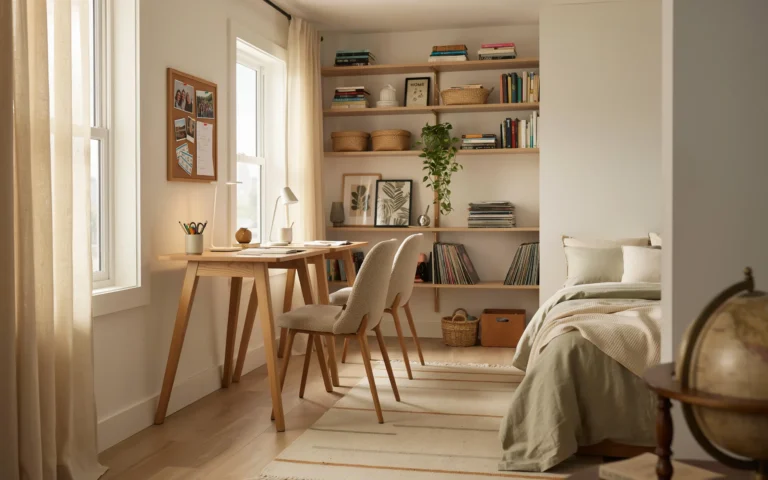
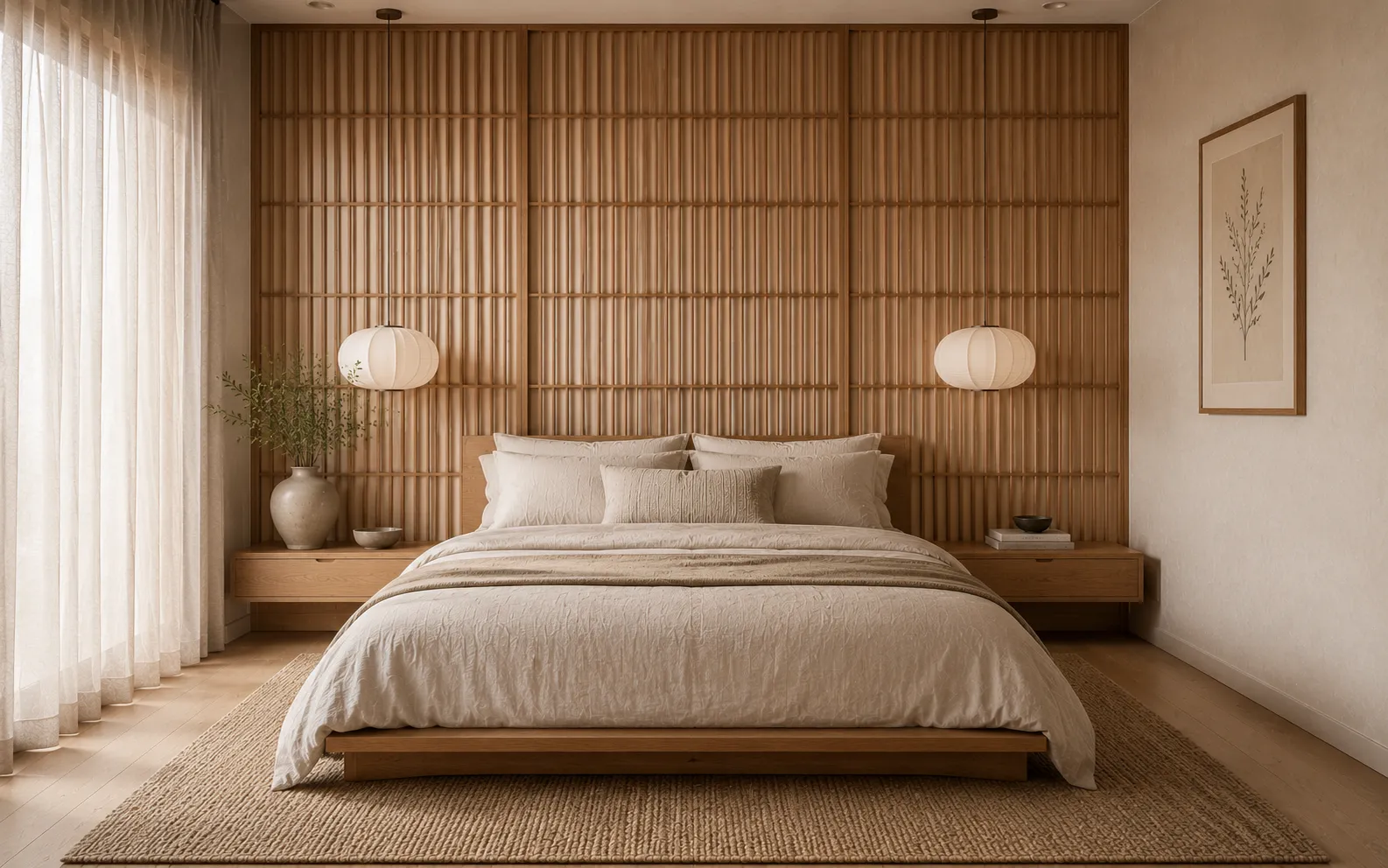
22 Japandi Small Bedroom Ideas with Serene Style
Dreaming of a calmer, more beautiful space? These Japandi small bedroom ideas show how even the tiniest room can feel open, organized, and effortlessly stylish with the right design choices.
A small bedroom often comes with challenges like limited storage, visual clutter, and a lack of relaxation. This collection is designed to help solve those problems by combining the warmth of Scandinavian design with the simplicity of Japanese interiors. You’ll discover practical ways to maximize space, introduce natural textures, improve functionality, and create a peaceful atmosphere without overcrowding the room. In my experience, small bedrooms feel their best when every element has a purpose and contributes to a sense of calm. From smart storage solutions to soothing color palettes, these ideas offer inspiration that is both beautiful and realistic for everyday living.
1. Low Platform Bed
- Creates a more open visual line across the room
- Makes ceilings appear taller and airier
- Supports a calm and uncluttered atmosphere
- Works beautifully in compact layouts
- Enhances the signature Japandi aesthetic
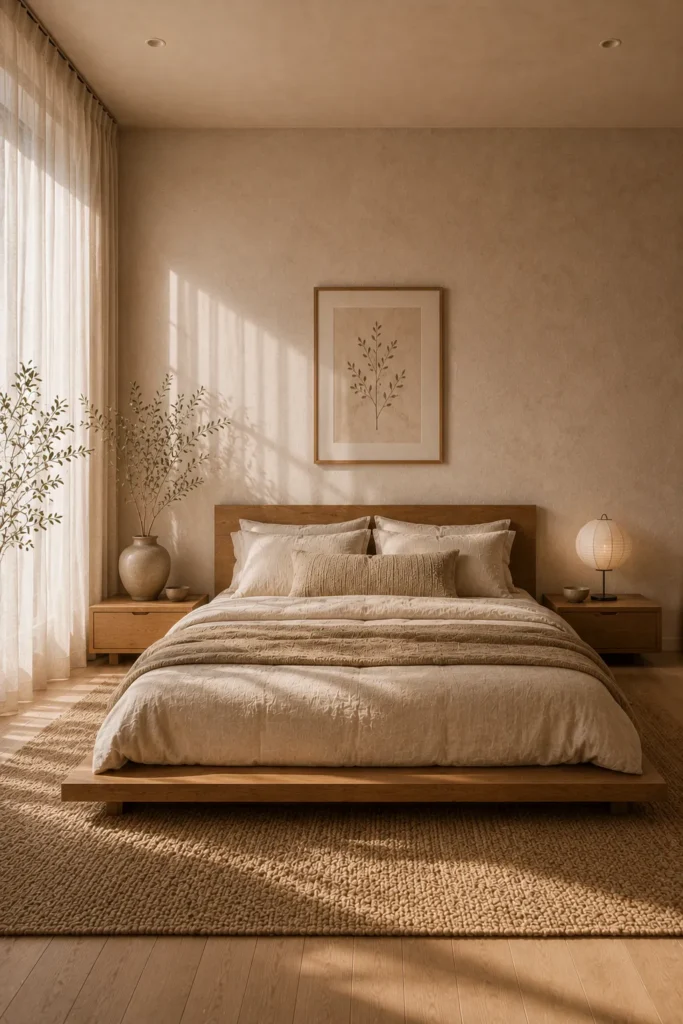
Nothing transforms a compact bedroom faster than lowering the visual weight of the furniture. A low platform bed naturally draws the eye horizontally, helping the room feel wider and more spacious without changing the actual footprint. The clean profile removes unnecessary bulk while allowing surrounding elements like soft textiles and natural materials to stand out. In smaller spaces, visual simplicity is often more important than adding extra decor. This approach creates breathing room around the bed and helps establish the balanced, restful environment that makes minimalist interiors feel comfortable rather than empty or unfinished.
One of the biggest advantages of this setup is how effortlessly it supports a serene and organized atmosphere. I’ve noticed that lower furniture often makes compact rooms feel calmer because it reduces visual interruptions throughout the space. Light wood finishes reinforce the natural aesthetic while maintaining warmth that prevents the room from feeling stark. Soft linen bedding, neutral textures, and carefully chosen accessories complete the look without overwhelming the design. The result feels intentional, functional, and welcoming while maximizing every square foot in a way that supports both relaxation and everyday living.
2. Floating Oak Nightstands
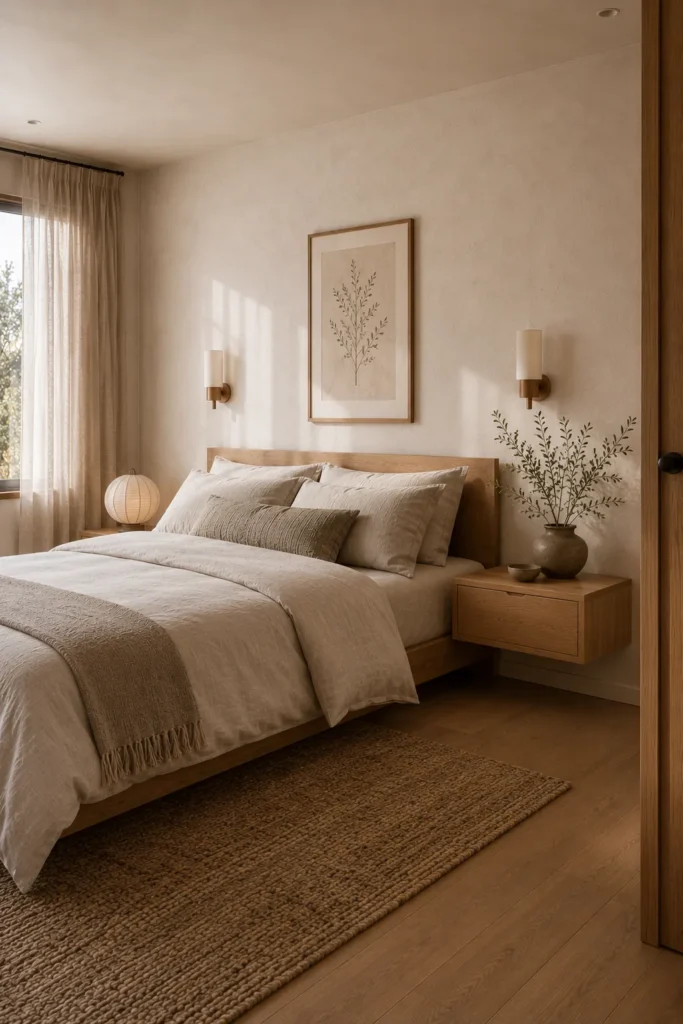
- Frees up valuable floor space
- Makes the room appear less crowded
- Adds practical storage without bulk
- Keeps cleaning simple and efficient
- Strengthens the clean minimalist look
A surprisingly small change can dramatically improve how spacious a bedroom feels. Floating nightstands eliminate heavy furniture legs and create visible floor area underneath, which instantly makes the room feel larger. The uninterrupted flooring helps the eye travel smoothly across the space, making compact layouts appear more open and cohesive. Natural oak tones add warmth while maintaining the understated simplicity that defines Japandi-inspired interiors. By removing visual clutter and focusing on functional essentials, this design choice creates a calm foundation that supports both beauty and practicality in everyday use.
Many designers recommend wall-mounted furniture in smaller rooms because every visible inch of floor contributes to a greater sense of openness. In my experience, floating nightstands work particularly well when paired with soft neutral bedding and simple wall lighting. The combination creates a clean and uncluttered bedside area while still providing enough space for daily necessities. Carefully selected decor such as a ceramic vase or small reading lamp adds personality without overwhelming the room. The finished design feels thoughtful, refined, and highly functional while preserving the peaceful atmosphere associated with Japandi-inspired living.
3. Neutral Linen Layers
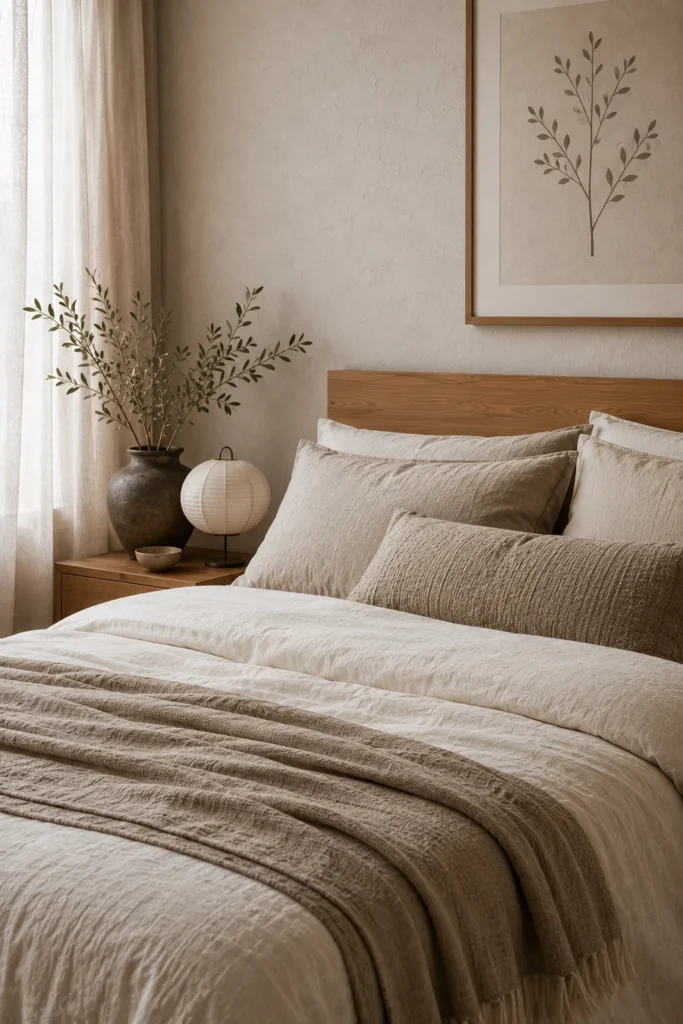
- Adds depth without visual clutter
- Creates a soft and inviting atmosphere
- Enhances comfort through texture variation
- Supports a calming color palette
- Keeps the design timeless and versatile
The easiest way to make a minimalist bedroom feel welcoming is through thoughtful layering of natural textiles. Soft linen bedding introduces texture, movement, and warmth while maintaining the restrained aesthetic that defines Japandi interiors. Rather than relying on bold colors or decorative accessories, layered fabrics create visual interest through subtle tonal variations. This approach helps compact rooms feel comfortable and complete without sacrificing simplicity. When neutral shades are combined thoughtfully, the space gains depth and character while remaining calm, balanced, and highly functional for everyday living.
That is why many designers recommend focusing on texture before adding decorative accents. I’ve seen this work well in many homes where bedrooms felt either too plain or overly decorated. Linen naturally softens the environment while helping the room feel relaxed and lived in. Combining warm ivory, oatmeal, and taupe tones creates gentle contrast that never competes for attention. The result is a peaceful retreat that feels cozy throughout the year while preserving the clean aesthetic that makes smaller bedrooms appear larger, brighter, and more harmonious overall.
4. Shoji Panel Accent
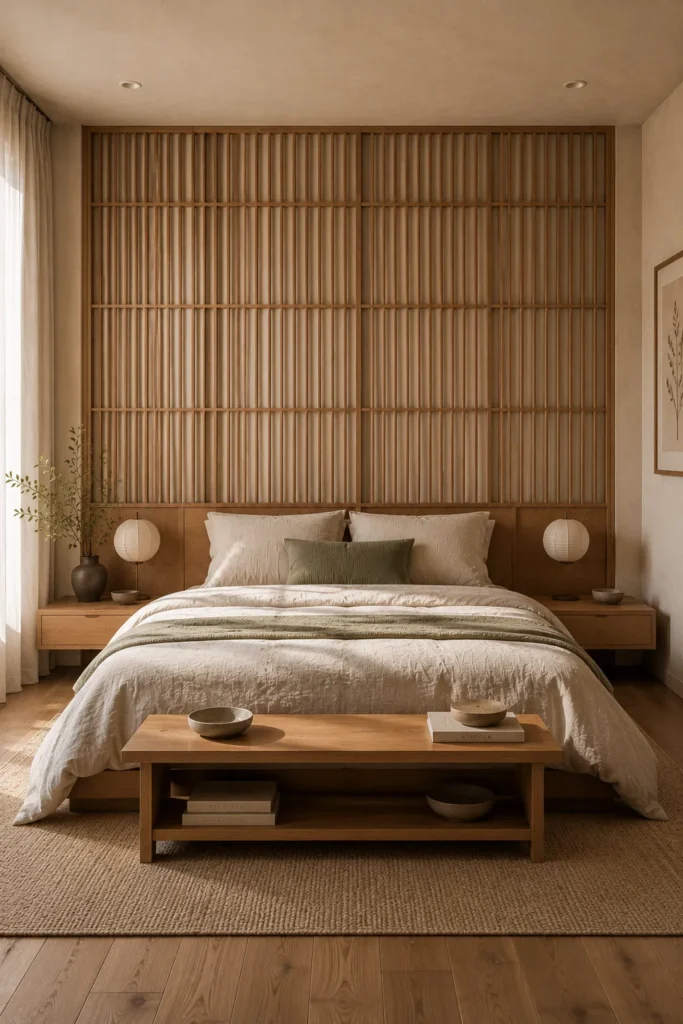
- Adds character without overwhelming the room
- Creates a refined focal point behind the bed
- Introduces subtle Japanese influence
- Enhances warmth through natural wood textures
- Maintains a calm and balanced appearance
A carefully designed accent wall can completely elevate a compact bedroom without adding clutter. Shoji-inspired wood paneling introduces architectural interest while maintaining the clean simplicity that defines Japandi interiors. The vertical lines naturally guide the eye upward, helping the room feel taller and more open. Unlike busy wallpaper patterns, this approach creates texture through materials rather than visual noise. The combination of wood and soft neutral tones feels sophisticated yet calming, making the sleeping area feel intentionally designed while preserving the peaceful atmosphere essential for relaxation and daily comfort.
One reason this feature works so well is its ability to create visual depth without relying on decorative excess. I’ve noticed that textured architectural details often feel more timeless than trend-based wall treatments. Light oak finishes keep the room bright while adding enough warmth to prevent the space from feeling sterile. Paired with simple bedding and restrained accessories, the wall becomes a subtle focal point that supports the overall design rather than dominating it. The result feels elegant, grounded, and highly cohesive while making even the smallest bedroom appear more thoughtfully curated.
5. Hidden Storage Bench
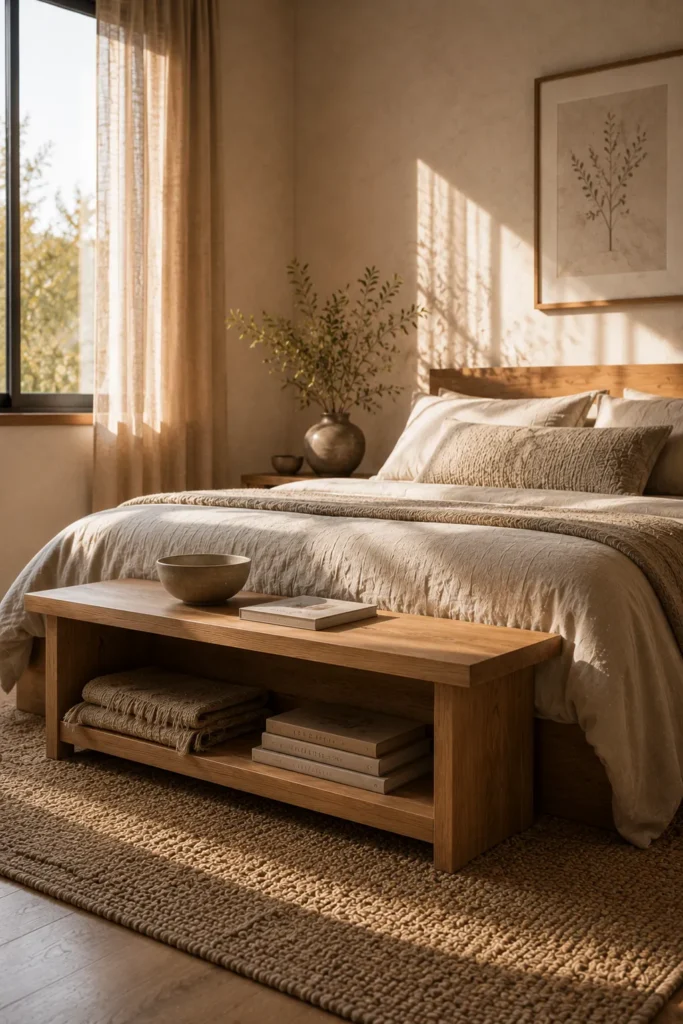
- Provides extra storage without visual bulk
- Keeps seasonal items neatly organized
- Adds functional seating to the room
- Supports a clutter-free environment
- Enhances the layered natural aesthetic
Smart storage solutions often make the biggest difference in compact bedrooms. A storage bench placed at the foot of the bed creates a practical place to store blankets, pillows, and everyday essentials while contributing to the overall design. Instead of adding multiple storage pieces throughout the room, this approach consolidates functionality into a single elegant element. Natural wood finishes blend seamlessly into the space while maintaining visual harmony. The clean lines help preserve the minimalist aesthetic while making daily routines easier and more organized.
In my experience, hidden storage is one of the most effective ways to keep smaller bedrooms feeling calm and spacious. Visible clutter quickly disrupts the serene atmosphere that many people hope to achieve in a restful retreat. A well-designed bench offers practical benefits while adding texture and warmth through natural materials. Soft upholstery paired with wood creates subtle contrast without introducing unnecessary visual weight. The finished look feels intentional and refined while helping maintain the organized environment that supports relaxation and a more peaceful daily experience.
6. Paper Pendant Glow
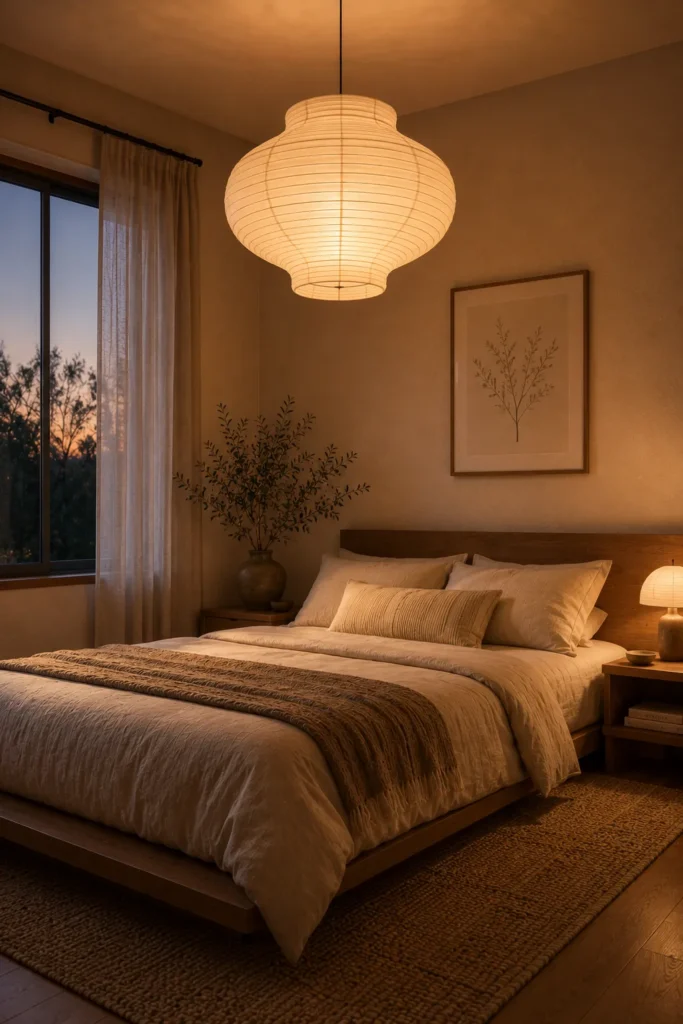
- Creates soft and relaxing illumination
- Adds sculptural interest without clutter
- Supports a cozy evening atmosphere
- Enhances the Japanese-inspired aesthetic
- Keeps the room feeling airy and light
Lighting has an enormous influence on how a bedroom feels, especially in smaller spaces where every design choice becomes more noticeable. A paper pendant introduces softness through both form and light quality, creating a warm glow that instantly makes the room feel more inviting. Unlike bulky fixtures, the lightweight appearance helps maintain an open visual flow. The organic shape adds subtle personality while staying true to the restrained aesthetic associated with Japandi interiors. Soft illumination also highlights natural textures throughout the room, enhancing the overall sense of calm and balance.
Many designers recommend layered lighting because harsh overhead fixtures can make compact rooms feel flat and less welcoming. I’ve seen this work beautifully in many homes where the bedroom lacked warmth despite having attractive furniture and decor. The gentle glow of a paper pendant softens corners, creates visual depth, and helps establish a relaxing evening environment. Combined with natural materials and neutral colors, the fixture contributes to a tranquil retreat that feels comfortable throughout the day. The result is a bedroom that appears larger, softer, and significantly more peaceful.
7. Tatami Texture Rug
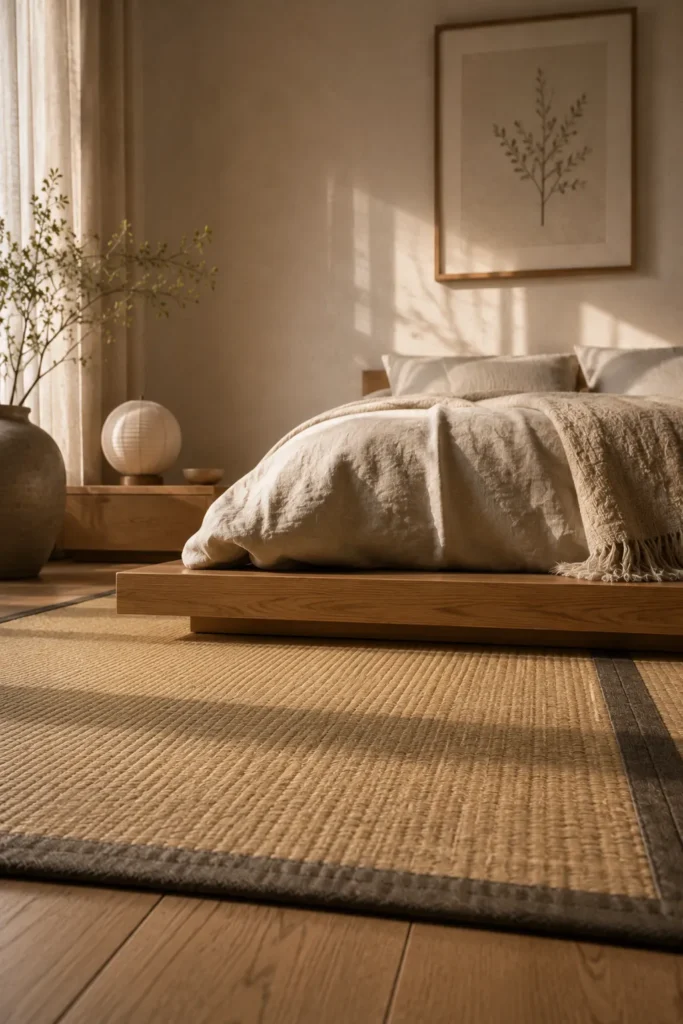
- Introduces natural texture without visual clutter
- Creates warmth underfoot in a subtle way
- Defines the sleeping area beautifully
- Supports a grounded and organic atmosphere
- Complements wood furniture effortlessly
A woven rug inspired by traditional tatami textures can instantly make a bedroom feel more layered and welcoming. Instead of relying on bold patterns or bright colors, the natural fibers create visual interest through texture alone. This approach aligns perfectly with Japandi design principles, where simplicity and craftsmanship play a central role. The rug helps anchor the bed while softening hard flooring surfaces, making the room feel warmer and more comfortable. In compact spaces, carefully chosen textures often create greater impact than additional decorative accessories or furniture pieces.
I’ve noticed that natural woven materials help smaller rooms feel more balanced because they introduce warmth without adding visual heaviness. The subtle texture catches light beautifully throughout the day while maintaining a calm and understated appearance. When paired with oak furniture, neutral linens, and handcrafted decor, the rug reinforces the organic aesthetic that defines this style. The finished space feels cohesive, inviting, and thoughtfully designed. Most importantly, it adds depth and comfort while preserving the clean simplicity that helps compact bedrooms feel open and relaxing.
8. Curved Wood Headboard
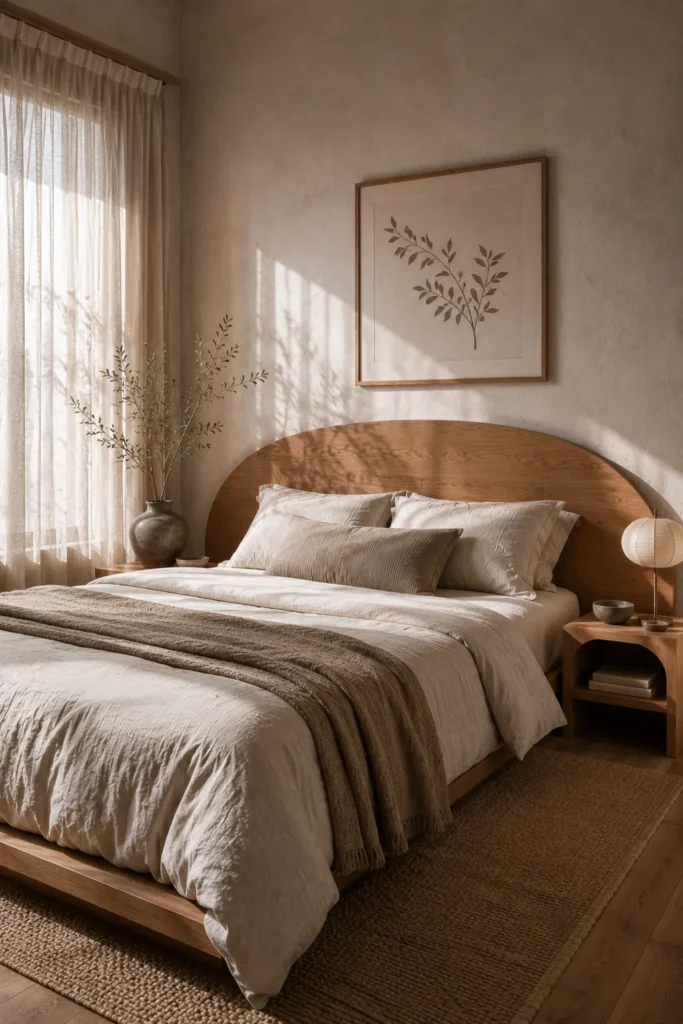
- Softens the room with organic shapes
- Creates a subtle focal point behind the bed
- Balances clean architectural lines
- Adds warmth through natural materials
- Enhances visual flow in smaller spaces
Sometimes the smallest design detail can dramatically change the feeling of a room. A curved wooden headboard introduces softness that balances the straight lines commonly found in furniture, walls, and flooring. The organic silhouette feels calming and approachable while adding visual interest without overwhelming the space. Natural wood tones contribute warmth and texture, helping the bedroom feel more inviting. Because the shape is understated, it works beautifully within a minimalist setting while still giving the sleeping area a distinct and intentional identity.
Many designers incorporate curved forms because they help create a more relaxed and harmonious environment. In my experience, gentle curves often make compact bedrooms feel less rigid and more comfortable. The headboard becomes a focal point without requiring bold colors or excessive decoration. Paired with soft linens and restrained accessories, it creates an elegant backdrop that supports the room’s overall serenity. The result feels balanced, timeless, and sophisticated while maintaining the simplicity that makes this design style so appealing in smaller homes.
9. Floor Cushion Corner
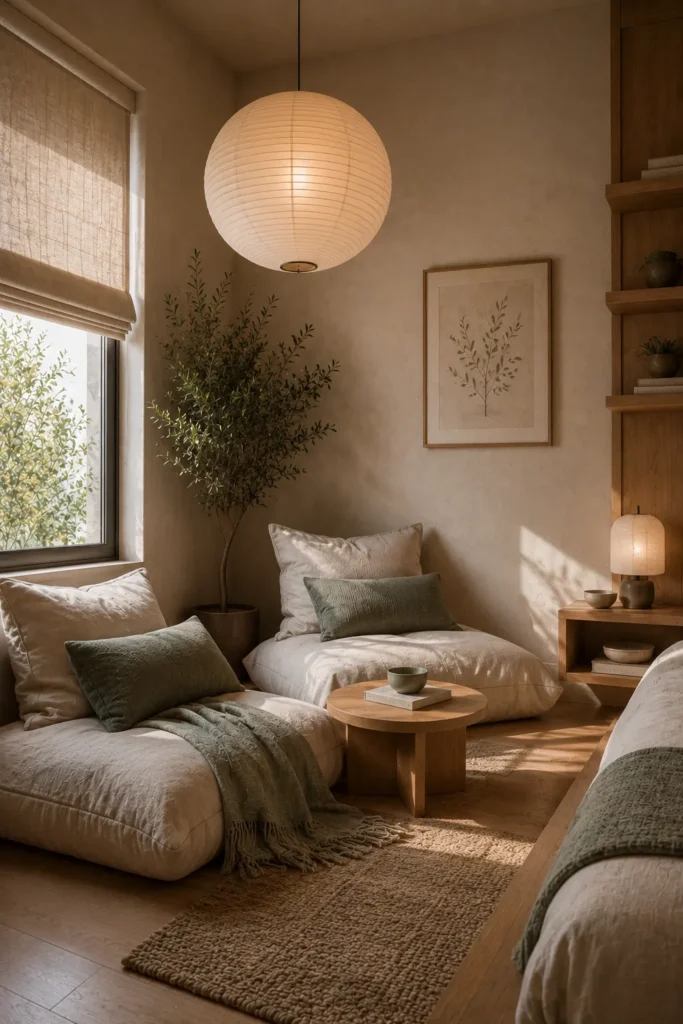
- tes a relaxing retreat within the bedroom
- Adds function without bulky furniture
- Encourages reading and quiet moments
- Uses minimal space efficiently
- Enhances the calm atmosphere
A dedicated relaxation corner can make a bedroom feel far more purposeful without requiring additional square footage. Floor cushions offer a flexible seating option that maintains the low-profile aesthetic commonly associated with Japanese-inspired interiors. The arrangement feels casual yet intentional, creating a comfortable place to read, journal, or unwind before bed. Because the cushions can be easily moved, the room remains adaptable while preserving valuable floor space. This simple addition introduces functionality without compromising the clean and uncluttered appearance that helps smaller rooms feel more spacious.
I’ve seen this work well in many homes where traditional accent chairs felt too bulky for the available space. Layered linen cushions paired with a small wooden table create a welcoming nook that feels both practical and visually appealing. Soft lighting nearby enhances the sense of comfort while reinforcing the room’s peaceful atmosphere. The area becomes a quiet retreat within the bedroom, encouraging slower moments and everyday relaxation. The final effect feels warm, balanced, and highly livable while supporting the serene character that defines thoughtful Japandi-inspired interiors.
Related Article : 24 Teen Bedroom Ideas That Feel Fresh and Inspiring
10. Light Oak Wardrobe
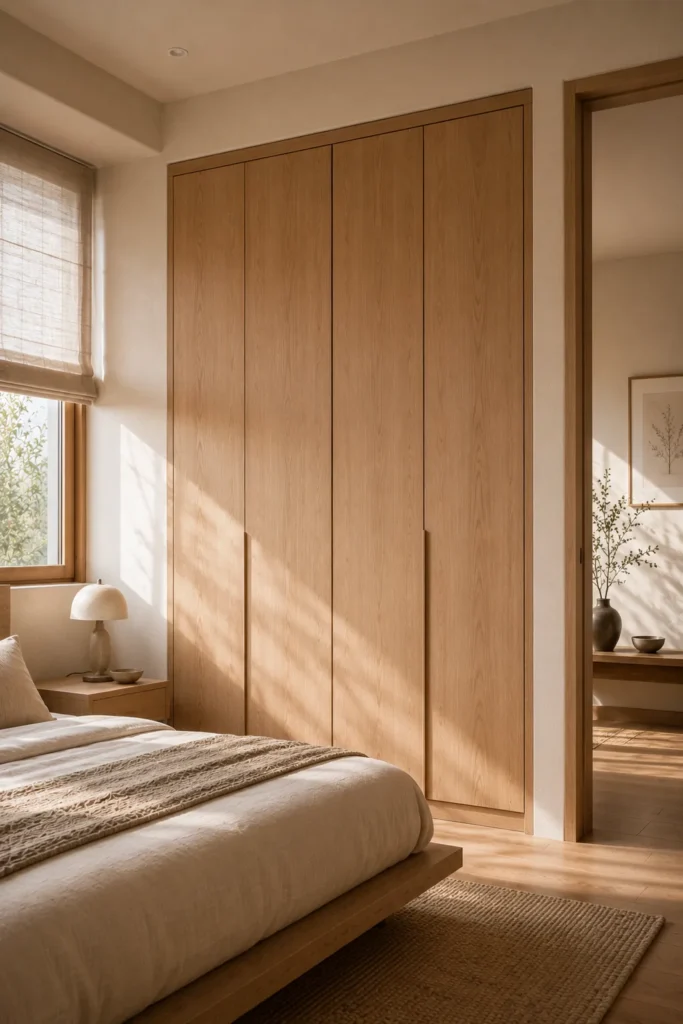
- Keeps storage visually calm and organized
- Blends seamlessly with neutral interiors
- Reduces visual heaviness in compact rooms
- Maximizes functionality without clutter
- Supports a bright and airy atmosphere
A thoughtfully designed wardrobe can dramatically improve how spacious a bedroom feels. Light oak cabinetry reflects natural light while maintaining the warm, organic character that defines Japandi interiors. Unlike darker or heavily detailed storage pieces, a streamlined wardrobe blends into the room and allows other elements to breathe visually. Clean lines help reduce visual distractions, creating a more restful environment overall. In smaller bedrooms, furniture that feels integrated rather than dominant often contributes significantly to a more open and balanced appearance throughout the space.
That is why many designers recommend selecting storage that quietly supports the room instead of demanding attention. I’ve noticed that lighter wood finishes often make compact layouts feel noticeably brighter and less crowded. Flat-panel doors maintain a clean profile while hiding everyday belongings that could otherwise create visual clutter. Paired with soft linens, natural textures, and restrained decor, the wardrobe becomes part of a cohesive design story. The final result feels elegant, functional, and calming while helping maintain the organized atmosphere that supports relaxation and daily comfort.
11. Stone Ceramic Display
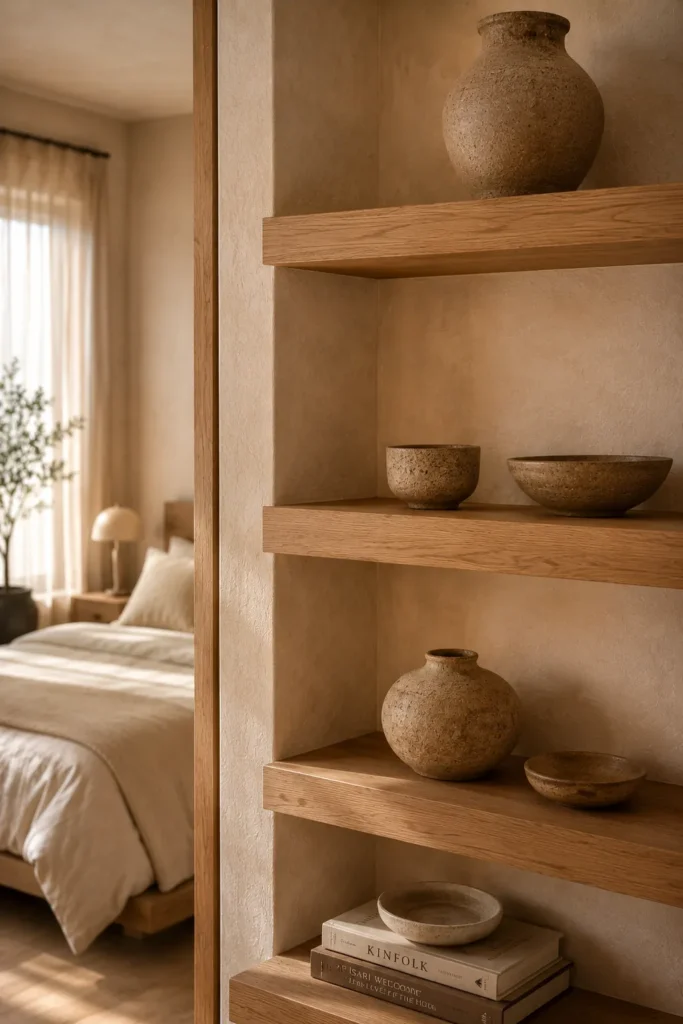
- Adds personality without visual excess
- Celebrates craftsmanship and natural materials
- Creates subtle decorative interest
- Enhances the organic aesthetic
- Keeps styling intentional and refined
Decor does not need to be abundant to make a bedroom feel beautiful. A small collection of handcrafted ceramics introduces texture, character, and artistry while maintaining the simplicity central to Japandi design. The imperfect forms and natural finishes create visual warmth that feels authentic rather than overly styled. Carefully displayed pieces add interest without overwhelming the room, allowing the overall atmosphere to remain calm and balanced. In compact bedrooms, fewer meaningful objects often create a stronger impact than numerous decorative accessories competing for attention.
I’ve seen this work beautifully in many homes where people wanted personality without clutter. Handmade ceramics naturally bring a sense of craftsmanship that complements wood, linen, and other organic materials. Displaying only a few carefully chosen pieces encourages a cleaner and more intentional look. Soft daylight enhances the subtle textures and earthy tones, making the arrangement feel integrated into the room rather than decorative for its own sake. The finished space feels thoughtful, sophisticated, and highly personal while preserving the tranquil aesthetic that defines this style.
12. Soft Greige Palette
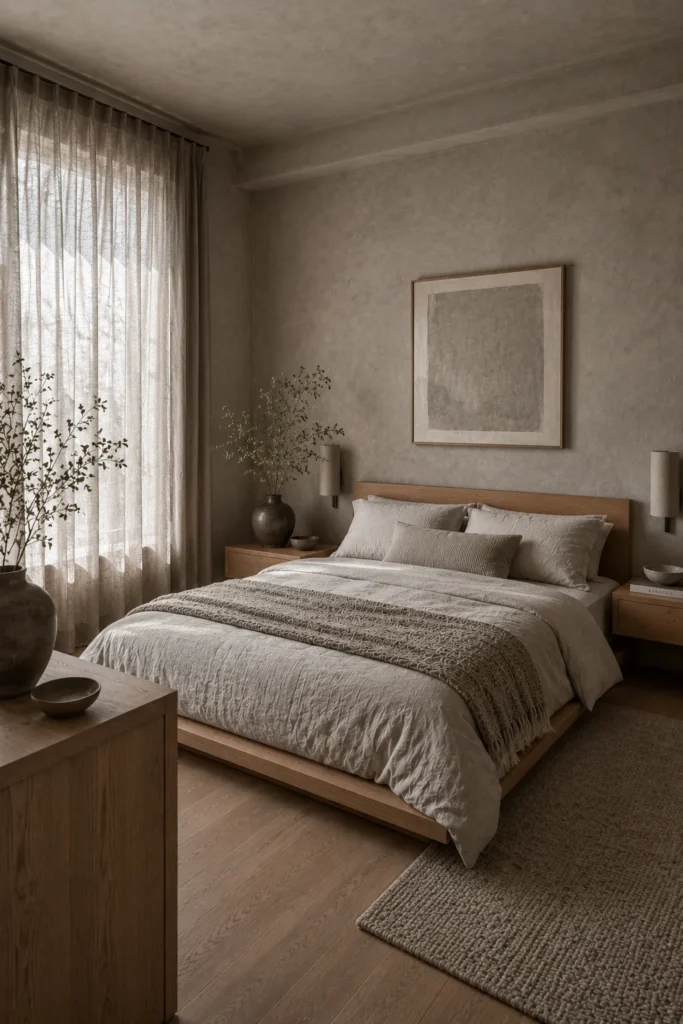
- Creates a soothing and cohesive atmosphere
- Adds depth without relying on bold colors
- Works beautifully with natural materials
- Makes compact rooms feel calm and spacious
- Supports a timeless design aesthetic
Color plays a major role in how a bedroom feels, especially when square footage is limited. A soft greige palette combines the warmth of beige with the sophistication of gray, creating a balanced foundation that feels both cozy and refined. These muted tones allow natural textures and materials to stand out while maintaining visual harmony throughout the room. Instead of introducing contrast through bright accents, the design relies on subtle tonal variations to create depth. This approach helps the space feel larger, calmer, and more cohesive from every angle.
In my experience, soft neutral palettes remain one of the most effective strategies for creating serene bedrooms. The gentle color transitions reduce visual noise and allow natural light to move beautifully across the space throughout the day. When paired with oak furniture, linen textiles, and handcrafted details, the palette feels timeless rather than trendy. Designers often favor these tones because they adapt easily to changing decor while maintaining a peaceful atmosphere. The final result feels warm, elegant, and effortlessly relaxing, making the bedroom a true retreat from everyday distractions.
13. Integrated Wall Sconces
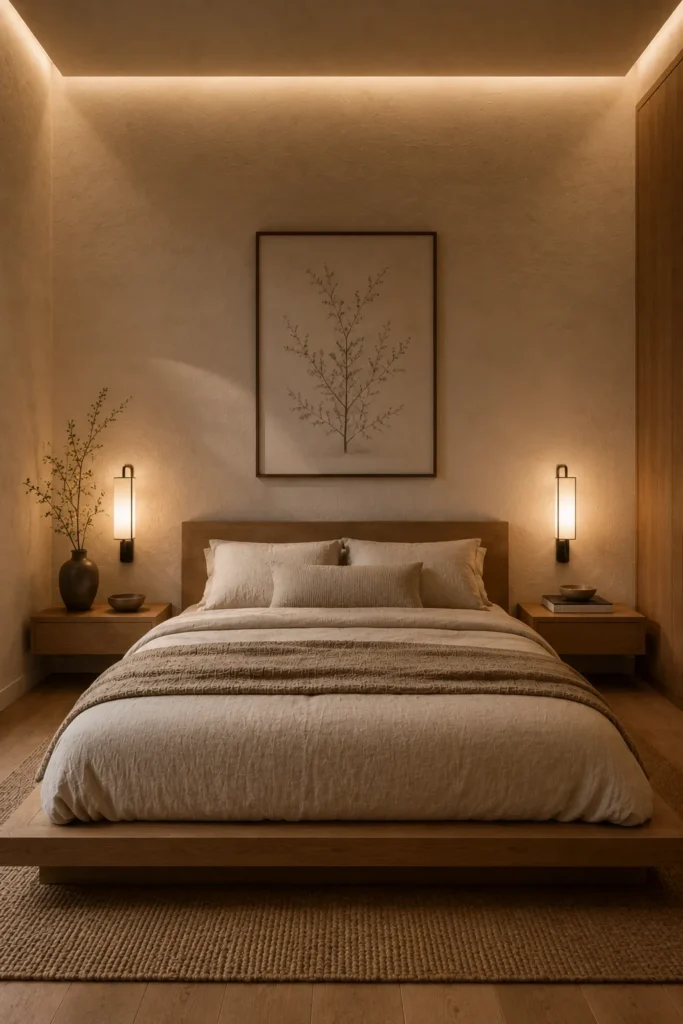
- Frees up valuable nightstand space
- Creates a clean and uncluttered look
- Adds warm layered lighting
- Enhances architectural interest subtly
- Supports a peaceful nighttime atmosphere
Lighting can completely transform how a bedroom feels, especially when space is limited. Integrated wall sconces eliminate the need for table lamps, allowing surfaces to remain open and visually lighter. This small adjustment creates a cleaner bedside area while improving functionality for reading and relaxation. The soft glow contributes warmth without introducing unnecessary decorative clutter. In smaller bedrooms, every design choice benefits from serving more than one purpose, and wall-mounted lighting provides both practical illumination and refined visual simplicity that aligns beautifully with Japandi-inspired interiors.
I’ve noticed that removing bulky lamps often makes compact bedrooms feel noticeably more spacious. The streamlined appearance helps create uninterrupted visual flow across the room while maintaining all the lighting needed for daily use. Warm illumination softens natural materials and highlights subtle textures in wood, linen, and plaster finishes. Designers frequently recommend layered lighting because it adds depth and comfort without overwhelming the space. The final effect feels calm, balanced, and sophisticated while supporting the serene environment that makes a bedroom feel restorative and welcoming every day.
14. Vertical Slat Detail
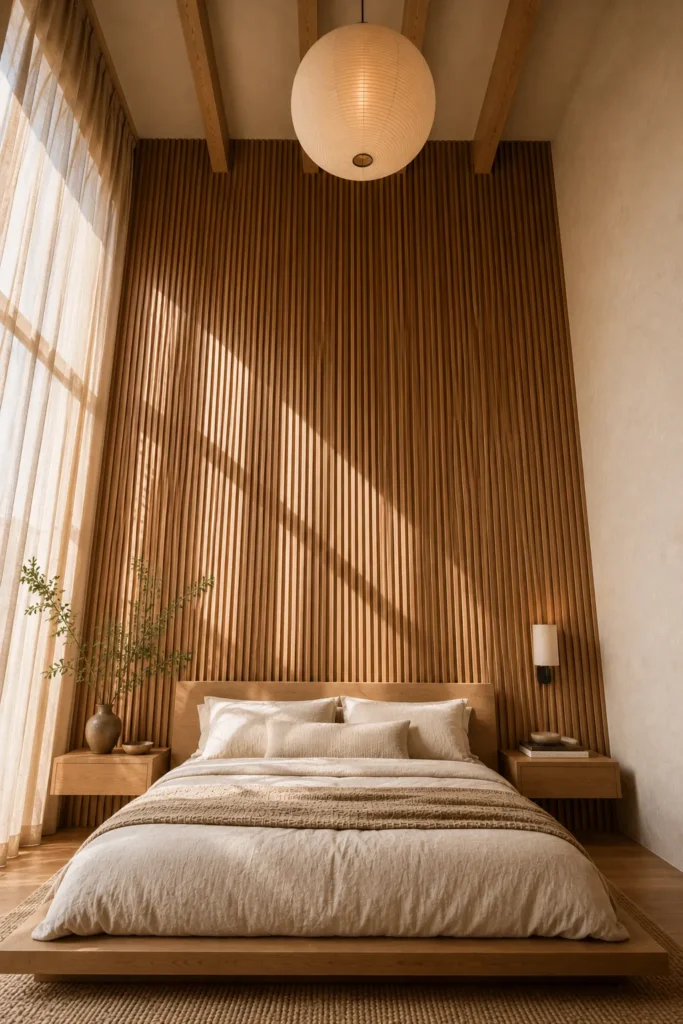
- Draws the eye upward naturally
- Makes ceilings appear higher
- Adds texture without visual clutter
- Creates a refined focal point
- Strengthens the natural material palette
A vertical slat feature can instantly elevate a compact bedroom while maintaining the simplicity that defines Japandi design. The repeating lines create subtle rhythm and structure without overwhelming the space with decorative elements. Because the eye naturally follows vertical patterns upward, ceilings often appear taller and the room feels more spacious. Natural oak finishes contribute warmth while reinforcing the connection to organic materials. This combination of texture and restraint helps create a sophisticated backdrop that enhances the entire room without becoming visually dominant.
Many designers use architectural details like slatted wood because they provide depth in a quiet and timeless way. I’ve seen this work well in many homes where plain walls felt unfinished but decorative wallpaper seemed too busy. The subtle texture creates visual interest while allowing furniture and textiles to remain the focus. Soft lighting enhances the wood grain beautifully, adding warmth and dimension throughout the day. The finished design feels intentional, elegant, and highly cohesive while preserving the calm atmosphere that makes smaller bedrooms feel comfortable and inviting.
15. Underbed Basket Storage
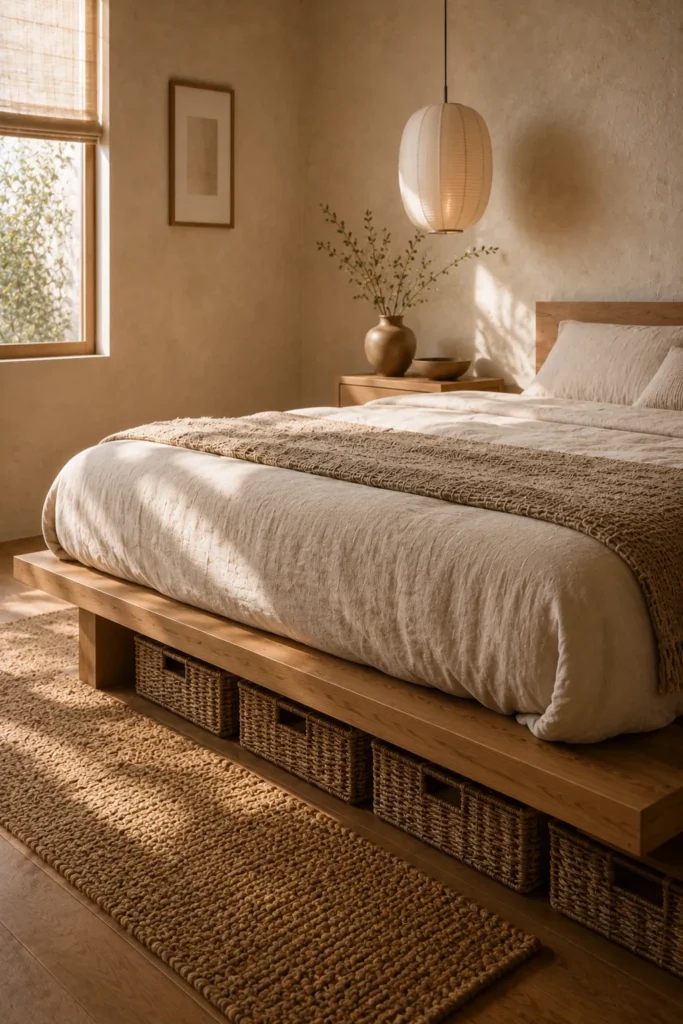
- Maximizes hidden storage opportunities
- Keeps everyday clutter out of sight
- Maintains a calm and organized appearance
- Adds texture through natural materials
- Makes compact layouts more functional
Smart storage solutions are essential when designing a peaceful and organized bedroom. Underbed baskets provide valuable space for seasonal linens, extra blankets, and everyday items while keeping them completely out of sight. Instead of adding more furniture, this approach uses existing space efficiently and supports a cleaner overall layout. Woven baskets introduce subtle texture that complements natural wood and linen beautifully. By reducing visible clutter, the room feels lighter, calmer, and significantly more spacious without requiring major design changes or expensive custom storage systems.
In my experience, hidden storage often has the greatest impact on maintaining a serene environment. Bedrooms quickly lose their relaxing quality when everyday items accumulate on visible surfaces. Natural woven baskets feel intentional and decorative while serving an important practical purpose. Designers frequently recommend integrating storage into existing furniture because it reduces visual noise and preserves open floor space. The result is a bedroom that feels highly functional yet effortlessly beautiful. Every element contributes to a sense of order and simplicity that supports restful living and everyday comfort.
16. Pebble Tone Artwork
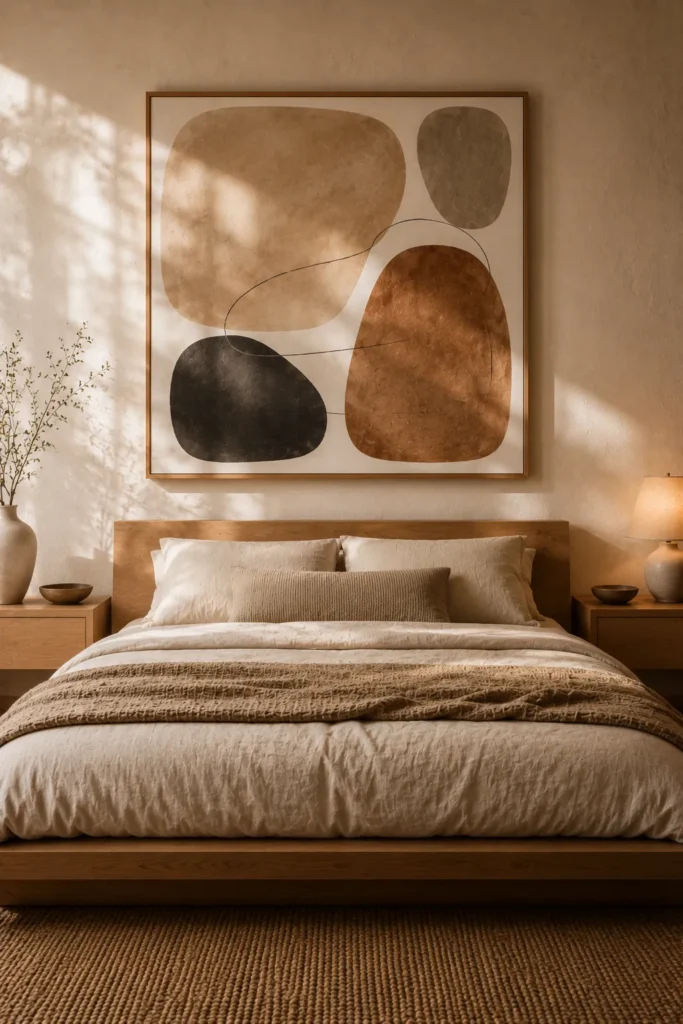
- Adds personality without overwhelming the room
- Introduces soft visual contrast
- Keeps the color palette calm and cohesive
- Creates a polished focal point
- Works beautifully with natural materials
Artwork can transform a bedroom, but in smaller spaces the key is choosing pieces that support the overall atmosphere rather than dominate it. Abstract designs in pebble-inspired tones bring subtle movement and visual depth while maintaining the calm aesthetic central to Japandi interiors. The muted colors blend naturally with wood, linen, and stone-inspired materials, helping every element feel connected. Instead of filling walls with multiple decorations, one thoughtfully selected piece often creates a stronger and more refined statement. This approach keeps the room visually balanced while adding a sense of quiet sophistication.
I’ve noticed that oversized artwork often works better than several smaller pieces in compact rooms. A single focal point reduces visual clutter and allows the eye to move more comfortably through the space. Soft earth tones help maintain harmony while introducing enough variation to prevent the room from feeling flat. Designers frequently recommend artwork with organic forms because it complements the natural materials commonly used throughout Japandi-inspired interiors. The final result feels curated, serene, and timeless while preserving the open and peaceful character that makes small bedrooms feel more spacious.
17. Linen Curtain Wall
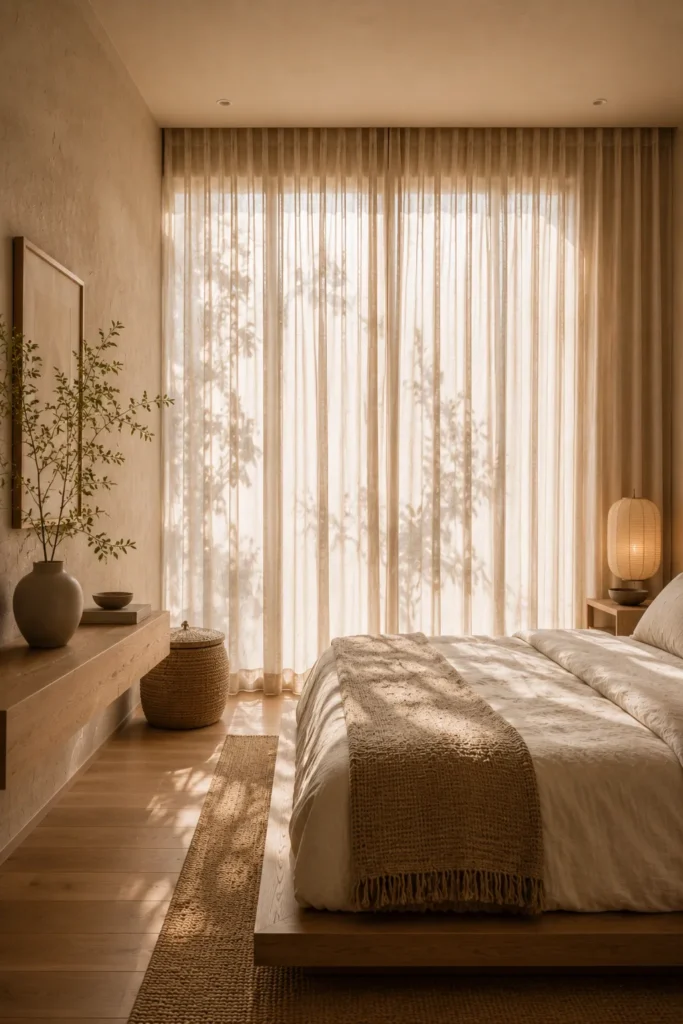
- Softens the room instantly
- Makes ceilings appear higher
- Enhances natural light beautifully
- Creates a calm layered look
- Adds warmth without visual heaviness
One simple design decision can dramatically change how spacious a bedroom feels. Full-height linen curtains create a continuous vertical line that naturally draws attention upward, making ceilings appear taller and the room feel more expansive. The flowing fabric softens architectural edges while filtering sunlight into a warm and gentle glow. Unlike heavy drapery, lightweight linen maintains an airy atmosphere that supports relaxation. This subtle layering technique introduces texture and depth while preserving the minimalist simplicity that helps smaller bedrooms feel open and comfortable.
Many designers recommend hanging curtains as close to the ceiling as possible because the visual effect is surprisingly powerful. I’ve seen this work beautifully in many homes where bedrooms felt boxy or visually compressed. Natural linen adds movement and softness without competing with surrounding materials. Throughout the day, filtered sunlight highlights the texture of the fabric and creates a calming ambiance. The finished space feels brighter, taller, and more welcoming while maintaining the understated elegance that defines thoughtful Japandi-inspired design.
18. Floating Desk Niche
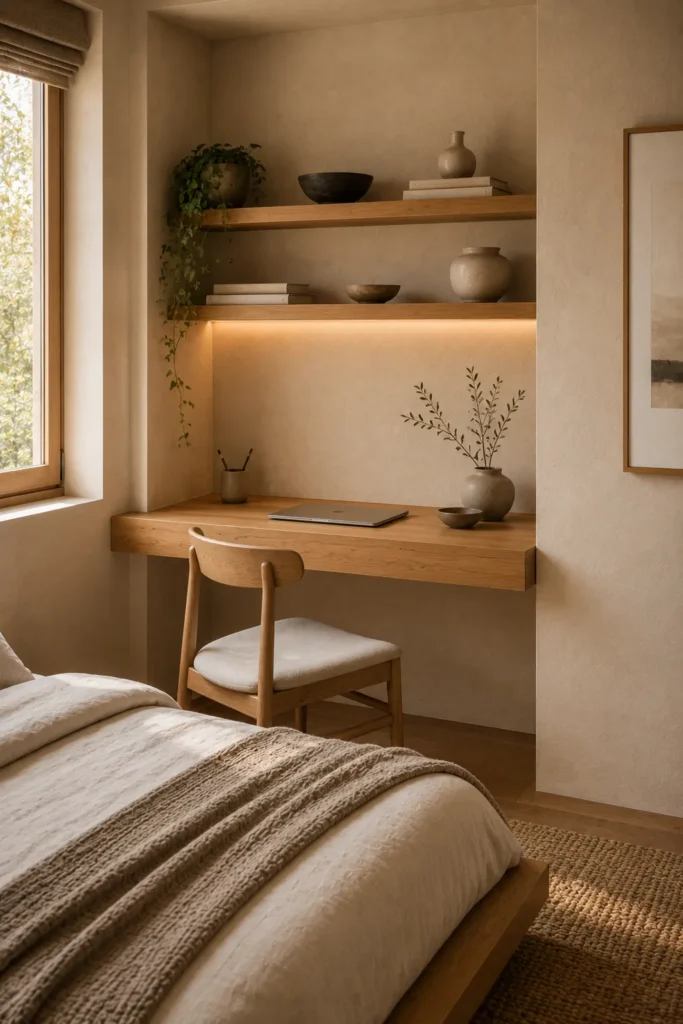
- Creates a functional workspace without bulk
- Preserves valuable floor space
- Maintains a clean visual flow
- Supports work-from-home flexibility
- Blends seamlessly with the room design
A compact bedroom can still accommodate a productive workspace when every element is thoughtfully designed. A floating desk tucked into a wall niche provides functionality without introducing the visual heaviness of traditional office furniture. The wall-mounted design keeps the floor open and maintains the spacious feeling that is especially important in smaller layouts. Natural wood finishes help the desk blend into the room rather than stand apart from it. This integration allows the bedroom to support multiple daily activities while preserving a calm and uncluttered atmosphere.
In my experience, built-in solutions often feel more relaxing because they eliminate the sense of competing furniture zones. A floating desk paired with minimal shelving creates an organized workspace that remains visually light. Designers frequently recommend keeping accessories limited to a few meaningful and practical items to avoid disrupting the room’s serenity. Soft daylight and natural materials help the workspace feel connected to the rest of the design. The result is a highly functional area that supports productivity while maintaining the peaceful aesthetic that makes a bedroom feel restorative.
19. Oak Peg Rail
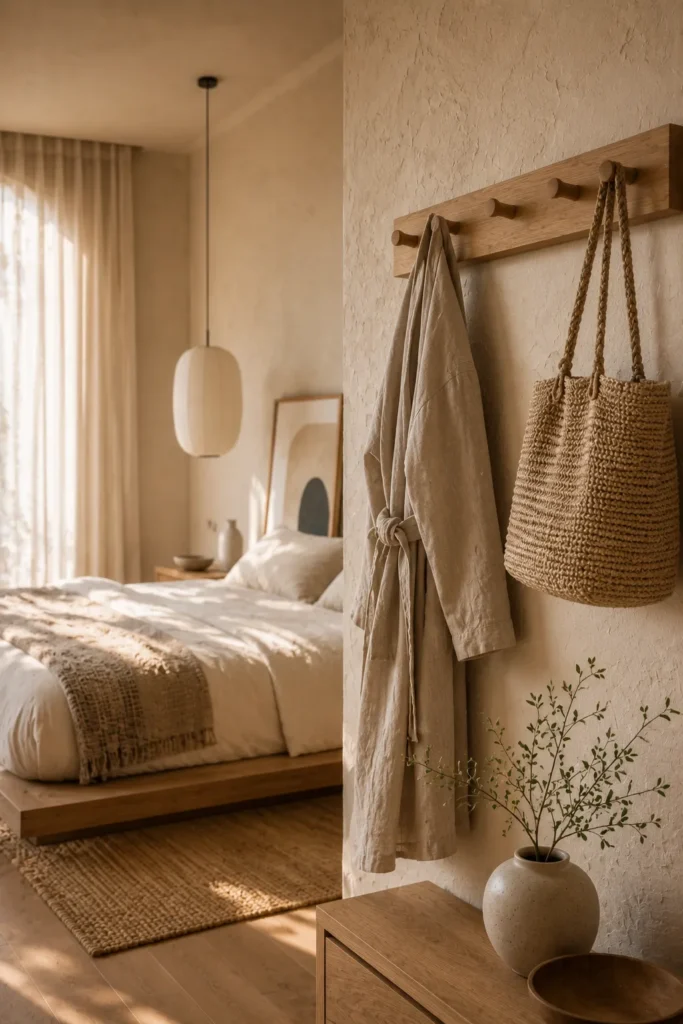
- Adds storage without bulky furniture
- Keeps essentials easily accessible
- Enhances the handcrafted aesthetic
- Creates subtle wall interest
- Supports a clutter-free environment
Sometimes the most effective storage solutions are also the simplest. A wooden peg rail provides a practical place for robes, bags, or lightweight accessories while maintaining the clean aesthetic that makes small bedrooms feel calm and organized. Unlike larger wall units, the slim profile preserves visual openness and allows the room to breathe. Natural oak introduces warmth and texture while reinforcing the connection to organic materials. This small addition contributes functionality without disrupting the balance of the space, making it ideal for compact interiors where every design choice matters.
I’ve noticed that open storage works best when it is carefully limited and intentionally styled. A few thoughtfully selected items can become part of the decor while still serving a practical purpose. Designers often recommend peg rails because they combine utility with craftsmanship in a way that feels timeless rather than trendy. When paired with soft textiles and natural finishes, the rail blends seamlessly into the room. The result feels organized, relaxed, and highly functional while preserving the peaceful atmosphere that defines a well-designed Japandi-inspired retreat.
20. Textured Plaster Walls
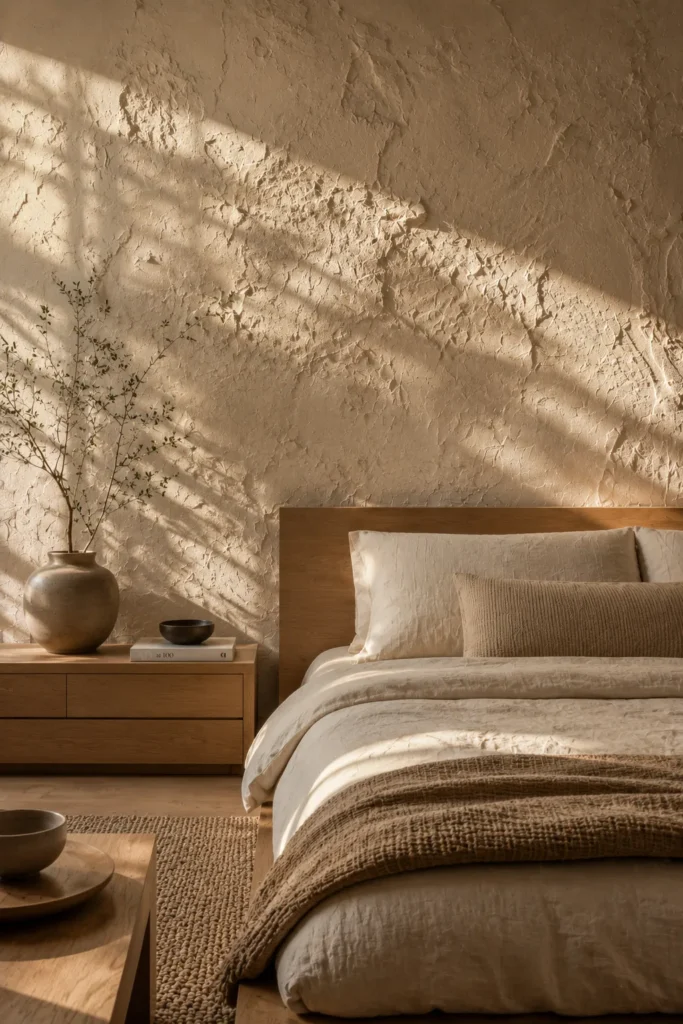
- Adds depth without using patterns
- Creates a warm handcrafted look
- Enhances natural light beautifully
- Supports a minimalist design approach
- Makes the room feel more refined
A bedroom does not need bold colors or decorative wall treatments to feel visually interesting. Textured plaster introduces depth through subtle variations in surface and light, creating an elegant backdrop that feels calm and sophisticated. The organic finish adds character while maintaining the restrained simplicity central to Japandi design. Throughout the day, changing sunlight highlights the texture and gives the walls a soft, dynamic quality. This approach helps create richness without clutter, allowing furniture and natural materials to remain the focus of the room.
That is why many designers recommend texture over pattern when working with smaller spaces. I’ve seen this work beautifully in many homes where plain painted walls felt too flat but wallpaper seemed too busy. The handcrafted appearance creates warmth while preserving a clean and timeless aesthetic. Combined with oak furniture, linen bedding, and neutral colors, the textured surface contributes to a layered yet understated environment. The finished room feels more inviting, balanced, and visually complete while maintaining the peaceful atmosphere essential for rest and relaxation.
21. Sculptural Branch Accent
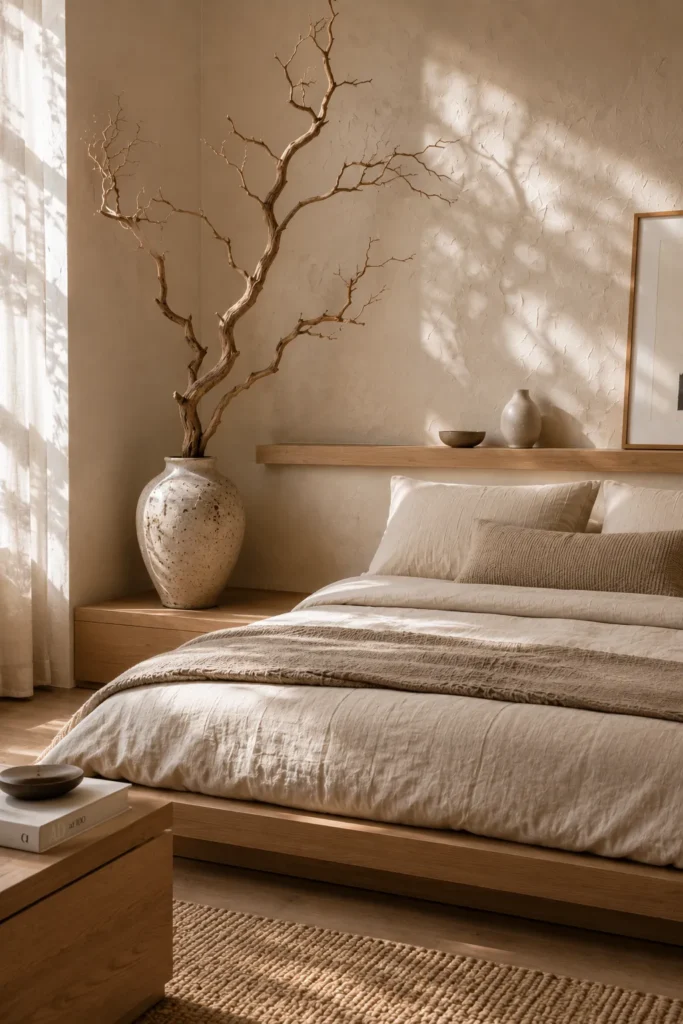
- Introduces nature in a simple way
- Adds height without visual clutter
- Creates an artistic focal point
- Reinforces the organic aesthetic
- Requires minimal maintenance
Natural elements often create the strongest visual impact when used with restraint. A sculptural branch displayed in a simple ceramic vase introduces movement, texture, and organic beauty without requiring elaborate arrangements. The shape becomes a subtle focal point that draws the eye upward while maintaining the room’s serene character. Unlike larger decorative pieces, a branch feels lightweight and effortless, making it especially suitable for compact bedrooms. This approach celebrates natural forms and helps strengthen the connection between the interior and the calming influence of nature.
In my experience, simple organic accents often feel more timeless than trend-driven decor. Designers frequently use branches because they add visual interest while remaining quiet and understated. The natural silhouette contrasts beautifully with clean architectural lines and minimalist furniture. Soft daylight enhances the organic texture, creating subtle shadows that add depth throughout the room. The finished arrangement feels thoughtful, artistic, and calming while supporting the balanced design principles that make Japandi-inspired bedrooms feel harmonious and restorative.
22. Raised Tatami Platform
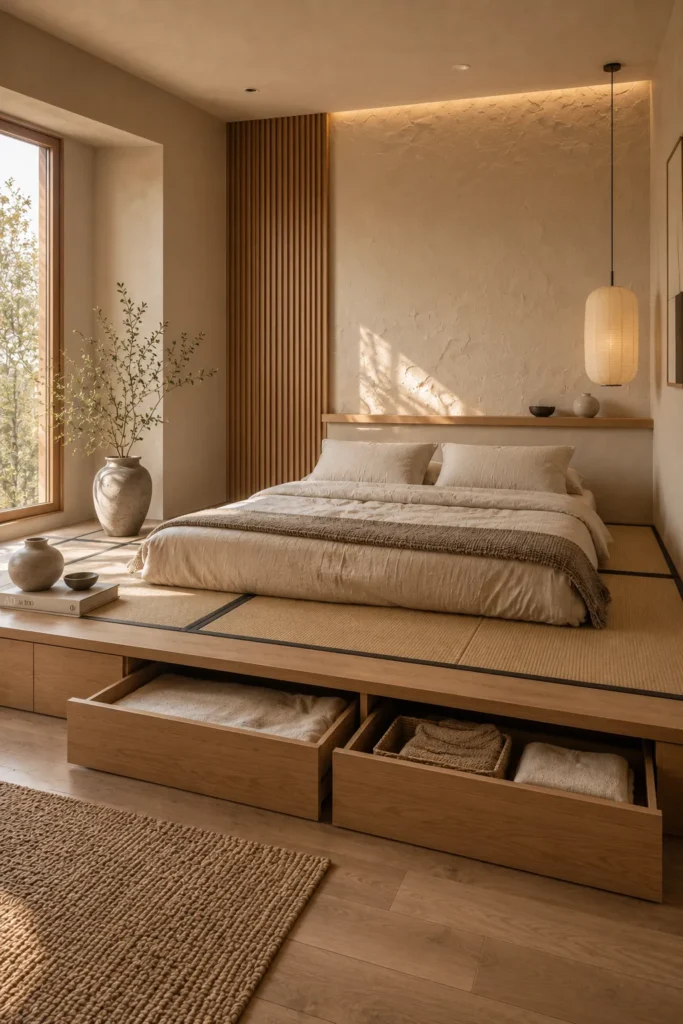
- Combines sleeping and storage functions
- Maximizes every inch of floor space
- Creates architectural interest
- Enhances the Japanese-inspired aesthetic
- Keeps the room organized and streamlined
A raised sleeping platform can completely transform the functionality of a compact bedroom. By integrating storage beneath the sleeping area, the design eliminates the need for additional furniture while maintaining a clean and spacious appearance. The architectural structure creates a sense of intention and craftsmanship that aligns beautifully with Japandi principles. Natural materials and simple lines keep the platform feeling light rather than bulky. In smaller homes, multifunctional solutions like this often provide the greatest improvement in both aesthetics and everyday usability.
I’ve seen this work well in many homes where limited square footage required every element to serve multiple purposes. Integrated drawers keep belongings hidden while preserving the calm atmosphere that supports rest and relaxation. Designers often recommend raised platforms because they create subtle zoning without adding visual barriers. Paired with soft linens, warm wood tones, and minimal decor, the structure becomes the centerpiece of the room. The final result feels serene, efficient, and highly refined while maximizing comfort and storage within a compact footprint.
Conclusion
Creating a peaceful and functional bedroom does not require a large amount of space. With thoughtful furniture choices, natural materials, smart storage, and calming textures, you can completely transform how your room looks and feels. These Japandi small bedroom ideas prove that simplicity often creates the biggest impact. I’ve seen how small changes like better lighting, cleaner layouts, and intentional decor can make a bedroom feel larger and far more relaxing. Save your favorite ideas on Pinterest, try a few in your own space, and share this article with anyone looking to create a serene retreat that feels stylish, practical, and inspiring every day.