21 Attic Bedroom Ideas for a Cozy Dream Retreat
Dreaming of Attic Bedroom Ideas that feel warm, cozy, and beautifully designed? The right layout, lighting, and storage solutions can transform an awkward upper-floor space into a peaceful retreat you’ll never want to leave.
Attic rooms often come with unique challenges such as sloped ceilings, limited storage, and difficult furniture placement. The good news is that these architectural features can become some of the room’s greatest strengths with the right design approach. From skylight reading corners and built-in storage to layered textiles and charming architectural details, these ideas are designed to help you create a comfortable and inviting space. In my experience, attic bedrooms often become the coziest rooms in a home because their unique shapes naturally create a sense of comfort and privacy. You’ll discover practical inspiration that makes every inch feel beautiful, functional, and relaxing.
1. Skylight Reading Nook
- Makes excellent use of underutilized attic space
- Creates a peaceful spot for reading and relaxing
- Brings more natural light into the room
- Adds character without adding clutter
- Makes the space feel custom designed
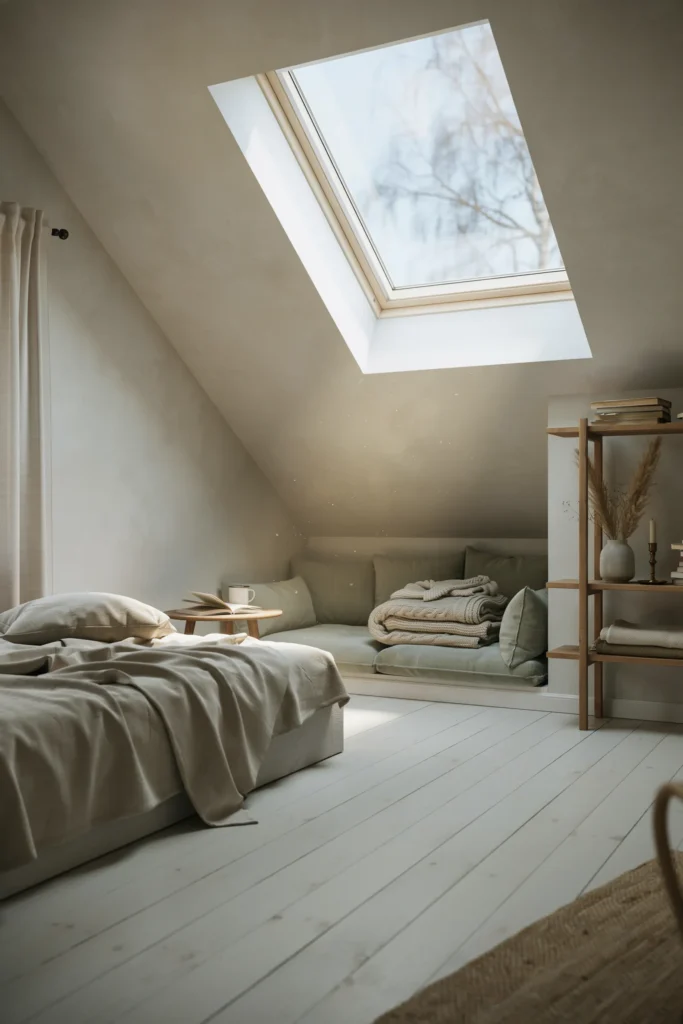
A dedicated reading nook can completely change the atmosphere of an attic bedroom. Positioned beneath a skylight, this cozy corner takes advantage of natural daylight while creating a separate zone for relaxation. The combination of soft cushions, warm textiles, and built-in seating helps the room feel more inviting and functional. Because the nook fits naturally beneath the roofline, it makes use of space that might otherwise go unused. The result is a comfortable retreat that feels thoughtful, practical, and visually appealing while enhancing the overall layout.
In my experience, small seating areas make upper-floor bedrooms feel significantly more luxurious because they introduce purpose beyond sleeping. Natural light from above creates an airy feeling even in compact spaces. Many designers recommend creating activity zones within unusual layouts because it helps the room feel larger and more intentional. The finished space becomes a favorite place for reading, journaling, or simply enjoying quiet moments. The final effect feels warm, welcoming, and perfectly suited to a cozy retreat.
2. Exposed Beam Charm
- Highlights original architectural details
- Adds warmth and depth to the room
- Creates a timeless rustic atmosphere
- Works with modern and traditional decor
- Makes the ceiling a visual focal point
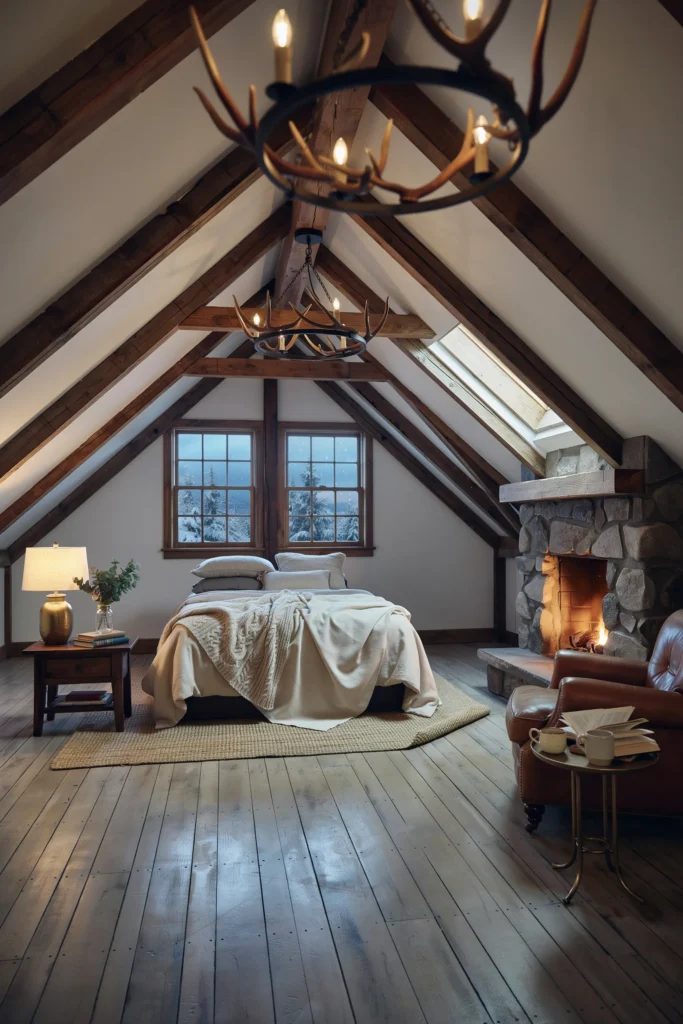
Exposed beams instantly give an attic bedroom personality and architectural interest. Instead of hiding structural elements, this design celebrates them as one of the room’s most beautiful features. Natural wood introduces warmth while creating contrast against lighter walls and textiles. The beams also help draw attention upward, making the room feel more dynamic and visually balanced. Because every beam pattern is unique, the finished space feels personal and full of character. The result is a cozy environment that blends history, texture, and comfort effortlessly.
I’ve noticed that rooms with visible architectural details often feel more memorable because they have built-in character. Many designers intentionally highlight original beams rather than covering them because they add authenticity and charm. Combined with soft bedding and warm lighting, the natural wood creates a welcoming atmosphere that never feels outdated. The final look feels timeless, cozy, and perfectly suited to an attic retreat where comfort and personality are equally important.
3. Window Seat Alcove
- Transforms a dormer area into usable space
- Adds seating without overcrowding the room
- Creates a cozy relaxation corner
- Enhances natural light and outdoor views
- Can include hidden storage underneath
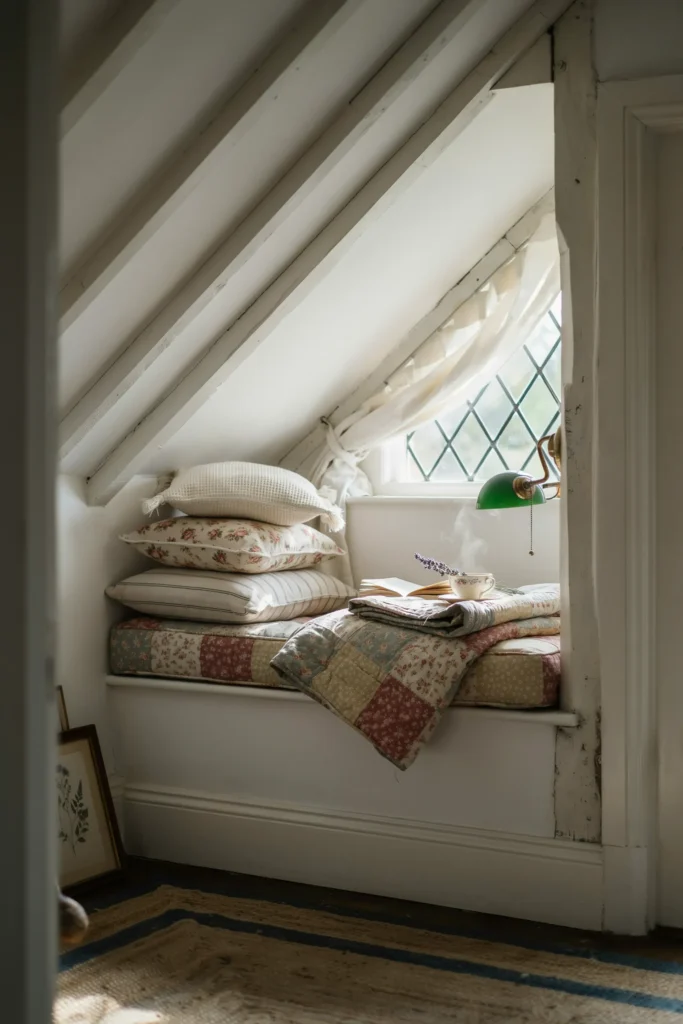
A window seat alcove can make an attic bedroom feel custom designed while improving functionality. Built into a dormer, the seating area provides a comfortable place to relax without requiring extra furniture. Soft cushions and layered fabrics help create a warm atmosphere while making the most of available natural light. Because the seating follows the shape of the architecture, it feels integrated and intentional. The result is a charming feature that improves both the appearance and practicality of the room.
I’ve seen window alcoves become the most used area in many attic spaces because they naturally attract people toward light and views. The built-in design keeps the room feeling open while adding valuable functionality. Many interior designers recommend using dormer spaces creatively because they often become standout architectural features. The final effect feels peaceful, inviting, and perfectly suited to a cozy dream retreat.
4. Dormer Window Lounge
- Creates a dedicated relaxation corner
- Makes dormer architecture more functional
- Adds balance to the room layout
- Encourages use of natural light
- Gives the bedroom a boutique-hotel feel
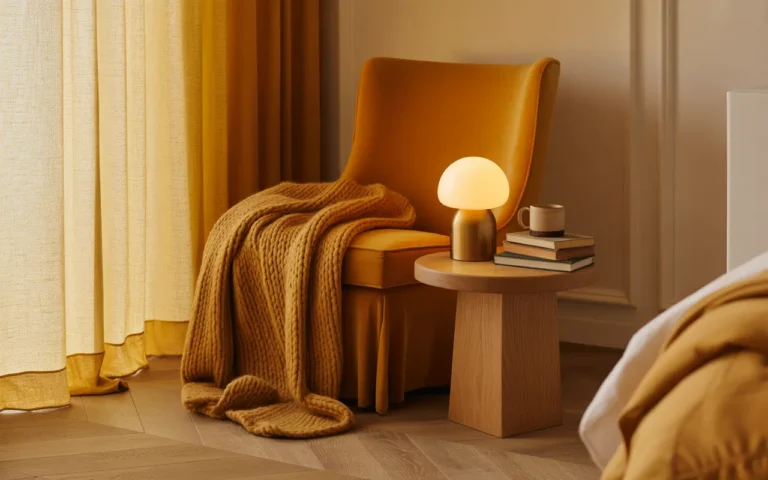
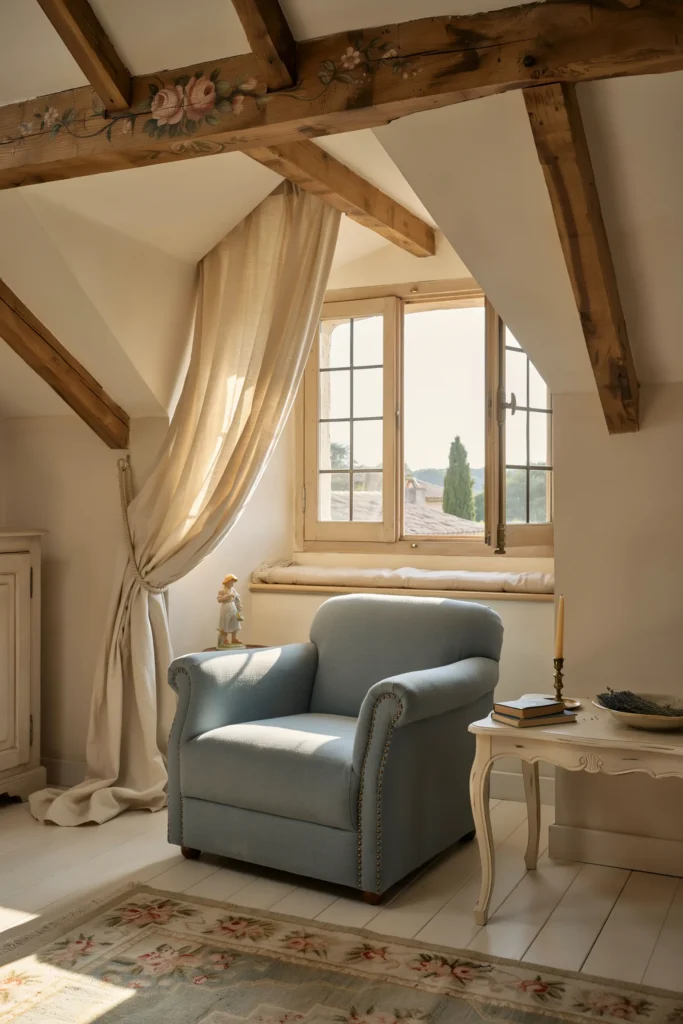
A dormer window lounge can instantly make an attic bedroom feel more luxurious and thoughtfully designed. By placing a comfortable chair and a small side table within the dormer area, the space becomes a cozy destination for reading, relaxing, or enjoying morning light. The arrangement helps define a separate function within the room while keeping the layout open and airy. Because the lounge takes advantage of existing architecture, it feels intentional rather than forced. The result is a charming retreat that adds both comfort and visual interest.
In my experience, creating small lifestyle zones inside a bedroom often makes the entire space feel larger and more functional. A dedicated seating area encourages relaxation while making use of a feature that might otherwise be overlooked. Many designers recommend furnishing dormer spaces because they naturally draw attention and provide beautiful views. The final effect feels welcoming, sophisticated, and perfectly suited to a cozy upper-level retreat.
5. Eaves Storage Bench
- Maximizes difficult low-height areas
- Provides concealed storage for essentials
- Helps reduce visual clutter
- Adds custom-built character
- Improves overall room organization
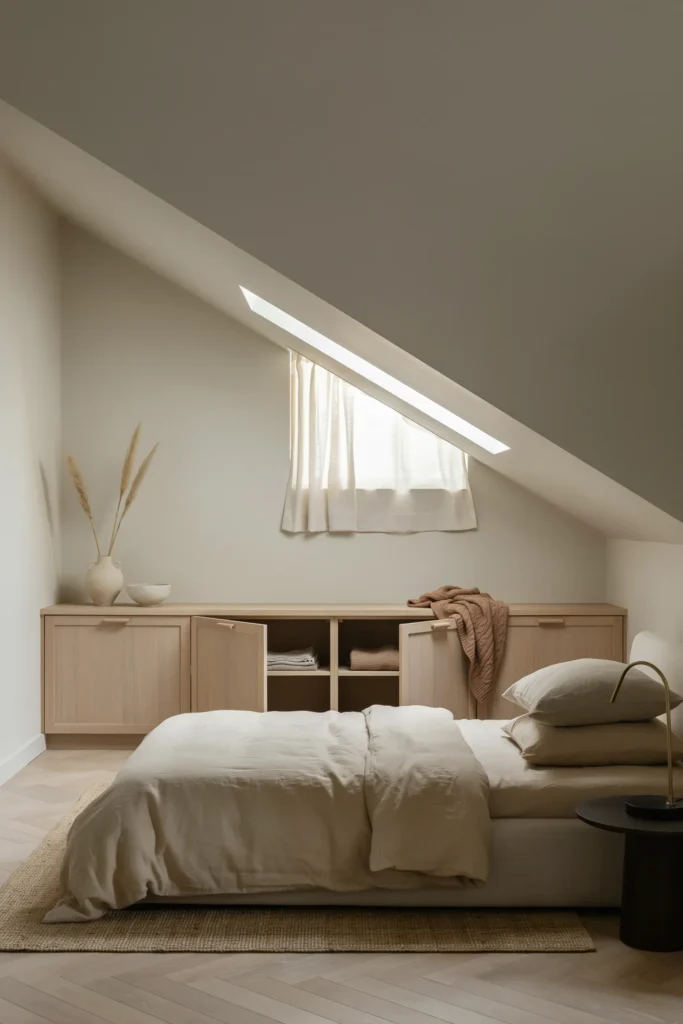
Sloped eaves often create awkward spaces that are difficult to furnish, but a built-in storage bench turns them into one of the room’s most useful features. The bench provides practical hidden storage while maintaining a clean and cohesive appearance. Because it follows the shape of the roofline, it feels integrated into the architecture rather than added later. The design helps keep seasonal items, extra bedding, and personal belongings organized without sacrificing valuable floor space. The result is a bedroom that feels more spacious, functional, and visually calm.
I’ve noticed that built-in storage solutions often make attic rooms feel significantly larger because they eliminate unnecessary furniture. Many designers favor custom benches beneath eaves because they transform unusable areas into productive storage zones. The addition of cushions and decorative textiles can also turn the bench into a comfortable seating area. The final effect feels practical, polished, and perfectly adapted to the unique challenges of attic living.
6. Gable End Retreat
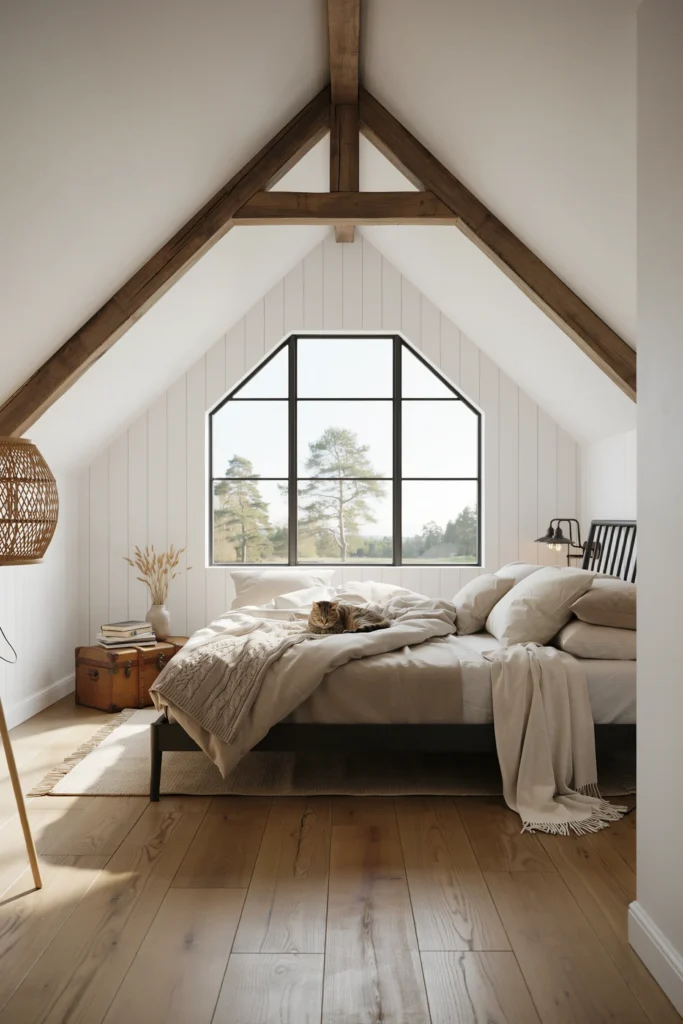
- Creates a strong focal point
- Makes the room feel symmetrical and balanced
- Highlights unique architectural features
- Maximizes visual impact from the bed area
- Works in both modern and rustic spaces
A gable wall can become the defining feature of an attic bedroom when used as the room’s focal point. Positioning the bed against this architectural element helps create symmetry while emphasizing the dramatic shape of the ceiling. The arrangement naturally draws the eye upward, making the room feel larger and more visually interesting. Because the design works with the structure rather than against it, the overall layout feels balanced and intentional. The result is a bedroom that feels cozy, elegant, and architecturally distinctive.
I’ve seen this approach work exceptionally well in attic spaces because it helps establish order within unusual room shapes. The strong focal point anchors the design and makes furniture placement easier. Many interior designers recommend highlighting gable walls instead of trying to disguise them because they provide built-in character. The final look feels sophisticated, inviting, and perfectly suited to creating a dream retreat beneath the roofline.
7. Whitewashed Rafters
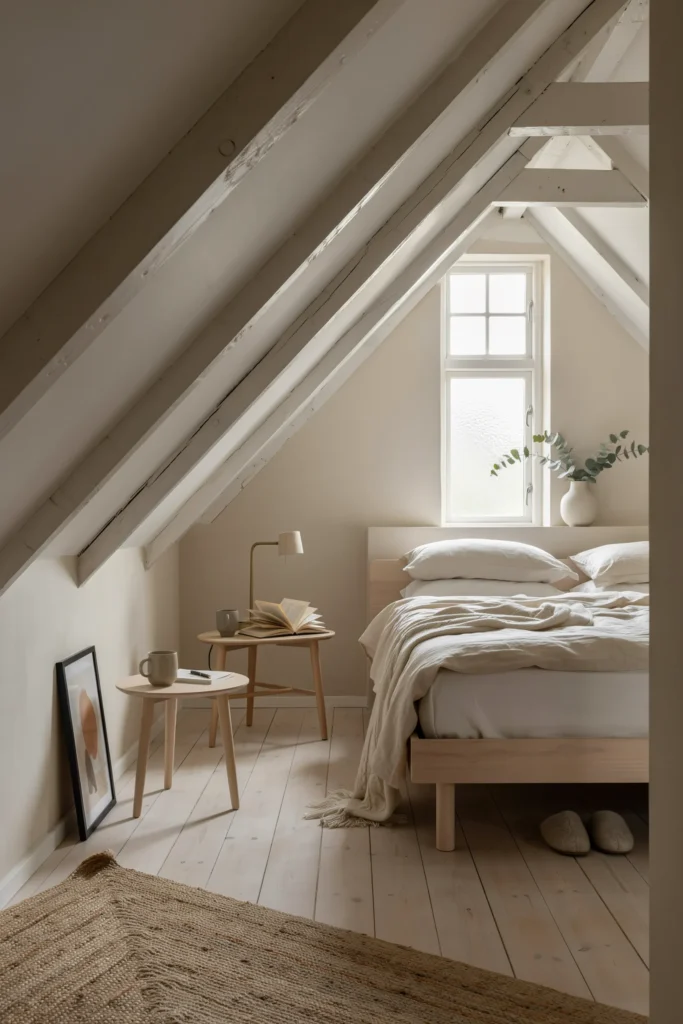
- Brightens darker attic spaces instantly
- Makes ceilings feel taller and lighter
- Preserves architectural character
- Enhances soft neutral color palettes
- Creates an airy Scandinavian-inspired atmosphere
Whitewashed rafters can completely transform the mood of an attic bedroom by reflecting more light throughout the space. Instead of dark beams drawing the room inward, the lighter finish helps open the ceiling visually while preserving the charm of exposed wood. The subtle texture adds character without making the room feel heavy. Because the rafters remain visible, the architecture still becomes part of the design story. The result is a bright and welcoming retreat that feels larger, calmer, and beautifully balanced.
In my experience, lighter ceiling treatments often make attic rooms feel significantly more spacious without requiring structural changes. The soft finish helps distribute daylight more evenly and pairs beautifully with neutral furnishings. Many designers use whitewashed wood because it blends rustic charm with modern simplicity. Combined with natural fabrics and warm accents, the final effect feels relaxed, elegant, and perfectly suited to a cozy sleeping space beneath the roof.
8. Lantern Glow Corner
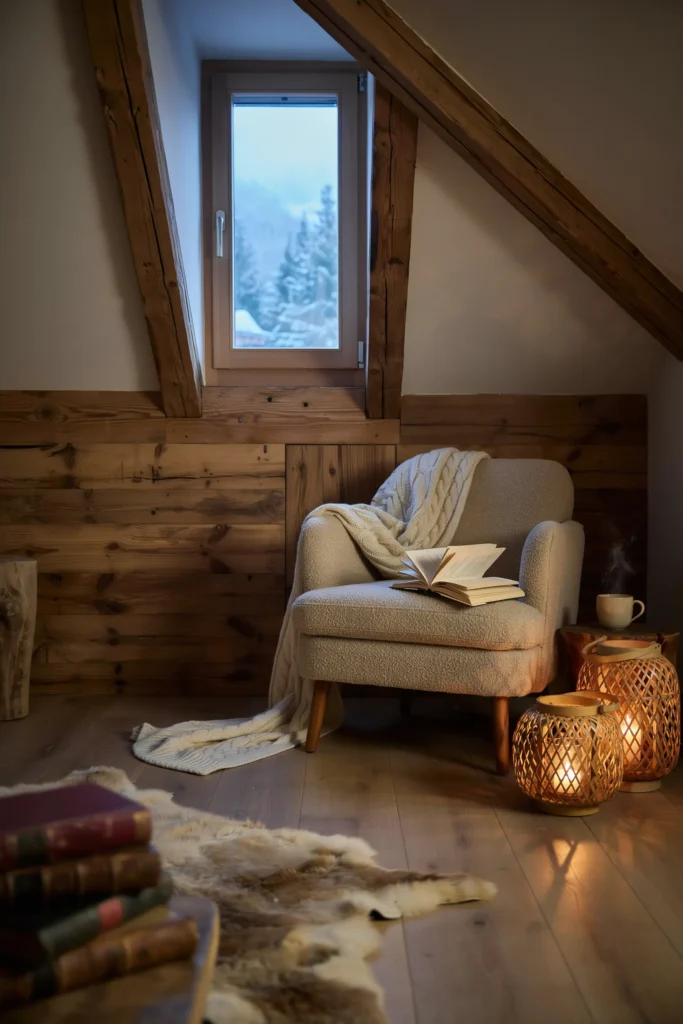
- Adds warmth without harsh overhead lighting
- Creates a cozy evening atmosphere
- Enhances the feeling of comfort
- Works beautifully in small spaces
- Adds decorative character and texture
Lighting can completely change how an attic bedroom feels, especially after sunset. A dedicated lantern-lit corner introduces warmth and softness that makes the room feel more intimate and inviting. The gentle glow highlights textures and architectural details while avoiding the harshness of brighter ceiling fixtures. Because lanterns create layered lighting, the room feels more relaxing and comfortable. The result is a cozy environment that encourages rest while adding visual charm to the overall design.
I’ve noticed that smaller attic rooms often benefit from multiple warm light sources rather than a single bright fixture. Layered lighting creates depth and makes the space feel more welcoming throughout the evening. Many interior designers recommend decorative lanterns because they provide both function and visual interest. Whether woven, metal, or glass, the lanterns help establish a peaceful atmosphere. The final effect feels comforting, elegant, and ideal for creating a dream retreat.
9. Built-In Book Wall
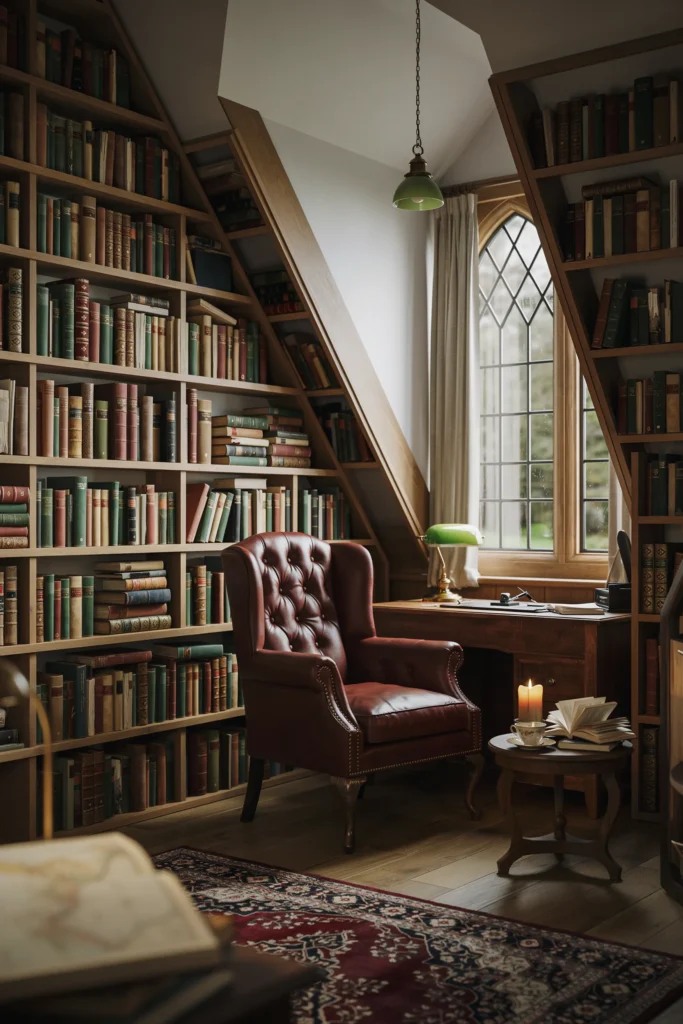
- Maximizes awkward wall space efficiently
- Adds personality and visual interest
- Provides practical storage without clutter
- Creates a cozy library-inspired atmosphere
- Makes the room feel custom designed
Built-in shelving can turn challenging attic walls into one of the room’s most impressive features. By following the roofline, the shelves fit naturally into the architecture while providing valuable storage and display space. Books, artwork, and decorative objects help personalize the room without making it feel crowded. Because the shelving becomes part of the structure, the design feels seamless and intentional. The result is a bedroom that combines functionality, warmth, and character in a highly efficient way.
I’ve seen built-in book walls completely change how attic rooms function because they eliminate the need for bulky furniture. The integrated storage keeps the room organized while creating a cozy atmosphere that feels lived-in and welcoming. Many designers recommend custom shelving for unusual spaces because it maximizes every available inch. The final look feels sophisticated, practical, and perfectly tailored to the architecture of the room.
Related Article : 22 Japandi Small Bedroom Ideas with Serene Style
10. Shiplap Accent Peak
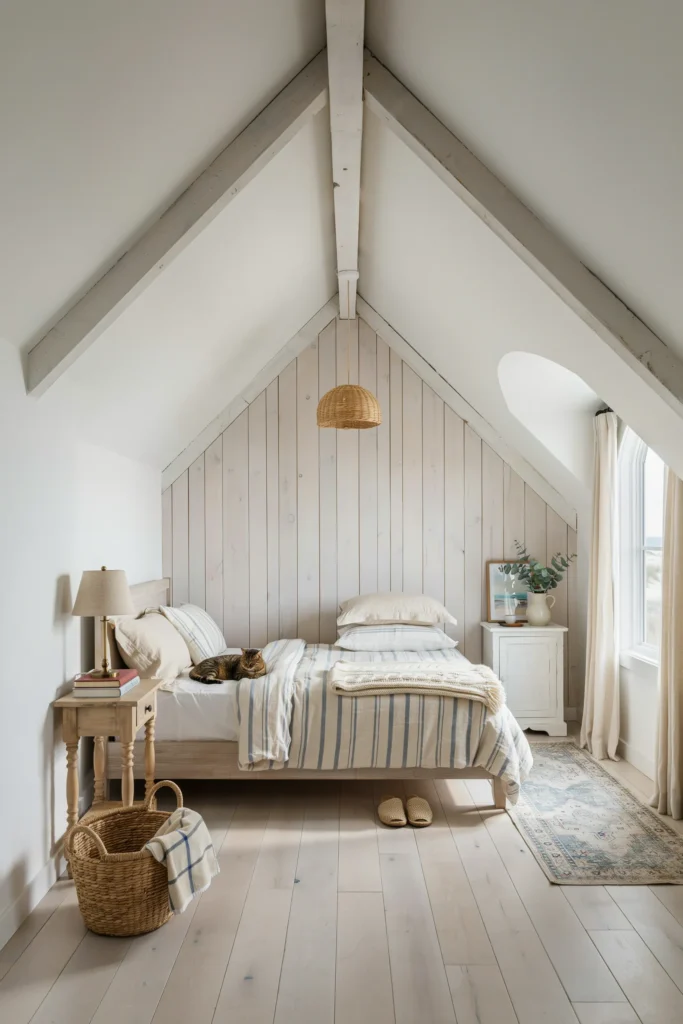
- Creates a dramatic focal point
- Highlights the height of the ceiling
- Adds texture without overwhelming the room
- Works with rustic and modern interiors
- Makes architectural lines feel intentional
An accent wall that follows the roof peak can instantly make an attic bedroom feel more polished and visually organized. Vertical shiplap naturally guides the eye upward, emphasizing ceiling height while drawing attention to the room’s unique architecture. The subtle texture adds depth without introducing visual clutter. Because the paneling works as both a decorative and architectural feature, the room feels thoughtfully designed from top to bottom. The result is a cozy retreat that feels spacious, balanced, and full of character.
In my experience, vertical wall treatments often make sloped-ceiling rooms feel taller because they reinforce natural architectural lines. The texture introduces interest while allowing furniture and decor to remain the focus. Many designers use wood paneling strategically because it creates warmth without requiring bold colors or heavy patterns. The final effect feels timeless, inviting, and beautifully suited to an upper-level bedroom.
11. Canopy Beam Bed
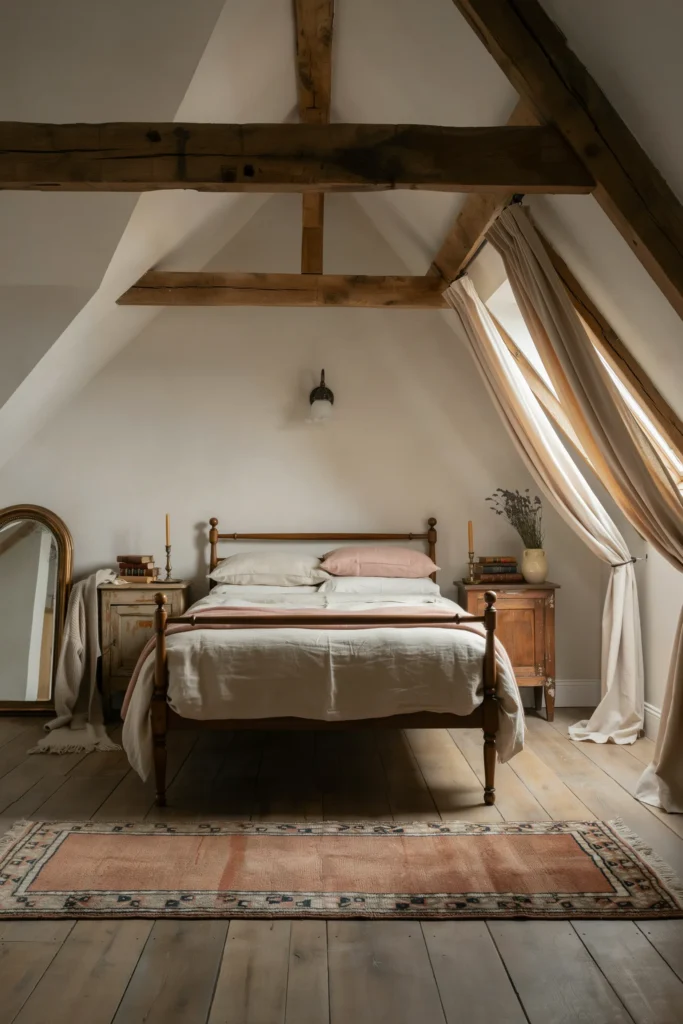
- Creates a cozy room-within-a-room effect
- Adds visual elegance without overwhelming the space
- Defines the sleeping area beautifully
- Enhances vertical architectural features
- Makes the bedroom feel more luxurious
A canopy bed can look surprisingly beautiful in an attic setting when designed with clean lines and lightweight materials. The frame creates structure around the sleeping area while complementing exposed beams and sloped ceilings. Soft drapery introduces texture and comfort without making the room feel enclosed. Because the canopy visually anchors the bed, the entire layout feels more intentional and balanced. The result is a sleeping space that feels elegant, comfortable, and perfectly tailored to a dream retreat.
I’ve noticed that slim canopy frames often work better than bulky designs in attic rooms because they add presence without blocking natural light. The structure creates a focal point while maintaining openness throughout the room. Many interior designers use canopy beds to make bedrooms feel more luxurious without relying on excessive decoration. The final appearance feels romantic, cozy, and beautifully integrated into the architecture.
12. Cottage Quilt Layers
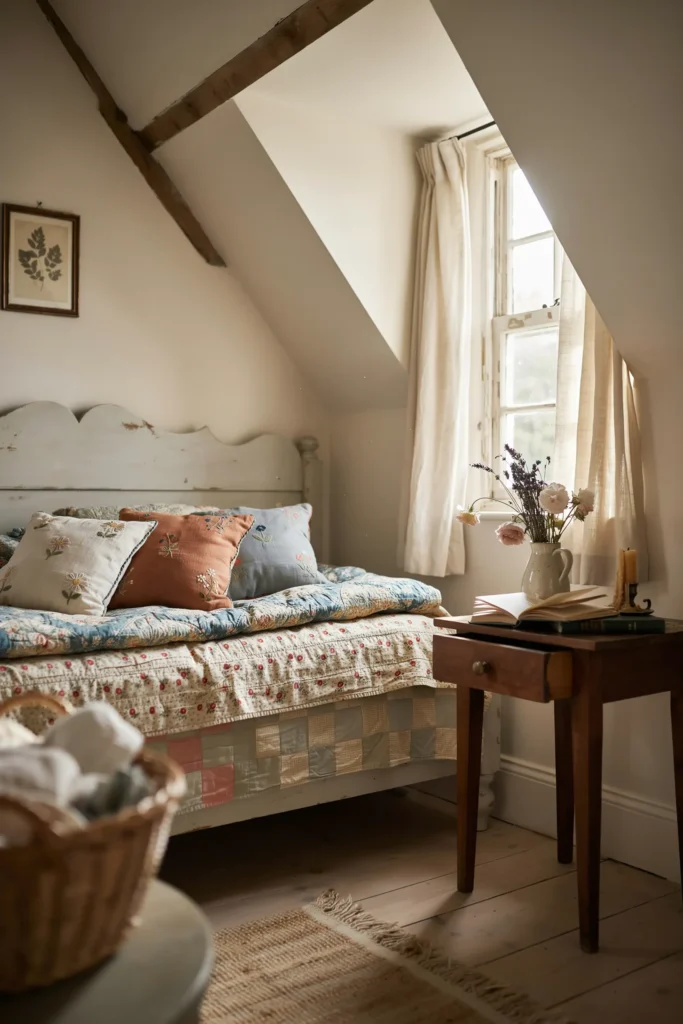
- Adds instant warmth and comfort
- Creates visual softness throughout the room
- Brings personality through layered textiles
- Enhances a cozy cottage atmosphere
- Makes the bed feel inviting year-round
Layered quilts can completely transform an attic bedroom by introducing warmth, texture, and visual comfort. The combination of different fabrics, patterns, and weights creates a welcoming bed that becomes the heart of the room. Soft layers help balance the angles and architectural lines often found beneath the roof. Because textiles are easy to change seasonally, this approach also offers flexibility. The result is a bedroom that feels lived-in, comfortable, and full of charm without requiring major renovations.
I’ve seen quilt layering work beautifully in attic spaces because it naturally softens architectural edges and creates a more inviting atmosphere. The extra texture helps the room feel cozy even when the decor remains simple. Many designers recommend focusing on bedding first because it has the greatest visual impact in a bedroom. The final look feels warm, timeless, and perfectly suited to a relaxing retreat.
13. Rustic Trunk Footboard
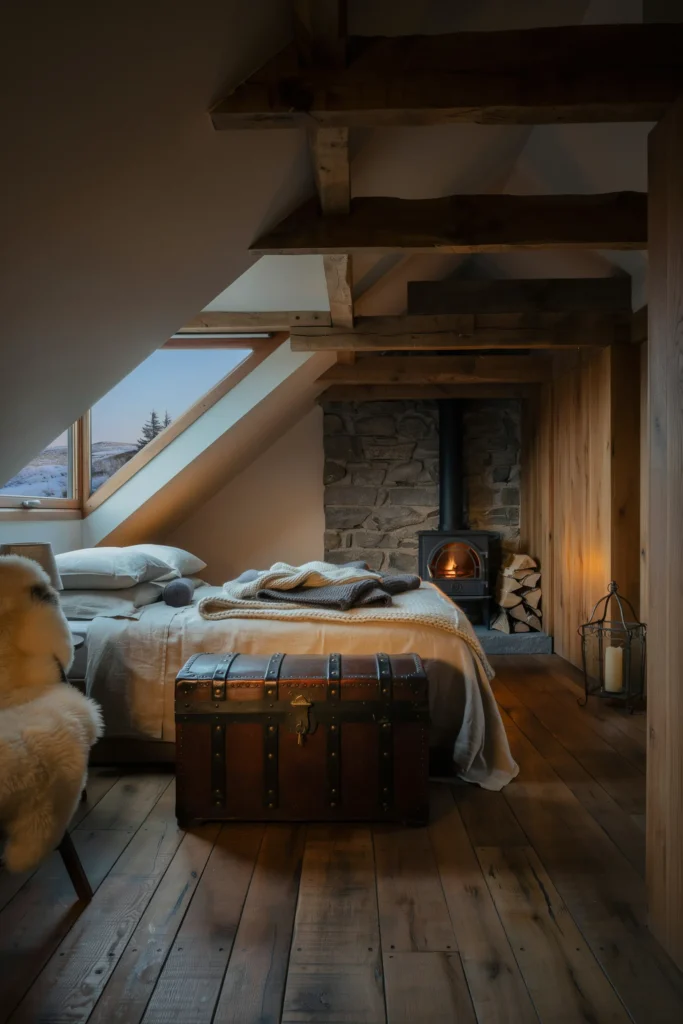
- Adds storage without extra cabinetry
- Creates a charming vintage focal point
- Helps keep blankets and linens organized
- Enhances the cozy retreat atmosphere
- Works with farmhouse and cottage styles
A vintage trunk at the foot of the bed can instantly add character while solving practical storage needs. The aged wood introduces warmth and texture that complements the unique architecture of an attic room. Beyond its decorative value, the trunk provides a convenient place to store extra bedding, seasonal decor, or personal items. Because it combines beauty and function, the piece helps reduce clutter while enriching the room’s overall design. The result is a cozy space that feels collected, welcoming, and full of timeless charm.
In my experience, multifunctional furniture often works best in upper-floor bedrooms where every square foot matters. A well-chosen trunk introduces personality without requiring additional furniture pieces. Many designers use vintage storage elements because they make a room feel layered and authentic. The final look feels practical, inviting, and beautifully suited to a relaxing hideaway beneath the roof.
14. Painted Brick Feature
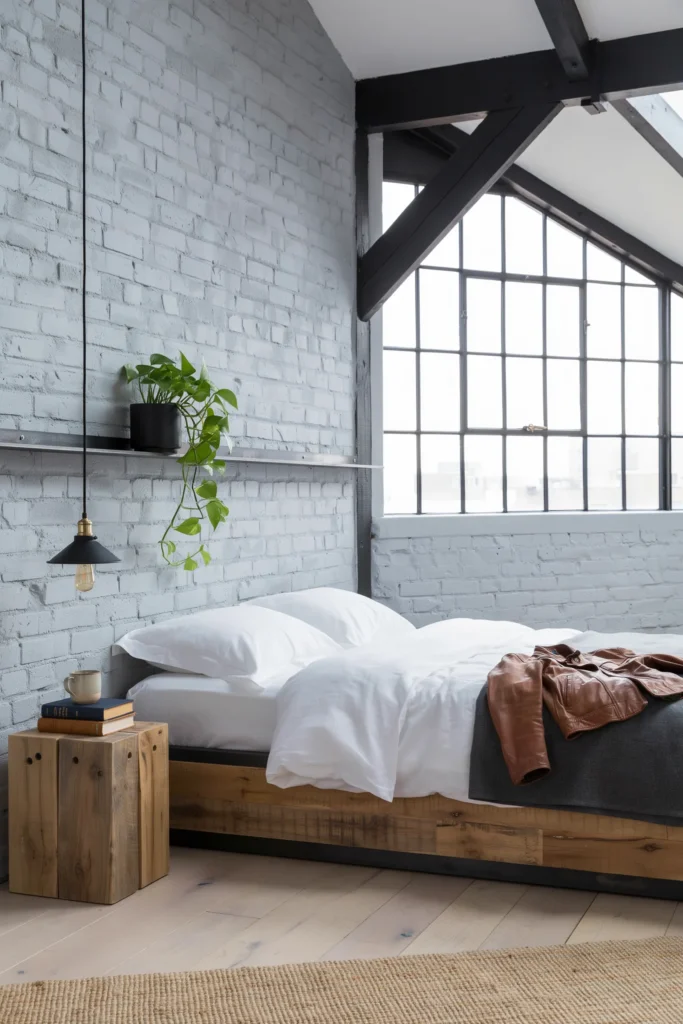
- Adds texture without darkening the room
- Creates a subtle architectural statement
- Brightens older attic spaces
- Works with modern and rustic decor
- Enhances visual depth beautifully
A painted brick wall can bring texture and history into an attic bedroom while keeping the space light and airy. The brick introduces visual interest that contrasts beautifully with soft bedding and smooth surfaces. Painting the surface a light color prevents the room from feeling heavy while still preserving its architectural character. Because the wall becomes a natural focal point, it adds depth without requiring excessive decoration. The result is a bedroom that feels stylish, balanced, and full of personality.
I’ve noticed that textured walls often make attic spaces feel more finished because they add depth where traditional walls might appear plain. Many designers choose painted brick because it offers the perfect balance between rustic charm and modern simplicity. Combined with soft furnishings and natural materials, the final effect feels warm, timeless, and effortlessly inviting.
15. Woven Pendant Focus
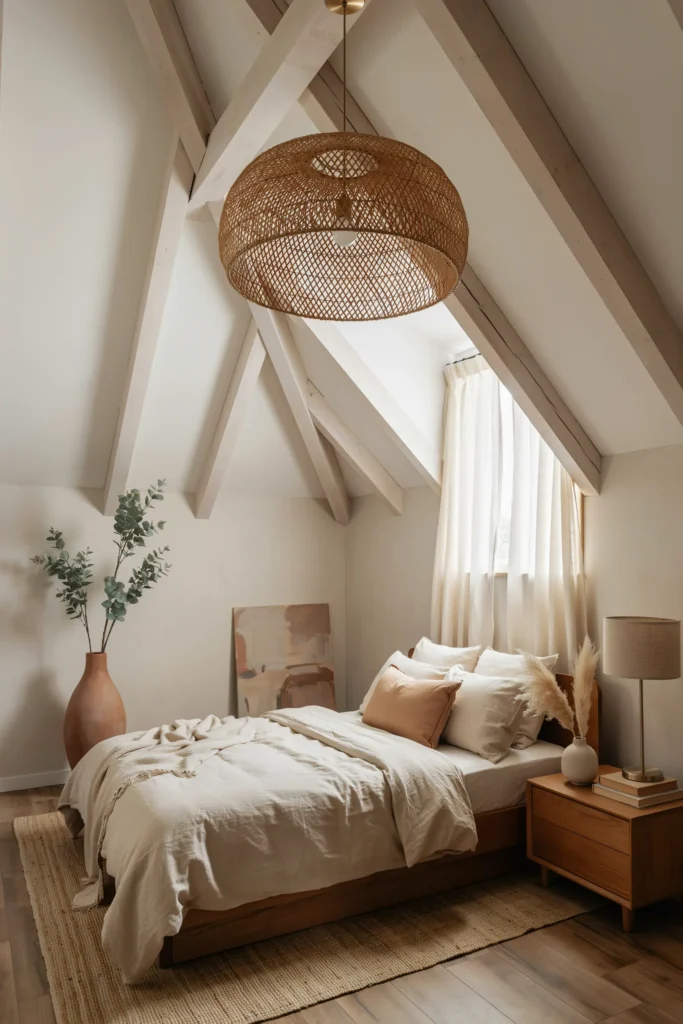
- Draws attention upward beautifully
- Adds natural texture to the room
- Creates a cozy ambient glow
- Balances tall ceiling spaces
- Enhances relaxed organic styling
Lighting can completely transform an attic bedroom, and a woven pendant creates both function and visual impact. Suspended beneath a vaulted ceiling, the fixture helps define the center of the room while adding texture and warmth. The natural material softens architectural lines and complements wood finishes beautifully. Because the pendant occupies vertical space, it makes the ceiling feel intentional rather than awkward. The result is a room that feels balanced, inviting, and thoughtfully designed.
I’ve seen statement lighting become the feature people notice first when entering an attic bedroom. A woven pendant adds character during the day and creates a cozy glow in the evening. Many interior designers recommend oversized fixtures because they help connect the room visually from floor to ceiling. The final look feels warm, stylish, and perfectly suited to a dream retreat.
16. Vintage Ladder Display
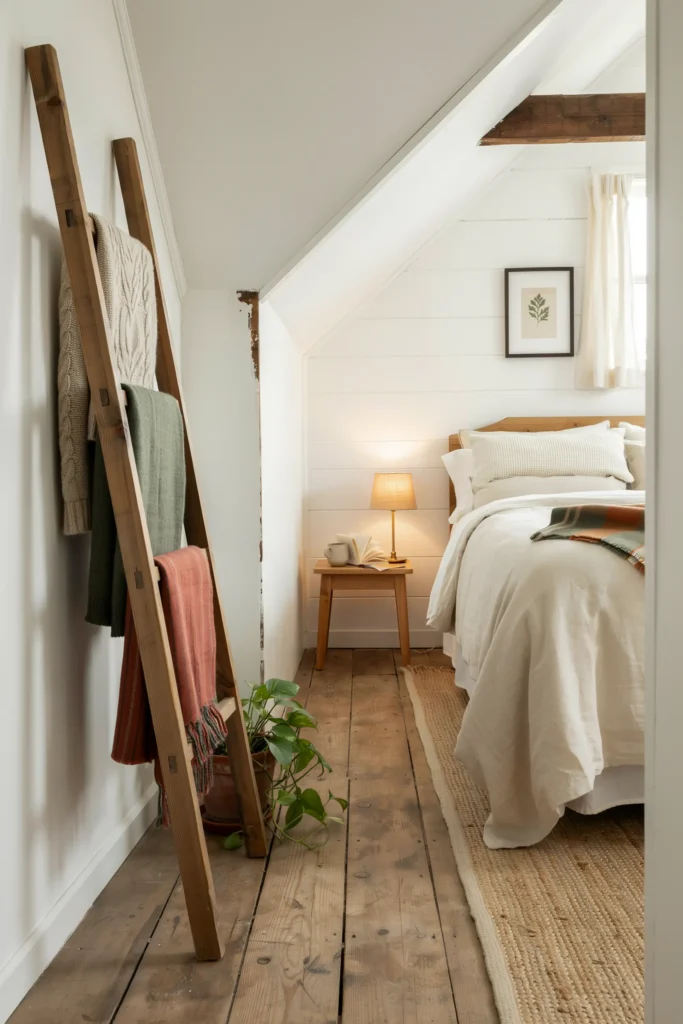
- Adds storage without bulky furniture
- Displays blankets in a decorative way
- Introduces vertical visual interest
- Enhances rustic and cottage aesthetics
- Keeps essentials easily accessible
A decorative ladder can add both function and personality to an attic bedroom without taking up much floor space. Leaned against a wall, it provides an attractive place to display blankets, quilts, or textiles while contributing to the room’s overall design. The vertical shape helps balance sloped ceilings and draws attention upward. Because the ladder remains open and lightweight, it keeps the room feeling airy. The result is a charming feature that blends practicality and style while enhancing the cozy atmosphere.
In my experience, decorative storage solutions often work best in attic rooms because they reduce visual heaviness while remaining useful. A ladder display introduces texture and warmth without requiring additional cabinetry. Many designers use this approach to create a relaxed, collected look that feels personal and inviting. The final effect is simple, functional, and perfectly suited to a comfortable retreat.
17. Soft Arch Headboard
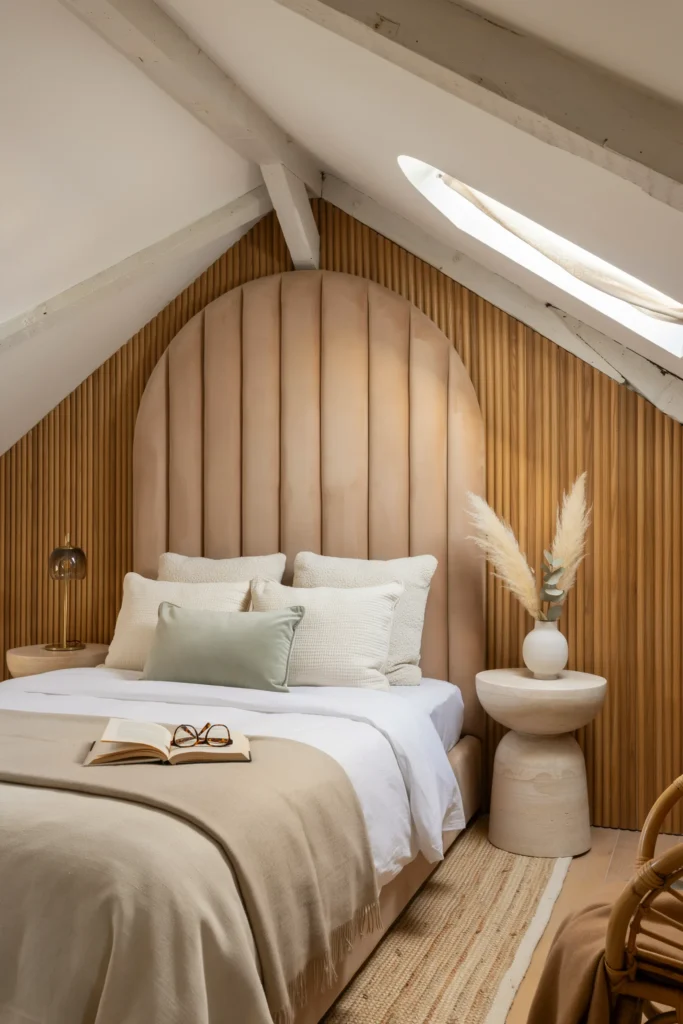
- Softens angular rooflines beautifully
- Creates an elegant focal point
- Adds comfort and visual warmth
- Works with many decorating styles
- Enhances the bed without overwhelming the room
Curved furniture can provide the perfect contrast to the strong angles often found in attic architecture. A softly arched headboard introduces gentle lines that help balance sloped ceilings and exposed structural elements. The upholstered surface also adds texture and comfort, making the bed feel more inviting. Because the shape remains understated, it complements both modern and traditional interiors. The result is a bedroom that feels softer, calmer, and visually harmonious while maintaining a sophisticated appearance.
I’ve noticed that rounded forms often improve the overall flow of attic spaces because they break up rigid architectural lines. Many designers use curved headboards to create a more welcoming atmosphere without adding visual clutter. Combined with layered bedding and warm materials, the final look feels cozy, refined, and perfectly suited to restful living.
18. Skylit Plant Haven
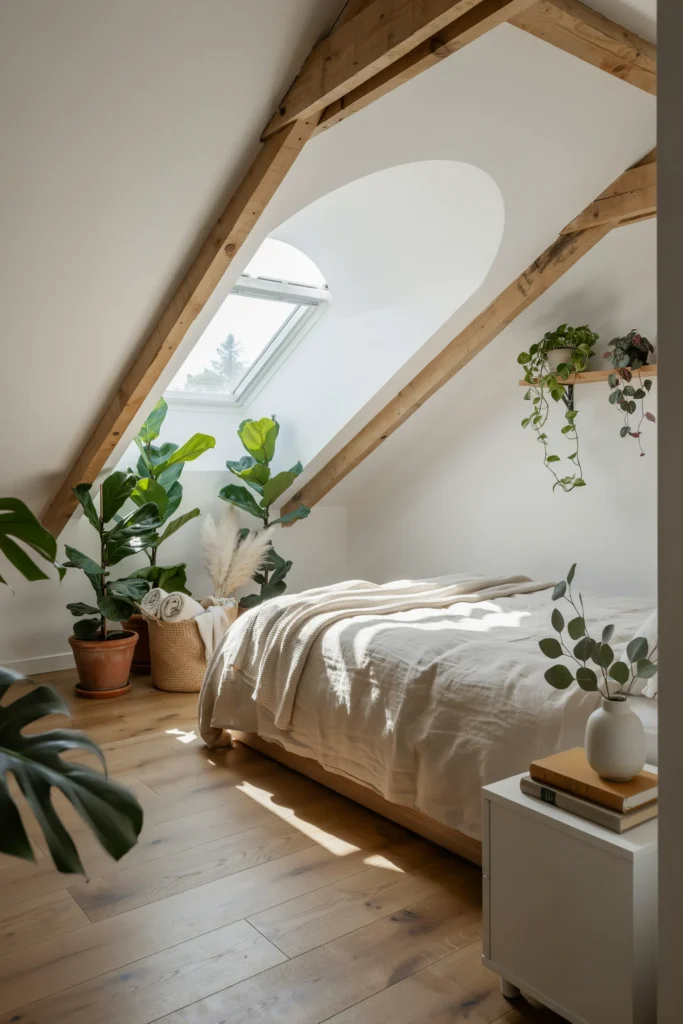
- Brings life and freshness into the room
- Takes advantage of natural skylight exposure
- Improves the overall atmosphere
- Adds organic texture and color
- Creates a peaceful retreat-like feeling
Natural light from skylights makes attic bedrooms ideal for incorporating indoor greenery. A thoughtfully arranged plant collection introduces softness, texture, and color while helping the room feel more connected to nature. The plants draw attention toward natural light sources and create a fresh, calming environment. Because greenery works with nearly every design style, it remains versatile and timeless. The result is a bedroom that feels vibrant, peaceful, and beautifully balanced.
I’ve seen plants completely transform upper-level rooms by making them feel more alive and welcoming. Skylight exposure often provides ideal growing conditions for many indoor varieties. Designers frequently use greenery to soften architectural features and add movement throughout a space. The final effect feels serene, refreshing, and perfectly suited to a cozy dream retreat.
19. Hidden Closet Wall
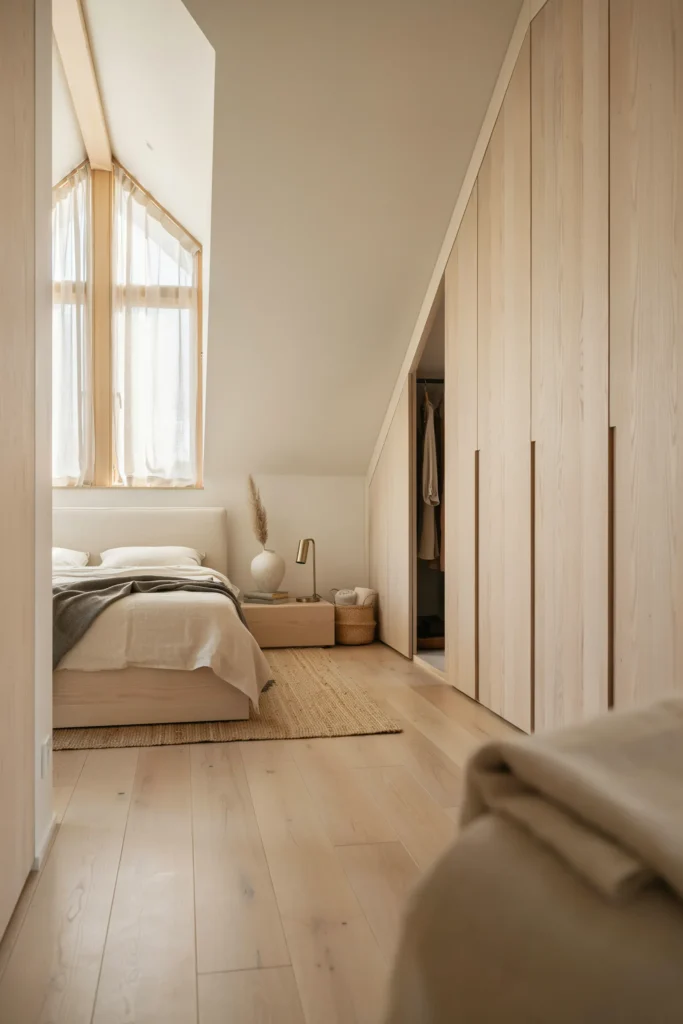
- Maximizes difficult attic wall space
- Keeps storage visually concealed
- Reduces clutter and improves organization
- Creates a clean custom-built appearance
- Makes the room feel larger and calmer
Built-in closet walls are one of the smartest ways to use the unusual angles found in attic bedrooms. Instead of leaving low sections unused, custom cabinetry follows the roofline and transforms them into practical storage. The seamless design keeps clothing and personal items hidden while maintaining a clean and organized appearance. Because the storage blends into the architecture, it feels intentional rather than bulky. The result is a room that appears more spacious, functional, and visually polished without sacrificing valuable floor area.
In my experience, concealed storage solutions have the biggest impact in attic spaces because they eliminate visual clutter while maximizing every inch. Many designers favor integrated cabinetry because it creates a streamlined appearance that allows architectural features to stand out. The final effect feels sophisticated, efficient, and perfectly tailored to the room’s unique layout.
20. Fireplace Niche Corner
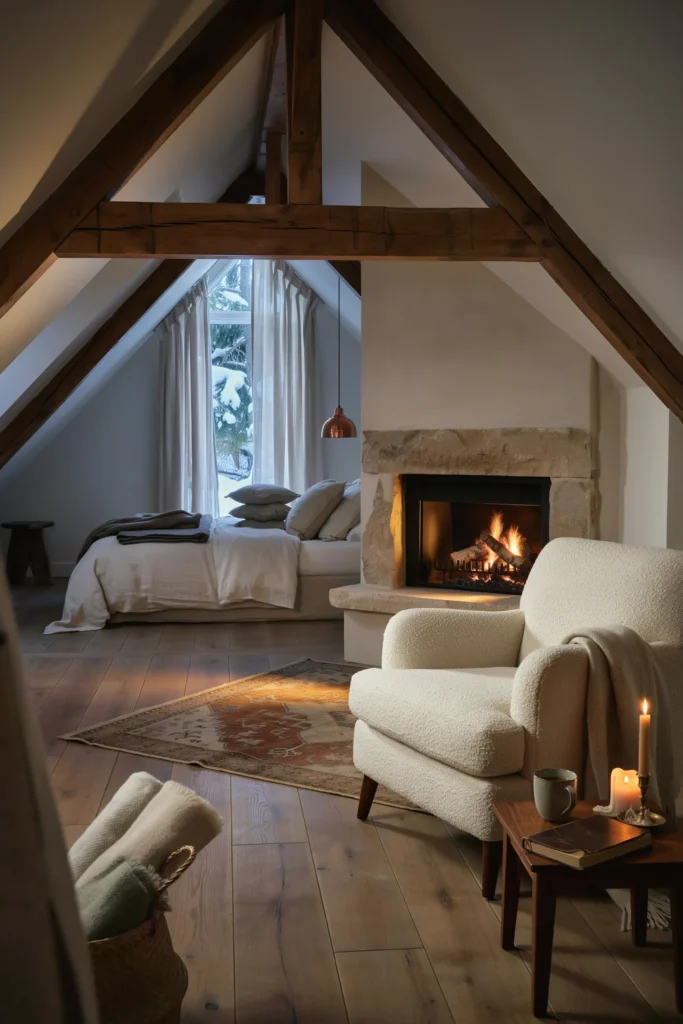
- Creates a warm focal point
- Enhances the retreat-like atmosphere
- Adds architectural character
- Makes the room feel cozy year-round
- Works beautifully with rustic and traditional decor
A small fireplace niche can instantly transform an attic bedroom into a true sanctuary. Whether functional or decorative, the fireplace introduces warmth and visual comfort that naturally draws attention. The stone or plaster surround adds texture while helping define a dedicated relaxation area. Because the feature creates a focal point beyond the bed, it adds depth and personality to the room. The result is a cozy environment that feels inviting, intimate, and perfectly suited to peaceful evenings.
I’ve noticed that fireplaces often become the emotional center of a bedroom because they contribute both warmth and atmosphere. Many designers use compact fireplace features to create a luxury retreat feeling without requiring extensive furnishings. The final appearance feels timeless, comforting, and wonderfully suited to an upper-floor escape.
21. Layered Neutral Cocoon
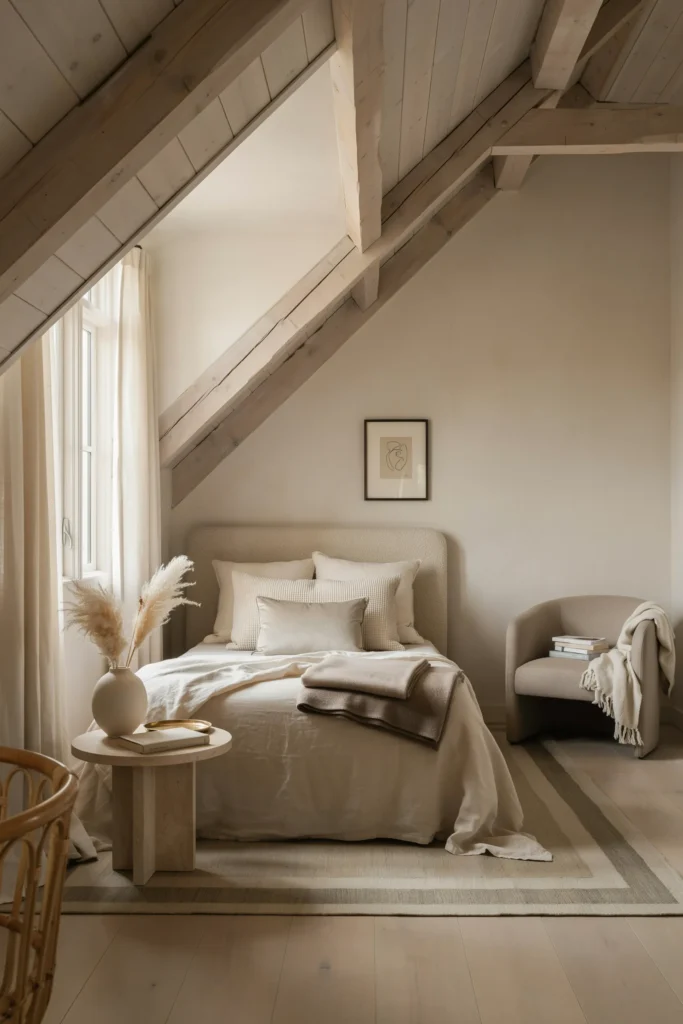
- Creates a calm and relaxing atmosphere
- Adds depth without relying on bold colors
- Makes the room feel warmer and softer
- Enhances comfort through layered textures
- Works across many design styles
Layering neutral tones is one of the most effective ways to make an attic bedroom feel cozy and sophisticated. Combining soft shades of ivory, oatmeal, beige, and taupe creates depth while maintaining a peaceful visual flow. Different fabrics and textures prevent the palette from feeling flat, allowing the room to remain interesting without becoming overwhelming. Because neutral layers complement natural light beautifully, the entire space feels brighter and more inviting. The result is a bedroom that encourages relaxation while looking timeless and elegant.
I’ve seen neutral layering transform even the simplest attic rooms into luxurious retreats. The subtle color variations create warmth and texture without competing with architectural details. Many interior designers recommend building a room around texture rather than strong color because it creates lasting appeal and flexibility. The final effect feels cozy, refined, and perfectly suited to a dream retreat beneath the roofline.
Conclusion
A well-designed attic bedroom can become one of the most charming and relaxing spaces in your home. These Attic Bedroom Ideas show how thoughtful storage, cozy textures, smart layouts, and architectural details can transform even the most challenging room into a dream retreat. I’ve seen how small changes like better lighting, layered fabrics, and custom storage can completely change the feeling of a space. Save your favorite ideas on Pinterest, try one or two in your own bedroom, and share this article with anyone looking for inspiration. Your perfect cozy retreat may be closer than you think.