22 Dark Leaf Plants for Dark Apartments That Shine
Imagine walking into a dim apartment and instantly feeling calm, refreshed, and surrounded by natural beauty. That’s exactly what dark leaf plants for dark apartments can do when styled the right way. These plants don’t just survive in low light—they thrive and completely transform the mood of your home into something lush and alive.
In this guide, you’ll discover inspiring, Pinterest-worthy ideas that show how to style greenery in low-light spaces without needing bright sunlight or large rooms. I’ve noticed in many homes that even one well-placed plant can completely shift the atmosphere. In my experience, people are often surprised at how much warmer, fresher, and more luxurious their space feels after adding just a few deep green plants.
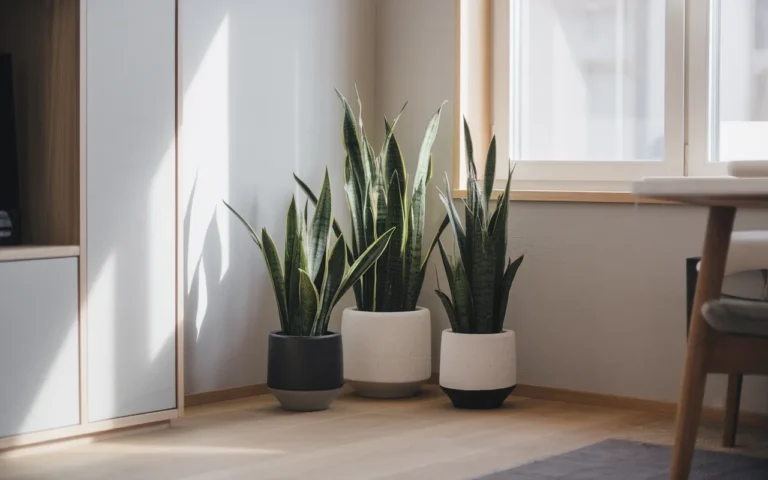
1. Low Light Corners
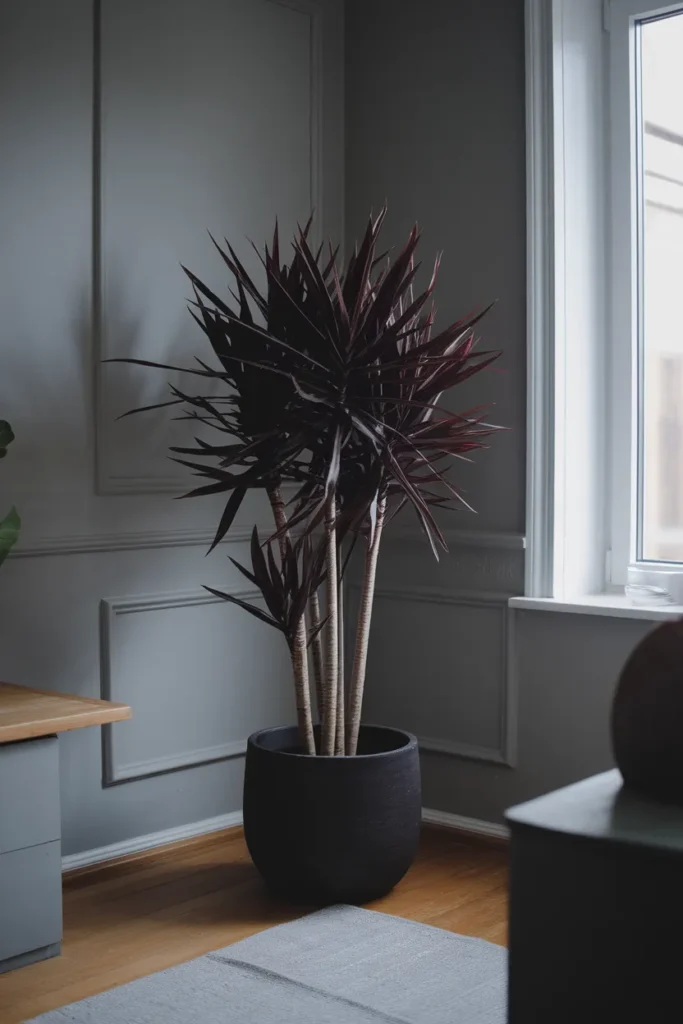
- Improves low-light corners visually
- Adds natural depth to small rooms
- Requires minimal maintenance indoors
- Enhances modern moody aesthetics
Low-light corners often feel empty and forgotten, but adding deep green foliage completely changes how the space feels. In shaded apartments, these plants thrive without direct sunlight, making them ideal for compact urban homes. The rich green tones bring instant depth and calmness to dull interiors. I’ve noticed that even a single plant can soften harsh walls and make the room feel more balanced. Designers often use this approach to introduce life into darker areas without overwhelming the space or requiring complicated maintenance routines for beginners especially in small modern apartments today spaces overall feel.
Bringing greenery into low-light rooms is one of the simplest yet most effective interior upgrades for improving atmosphere. These plants adapt well to indirect lighting, which makes them perfect for apartments with limited windows. Over time, they create a more refreshing and breathable environment that feels less confined. In my experience, people often underestimate how much visual softness plants can add to hard architectural lines. That’s why many designers recommend starting with one statement plant before expanding the collection for a more layered and natural indoor look overall that improves everyday living comfort visually soothing.
2. Shelf Layer Plants
- Maximizes vertical growing space
- Creates layered green texture effect
- Ideal for small apartments
- Improves visual depth instantly
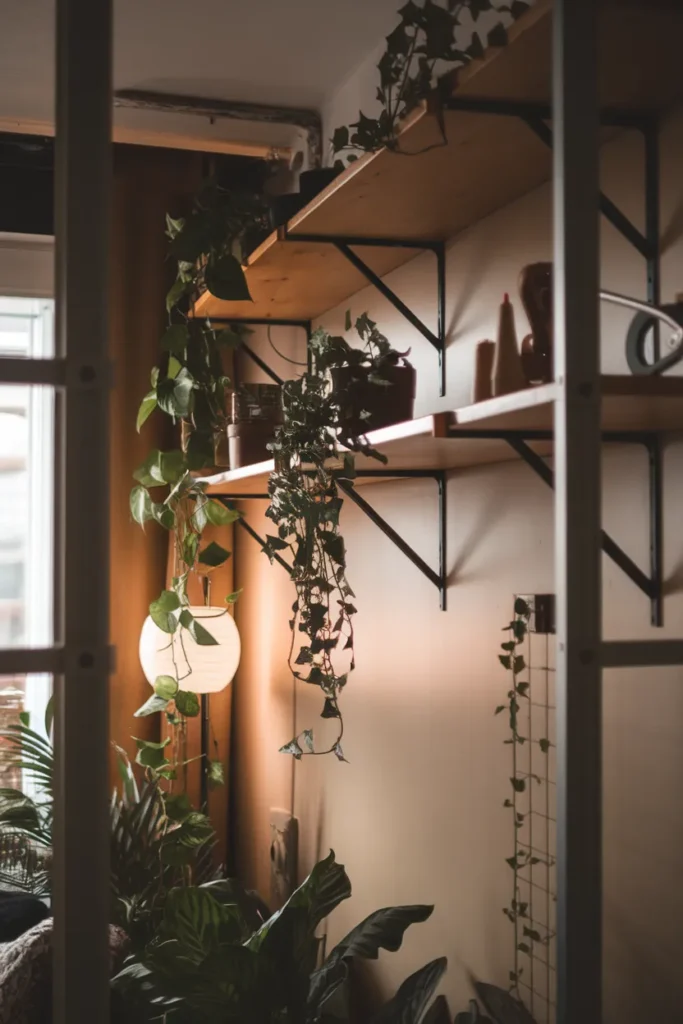
Shelf-based plant styling is one of the most effective ways to bring greenery into compact apartments without using floor space. It allows plants to cascade naturally, creating a layered visual effect that feels dynamic and modern. These setups work especially well in darker rooms because higher placement captures whatever indirect light is available. I’ve noticed that even artificial lighting can support this arrangement when natural light is limited. This approach is widely used in urban interior design to add softness, structure, and movement to otherwise flat wall spaces making interiors feel more alive naturally balanced.
This plant layering method also improves how people perceive depth in small or dim environments. Instead of leaving walls empty, shelves filled with greenery create a sense of dimension that makes the room feel larger and more intentional. In many homes, designers rely on this trick to balance functionality with aesthetics. I’ve seen this work well in apartments where space is limited but personality is still important. It allows homeowners to experiment with different plant types while maintaining a clean, organized structure that remains visually appealing year-round especially in low light settings and urban homes.
3. Hanging Jungle Shelves
- Creates floating greenery effect
- Saves valuable floor space
- Adds boho-modern aesthetic touch
- Enhances vertical visual interest
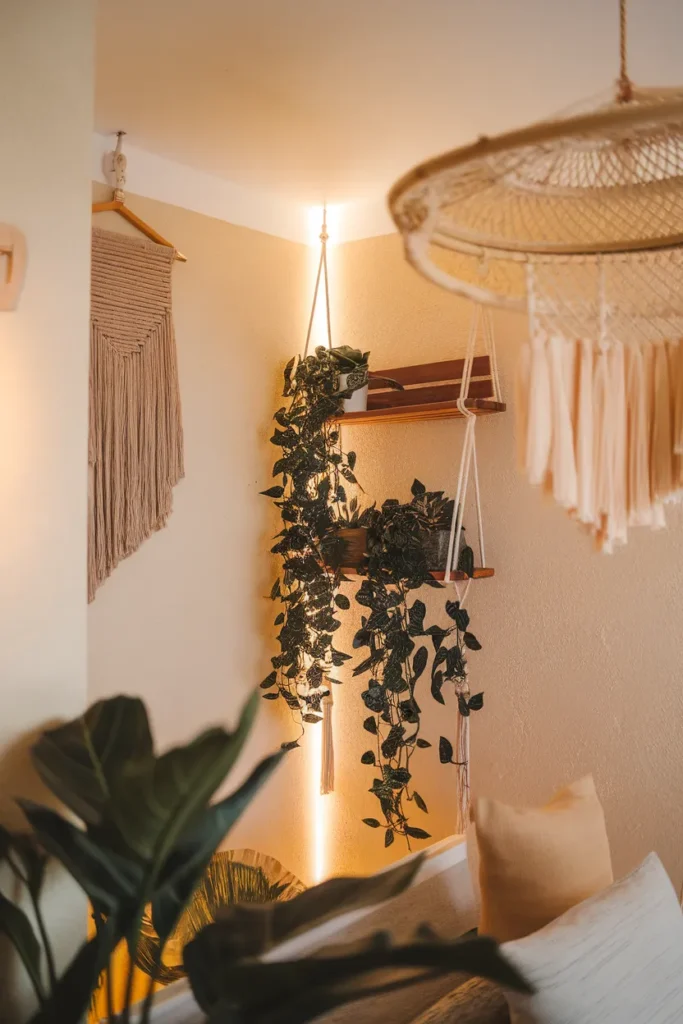
Hanging plant shelves instantly transform a plain wall into a living green feature, especially in apartments where floor space is limited. The suspended design creates a floating garden effect that feels both modern and artistic. These setups work well with trailing plants that naturally cascade downward, adding movement and softness to structured interiors. I’ve noticed that this style is particularly effective in darker rooms because it draws attention upward, making the space feel taller and more open without major renovations or expensive decor changes.
This idea works because it combines function with visual storytelling, turning storage into a design feature. In many small homes, vertical hanging systems are used to maximize greenery without cluttering surfaces. The warm lighting enhances the natural tones of the leaves, creating a cozy indoor jungle feel. It also allows flexibility in arrangement, so homeowners can adjust plant placement easily. The result is a balanced, airy atmosphere that feels refreshing, creative, and deeply connected to nature indoors.
4. Bathroom Green Glow
- Enhances dark bathroom ambiance instantly
- Adds fresh natural contrast to tiles
- Works well with LED lighting
- Improves spa-like relaxation feel
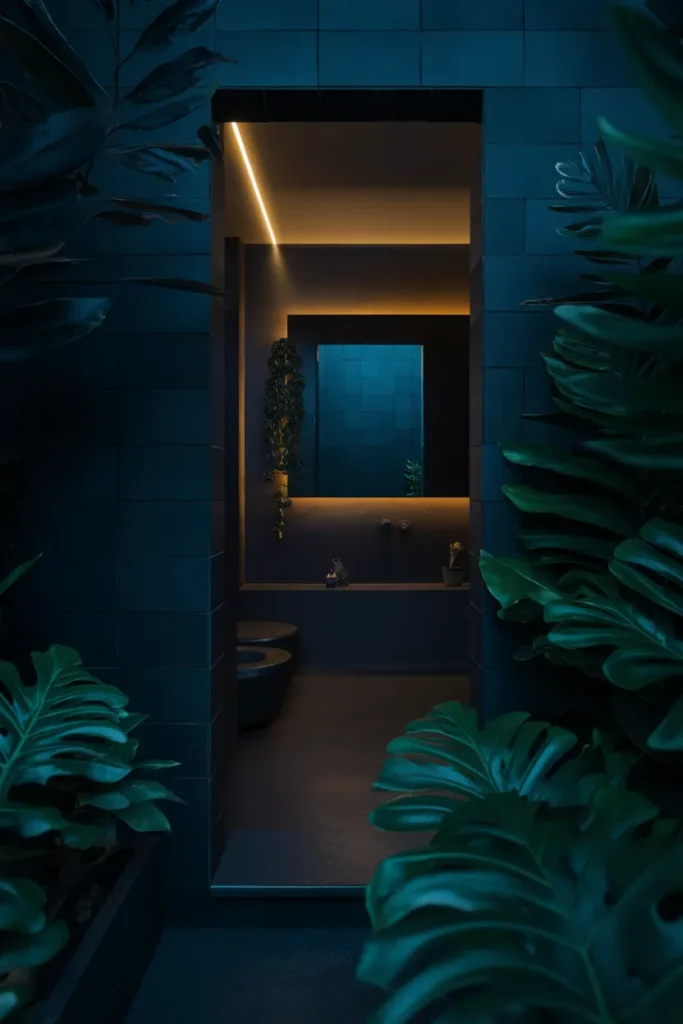
Bathroom greenery is one of the most effective ways to soften harsh tile surfaces and create a calming spa-like environment. In darker apartments, the contrast between deep green leaves and dim lighting creates a visually soothing effect. I’ve noticed that even small potted plants near the sink or shelves can completely change the mood of the space. The natural tones balance out artificial lighting and make the bathroom feel less sterile and more inviting, especially in compact urban homes where natural light is limited throughout the day.
This setup works particularly well with indirect LED lighting because it highlights leaf textures without overwhelming the space. Designers often recommend placing plants near mirrors or corners where light gently reflects off surfaces. In my experience, this combination creates a soft glow that makes nighttime routines feel more relaxing. It also improves air freshness and adds a natural spa atmosphere. Over time, even the smallest bathroom can feel more luxurious, balanced, and visually connected to nature through this simple addition.
5. Desk Jungle Setup
- Boosts focus and productivity naturally
- Reduces dull workspace appearance
- Adds calming green energy
- Works in small desk areas
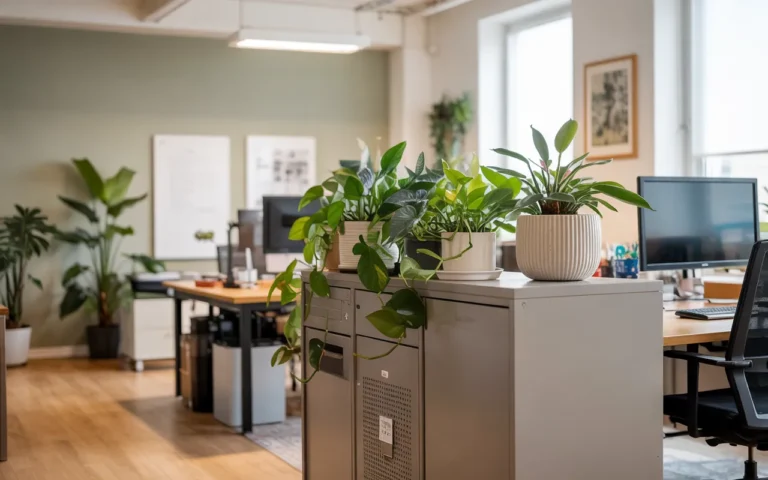
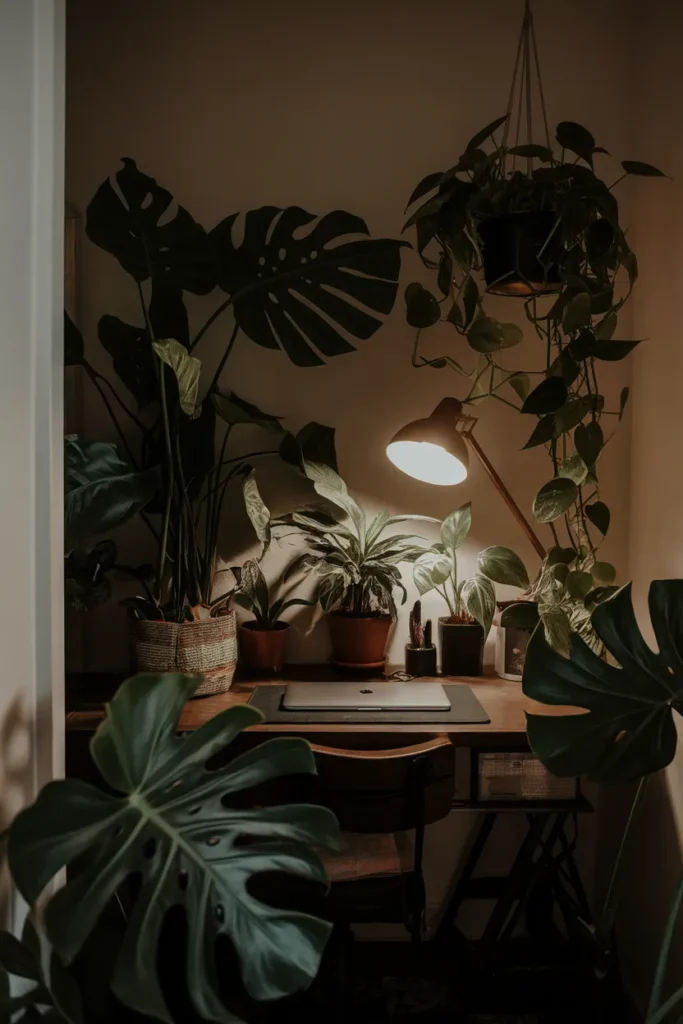
A plant-filled desk setup transforms a basic workspace into a refreshing and motivating environment, especially in darker apartments where natural energy is limited. The presence of deep green foliage creates a sense of calm that helps reduce visual fatigue during long working hours. I’ve noticed that even a single large-leaf plant beside a laptop can make the area feel more grounded and less stressful. This is why many remote workers now intentionally design plant-based workspaces for better mental clarity and comfort throughout the day.
This approach also improves how the space feels visually structured without adding clutter. Plants naturally soften the sharp lines of desks, monitors, and office equipment. In many modern apartments, designers use greenery to break monotony and create a more human-centered workspace. The combination of warm desk lighting and natural leaves produces a balanced contrast that feels cozy yet professional. Over time, this setup encourages better focus, improved mood, and a more enjoyable daily work routine in compact indoor environments.
6. Corner Plant Tower
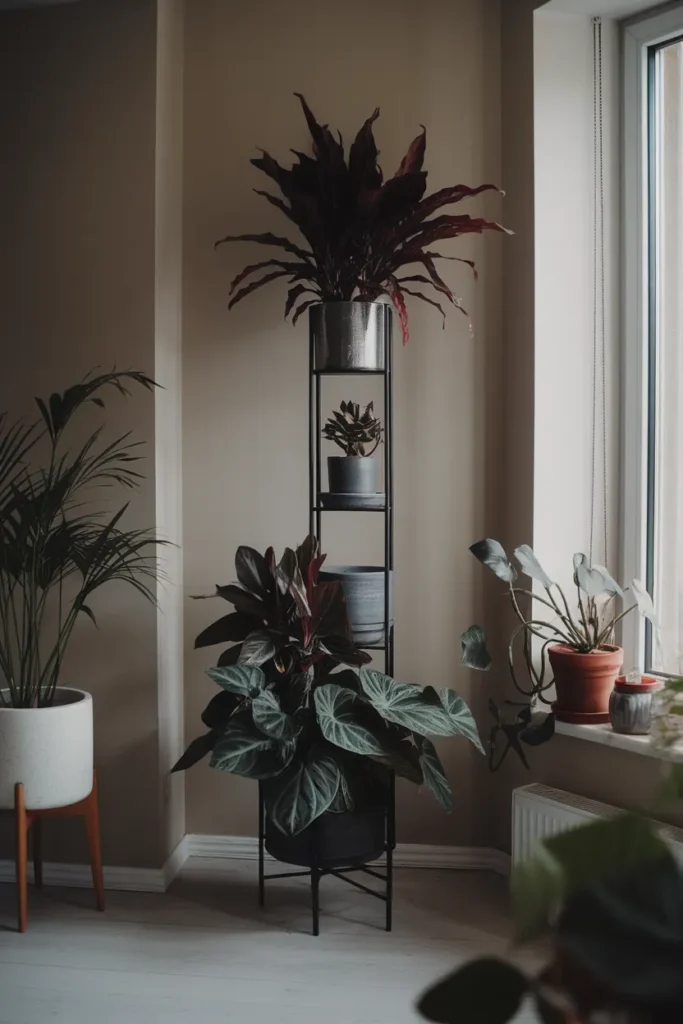
- Utilizes empty corner spaces effectively
- Adds vertical green structure indoors
- Creates focal point in room
- Improves spatial balance visually
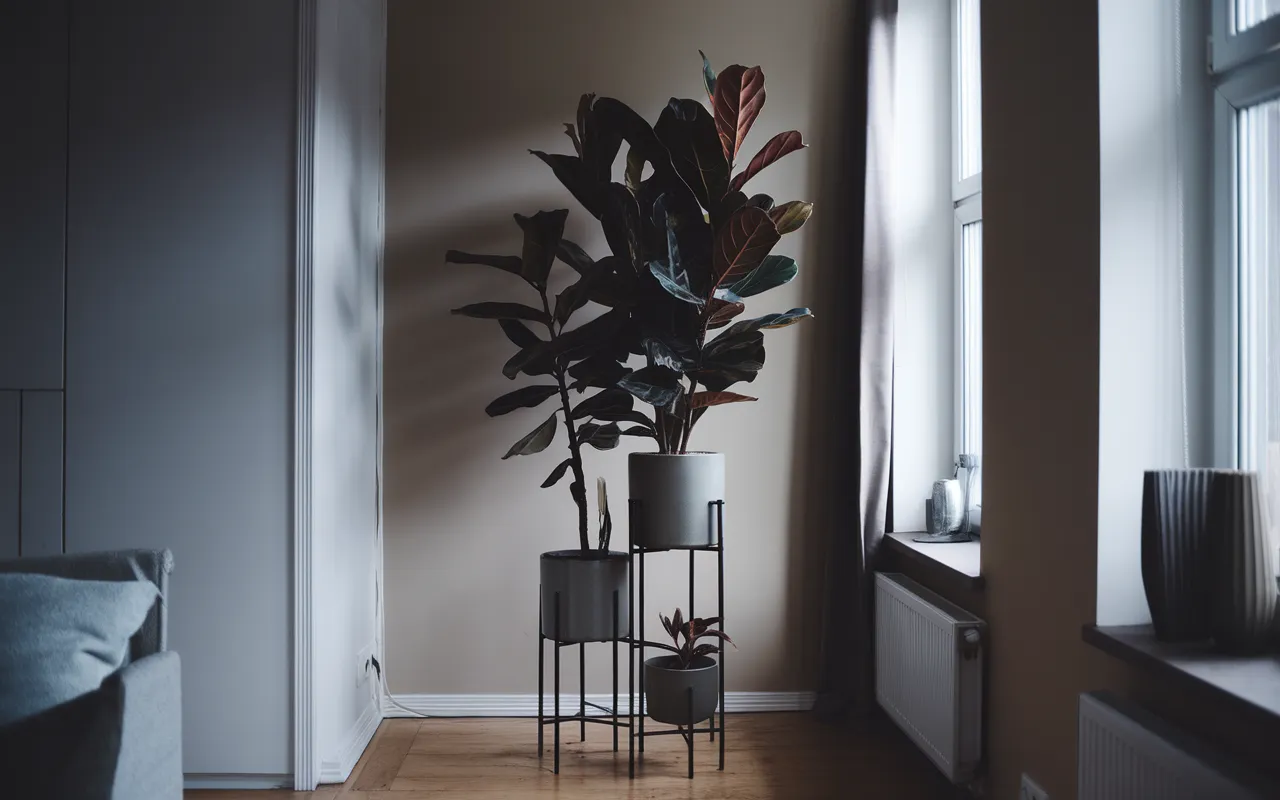
Corner plant towers are a powerful way to turn unused apartment spaces into vibrant green focal points. In darker rooms, vertical plant arrangements help draw the eye upward, making ceilings feel higher and spaces more open. I’ve seen this technique used frequently in compact urban apartments where floor space is limited. The layered structure allows multiple plants to thrive together, creating a dense yet organized display that brings life and movement into otherwise static corners of the home.
This design works because it combines structure with natural softness, balancing geometry and organic shapes. In my experience, corner plant setups are especially effective when placed near indirect light sources, allowing foliage to grow evenly. Designers often use tiered stands to maximize greenery without cluttering the room. The result is a visually rich corner that feels intentional, calming, and deeply connected to nature, even in apartments that lack large windows or outdoor access.
7. Dark Leaf Bedroom Mood
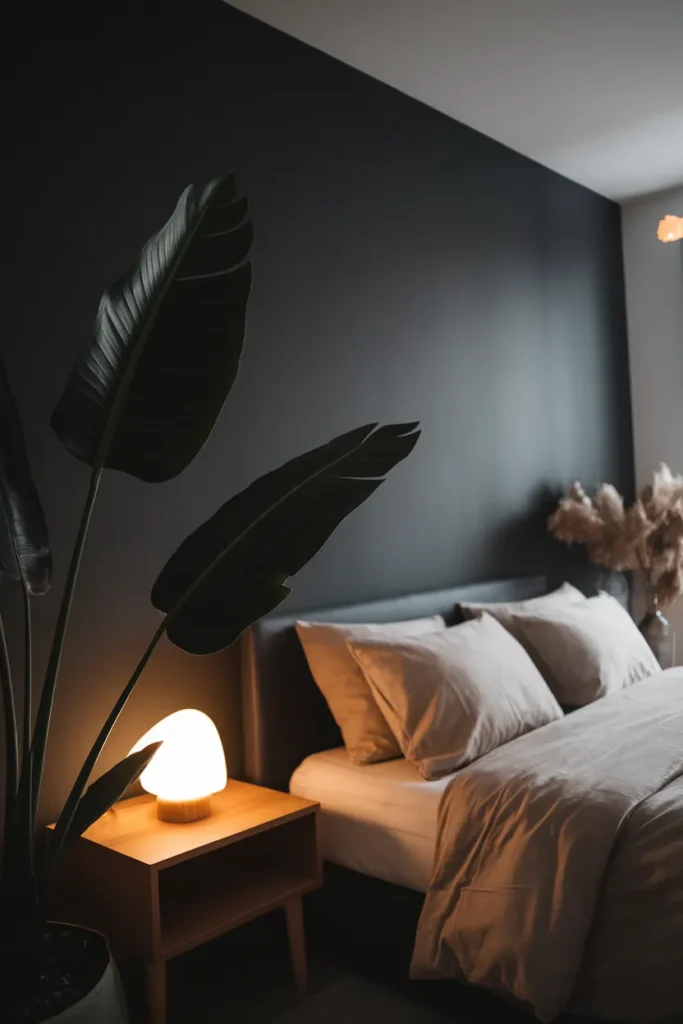
- Adds calming natural bedroom energy
- Softens dark wall tones beautifully
- Improves sleep-friendly atmosphere
- Enhances cozy minimal style
Bringing greenery into a bedroom completely changes how the space feels, especially in darker apartments where artificial lighting dominates. Large leafy plants add softness to strong wall colors and help balance the overall mood of the room. I’ve noticed that placing plants near bedside lighting creates a calming contrast that feels both grounding and relaxing. This setup works particularly well for people who want a peaceful environment without overwhelming decor or excessive styling, making the bedroom feel more restful and visually balanced overall.
This idea is also effective because it introduces a natural rhythm into the most personal space of the home. In many modern interiors, designers use plants to soften sharp furniture edges and create a more organic sleeping environment. The combination of warm lighting, neutral bedding, and deep green leaves produces a cozy, cocoon-like effect. Over time, the room feels less artificial and more connected to nature, improving relaxation and making nightly routines feel more soothing and comfortable.
8. Kitchen Herb Corner
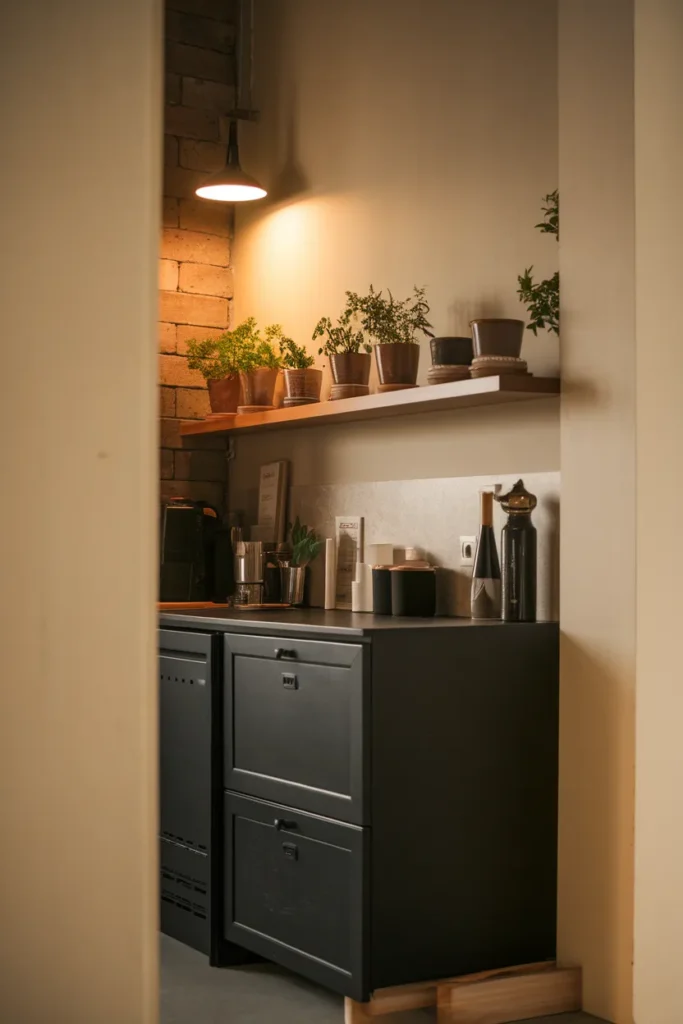
- Adds fresh cooking ingredients naturally
- Brightens dark kitchen corners
- Improves kitchen freshness visually
- Combines function with decor
A kitchen herb corner is a practical and visually refreshing way to introduce greenery into darker apartment kitchens. Even in low-light conditions, certain leafy herbs and hardy plants can thrive near windows or under warm artificial lighting. I’ve noticed that having greenery near cooking areas not only improves aesthetics but also encourages more fresh cooking habits. The presence of living plants adds a sense of freshness and cleanliness, making the kitchen feel more inviting and active throughout the day.
This setup works well because it blends functionality with natural beauty, turning everyday cooking spaces into small green sanctuaries. In many modern homes, designers use herb corners to break up heavy cabinetry and add softness to structured layouts. The combination of wood, ceramic pots, and greenery creates a balanced visual texture. Over time, this simple addition makes the kitchen feel more lively, organized, and connected to natural living, even in compact or dimly lit apartments.
9. Window Leaf Frame
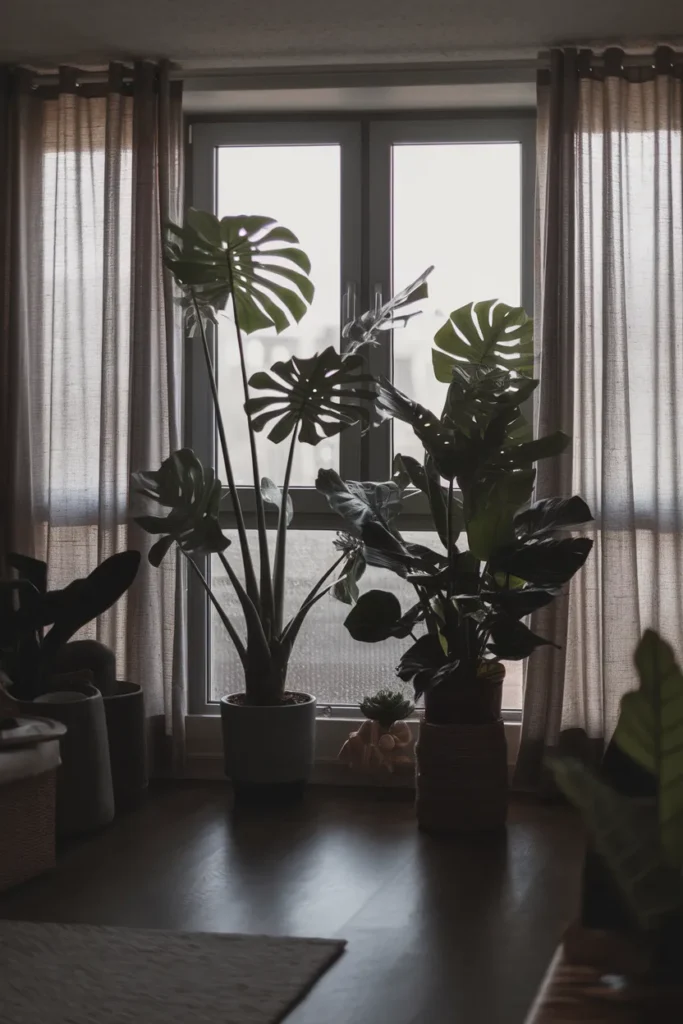
- Frames natural light beautifully
- Enhances window focal area
- Creates indoor jungle effect
- Improves light diffusion visually
Placing plants around a window instantly transforms it into a living frame that enhances both light and atmosphere. In darker apartments, this technique helps soften incoming daylight while adding depth to the space. I’ve noticed that large leafy plants work especially well because they naturally guide the eye toward the window, making the entire room feel more open. The combination of greenery and natural light creates a peaceful transition between indoors and outdoors, even when exterior views are limited or urban.
This design idea is also powerful because it uses existing light sources in a decorative and functional way. Designers often recommend framing windows with plants to create symmetry and visual balance. The leaves gently filter sunlight, reducing harsh brightness while adding texture and movement. Over time, this setup makes rooms feel more connected to nature and visually soothing. It’s a simple yet highly effective approach to improving both mood and aesthetics in compact, low-light living spaces.
Also View : 23 Plants for North Facing Rooms That Truly Thrive
10. Hanging Leaf Curtain
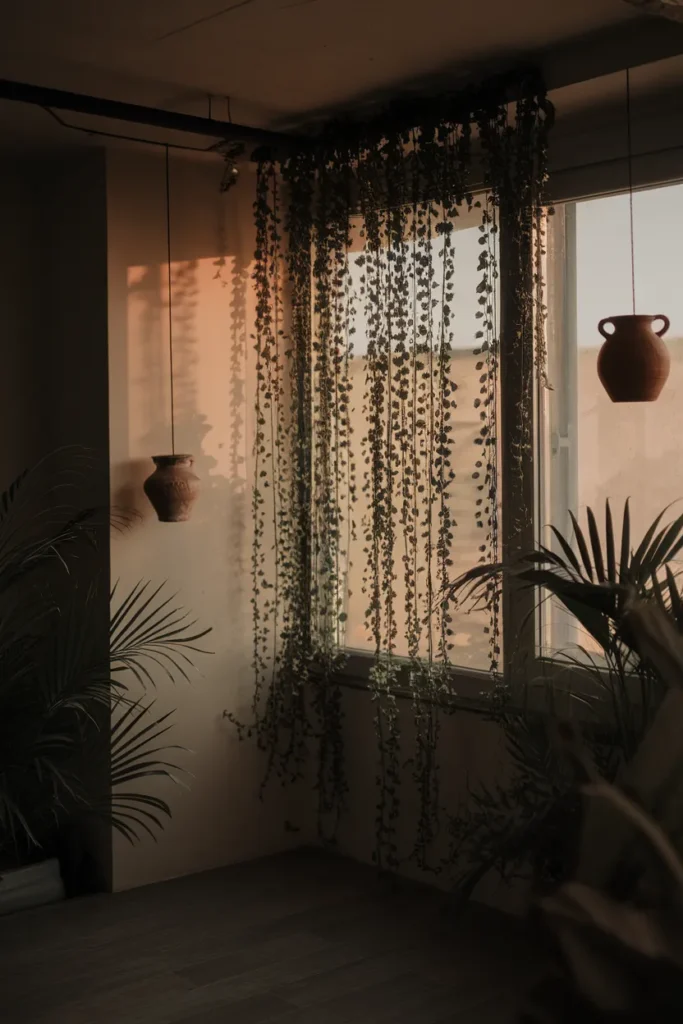
- Creates natural room divider effect
- Softens harsh light beautifully
- Adds flowing vertical greenery
- Enhances boho interior style
A hanging leaf curtain is a creative way to divide space while keeping the apartment visually light and breathable. In darker homes, trailing plants gently filter light and create soft shadow patterns that make the room feel more dynamic. I’ve noticed that this setup works especially well in studio apartments where separation between living and sleeping zones is needed without using solid walls. The cascading greenery introduces movement and softness, turning plain areas into visually engaging natural features.
This idea is also popular because it combines decoration with function in a very subtle way. Designers often use hanging plants to create privacy without blocking airflow or natural light. The result is a layered indoor environment that feels cozy yet open. Over time, this plant curtain effect adds depth and texture to the room, making it feel more organic and balanced while maintaining a calm, modern aesthetic suitable for compact urban living.
11. Matte Black Pots
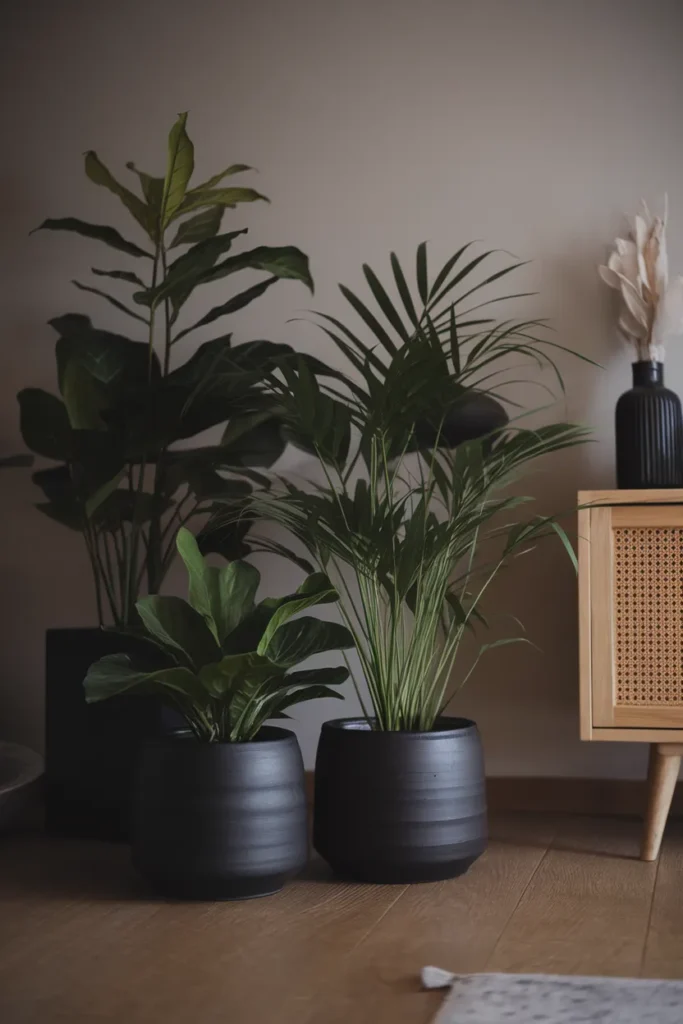
- Enhances plant color contrast
- Adds modern minimal aesthetic
- Works in any room style
- Keeps focus on foliage texture
Matte black pots create a striking contrast that makes dark green plants appear even richer and more vibrant. In low-light apartments, this combination helps highlight natural foliage without adding visual noise. I’ve noticed that matte finishes absorb excess reflection, which keeps the overall look grounded and modern. This is why many interior designers prefer dark containers for leafy plants in contemporary homes, as it allows the greenery to become the true focal point of the space.
This design choice is also highly versatile because it blends seamlessly with different interior styles, from minimalist to industrial. The neutral black base supports a wide variety of plant types while maintaining visual consistency throughout the room. Over time, this approach helps create a cohesive indoor garden effect. It also reduces cluttered visuals, making the space feel more intentional, organized, and stylish even in apartments with limited natural light and compact layouts.
12. Sofa Jungle Backdrop
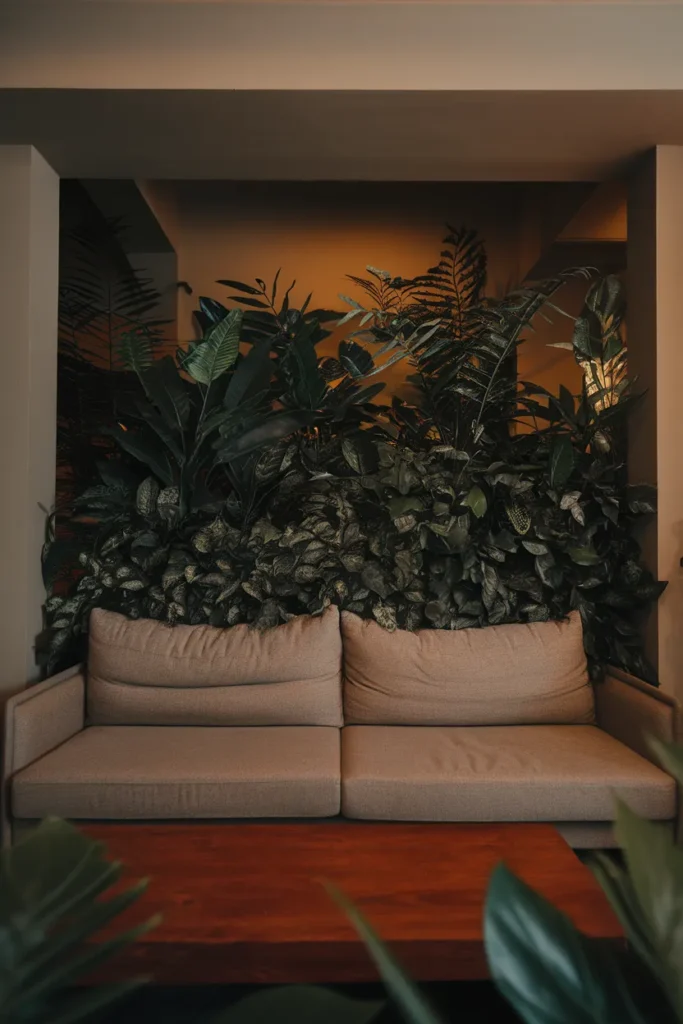
- Creates natural living room backdrop
- Adds depth behind seating area
- Enhances cozy relaxation space
- Improves visual layering indoors
A sofa jungle backdrop transforms an ordinary living room into a vibrant and calming green space that feels both stylish and grounded. In darker apartments, placing plants behind seating areas helps soften wall surfaces and adds depth to the overall design. I’ve noticed that this arrangement naturally frames the sofa, making it feel more inviting and visually anchored within the room. It also creates a relaxing environment that encourages comfort and unwinding after long hours of indoor living.
This idea works particularly well because it builds a layered visual effect without adding heavy furniture or complex decor. Designers often use greenery behind seating zones to create a natural focal wall that feels alive and balanced. The combination of soft lighting and dense foliage produces a cozy, immersive atmosphere. Over time, this setup makes the living area feel more connected to nature, improving both aesthetics and emotional comfort in compact or low-light apartments.
13. Floating Plant Corners
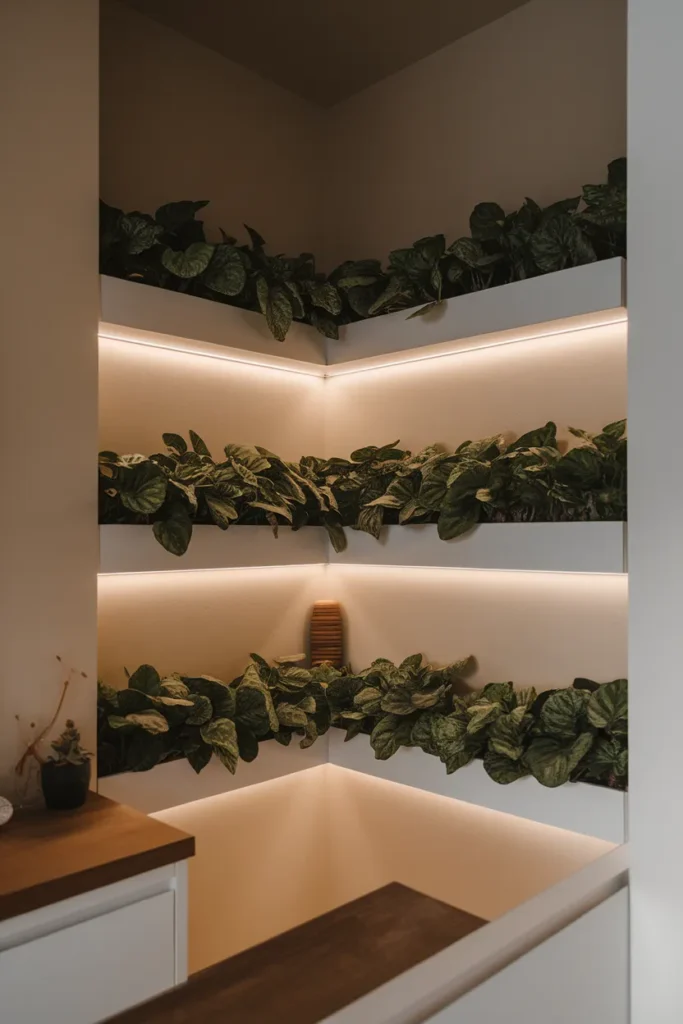
- Utilizes empty wall corners smartly
- Creates layered vertical greenery
- Adds soft ambient lighting effect
- Improves small space styling
Floating plant corners are a smart way to transform unused wall areas into living green displays, especially in darker apartments where floor space is limited. The combination of layered shelves and leafy plants creates depth that makes the room feel more dynamic. I’ve noticed that this setup works particularly well in compact homes because it draws attention upward, giving the illusion of a taller and more spacious interior. The soft greenery also balances out hard architectural edges, making the entire room feel more relaxed and visually cohesive.
This idea is also effective because it allows flexibility in plant arrangement without cluttering surfaces. Designers often use floating shelves to build vertical gardens that feel organized yet natural. The addition of warm lighting enhances the leaf textures and adds a cozy glow to the space. Over time, this arrangement creates a balanced indoor environment that feels fresh, modern, and connected to nature, even in apartments that lack direct sunlight or outdoor views.
14. Green Bathroom Spa
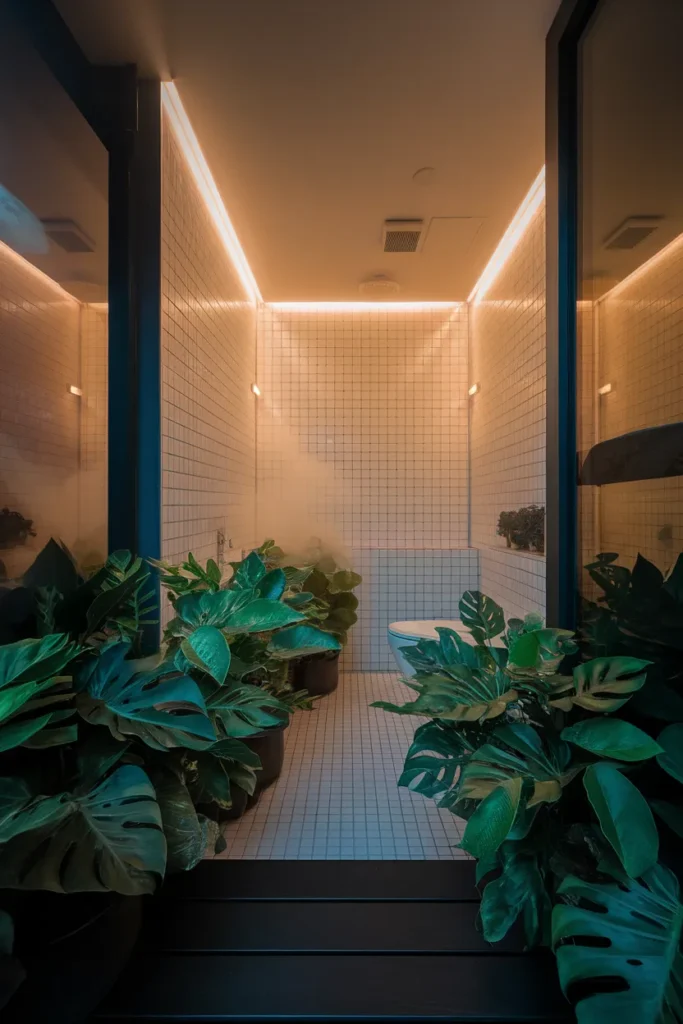
- Improves bathroom spa feeling instantly
- Adds freshness to enclosed spaces
- Softens tile-heavy interiors
- Enhances relaxation atmosphere
A green bathroom spa setup completely changes how a compact or dim bathroom feels by introducing natural freshness into an otherwise hard-surfaced environment. The presence of leafy plants helps soften tiles, glass, and ceramic finishes, making the space feel warmer and more inviting. I’ve noticed that even a few well-placed plants near sinks or shelves can significantly improve the atmosphere. The combination of greenery and warm lighting creates a calming spa-like effect that feels perfect for relaxation after a long day.
This design works especially well in darker apartments where bathrooms often lack natural light. Designers frequently use humidity-loving plants to enhance moisture-rich environments like showers and wash areas. The result is a balanced blend of nature and function that elevates daily routines. Over time, this setup makes the bathroom feel more like a personal wellness zone, improving both visual appeal and emotional comfort in small, enclosed living spaces.
15. Indoor Plant Ladder
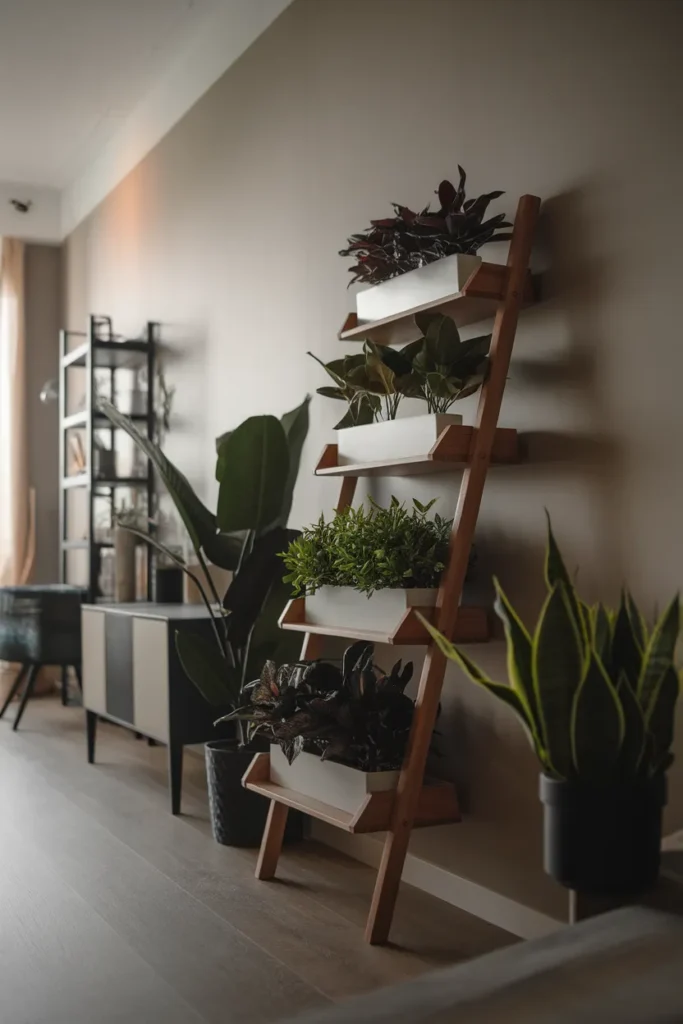
- Maximizes vertical plant display
- Easy movable plant arrangement
- Adds rustic-modern aesthetic mix
- Perfect for small apartments
An indoor plant ladder is a versatile and stylish way to display greenery without taking up much floor space, making it ideal for dark apartments. The tiered structure allows multiple plants to be arranged at different heights, creating a natural cascading effect. I’ve noticed that this design works especially well in corners or near windows where light can gently filter through the leaves. It adds a sense of structure while still maintaining a relaxed, organic feel that enhances the overall interior atmosphere.
This idea is popular because it blends functionality with decorative appeal, allowing homeowners to move and rearrange plants easily. Designers often recommend ladder displays for renters or small-space living because they require no permanent installation. The layered greenery introduces depth and movement, making the room feel more alive. Over time, it creates a balanced indoor garden effect that feels cozy, flexible, and visually engaging without overwhelming compact apartment layouts.
16. Dark Leaf Dining Glow
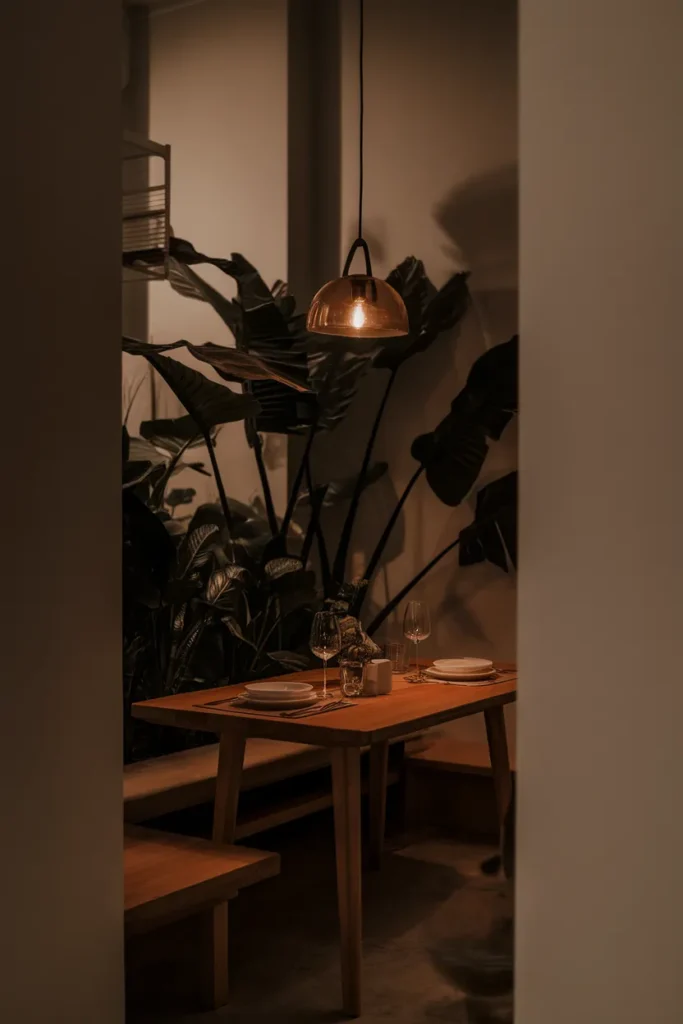
- Enhances dining space warmth naturally
- Adds calm visual balance to meals
- Softens structured dining furniture
- Creates cozy gathering atmosphere
A dining area surrounded by greenery instantly feels more welcoming and grounded, especially in darker apartments where artificial lighting dominates. Large leafy plants soften the edges of furniture and create a natural backdrop that makes meals feel more relaxed and enjoyable. I’ve noticed that even a single statement plant beside a dining table can change the entire mood of the space. It introduces a sense of calm that encourages slower, more mindful eating experiences without requiring complex decor changes or expensive upgrades.
This setup also works beautifully with warm pendant lighting, which highlights the natural textures of leaves while keeping the atmosphere intimate. Designers often recommend placing plants near dining zones to break visual monotony and add life to structured interiors. The result is a balanced space that feels cozy, stylish, and connected to nature. Over time, the dining area becomes not just functional but also emotionally inviting, making everyday meals feel more special and visually pleasing.
17. Monochrome Jungle Mix
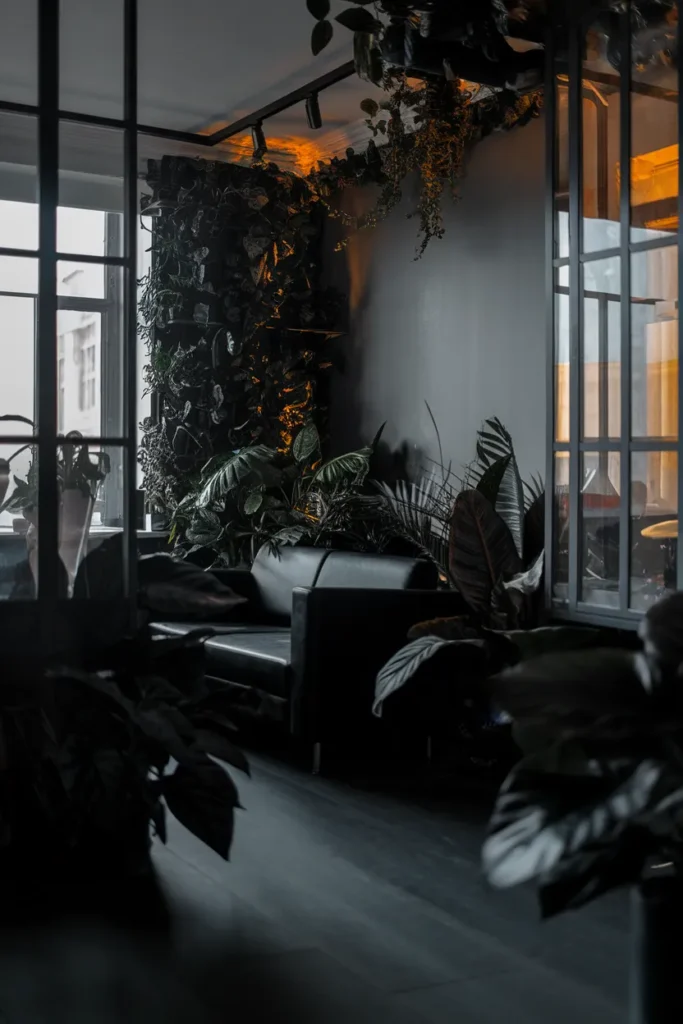
- Enhances dramatic color contrast
- Keeps modern minimalist balance
- Highlights plant textures strongly
- Creates bold interior statement
A monochrome jungle mix is a powerful interior approach where deep green plants stand out against black, grey, and neutral tones. In darker apartments, this contrast creates a visually striking effect that feels modern and sophisticated. I’ve noticed that this style works especially well in minimalist homes because the plants become the main source of visual softness. The simplicity of the background allows greenery to take center stage, making the space feel more dynamic without adding unnecessary decorative clutter or complexity.
This design is also effective because it enhances depth and dimension within flat color schemes. Designers often rely on monochrome bases to make plant textures more prominent and visually engaging. The combination of shadow, light, and greenery creates a cinematic atmosphere that feels both bold and calming. Over time, this setup transforms ordinary interiors into curated spaces that feel intentional, stylish, and naturally balanced even in low-light urban apartments.
18. Hanging Bedroom Vines
- Creates dreamy bedroom atmosphere
- Softens ceiling and wall edges
- Adds flowing natural movement
- Enhances relaxation and sleep mood
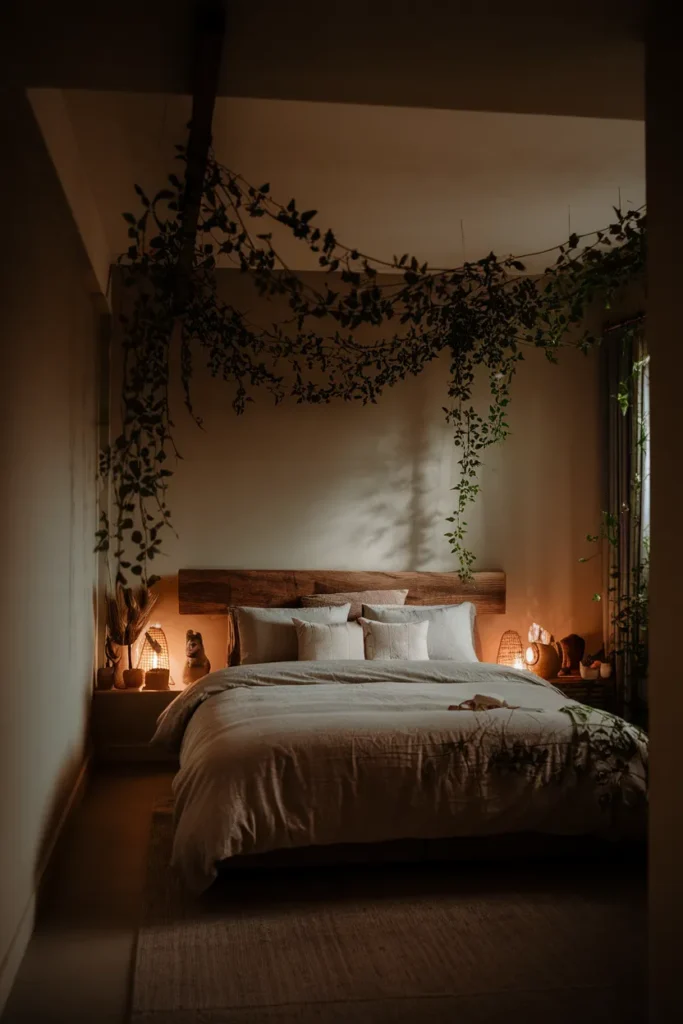
Hanging vines in the bedroom create a soft, dreamlike atmosphere that feels calming and naturally immersive, especially in darker apartments. The trailing greenery above the bed introduces gentle movement and texture that softens the overall space. I’ve noticed that this setup works particularly well when paired with warm bedside lighting, as it highlights the organic shapes of the vines without overwhelming the room. It helps transform a simple sleeping area into a cozy, nature-inspired retreat that feels peaceful and visually balanced.
This idea is also effective because it draws the eye upward, making the room feel taller and more open despite limited lighting conditions. Designers often use hanging plants in bedrooms to introduce softness without cluttering surfaces. The result is a calming environment that encourages relaxation and better sleep quality. Over time, the greenery adds a natural rhythm to the room, making it feel more alive, soothing, and connected to organic elements even in compact urban living spaces.
19. Compact Plant Shelf Wall
- Maximizes vertical wall greenery
- Creates organized plant display
- Adds depth to plain walls
- Works well in small apartments
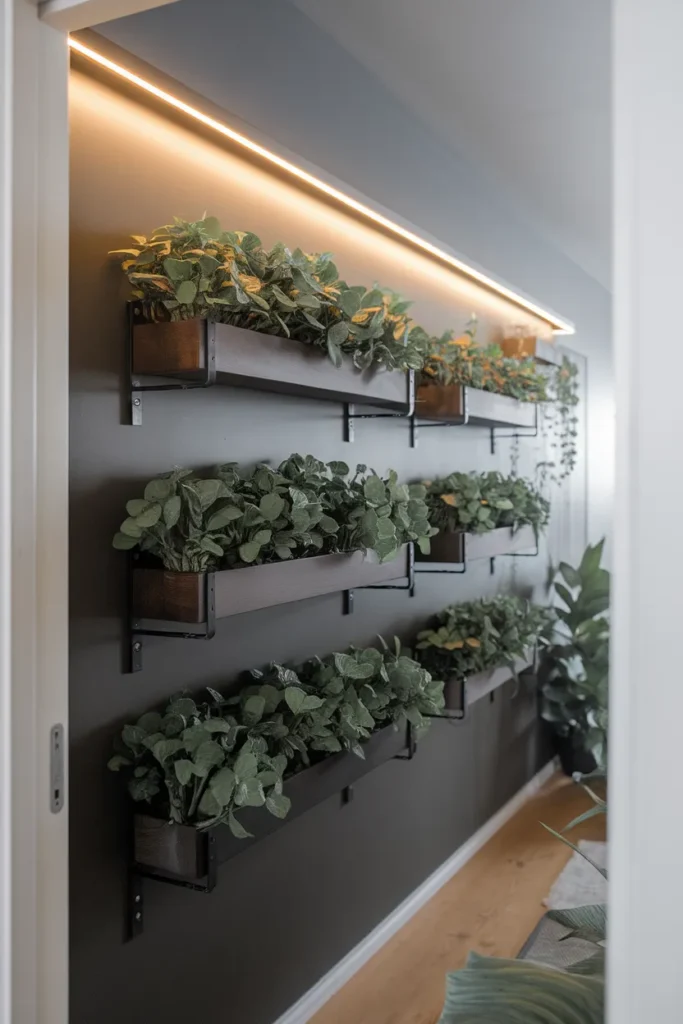
A compact plant shelf wall is one of the most efficient ways to bring greenery into a dark apartment without sacrificing floor space. By stacking plants vertically, the wall becomes a living feature that instantly adds depth and character. I’ve noticed that this approach works especially well in narrow rooms where horizontal space is limited. The layered arrangement creates a structured yet natural rhythm that softens plain walls and makes the entire interior feel more intentional and visually balanced.
This setup is also highly flexible, allowing homeowners to mix different plant sizes and leaf textures for variety. Designers often use compact shelving systems to create indoor green panels that feel both decorative and functional. The addition of soft LED lighting helps highlight the plants even in low-light environments. Over time, the wall transforms into a calming green backdrop that enhances the atmosphere, making small apartments feel more vibrant, organized, and naturally connected to indoor greenery.
20. Cozy Corner Jungle
- Creates relaxing reading nook space
- Adds natural softness to corners
- Improves unused room areas
- Enhances cozy interior feel
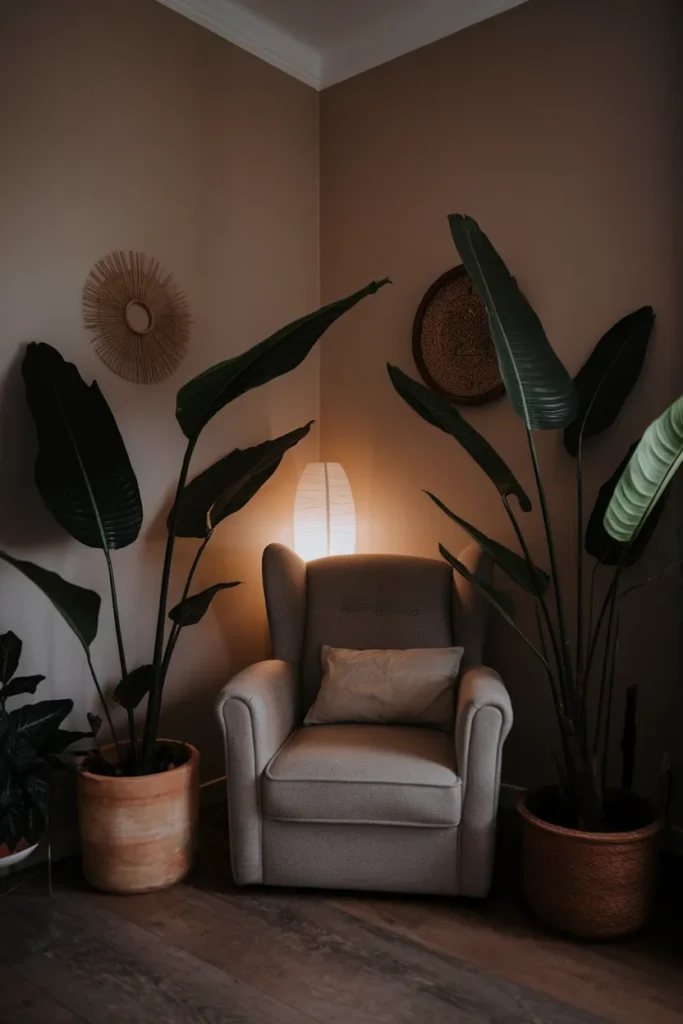
A cozy corner jungle transforms an unused apartment corner into a peaceful retreat filled with natural energy. Large leafy plants placed around a chair or seating area create a calming enclosure that feels private and inviting. I’ve noticed that this setup works especially well in darker apartments where corners often feel empty or underused. The greenery softens the space and makes it feel more intentional, turning a simple corner into a functional relaxation zone perfect for reading, resting, or quiet reflection.
This idea is also effective because it combines comfort with nature in a very simple way. Designers often recommend placing plants around seating areas to create a sense of enclosure without physical barriers. The warm lighting enhances the greenery and adds depth to the atmosphere. Over time, the corner becomes a favorite spot in the home, offering a cozy, visually soothing environment that feels naturally balanced and deeply relaxing in compact urban living spaces.
21. Minimal Plant Podiums
- Highlights single statement plants
- Creates clean minimalist styling
- Adds elevation to greenery
- Enhances modern interior balance
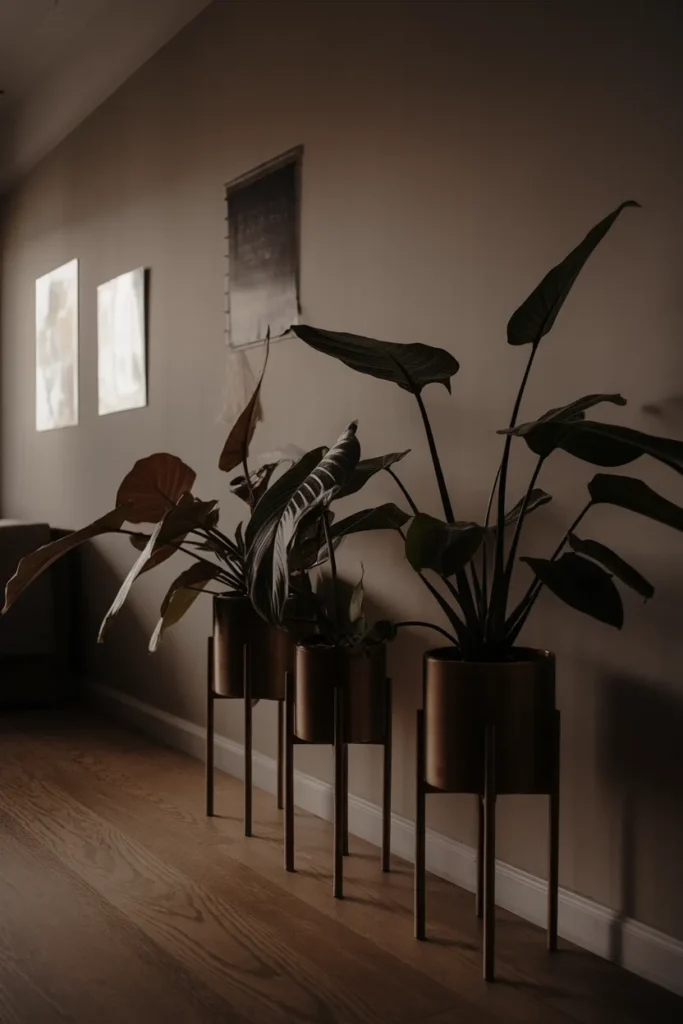
Minimal plant podiums are a refined way to display greenery in a dark apartment without creating visual clutter. By elevating a single plant on a stand, the design draws attention to its shape and texture, making it feel like a living sculpture. I’ve noticed that this approach works especially well in minimalist interiors where simplicity is key. The added height helps plants interact better with light, even in low-light conditions, creating a subtle yet elegant focal point within the room.
This design is also powerful because it emphasizes intentional placement over quantity. Designers often use podiums to create breathing space between objects, ensuring that each plant stands out individually. The result is a clean, gallery-like aesthetic that feels modern and balanced. Over time, this approach enhances the overall composition of the room, making even small apartments feel more curated, spacious, and visually harmonious without relying on heavy decoration or excessive furnishings.
22. Window Jungle Layer
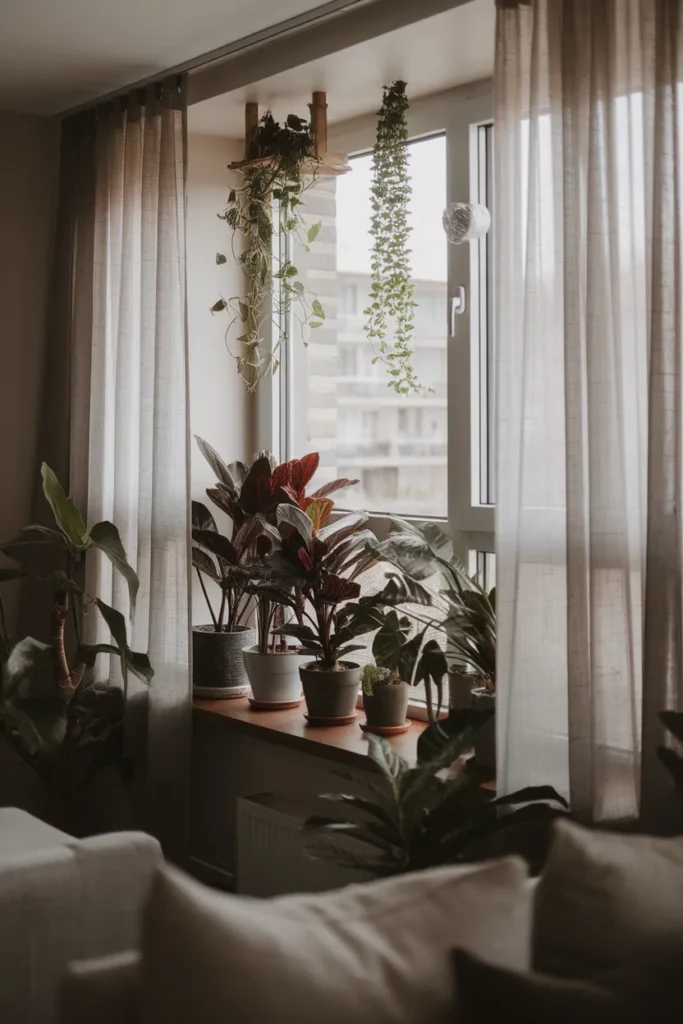
- Maximizes natural light usage
- Creates layered plant depth
- Enhances window visual appeal
- Softens harsh exterior views
A window jungle layer turns a simple window area into a rich, natural focal point filled with depth and greenery. By placing plants at different heights, the arrangement creates a layered effect that feels dynamic and visually engaging. I’ve noticed that this setup works particularly well in darker apartments because it makes the most of limited natural light. The greenery gently filters sunlight, softening the brightness while adding texture and movement to an otherwise plain window space.
This idea is also effective because it connects the indoors with the outside environment in a subtle, natural way. Designers often use layered plant arrangements to create a sense of continuity between interior and exterior spaces. The result is a calm, refreshing atmosphere that feels more open and breathable. Over time, the window area becomes a living display that enhances both mood and aesthetics, making the apartment feel more vibrant and naturally balanced even in low-light conditions.
Conclusion
These ideas prove that even the darkest apartments can feel vibrant, calming, and full of life with the right greenery choices. From layered shelves to cozy corners and window jungle setups, each design helps transform dull spaces into refreshing indoor sanctuaries.
Using dark leaf plants for dark apartments is not just about decoration—it’s about creating a peaceful lifestyle that feels more connected to nature. I’ve seen how small plant changes can completely shift the energy of a home, making it feel more alive and inviting. Save these ideas on Pinterest, try your favorite setup, and share them with anyone who wants to bring natural beauty into their space.