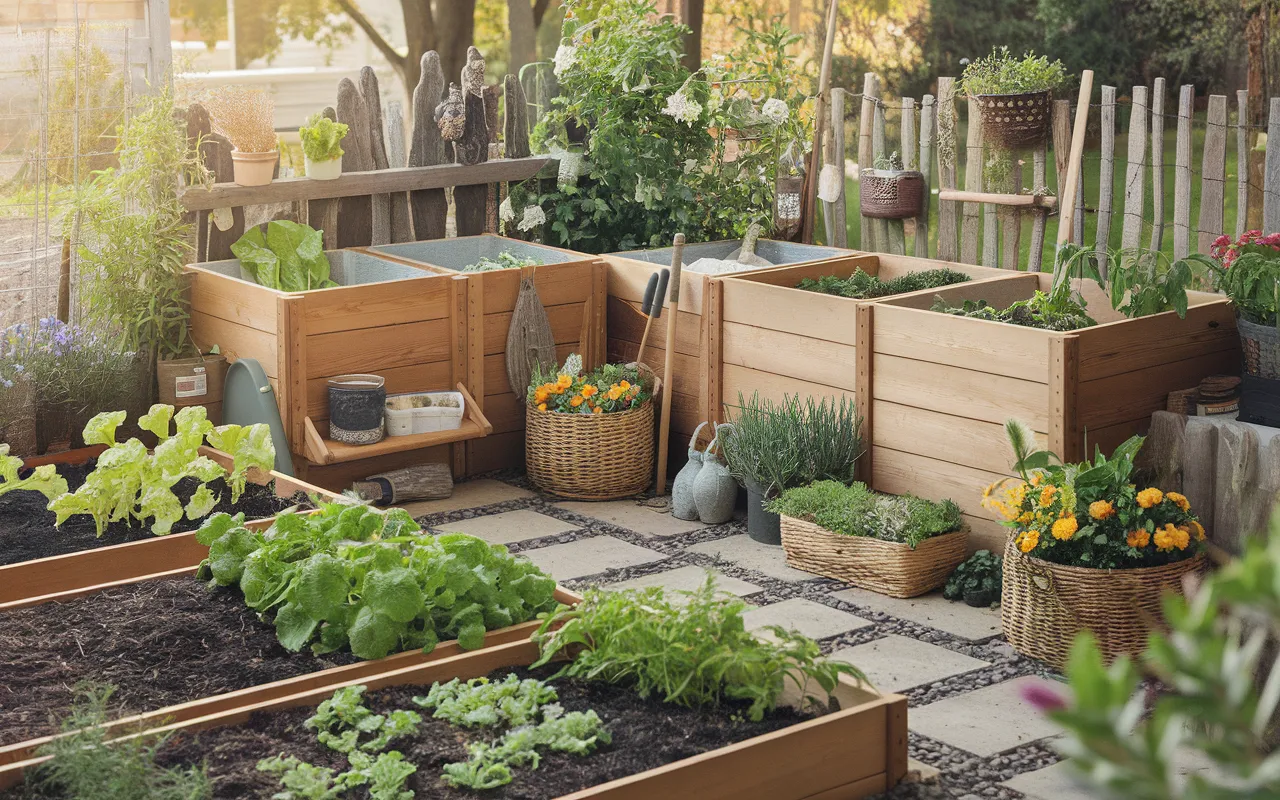
22 Smart Seasonal Planting Tips for Every Garden
A beautiful, thriving garden does not happen by accident — it starts with the right seasonal planting tips and thoughtful planning. Whether you have a tiny patio, raised beds, or a large backyard, small planting changes can completely transform how your garden looks and performs throughout the year.
This article is filled with practical, visually inspiring ideas designed to help gardeners create healthier plants, cleaner layouts, and more productive outdoor spaces without making gardening feel overwhelming. From vertical growing solutions to pollinator-friendly flower patches and organized harvest stations, every idea focuses on improving both beauty and function naturally.
In my experience, the gardens that feel the most relaxing and rewarding are usually the ones designed with flexibility and seasonal balance in mind. I’ve noticed even simple upgrades like mulch borders, layered containers, or herb shelves can make outdoor spaces feel more intentional and easier to maintain. These ideas are especially helpful for gardeners looking to maximize smaller spaces, extend harvest seasons, and create Pinterest-worthy landscapes that still feel practical for everyday life.
1. Raised Bed Rows
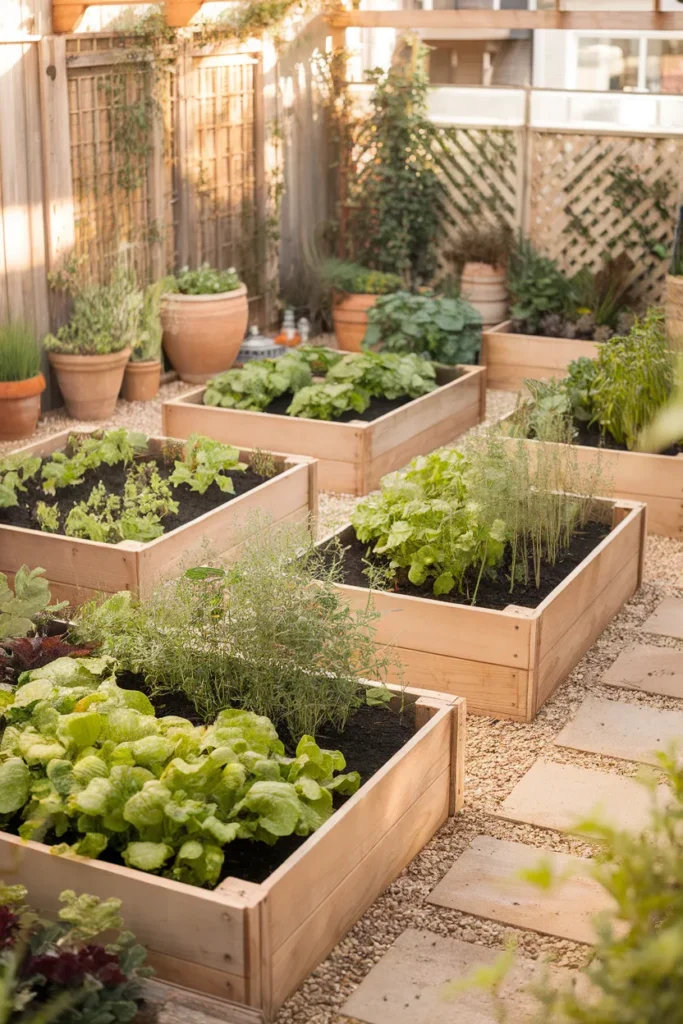
- Improves soil drainage during rainy growing months
- Makes crop rotation easier throughout the year
- Creates a clean and organized garden layout
- Helps reduce weeds and messy foot traffic
- Adds strong visual structure to outdoor spaces
Nothing transforms a backyard faster than tidy elevated planting rows filled with thriving greenery and colorful vegetables. Raised garden sections naturally warm up quicker during cooler months, which helps seeds sprout more consistently and gives delicate crops a healthier start. I’ve noticed these setups also make watering routines far easier because moisture stays concentrated exactly where plants need it most. The structured layout creates visual balance while helping gardeners separate herbs, flowers, and produce more efficiently. This organized approach works especially well for anyone trying to follow smart seasonal planting tips without overwhelming their outdoor space.
One reason gardeners love elevated growing spaces is how adaptable they become across changing weather conditions throughout the year. Rich soil blends can be customized for spring vegetables, summer flowers, or cool-weather greens without disturbing surrounding plants. The added height also reduces back strain during pruning, watering, and harvesting, making regular maintenance much more comfortable. Natural wood textures blend beautifully into modern, rustic, or farmhouse-inspired landscapes while creating a polished Pinterest-worthy appearance. That’s why many designers recommend combining raised sections with gravel paths and vertical supports for a practical yet highly decorative backyard upgrade.
2. Herb Corner Shelves
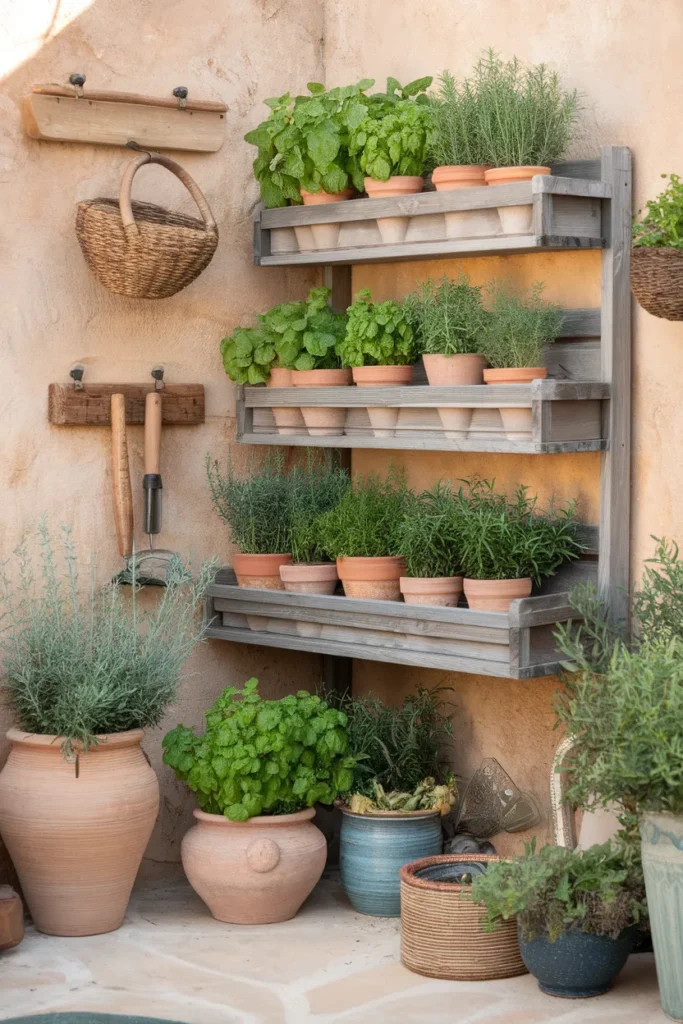
- Maximizes small gardening spaces beautifully
- Keeps herbs accessible for daily cooking use
- Creates a decorative layered garden display
- Helps organize plants by sunlight needs
- Adds fresh fragrance near patios or kitchens
Fresh herbs instantly make outdoor spaces feel lively, welcoming, and beautifully functional throughout every growing season. A compact shelf arrangement allows gardeners to group plants based on sunlight exposure while adding texture and height variation to patios or balconies. In my experience, layered shelving also improves airflow around herbs, helping leaves stay healthier during humid weather. This setup works especially well for gardeners managing limited space because vertical organization increases planting capacity without crowding pathways. Small containers filled with fragrant herbs create a cozy visual effect while making everyday harvesting simple and convenient for cooking enthusiasts.
Carefully styled herb stations can also become decorative focal points that elevate the entire atmosphere of an outdoor area. Terracotta pots, aged wood shelving, and woven baskets bring warmth and natural texture into compact gardening spaces without looking cluttered. Seasonal herb rotation becomes easier because containers can quickly be rearranged depending on temperature changes or rainfall patterns. I’ve seen this work well in many homes where balconies or narrow patios lacked enough ground space for traditional planting beds. Combining greenery with practical storage creates a highly efficient gardening corner that feels curated, inviting, and visually polished all year long.
3. Mulched Path Borders
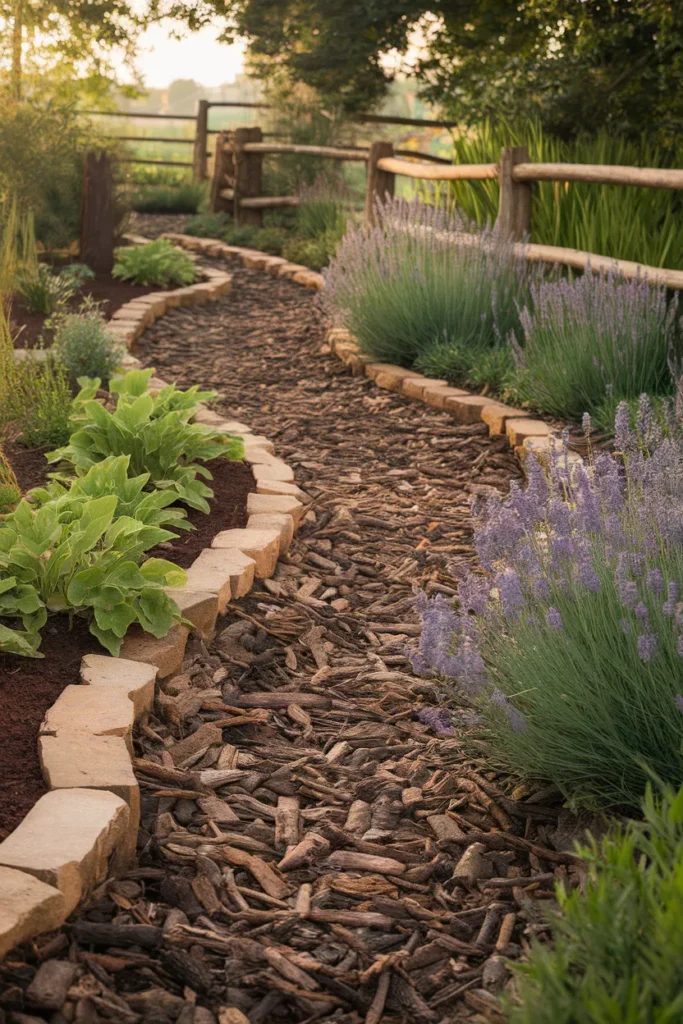
- Helps soil retain moisture during hot months
- Reduces weed growth around delicate plants
- Creates cleaner and more polished walkways
- Protects roots from temperature fluctuations
- Adds natural texture and contrast outdoors
Few landscaping upgrades make a garden look instantly finished quite like rich mulch lining pathways and flower borders. Dark organic mulch creates striking contrast against green foliage while helping the soil stay cool and hydrated during warmer seasons. Many gardeners appreciate how this simple addition dramatically reduces weed growth and keeps planting beds looking cleaner with less maintenance. I’ve noticed mulched borders also soften hard landscape edges, making outdoor spaces feel more natural and layered. These practical improvements support healthier plant development while adding depth and visual richness that photographs beautifully for Pinterest-inspired garden styling.
Functional garden pathways become even more appealing when paired with bark textures, stone edging, and seasonal blooms that guide visitors through the space naturally. Mulch acts like a protective blanket for delicate roots during changing temperatures, helping gardens adapt more smoothly across spring, summer, and autumn conditions. This detail becomes especially valuable when following seasonal planting tips because healthier soil creates stronger long-term growth. Natural materials like cedar mulch or shredded bark blend seamlessly into cottage, rustic, and modern garden aesthetics while enhancing the overall atmosphere. The result feels organized, calming, and effortlessly maintained without requiring expensive landscaping upgrades.
4. Vertical Bean Frames
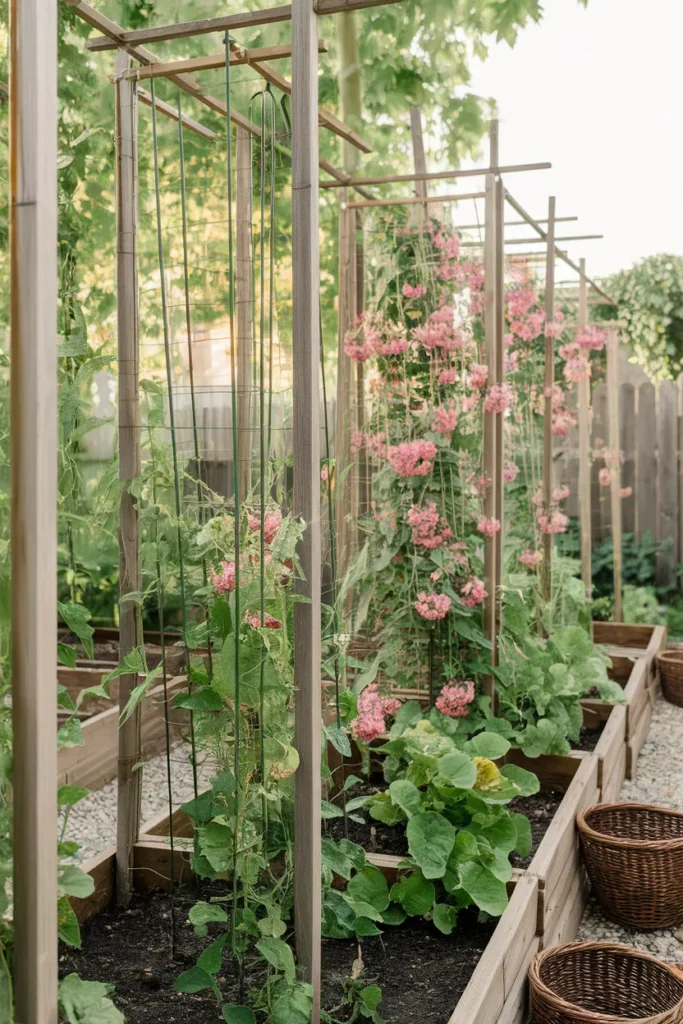
- Saves valuable ground planting space
- Encourages healthier airflow around crops
- Makes harvesting easier and cleaner
- Adds height and visual interest outdoors
- Supports stronger vine growth naturally
Tall climbing structures instantly bring life and movement into productive garden spaces while helping maximize smaller outdoor areas efficiently. Vertical supports allow bean vines and other climbers to grow upward instead of spreading across valuable soil space, creating a cleaner and more organized layout. I’ve noticed these structures also improve airflow around leaves, which helps reduce moisture buildup and supports healthier plant development during humid weather. The added height introduces beautiful texture variation that makes backyard gardens feel fuller and more visually dynamic. This setup works especially well for gardeners trying to increase harvests without overcrowding existing beds.
Natural bamboo poles, wooden trellises, and rustic climbing frames blend beautifully into cottage-inspired landscapes while remaining highly practical through multiple growing cycles. Seasonal crop rotation becomes much easier because vines can be switched between peas, beans, cucumbers, and flowering climbers depending on the time of year. Many gardeners appreciate how elevated growth keeps vegetables cleaner and easier to spot during harvesting. I’ve seen this work well in compact urban gardens where maximizing vertical space becomes essential for productivity. Combining functional supports with lush greenery creates a charming layered effect that feels both decorative and incredibly efficient throughout changing seasons.
5. Rain Barrel Stations
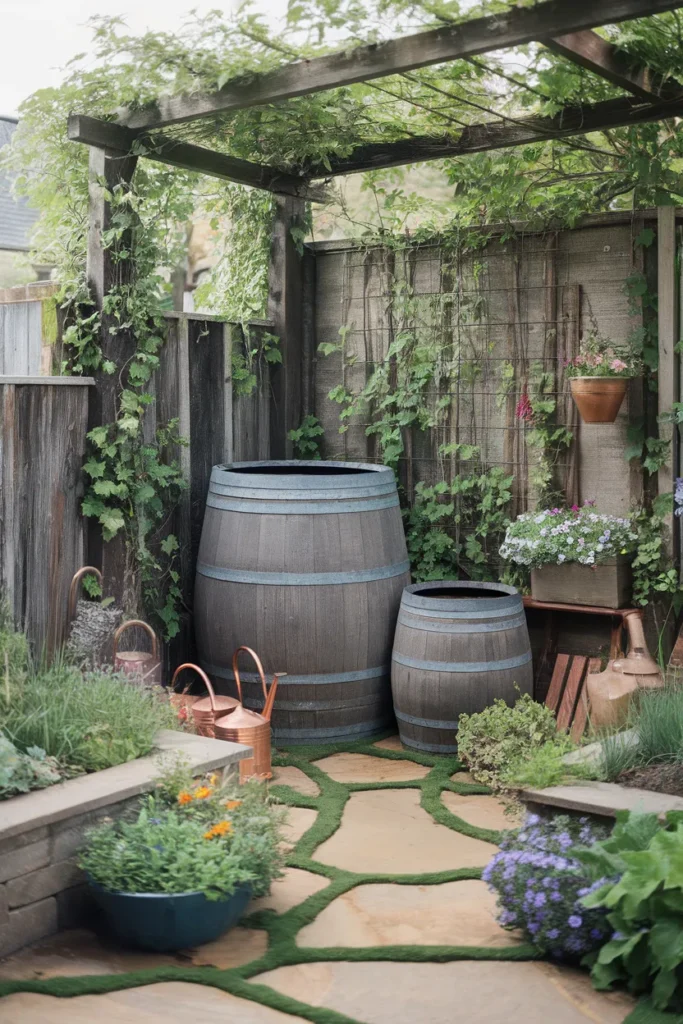
- Conserves water during dry growing periods
- Reduces dependence on outdoor water lines
- Supports eco-friendly gardening routines
- Keeps gardens hydrated naturally after rainfall
- Adds rustic charm to backyard spaces
Collecting rainwater creates a practical and environmentally friendly gardening routine that benefits plants throughout changing weather conditions. Rain barrel stations allow gardeners to store natural water for dry periods while reducing overall outdoor water usage during hotter months. Many plants respond especially well to untreated rainwater because it lacks the added minerals commonly found in tap systems. In my experience, having extra stored water nearby also makes daily watering routines much more convenient and consistent. The barrels themselves can become attractive decorative features when paired with climbing greenery, rustic wood accents, and natural stone landscaping around planting beds.
Thoughtfully designed water collection areas blend beautifully into farmhouse, cottage, or modern organic garden styles without feeling overly functional or industrial. Copper watering cans, weathered barrels, and leafy vines soften the overall appearance while creating a calm sustainable atmosphere outdoors. This setup becomes especially useful when implementing seasonal planting tips because different crops require changing moisture levels throughout the year. I’ve seen gardeners successfully pair rain barrels with drip irrigation systems for even more efficient watering during peak summer heat. The combination of sustainability, practicality, and visual charm makes this idea both smart and highly Pinterest-worthy.
6. Cold Frame Boxes
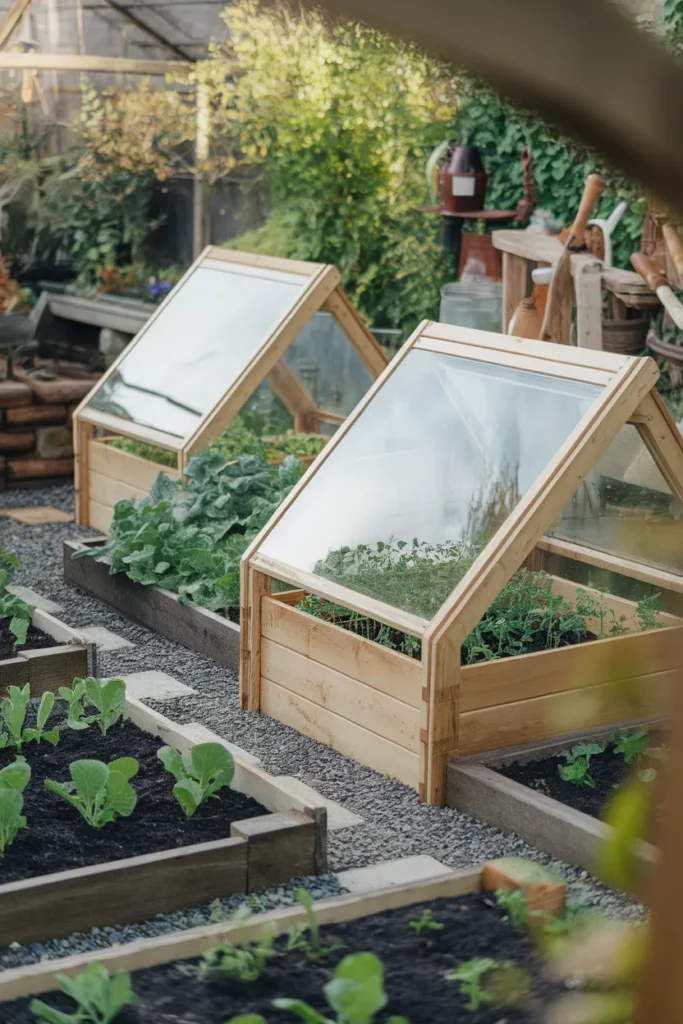
- Extends growing time during colder months
- Protects seedlings from frost and harsh winds
- Helps young plants establish more successfully
- Creates a controlled environment for delicate crops
- Adds charming cottage-style structure outdoors
Protective growing boxes can completely change how early gardeners manage fragile seedlings during unpredictable temperature swings. Cold frames trap warmth from sunlight while shielding tender plants from frost, wind, and heavy rainfall, helping crops establish themselves much earlier in the season. I’ve noticed these structures are especially helpful for leafy greens, herbs, and young vegetable starts that struggle during chilly nights. The enclosed environment also supports stronger root development before plants transition into open beds. This simple gardening solution creates more flexibility for growers who want healthier harvests without relying entirely on indoor seed starting setups.
Beyond their practical advantages, compact glass-covered frames add beautiful structure and vintage charm to outdoor gardening spaces throughout spring and autumn. Natural wood finishes paired with transparent tops create a timeless cottage-garden look that blends effortlessly beside raised beds and gravel paths. Many gardeners appreciate how these boxes encourage better planting organization by separating delicate seedlings from mature crops. I’ve seen this work well in many homes where unpredictable weather shortened the normal growing season dramatically. Adding protective frames helps gardens stay productive longer while creating a polished, thoughtfully designed landscape that looks both cozy and functional.
7. Companion Flower Beds
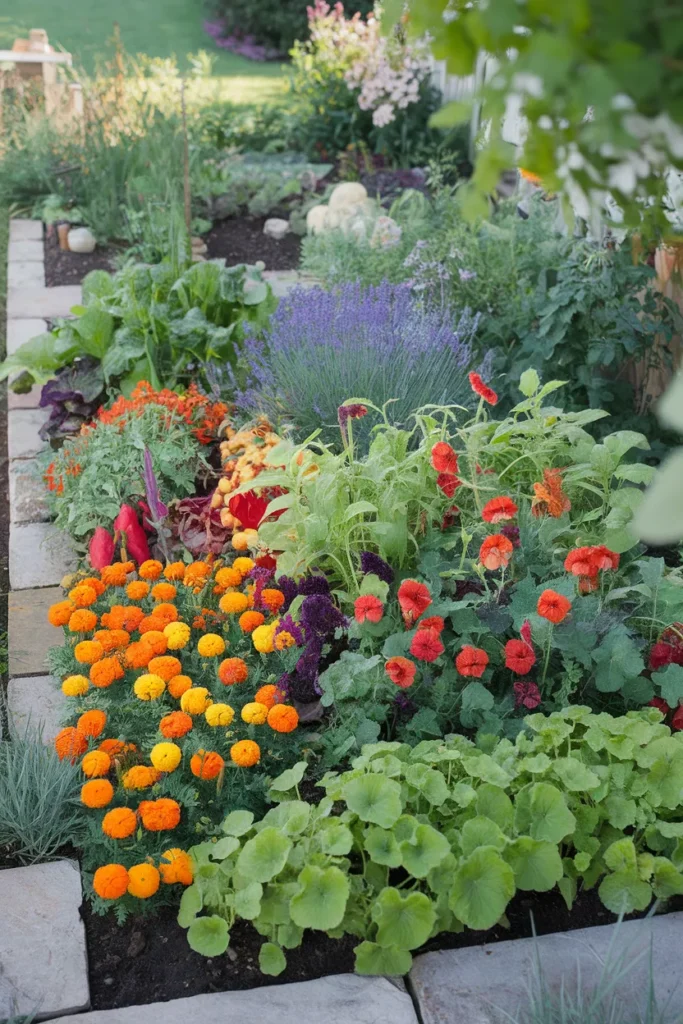
- Encourages natural pest control outdoors
- Adds color and texture beside vegetables
- Helps attract bees and pollinators
- Creates fuller and more balanced garden beds
- Supports healthier plant growth naturally
Colorful flowering borders do far more than beautify outdoor spaces because they actively support healthier and more productive garden environments. Companion blooms attract pollinators while helping discourage common pests that damage vegetables and herbs during active growing months. I’ve noticed marigolds, lavender, and nasturtiums work especially well when placed near tomatoes, peppers, and leafy greens because they introduce both color and practical protection. The layered mixture of flowers and edible plants also creates a lush cottage-style appearance that feels visually rich without looking overly structured. This combination brings softness and movement into productive backyard gardens beautifully.
Blending flowers with vegetables creates a more natural ecosystem that benefits gardens throughout changing weather conditions and seasonal transitions. Pollinator-friendly blooms encourage bees and butterflies to visit more frequently, helping improve fruit and vegetable production naturally over time. Many gardeners appreciate how mixed planting arrangements reduce the sterile appearance often associated with traditional vegetable rows. I’ve seen this work well in compact spaces where every section of the garden needs to feel decorative and functional simultaneously. Combining edible crops with vibrant blooms creates a balanced outdoor setting that photographs beautifully while supporting healthier long-term plant performance.
8. Shade Cloth Covers
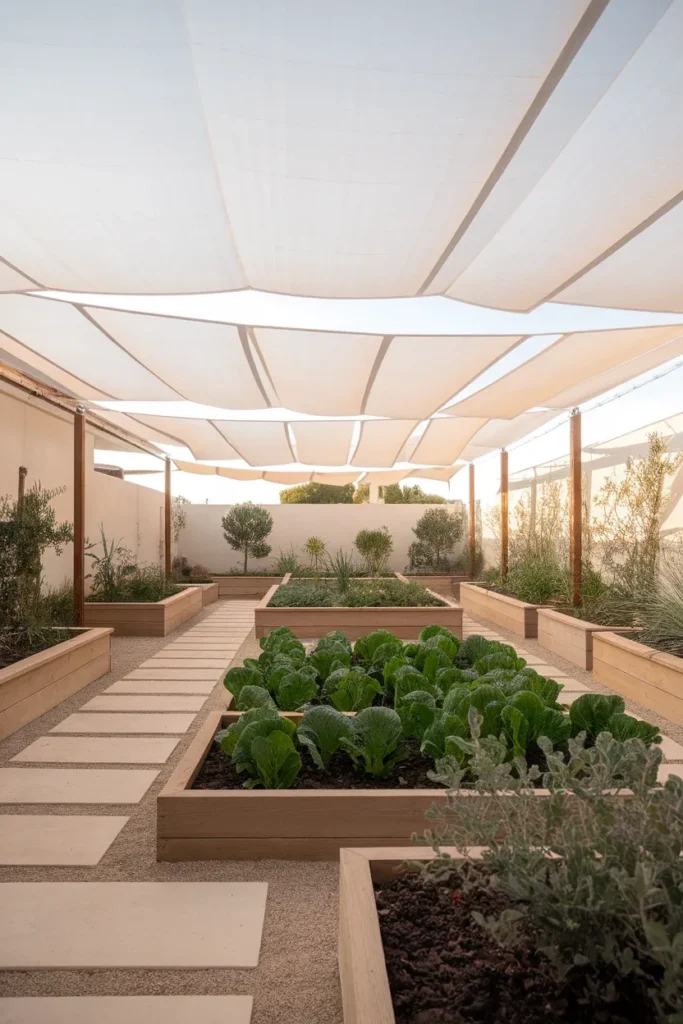
- Protects plants from extreme summer heat
- Prevents leaf scorching during intense sunlight
- Helps soil retain moisture longer
- Creates gentler growing conditions for greens
- Adds soft texture to outdoor spaces
Strong summer sunlight can quickly overwhelm delicate plants, especially leafy greens and young seedlings that struggle during extreme heat waves. Shade cloth coverings create a softer growing environment by filtering harsh sunlight while still allowing enough brightness for healthy plant development. In my experience, these lightweight coverings noticeably reduce leaf damage and help vegetables stay productive much longer during peak summer temperatures. Gardens also require less frequent watering because shaded soil retains moisture more efficiently throughout hot afternoons. The filtered lighting creates a calm, relaxing atmosphere outdoors while protecting crops from unnecessary seasonal stress and dehydration.
Neutral-toned fabric stretched across wooden supports introduces a modern yet organic design element that complements many backyard styles beautifully. Soft shadows moving across pathways and raised beds add depth and texture while making the garden feel cooler and more inviting visually. Many gardeners appreciate how temporary shade systems can easily be adjusted depending on changing weather patterns or crop requirements. I’ve seen this work especially well in areas with long, intense summers where plants regularly experience heat exhaustion. Combining practical sun protection with attractive outdoor styling creates a balanced setup that supports healthier gardens throughout demanding growing seasons.
9. Gravel Herb Paths
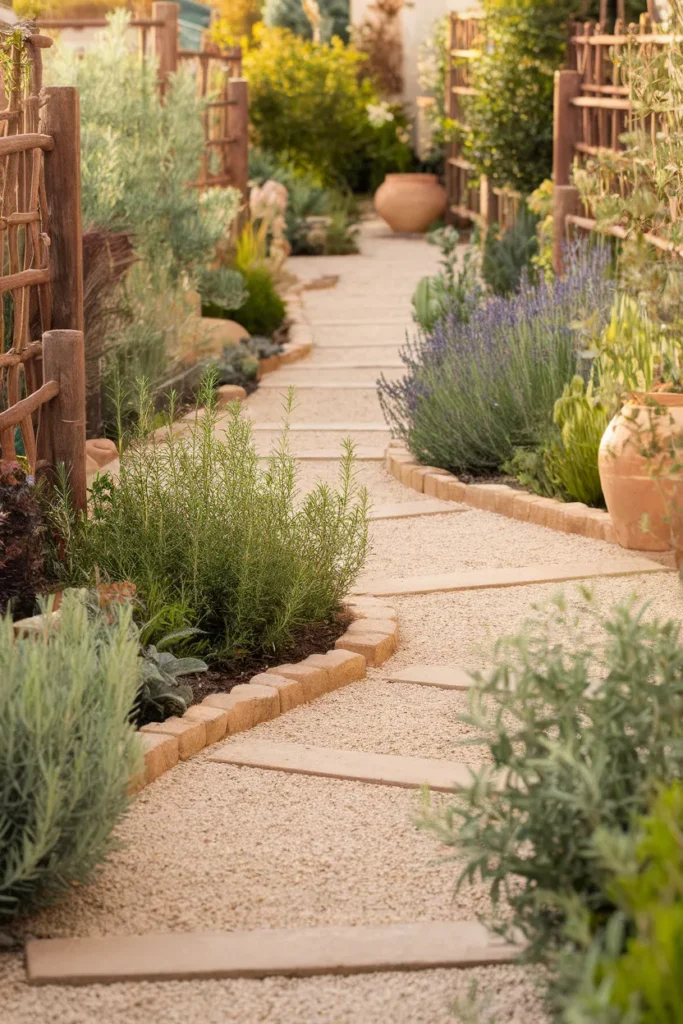
- Improves drainage around garden walkways
- Keeps pathways cleaner during rainy months
- Adds texture and contrast outdoors
- Helps define planting zones clearly
- Creates a relaxed Mediterranean garden feel
Simple gravel pathways instantly make outdoor gardens feel more polished, organized, and visually balanced without requiring expensive landscaping work. Light-colored stone creates beautiful contrast against rich greenery while helping water drain away efficiently during rainy weather. I’ve noticed herb-lined paths also release fresh fragrance whenever someone walks nearby, adding a calming sensory element that transforms the overall atmosphere. Defining pathways clearly helps separate growing zones while reducing muddy foot traffic around delicate plants and vegetables. This layout works especially well for gardeners wanting a practical design that still feels relaxed, decorative, and highly Pinterest-friendly throughout the year.
Combining herbs with textured gravel introduces a Mediterranean-inspired aesthetic that feels timeless and naturally welcoming in both large and compact outdoor spaces. Hardy plants like rosemary, thyme, and lavender thrive beside stone pathways because the surrounding drainage conditions help prevent excessive root moisture. Many gardeners appreciate how these durable herbs remain attractive through multiple seasons while requiring relatively low maintenance. I’ve seen this work well in homes where outdoor areas needed stronger structure without losing their soft organic character. The result feels airy, fragrant, and thoughtfully designed while supporting healthier pathways and cleaner gardening routines year-round.
10. Layered Container Pots
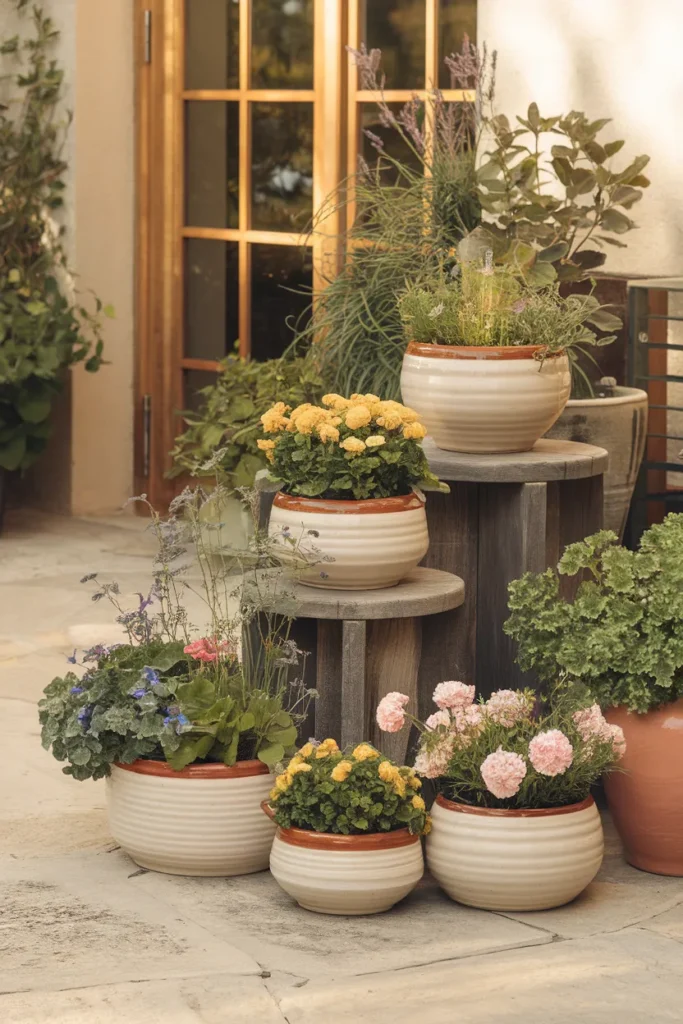
- Maximizes planting space on patios
- Adds height variation and visual depth
- Makes seasonal plant swaps easier
- Works well for renters or small homes
- Creates a cozy curated garden look
Container arrangements instantly make patios and balconies feel fuller, greener, and more visually styled without requiring permanent landscaping changes. Layering pots at different heights helps create movement and depth while allowing gardeners to organize plants based on sunlight and watering needs. I’ve noticed this setup works especially well for rotating flowers and herbs throughout changing weather conditions because individual pots can easily be refreshed or relocated. Compact spaces benefit greatly from vertical variation since it prevents flat-looking layouts and creates a richer garden atmosphere. The combination of mixed textures and greenery adds warmth that feels welcoming year-round.
Carefully selected pottery finishes can dramatically influence the overall mood of an outdoor garden corner while supporting healthier plant management. Terracotta, ceramic, and weathered stone containers introduce natural texture and complement both rustic and modern outdoor aesthetics beautifully. Many gardeners appreciate how portable pots simplify crop changes when following seasonal planting tips across spring, summer, and cooler months. I’ve seen this work especially well for renters who want flexibility without sacrificing visual impact. Combining varied container sizes with layered greenery creates a curated Pinterest-inspired display that feels elegant, practical, and surprisingly easy to maintain throughout the year.
Also View : 20 Indoor Plants Fairy Lights Ideas for Cozy Glow
11. Strawberry Tower Planters
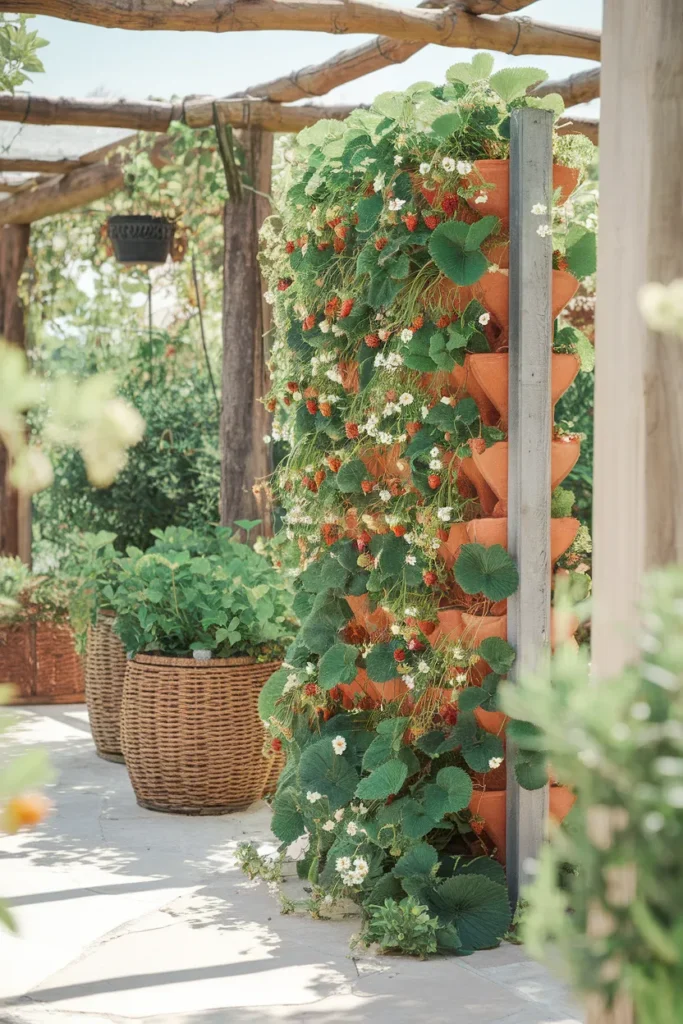
- Saves space while increasing harvest potential
- Keeps fruit cleaner and easier to pick
- Adds vertical texture to patios or gardens
- Improves airflow around berry plants
- Creates a fun decorative edible display
Growing strawberries vertically creates a beautiful and practical garden feature that combines decorative charm with productive harvesting. Tiered planters allow multiple berry plants to thrive in compact areas without spreading aggressively across garden beds or pathways. I’ve noticed elevated strawberry setups also help keep fruit cleaner because berries remain lifted away from damp soil and muddy splashes after rain. Improved airflow around the plants can support healthier growth while reducing moisture-related issues during warmer months. The cascading greenery and bright red berries naturally create a cheerful focal point that instantly enhances patios, balconies, or small backyard spaces.
Vertical berry planters work especially well for gardeners who want edible plants to double as decorative outdoor accents throughout the growing season. The layered arrangement introduces height variation and visual softness while making harvesting far more comfortable and accessible. Many gardeners appreciate how compact strawberry towers simplify watering and seasonal maintenance without sacrificing production quality. I’ve seen this work beautifully in smaller homes where limited ground space required smarter planting layouts. Combining edible gardening with attractive vertical displays creates an inviting outdoor atmosphere that feels fresh, organized, and highly inspiring for everyday backyard enjoyment.
12. Compost Corner Stations
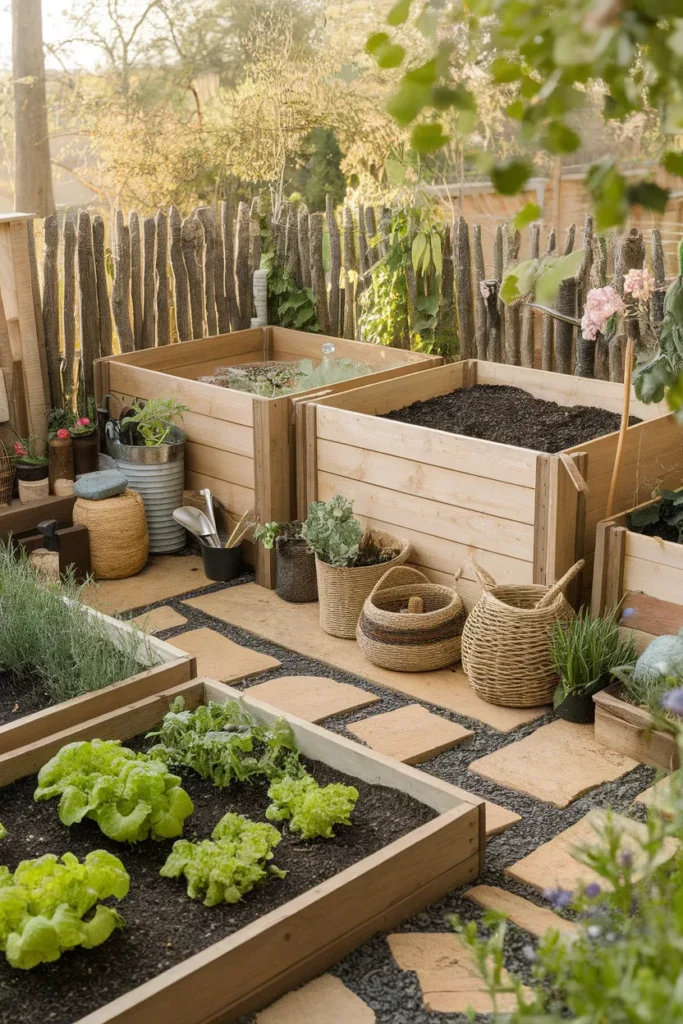
- Recycles kitchen and garden waste naturally
- Improves long-term soil quality effectively
- Reduces dependency on chemical fertilizers
- Keeps gardening routines more sustainable
- Adds practical organization to outdoor spaces
Healthy gardens often begin with nutrient-rich soil, and organized composting areas help create that foundation naturally over time. Compost stations allow gardeners to recycle food scraps, dried leaves, and plant trimmings into valuable organic material that strengthens future growth. In my experience, compost-enriched soil noticeably improves moisture retention while supporting healthier vegetables, herbs, and flowering plants across different seasons. Having a dedicated corner also keeps garden waste organized instead of scattered throughout planting beds or pathways. This sustainable approach encourages more efficient gardening habits while reducing unnecessary outdoor waste and supporting healthier long-term planting conditions.
Thoughtfully designed compost stations can blend beautifully into backyard layouts when paired with natural wood finishes, gravel paths, and surrounding greenery. Many gardeners appreciate how enclosed bins create a cleaner appearance while helping maintain proper airflow for decomposition. I’ve seen this work especially well in productive backyard gardens where continuous planting requires consistent soil improvement throughout the year. Functional composting systems support smarter gardening routines while complementing rustic, cottage, or eco-inspired outdoor aesthetics naturally. The result feels intentional, environmentally friendly, and visually balanced without making the gardening space appear overly technical or cluttered.
13. Hoop Tunnel Covers
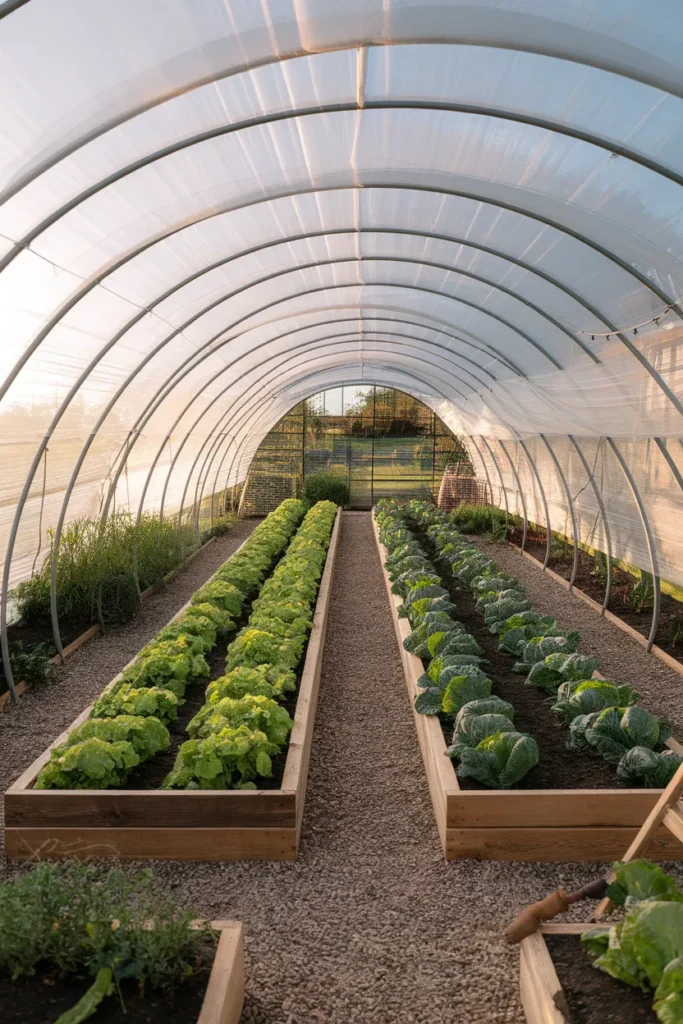
- Shields crops from frost and pests
- Extends harvest time during colder months
- Creates stable growing temperatures outdoors
- Protects delicate greens from strong winds
- Adds neat structure to planting rows
Protective garden tunnels can dramatically improve crop survival during unpredictable weather while helping gardeners maintain stronger harvests throughout the year. Lightweight coverings trap warmth around plants, creating a stable environment that supports healthier growth during chilly mornings and seasonal transitions. I’ve noticed these tunnel systems work especially well for lettuce, spinach, and tender seedlings that struggle with frost or sudden temperature drops. The enclosed structure also helps block insects and harsh winds without limiting airflow completely. This practical gardening solution creates a cleaner, more organized appearance while improving overall crop consistency across multiple growing cycles.
Curved tunnel frames introduce soft architectural lines into vegetable gardens while blending naturally with raised beds and rustic pathways. Many gardeners appreciate how these temporary structures can easily be adjusted depending on weather patterns or changing crop needs throughout different seasons. I’ve seen this work especially well in regions where spring temperatures fluctuate unpredictably and young plants require additional protection. The transparent covering allows sunlight to filter gently through while creating a cozy greenhouse-like atmosphere outdoors. Combining functional crop protection with visually tidy planting rows makes hoop tunnels both highly efficient and beautifully Pinterest-worthy for modern backyard gardens.
14. Pollinator Garden Patches
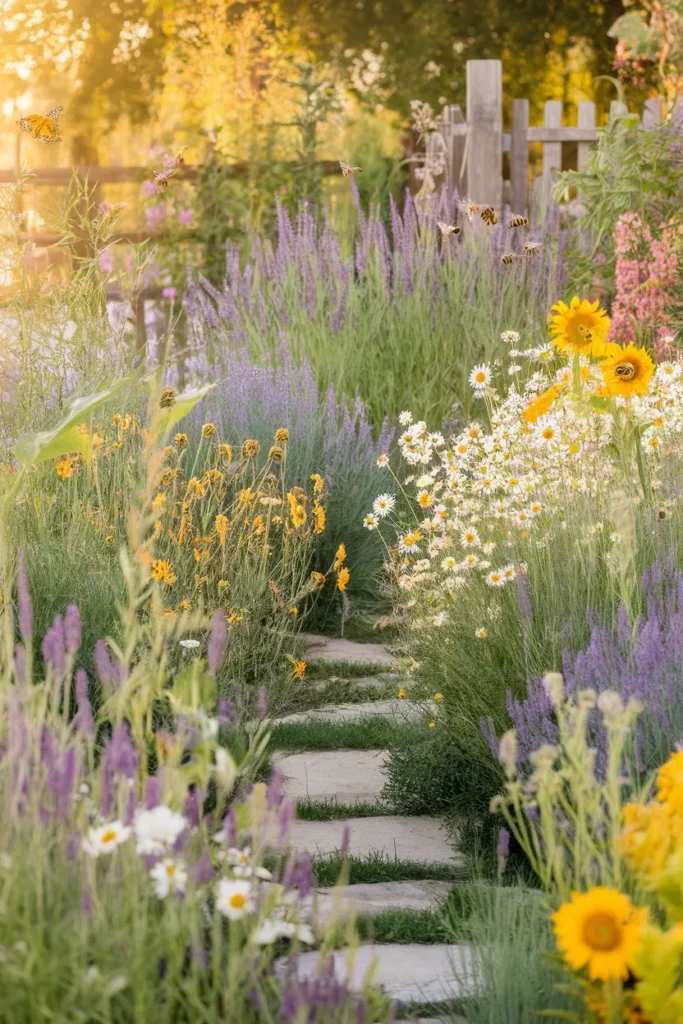
- Encourages bees and butterflies naturally
- Improves fruit and vegetable pollination
- Adds vibrant color throughout the garden
- Creates a lively and healthy ecosystem
- Supports stronger long-term plant production
Few gardening upgrades bring as much life and movement into outdoor spaces as flower-filled pollinator patches buzzing with activity. A mix of nectar-rich blooms encourages bees, butterflies, and other beneficial insects to visit more frequently, helping nearby fruits and vegetables produce more successfully. I’ve noticed gardens with pollinator-friendly sections often feel more balanced and naturally thriving because the ecosystem supports itself more efficiently over time. Layered flowers also add beautiful texture and seasonal color variation that keeps outdoor spaces visually interesting throughout the year. This combination of function and beauty works wonderfully in nearly every garden style.
Creating dedicated pollinator zones helps transform ordinary backyards into lively outdoor retreats filled with movement, fragrance, and vibrant seasonal color. Hardy flowers like lavender, echinacea, daisies, and sunflowers attract helpful insects while requiring relatively manageable care once established. Many gardeners appreciate how these flower patches soften vegetable-heavy landscapes and make the space feel more decorative overall. I’ve seen this work especially well in family gardens where attracting butterflies adds an extra sense of enjoyment and calm outdoors. Combining practical pollination support with layered floral beauty creates a healthier, more inviting environment that feels naturally abundant and visually unforgettable.
15. Seed Starter Trays
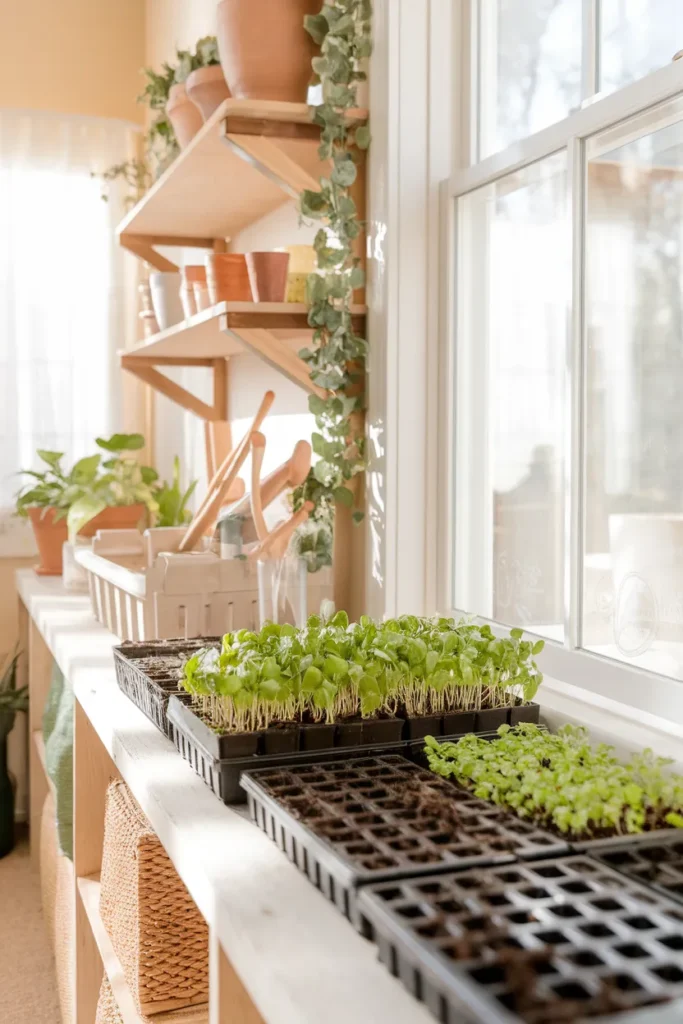
- Helps seedlings develop stronger roots early
- Gives plants a healthier seasonal start
- Makes crop planning more organized
- Increases germination success indoors
- Extends the productive growing season
Starting seeds indoors creates a major advantage for gardeners who want stronger, healthier plants before outdoor temperatures fully stabilize. Organized starter trays provide a controlled environment where moisture, warmth, and lighting remain consistent during the earliest growth stages. In my experience, seedlings grown this way establish themselves faster once transferred outdoors because their roots become stronger and more developed beforehand. The process also allows gardeners to experiment with more plant varieties while planning future garden layouts more efficiently. Compact tray systems make it easier to manage delicate young sprouts without exposing them immediately to unpredictable outdoor conditions.
Neatly arranged seed stations can also become visually charming additions to sunny kitchens, greenhouses, or gardening corners during early spring months. Wooden shelves, small terracotta pots, and rows of vibrant sprouts create a fresh hopeful atmosphere that signals the start of a new growing season beautifully. Many gardeners appreciate how indoor propagation extends planting opportunities while improving overall harvest timing later in the year. I’ve seen this work especially well for vegetables and flowers that require longer growing periods before reaching maturity outdoors. Combining organization with healthy early growth creates a practical setup that feels both inspiring and highly productive.
16. Drip Irrigation Lines
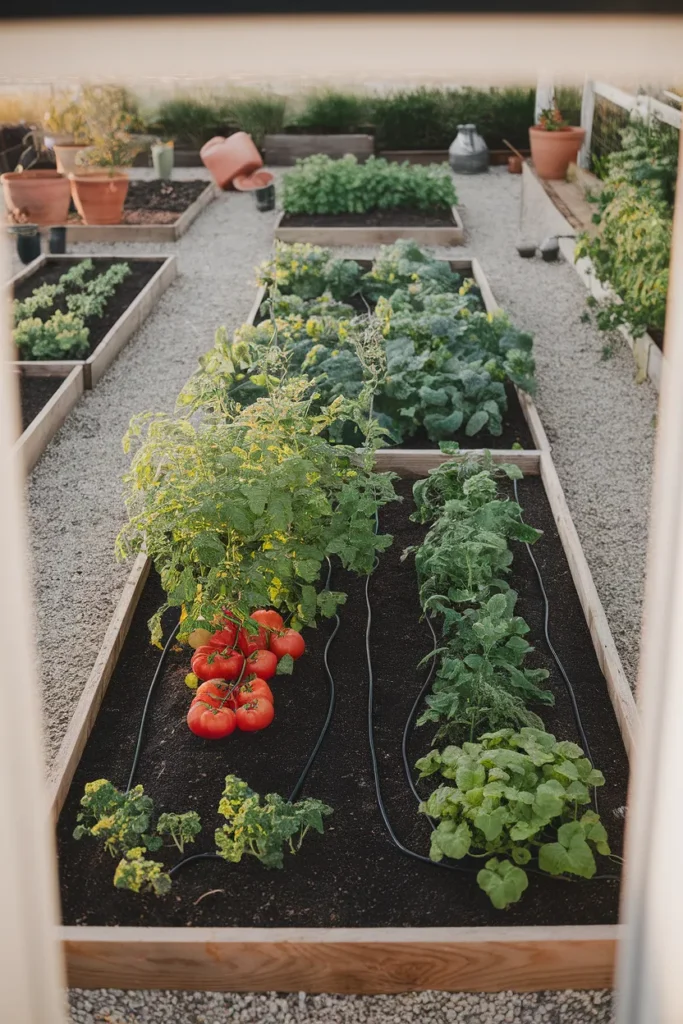
- Delivers water directly to plant roots
- Reduces unnecessary water waste outdoors
- Keeps leaves drier and healthier longer
- Simplifies daily garden maintenance routines
- Supports consistent moisture during hot weather
Consistent watering often makes the biggest difference between struggling plants and thriving productive gardens throughout changing seasons. Drip irrigation systems slowly deliver moisture directly into the soil near plant roots, helping reduce evaporation and unnecessary runoff during warmer months. I’ve noticed this method keeps vegetables and herbs healthier because leaves stay drier compared to overhead watering techniques. The steady moisture also prevents sudden soil fluctuations that can stress delicate crops during intense summer heat. This setup becomes especially useful for busy gardeners who want reliable watering routines without spending hours manually managing hoses every day.
Carefully placed irrigation lines create a cleaner and more organized garden appearance while improving long-term plant care efficiency. Hidden tubing beneath mulch or between planting rows keeps pathways uncluttered and allows greenery to remain the visual focus of the outdoor space. Many gardeners appreciate how drip systems simplify following seasonal planting tips because watering schedules can easily adjust depending on weather conditions and crop needs. I’ve seen this work well in both compact patios and large backyard vegetable gardens where consistent hydration dramatically improved overall growth. The result feels polished, practical, and surprisingly low-maintenance for everyday gardening routines.
17. Succession Plant Rows
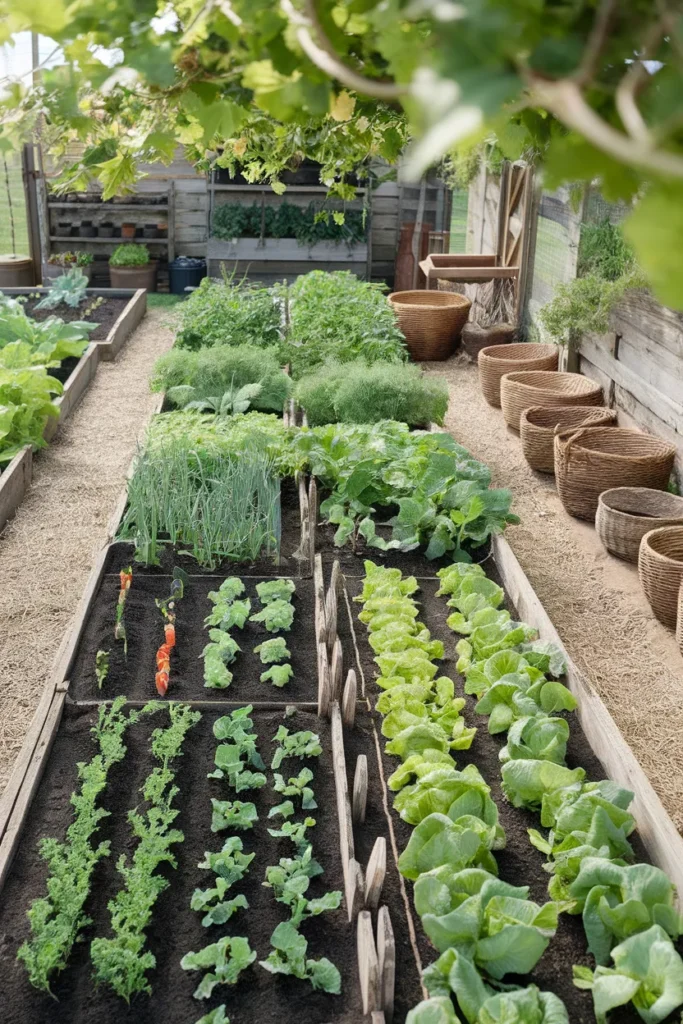
- Keeps harvests continuous through the season
- Maximizes productivity in limited garden space
- Prevents large gaps between crop cycles
- Improves planting organization and timing
- Creates a fuller and more active garden
Carefully timed planting rows help gardens stay productive much longer by ensuring fresh crops continue maturing throughout the growing season. Instead of planting everything simultaneously, gardeners stagger sowing schedules so younger seedlings replace harvested vegetables naturally over time. I’ve noticed this strategy keeps outdoor spaces looking fuller and more visually active because empty soil patches rarely appear between harvest cycles. The organized layout also simplifies planning for leafy greens, root vegetables, and herbs that mature at different speeds. This approach supports healthier garden management while helping families enjoy more consistent homegrown produce throughout changing weather conditions.
Succession planting creates an efficient rhythm that keeps gardens feeling organized, balanced, and continuously rewarding during spring, summer, and early autumn months. Many gardeners appreciate how this technique maximizes limited space without overcrowding individual crops or exhausting soil conditions too quickly. I’ve seen this work especially well in raised beds where structured rows make timing and rotation easier to monitor visually. Wooden plant markers, layered growth stages, and steady harvest transitions create a productive farmhouse-inspired aesthetic that feels both practical and beautiful. The result supports stronger long-term yields while maintaining a neat, thoughtfully maintained outdoor environment all season long.
18. Native Wildflower Borders
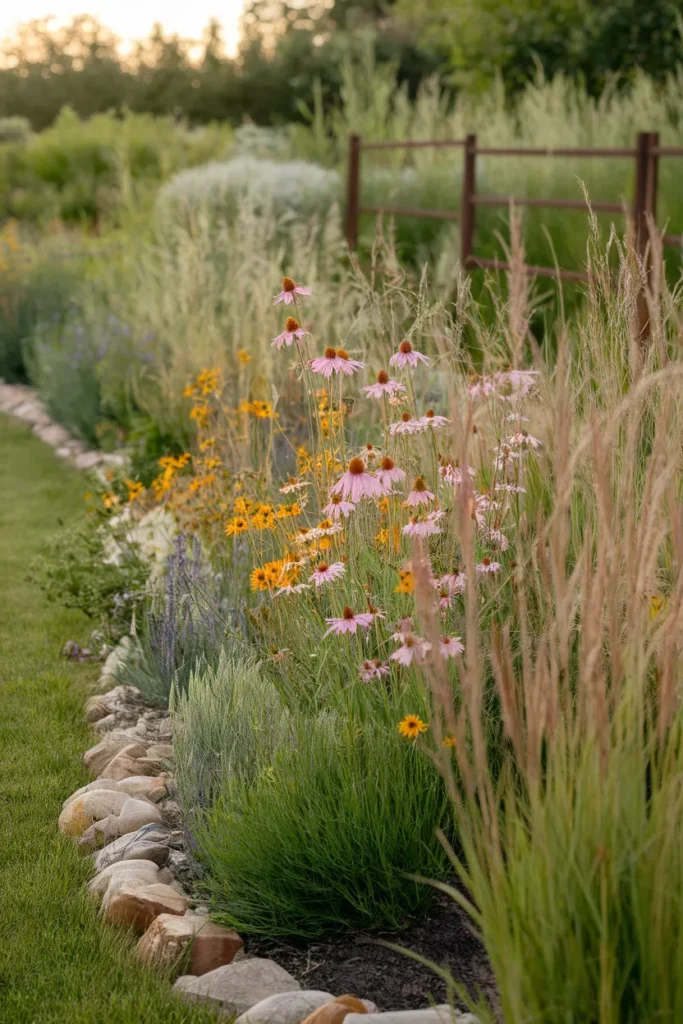
- Supports local pollinators and wildlife naturally
- Requires less maintenance after establishment
- Adds soft movement and seasonal color
- Helps gardens blend with surrounding landscapes
- Creates a relaxed meadow-inspired atmosphere
Natural wildflower borders bring effortless beauty into outdoor spaces while helping gardens feel softer, more connected, and environmentally balanced. Native blooms typically adapt well to local weather conditions, making them easier to maintain once established throughout changing seasons. I’ve noticed these flowing flower sections create gentle movement in the landscape that feels far more relaxed and organic than overly structured planting beds. Pollinators also benefit greatly from the diverse blooms, helping nearby vegetables and fruiting plants perform more successfully. The layered textures and seasonal color variation add depth that instantly makes backyard gardens feel richer and more visually inviting.
Wildflower edges work especially well for gardeners wanting a lower-maintenance landscape that still feels vibrant and thoughtfully designed throughout the year. Tall grasses, cone flowers, and scattered blooms create a meadow-inspired appearance that softens fences, pathways, and vegetable plots naturally. Many gardeners appreciate how native plantings typically require less watering and seasonal intervention after becoming established. I’ve seen this work beautifully in both rural and suburban gardens where homeowners wanted a more relaxed outdoor atmosphere without sacrificing visual impact. Combining practical sustainability with free-flowing floral beauty creates an outdoor environment that feels peaceful, natural, and highly Pinterest-worthy.
19. Hanging Basket Greens
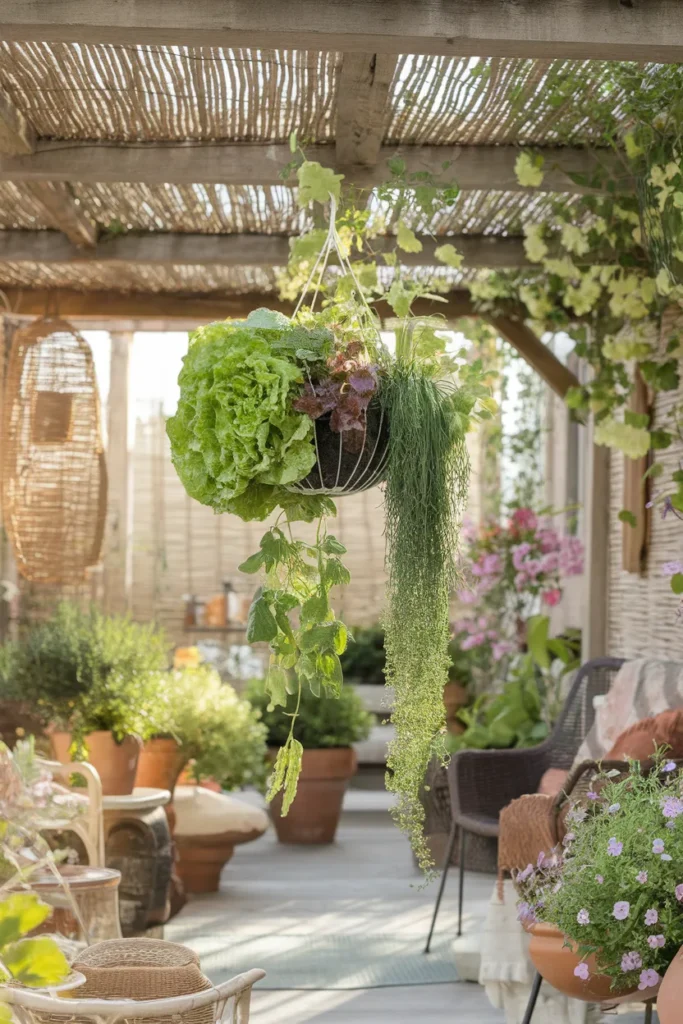
- Maximizes growing space in compact areas
- Keeps leafy greens cleaner and elevated
- Adds lush vertical texture outdoors
- Makes harvesting quick and convenient
- Creates a charming decorative garden display
Hanging baskets filled with edible greenery create a beautiful solution for gardeners working with smaller patios, balconies, or narrow outdoor spaces. Elevating leafy crops helps improve airflow while keeping delicate greens cleaner and farther from pests or muddy soil conditions after rainfall. I’ve noticed this setup also makes harvesting much easier because plants remain accessible at eye level instead of crowded among dense garden beds. The layered hanging effect introduces movement and softness that instantly makes outdoor areas feel fuller and more inviting. This simple vertical gardening method combines decorative charm with practical everyday functionality beautifully.
Carefully arranged hanging baskets can transform even compact outdoor corners into lush productive spaces overflowing with texture and fresh color. Herbs, spinach, lettuce, and trailing edible plants thrive particularly well in elevated containers when watering remains consistent throughout warmer months. Many gardeners appreciate how suspended planters free up valuable ground space for larger vegetables and seasonal flowers below. I’ve seen this work especially well in urban homes where patios needed stronger greenery without sacrificing walking space or comfort. Combining edible planting with layered vertical styling creates a Pinterest-inspired garden atmosphere that feels relaxed, efficient, and naturally welcoming year-round.
20. Rotating Crop Sections
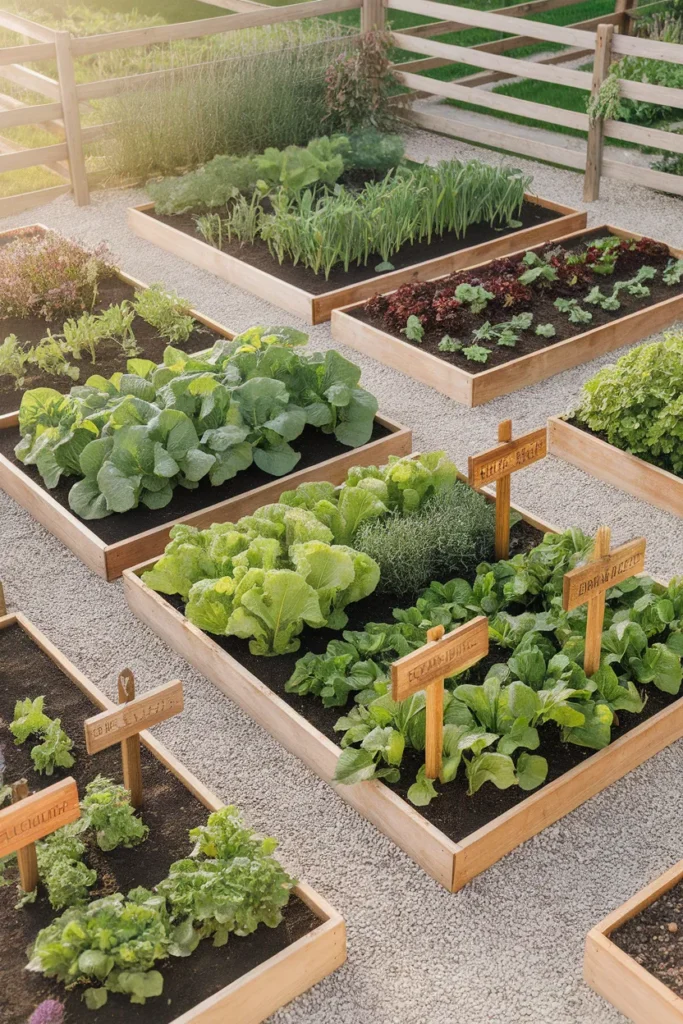
- Helps prevent soil nutrient depletion naturally
- Reduces recurring pest and disease problems
- Improves long-term garden productivity
- Keeps planting layouts more organized
- Supports healthier seasonal soil management
Rotating crops between different planting sections helps gardens stay healthier, more productive, and easier to manage over time. Growing the same vegetables repeatedly in one location can exhaust soil nutrients and encourage recurring pest problems that weaken future harvests. I’ve noticed organized rotation systems dramatically improve plant performance because the soil gets a chance to recover naturally between growing cycles. Dividing gardens into clear sections also simplifies seasonal planning and makes planting schedules feel far less overwhelming. This thoughtful approach supports stronger long-term growth while helping backyard spaces remain visually structured and intentionally designed throughout the year.
Clearly marked garden zones create a satisfying sense of organization that blends beautifully into modern farmhouse and cottage-style landscapes. Many gardeners appreciate how crop rotation naturally improves soil health without relying heavily on artificial fertilizers or complicated treatments. I’ve seen this work especially well in productive vegetable gardens where consistent planting previously caused weaker yields after several seasons. Wooden markers, raised sections, and organized pathways make the entire space easier to maintain while enhancing its overall visual appeal. Combining healthier soil management with clean garden structure creates a practical setup that feels efficient, balanced, and highly rewarding season after season.
21. Greenhouse Shelf Units
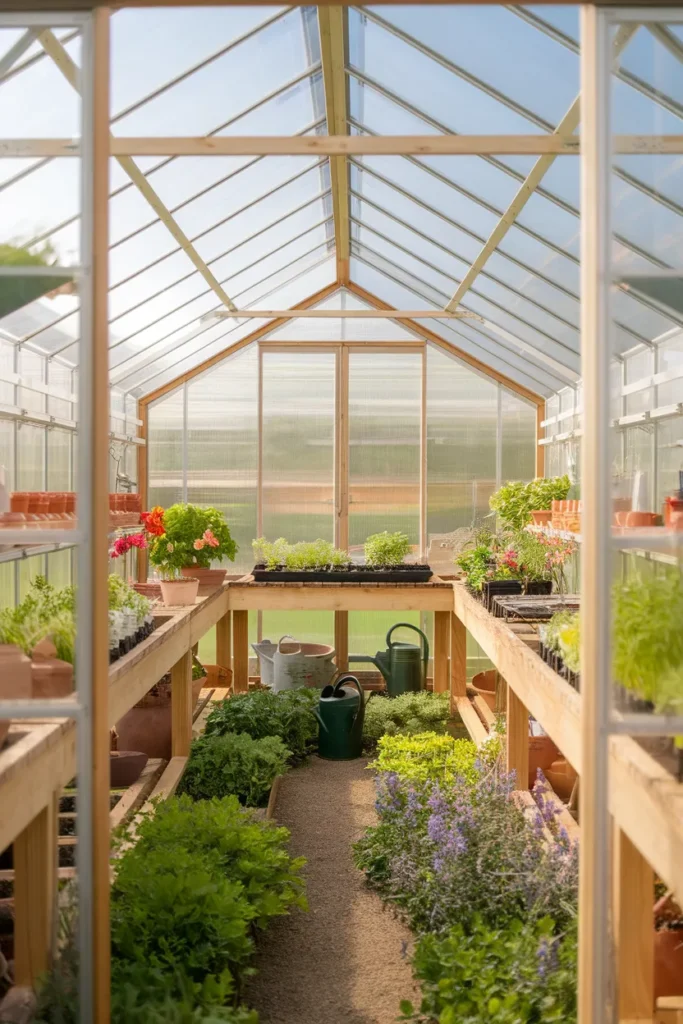
- Expands indoor growing and propagation space
- Keeps seedlings neatly organized and accessible
- Improves sunlight exposure for young plants
- Creates an efficient gardening workspace
- Adds structure to greenhouse interiors
Organized shelving can completely transform greenhouse spaces by creating more room for seedlings, herbs, and seasonal plant preparation throughout the year. Vertical shelf arrangements allow gardeners to maximize sunlight exposure while keeping delicate young plants neatly separated and easier to monitor daily. In my experience, structured greenhouse storage also improves watering routines because trays and containers remain accessible instead of crowded across the floor. The layered setup creates a more efficient gardening workflow while helping gardeners maintain healthier propagation conditions during early planting periods. This organized environment supports stronger growth and smoother seasonal transitions for many types of plants.
Wooden shelving paired with terracotta pots and lush greenery creates a warm botanical atmosphere that feels both practical and visually calming. Many gardeners appreciate how elevated displays make greenhouse interiors feel more polished and thoughtfully arranged rather than cluttered with random containers and tools. I’ve seen this work beautifully in compact greenhouses where every inch of growing space needed to remain functional and productive. Layered shelves also create opportunities for decorative styling while supporting healthier airflow and light distribution around young plants. The result feels inspiring, efficient, and highly suited for gardeners passionate about year-round growing success.
22. Seasonal Harvest Crates
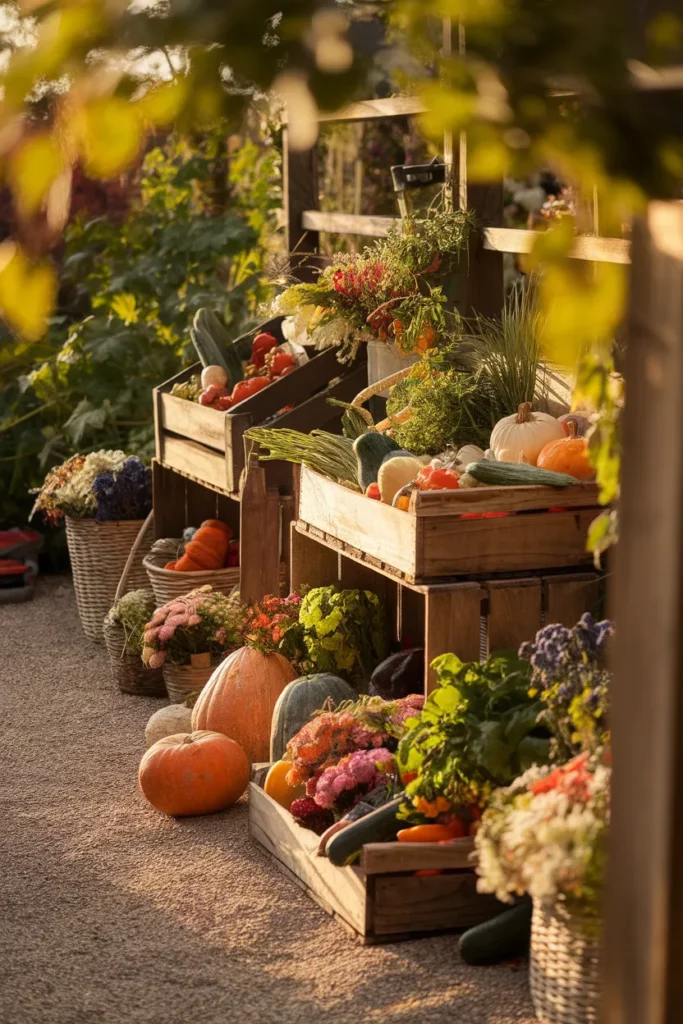
- Keeps harvested produce neatly organized outdoors
- Makes garden routines feel more efficient
- Adds rustic decorative charm to planting areas
- Simplifies sorting seasonal vegetables and herbs
- Creates a rewarding farmhouse-style garden aesthetic
Beautiful harvest stations make gardening feel even more satisfying because they create a dedicated space for organizing freshly picked produce throughout the growing season. Wooden crates provide simple storage for vegetables, herbs, flowers, and fruits while adding texture and warmth to outdoor gardening areas. I’ve noticed organized collection spaces also encourage quicker cleanup after harvesting, helping gardens stay tidy and functional during busy planting months. The layered arrangement of colorful produce naturally creates a visually rewarding atmosphere that highlights the success of careful gardening routines. This setup combines decorative charm with practical organization in a highly approachable way.
Rustic storage crates fit beautifully into farmhouse, cottage, and organic backyard styles while supporting smoother day-to-day gardening tasks. Many gardeners appreciate how separate containers simplify sorting crops based on ripeness, storage needs, or future meal planning after large harvest days. I’ve seen this work especially well in productive gardens where overflowing vegetables quickly became difficult to manage without designated collection areas. Natural wood finishes, woven baskets, and seasonal produce displays also create highly photogenic outdoor scenes perfect for Pinterest-inspired styling. The result feels warm, abundant, and deeply connected to the rewarding rhythm of seasonal gardening throughout the year.
Conclusion
Creating a healthier and more beautiful outdoor space often comes down to simple choices that work with nature instead of against it. These seasonal planting tips are designed to help you grow smarter, improve garden organization, and create an outdoor environment that feels productive, relaxing, and visually inspiring throughout the year. I’ve seen how small updates like vertical planters, pollinator flowers, and structured pathways can completely refresh a garden without requiring a major redesign. Save these ideas to Pinterest for future inspiration, try a few in your own space, and share this article with fellow gardening lovers ready to transform their backyard into something truly special.